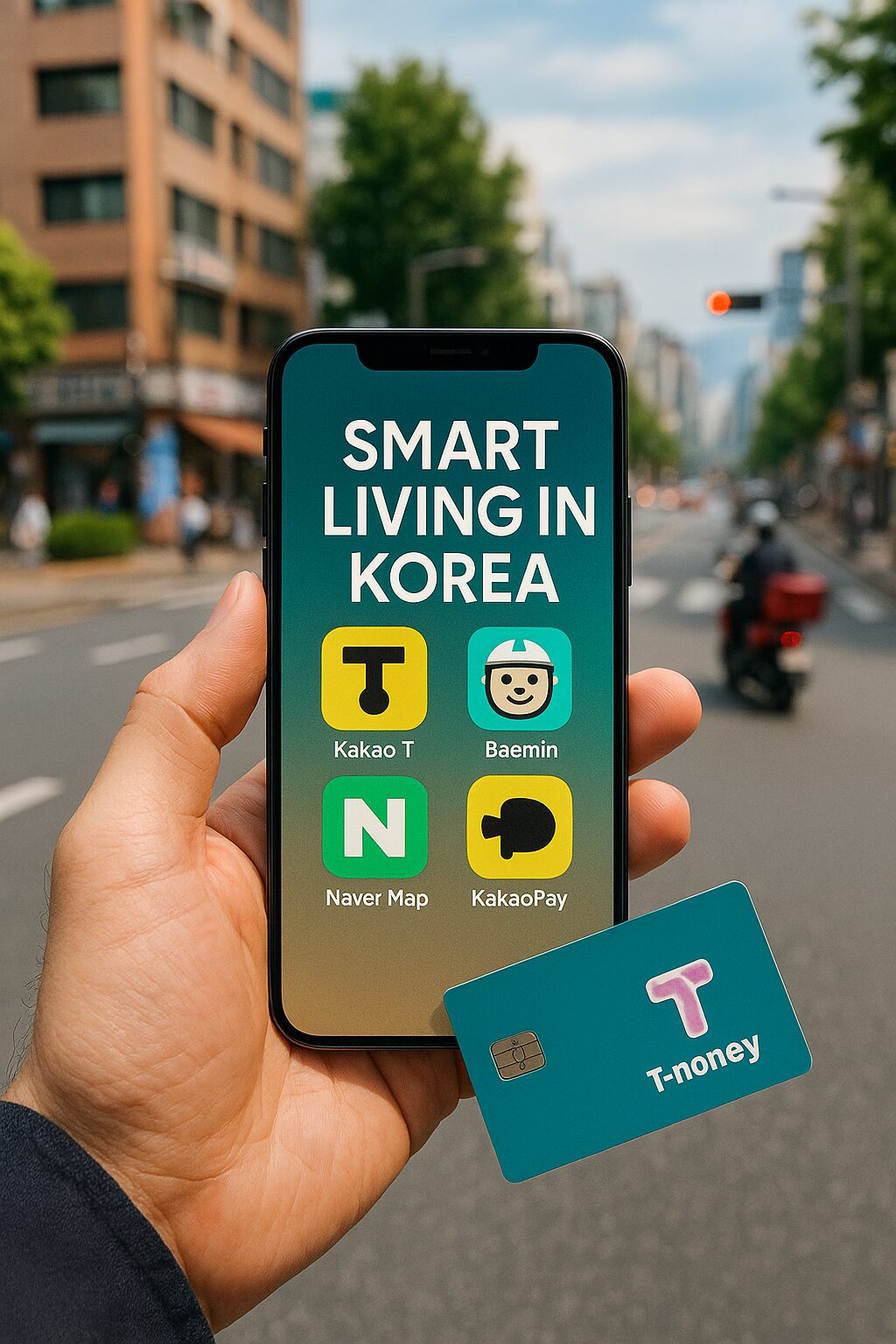
How Expats Really Live Smart in Korea

Mobile phone with Korean apps displayed on screen, surrounded by digital icons and a passport – representing smart travel and expat life in Korea

Subtitle: The Ultimate Survival Toolkit for Budget-Friendly Life in Korea (or Anywhere)

Introduction: Surviving Abroad Requires More Than Just a Passport

Living abroad isn’t just about booking a flight and finding accommodation.
Especially in Korea, where technology is everywhere and systems work differently, digital nomads and expats need smart strategies and local knowledge to thrive — not just survive.

From banking and public transport to food delivery and translation, this guide will show you exactly which mobile tools and cultural hacks are used by smart travelers and remote workers to live more efficiently in Korea.

Whether you’re staying for a few weeks or a few years, these tips can save you time, money, and stress.


1. Navigation: Naver Map & KakaoMap (Not Google!)

Why it matters:
Google Maps doesn’t work well in Korea. It lacks turn-by-turn directions and real-time transport info.
Instead, use Naver Map or KakaoMap, which are locally optimized.

What to know:

  • Both support English interface
  • Real-time bus/train/subway updates
  • Shows landmarks, exits, and food spots
  • KakaoMap is slightly more tourist-friendly

Pro Hack:
Use “Find Exit” for subway navigation — it tells you which subway car to ride for the fastest transfer.


2. Payments: KakaoPay & NaverPay

Why it matters:
Korea is almost cashless. Even small street vendors often accept QR codes.
KakaoPay and NaverPay are essential for payments, refunds, and rewards.

What to know:

  • Link with Korean bank account or foreign-issued credit card (limited)
  • Used for online shopping, in-store, and even taxis
  • Secure with biometric login
  • NaverPay often gives instant cashback

Pro Hack:
Use your T-money card with your Kakao or Naver account to auto-reload and track subway/bus spending.


3. Food Delivery: Baemin & Yogiyo

Why it matters:
Korean delivery is legendary. You can order anything from fried chicken to contact lenses.

What to know:

  • Baemin (배달의민족) is the #1 food app
  • Yogiyo is a strong alternative
  • English UI is limited, but Google Lens helps
  • Can pay via KakaoPay or credit card

Pro Hack:
If you don’t have a Korean number, use apps like Shuttle or Coupang Eats Global (English-friendly).


4. Language Support: Papago & Naver Dictionary

Why it matters:
Even if Koreans are helpful, many don’t speak English fluently.
To get around this, use Papago — Korea’s best AI translator — and Naver Dictionary for more depth.

What to know:

  • Papago handles slang, menus, signs better than Google Translate
  • Supports voice, camera, handwriting input
  • Naver Dictionary helps with grammar, pronunciation

Pro Hack:
Use the “Honorific Detection” feature in Papago for respectful phrasing in text or speech.


5. Shopping: Coupang & Gmarket

Why it matters:
Amazon doesn’t work well in Korea. Coupang is the go-to for same-day or next-day delivery.

What to know:

  • Coupang = Korean Amazon, with Prime-style service (Rocket Delivery)
  • Gmarket offers more global brand options
  • Foreign cards may work, but Korean account preferred
  • Apps often have auto-translate to English

Pro Hack:
Use Naver Shopping to compare prices between Coupang, Gmarket, and other vendors in one search.


6. Housing & Rentals: Zigbang & Dabang

Why it matters:
Short-term stays can be expensive. These apps let you find apartments without brokers.

What to know:

  • Zigbang and Dabang have both monthly and long-term options
  • Include actual photos, price breakdowns, and location info
  • Foreigners can sometimes book directly
  • Some units don’t require key money (jeonse)

Pro Hack:
Use the “Wolse” filter for monthly rentals and avoid deposit-heavy places.


7. Transportation: Kakao T (Taxi, Bike, Subway)

Why it matters:
Kakao T is Korea’s answer to Uber — plus more.

What to know:

  • Book taxis, bikes, and even EV charging stations
  • Tells you when buses/subways are crowded
  • Payments can be linked to KakaoPay
  • Supports real-time traffic info

Pro Hack:
Schedule a taxi in advance during rainy or rush hours — they disappear fast!


8. Essential Lifestyle Tools:

NeedApp
BankingToss, K-Bank, Hana OneQ
Health & HospitalsGoodoc, Seoul Hospital Finder
Events & TicketsInterpark, Yes24
Used GoodsKarrot (당근마켓)
Community & InfoMeetup, Reddit Korea, Facebook Groups

Pro Hack:
Use Karrot to buy used furniture or electronics at half price when you arrive — and resell them before you leave.


Bonus: Survival Hacks from Real Expats

  • Join a SIM plan with an eSIM provider — saves time at airport
  • Use NAVER ID for all logins — most websites accept it
  • KakaoTalk is essential — for messaging, community chats, and more
  • Ask locals for “편의점 추천템” — convenience store snacks and drinks worth trying
  • Use Coupang’s “Global” tab — international delivery even from Korea

Final Words: Korea Is Smart — You Should Be, Too

South Korea is one of the most tech-advanced and systematized societies in the world.
But that also means you need to play by its rules.

With the right apps and tips, you can enjoy a smooth, affordable, and exciting experience — without frustration or waste.

Being smart isn’t optional here. It’s how you survive.

Smart Living in Korea: Essential Apps and Hacks for Digital Nomads & Expats

Top apps, tools, and life hacks for foreigners living in Korea

Moving to Korea as a digital nomad or expat is exciting—but also overwhelming.
Even though Korea is known for lightning-fast internet and advanced tech, most systems are built for locals, and English support is limited. For those new to the country, everyday tasks like finding a hospital, ordering food, or catching a bus can quickly become stressful.

This guide gives you the essential tools and insider hacks that foreigners actually use to live smarter—not harder—in Korea. From must-have mobile apps to life-saving digital shortcuts, here’s how to make your Korean experience easier, more affordable, and more enjoyable in 2025 and beyond.


1. Navigating Like a Local: Ditch Google Maps

Google Maps doesn’t work well in Korea. It lacks walking directions, real-time traffic, and accurate subway data. Instead, use:

  • KakaoMap
  • Naver Map

Both offer detailed walking, driving, and public transit routes—plus accurate subway exit numbers (which are crucial in Korean cities). If you’re standing at Seoul Station and don’t know which of the 15 exits leads to your destination, these apps will tell you exactly where to go.

Install also:

  • Seoul Subway (for offline metro use)
  • Kakao T (for taxis, with real-time location tracking, in-app payment, and English interface)

Pro Tip: Subway directions in Korea rely on exit numbers instead of street names. Knowing the right exit can save you 20 minutes of walking in the wrong direction.


2. Paying Like a Local (Even Without a Korean Bank)

You don’t need a Korean bank account to pay like a local.

Top options:

  • KakaoPay – works with your Korean phone number and ARC (Alien Registration Card). You can pay at convenience stores, restaurants, and even taxis.
  • ZeroPay – QR-code based, accepted in traditional markets and mom-and-pop shops.
  • Wise (formerly TransferWise) – international-friendly with great exchange rates; works well for transferring funds to Korea and using local ATMs.

Some global cards work with Apple Pay or Samsung Pay, but local apps are more reliable.

Pro Tip: If you’re in Korea short-term, pair Wise with a Korean SIM card and skip the bank setup altogether.


3. Online Shopping & Food Delivery Without Knowing Korean

Welcome to the land of overnight delivery—even for foreigners.

Shopping apps you need:

  • Coupang – “Rocket Delivery” offers next-day or even same-day delivery.
  • 11st, Gmarket, SSG.com – For groceries, electronics, and daily items.

Food delivery:

  • Coupang Eats – Offers English interface and card payments.
  • Baemin – Most popular in Korea; great once you’re comfortable with Papago.

Language hacks:

  • Use Papago, Naver’s AI-powered translation app.
  • Use Chrome with auto-translate.
  • Screenshots + Papago OCR (text recognition) works like magic for menus.

Pro Tip: You can set delivery to your hotel, guesthouse, or GS25 convenience store lockers.

Related Guide:
Looking for practical tools to make life easier in Korea?
Smart Living in Korea – Essential Apps & Hacks for Digital Nomads
This guide covers the must-have apps and clever tips every expat and remote worker should know.


4. Booking Hospitals, Clinics, and Telehealth—Without a Phone Call

Korean healthcare is cheap and high-quality, but English access isn’t always obvious.

Try these apps:

  • Goodoc – Search clinics by area, specialty, language, and available time.
  • Dr.Now – Online consultations, especially useful for minor illnesses or prescription refills.
  • MediCheck – Book annual checkups or immigration-related medical exams.

Bonus Tip: Install the Emergency Ready App (by the Korean government) to get natural disaster alerts and emergency tips in English.

Emergency Numbers:


5. Hidden Local Tools Most Tourists Don’t Know About

Beyond basic apps, long-term expats benefit from these digital tools:

  • HiKorea – Government portal for visa management, ARC renewal, and immigration appointments. All done online.
  • Smart Seoul App – City services, garbage pickup reminders, and lost item tracking.
  • Public Wi-Fi Auto Connect – Save time and data by connecting to thousands of government-sponsored Wi-Fi spots.

Community tip:
Use KakaoTalk open chats or Facebook expat groups to join English-speaking communities. You’ll get real-time tips, job info, rental leads, and social events.

Bonus: Install Karrot to buy second-hand furniture and electronics from locals near you.


Final Thoughts: Build Your Own Digital Safety Net

Living smart in Korea means embracing local systems—but with the right tools. You don’t need to speak fluent Korean or have a local bank account. You just need the right apps and a little know-how.

These strategies will help you:

  • Avoid confusion and frustration
  • Save time and money
  • Navigate daily life confidently
  • Stay healthy, connected, and in control

Whether you’re staying 6 weeks or 6 years, this guide gives you a future-proof foundation to enjoy Korea like a local.


Next up: Want to know how a single habit changed Korea’s savings culture?
Read our next guide:
👉 The 1-Month Rule That Changed Korea’s Saving Culture – And How You Can Apply It

Health & Smart Living in Korea – What Expats Really Use and Buy

A guide to real products and apps used by expats living in Korea – practical pharmacy finds, smart apps, and top supplements.

From smart lifestyle apps to must-have pharmacy finds and popular supplements, this guide reveals what expats in Korea actually use and trust. Practical, proven, and easy to follow—perfect for new arrivals or curious explorers.

🌿 Health & Smart Living in Korea – Essential Tips for Expats

Smart Living in Korea 대표 이미지

Smart Living in Korea: Essential Apps and Hacks for Digital Nomads & Expats

Discover the must-have apps, lifestyle tools, and local hacks to make your life in Korea smarter, easier, and more budget-friendly.

Korean Pharmacies 대표 이미지

The Best-Kept Secrets of Korean Pharmacies – What You Can Buy Without a Prescription

Uncover surprising pharmacy items in Korea that don’t require a prescription – from skincare to wellness essentials.

Korean Supplements 대표 이미지

Top 5 Korean Supplements That Foreigners Actually Buy (And Reorder)

Explore the most popular and trusted Korean health supplements loved by global consumers—and why they keep coming back for more.

Top 5 Korean Supplements That Foreigners Actually Buy (And Reorder)

Korean supplements shelf including red ginseng, probiotics, and multivitamins

Subtitle: Real Wellness Products You’ll Find in Their Suitcases and Shopping Carts

Korean skincare is already famous—but a new star is rising: Korean health supplements.
Whether it’s energy, digestion, immunity, or stress relief, more foreigners are discovering Korean products that deliver results.

These aren’t trendy one-time purchases.
They’re daily essentials that people reorder, pack in their luggage, and recommend to friends.

Here are the top 5 Korean supplements that foreigners actually use—and keep coming back for.


1. Red Ginseng Extract – Daily Energy in a Drop

Why it’s popular:

  • Increases stamina, focus, and immunity
  • Supports long-term energy and brain function
  • Used across Korea by adults and seniors

Where to buy:

  • CheongKwanJang brand stores (most trusted ginseng label)
  • Major duty-free shops and department stores
  • Online retailers like Coupang and Gmarket

Reorder reason:
Many say they feel more energetic after 1–2 weeks. Often becomes a permanent morning routine.


2. Probiotic Stick Packs – Gut Health On the Go

Why it’s popular:

  • Easy-to-carry powder sticks—no water needed
  • Helps with digestion, bloating, and regular bowel movements
  • Often includes zinc or vitamin D

Top brands:

  • Lacto-Fit by Chong Kun Dang
  • Dr. Chung’s Probiotics
  • Bio Vita

Reorder reason:
Tastes mild, works fast. Expats often stock up before flights or ship them home regularly.


3. Milk Thistle – The Liver Support Solution

Why it’s popular:

  • Helps detox the liver, especially after alcohol or stress
  • Combats fatigue and supports recovery
  • Often paired with B vitamins

Top brands:

  • HealthyOrga
  • NutriCore
  • CheongKwanJang’s “Vitality Plus” series

Reorder reason:
Favored by night owls, freelancers, and people with frequent business dinners.
Noticed benefits include better sleep and less morning fatigue.


4. Omega-3 Soft Gels – Pure and Easy to Take

Why it’s popular:

  • Small, odorless capsules—ideal for daily use
  • High in EPA & DHA for heart, brain, and eye health
  • Korea’s supplement quality standards are globally respected

Top brands:

  • Ilyang Pharmaceutical
  • NutriOne
  • Chong Kun Dang

Reorder reason:
Easy to swallow, trusted quality, and no fishy aftertaste—reasons many foreigners switch to Korean Omega-3 permanently.


5. Multivitamin Daily Packs – Pre-Portioned Wellness

Why it’s popular:

  • One-day pouches include multiple tablets: C, D, B-complex, magnesium, etc.
  • Different versions for men, women, and seniors
  • Great for busy travelers or remote workers

Top picks:

  • CheongKwanJang “Balance Pack”
  • Celltrion Wellness Kits
  • GNC Korea blends

Reorder reason:
Highly convenient and gift-worthy. Foreigners love the compact packaging and completeness of Korean multi-vitamin kits.


Pro Tips – How to Buy Korean Supplements Like a Local

  1. Look for the “Health Functional Food” label (건강기능식품) – It’s government-approved.
  2. Use review sites like Coupang or Naver Shopping – Translate pages for local feedback.
  3. Start with 7-day sample packs – Some stores offer mini kits.
  4. Use images or English names when shopping offline – Most pharmacists can help.

Final Advice from Goldnuri

You don’t need to wait for a health problem to start supplementing.
Korean supplements focus on prevention, balance, and daily wellness—not short-term fixes.

Try one small item that fits your needs. If it works, make it a habit.
Thousands of foreigners are already doing it—and saving on healthcare costs in the process.

Your long-term health isn’t about dramatic change. It’s about consistent care.


Coming Up Next

10 Smart Habits from Koreans That Help You Save Money Without Trying
→ Discover daily Korean behaviors that quietly reduce spending and increase stability.


Internal Links

How Koreans Survive Abroad Real Budget Tactics That work Anywhere

Korean pharmacy shelf with OTC meds and skincare products

Subtitle: OTC Medications, Herbal Remedies, and Skincare Products Foreigners Love

If you’re new to Korea, going into a pharmacy (약국) can feel intimidating. Most pharmacists don’t speak English, many products lack translations, and you might wonder: “Can I even buy this without a prescription?”

The good news? Korean pharmacies offer a wide range of over-the-counter (OTC) medications and wellness products—many of which are affordable, effective, and accessible without any ID or health insurance.

This guide breaks down what foreigners can buy, what actually works, and how to navigate the system easily—even without knowing Korean.


1. Pain Relievers – Korea’s Answer to Tylenol & Advil

  • 타이레놀 (Tylenol)
    Same name, same ingredient (acetaminophen). Easy to find at any pharmacy or convenience store.
  • 게보린 (Geworin)
    Korea’s popular headache pill—includes caffeine and pain relievers. Works fast.
  • 이부프로펜 (Ibuprofen)
    Usually sold under names like Brufen or generic ibuprofen. Ask for “이부프로펜”.

Tip: Say the name directly or write it on your phone to show the pharmacist.


2. Cold & Flu Medications – What to Buy Without a Doctor

  • 판콜에스 (PanCold-S)
    Popular cold medicine. Handles stuffy nose, sore throat, and mild fever.
  • 콜대원 (Coldaewon)
    Great for children. Liquid type. Comes with measuring cup.
  • 청심환 (Cheongsimhwan)
    Herbal calming remedy often used for nervous tension and mild anxiety during illness.

Important: Most Korean cold meds combine multiple ingredients. If you’re sensitive, ask for single-ingredient options.


3. Digestive & Stomach Aids – Feel Better Fast

  • 베아제 (Bearse)
    Digestive enzyme tablet for bloating and heaviness after meals.
  • 훼스탈 (Festal)
    Another enzyme-based option. Comes in chewable tablets.
  • 까스활명수 (Kgas Hwalmyungsoo)
    Liquid herbal medicine for indigestion and gas. Tastes strong but works fast.

Tip: Say “소화제 주세요” (Please give me digestive medicine).


4. Skincare & First Aid – What You Didn’t Expect in a Pharmacy

  • 마데카연고 (Madeca Ointment)
    Healing cream used for cuts, burns, and even acne scars. Contains Centella Asiatica.
  • 후시딘 (Fucidin)
    Antibiotic ointment for minor wounds. No prescription needed.
  • 벅스킬 (BugsKill Spray or Patch)
    For insect bites and itch relief.
  • 제놀파워 (Zenol Power Patch)
    Cooling or heating patch for back pain, neck stiffness, etc.

Bonus: Most pharmacies carry affordable sunscreen, lip balm, and K-beauty facial mists.


5. Sleep, Stress, and Herbal Remedies

  • 청심환 (Cheongsimhwan)
    Traditional Korean medicine for anxiety and nervousness. Calms without strong drowsiness.
  • 쌍화탕 (Ssanghwatang)
    Herbal tonic used for fatigue recovery. Often served hot in packs or bottles.
  • 우황청심원 (Uwhang Cheongsimwon)
    Emergency pill used for panic, dizziness, and emotional shock. Popular with exam students and seniors.

Warning: These are herbal, but potent. Ask pharmacist about dosage if unsure.


6. How to Ask for What You Need – Even Without Korean

3 ways to make it easy:

  1. Use the product name: Just say “타이레놀 주세요” (“Tylenol, please”)
  2. Show a picture: Use Papago or Google Images
  3. Write on your phone: Type the name in Korean and show it

Bonus phrases:

  • 약 주세요 = Please give me medicine
  • 두통약 = headache medicine
  • 감기약 = cold medicine
  • 소화제 = digestive aid
  • 연고 = ointment
  • 반창고 = band-aid

7. Where to Buy – Not Just Pharmacies

  • Convenience stores: Tylenol, painkillers, energy drinks, cold medicine
  • Duty-free shops at airports: Branded Korean herbal supplements
  • Online (Coupang, Gmarket): Some OTC items available without ID (especially skincare or health foods)
  • Traditional Markets: For herbal teas, tonics, and handmade remedies

Final Advice from Goldnuri

Korean pharmacies aren’t scary—they’re goldmines of affordable health solutions.
By learning just a few keywords and preparing screenshots, you can save money, skip the hospital, and handle minor health issues on your own.
The real survival trick is knowing what to ask, and asking smart.


Coming Up Next

Top 5 Korean Supplements That Foreigners Actually Buy (And Reorder)
→ A breakdown of the most trusted Korean vitamins, digestion aids, and stress-relief formulas people keep coming back for.


Internal Links

Smart Living in Korea: Essential Apps and Hacks for Digital Nomads & Expats

Subtitle: Tools and Systems to Save Time, Money, and Stress in Korea

Living in Korea can be exciting—but also confusing if you’re not prepared. From cashless payments to transportation apps, Korea is filled with digital tools that can make your life easier… or overwhelming.
Whether you’re a digital nomad, long-term traveler, or expat living in Seoul or Busan, this guide will show you the essential apps and smart systems to navigate daily life smoothly and affordably in Korea.


1. T-Money + Kakao T – Master Korean Transportation

T-Money Card

  • Use this rechargeable card for subways, buses, and even taxis.
  • Available at any convenience store. Load it with cash or card.
  • Works nationwide.

Kakao T App

  • Korea’s Uber + Google Maps + taxi-hailing in one app.
  • Use it for taxis, navigation, bike rentals, and even parking.
  • Available in English.

Why You Need Both
Together, these tools make Korean public transport seamless. No stress over tickets or routes.


2. Naver Maps vs. Kakao Maps – Better Than Google in Korea

Google Maps = Not Reliable
In Korea, Google Maps lacks turn-by-turn navigation, real-time directions, and detailed addresses.

Naver Maps (Global Mode)

  • Great for walking directions and transit times.
  • Offers English, Japanese, Chinese support.
  • Includes local landmarks and shortcuts.

Kakao Maps

  • Better for local driving directions and POI search.
  • Also supports English interface.

Pro Tip
Install both. Use Naver for public transport and Kakao for location discovery.


3. Papago – Real-Time Translation that Actually Works

Forget Google Translate.
Papago is built by Naver, optimized for Korean context and idioms.

  • Translate speech, signs, menus, websites, and handwritten text.
  • Offline mode available.
  • Better nuance and grammar than Google.

Best Use Cases:

  • Reading restaurant menus
  • Asking for help in stores
  • Understanding notices in buildings or public signs

4. KakaoTalk – More Than a Messaging App

It’s not optional—it’s cultural.
KakaoTalk is used by 90% of Koreans. You’ll need it to:

  • Chat with friends, landlords, or Korean contacts
  • Receive alerts from local services
  • Join expat communities or study groups
  • Schedule haircuts or appointments (some shops only accept Kakao)

Tip:
Set your profile with a simple, clear photo. Koreans use this to recognize you.


5. Coupang Eats + Yogiyo – Food Delivery Without Korean Skills

Yes, Korea has amazing food delivery.
But most apps require a Korean ID. Here’s how to work around it.

  • Coupang Eats: Some restaurants allow guest checkout.
  • Yogiyo: Older but foreigner-friendly. Some English menus available.

Alternatives:

  • Use Google Chrome’s auto-translate to navigate Korean-only apps.
  • Many Airbnbs offer delivery setup assistance.

6. Banking and Payments – Go Cashless, the Right Way

KakaoPay + NaverPay

  • These apps allow you to pay with QR codes at most shops.
  • Great for daily coffee, convenience stores, and taxis.
  • Link a Korean bank account or use foreign cards with limits.

Wise + Revolut for Transfers

  • Send money to Korea at low fees.
  • Use virtual cards for online shopping or recharging transport cards.

Tip:
Most Koreans rarely use cash. Having a digital wallet is essential.


7. Essential Apps for Daily Living

  • 배달의민족 (Baemin): Main food delivery app. Simple UI.
  • 모두의마켓 (Modoo Market): Buy & sell used goods.
  • 당근마켓 (Danggeun Market): Local neighborhood marketplace.
  • 쿠팡 (Coupang): Amazon-style e-commerce platform with next-day delivery.
  • Seoul Bike (따릉이): Rent a city bike via app for cheap and fast travel.

8. Emergency and Health Apps

  • Emergency Ready App (by Korean Gov’t): Alerts for earthquakes, typhoons, etc. Available in English.
  • Hi Korea: Visa status, immigration services, and government notices.
  • GoodDoc or Doctornow: Book clinics and pharmacies nearby. Some offer English consultation.

Pro Strategy – Bundle and Automate Your Korea Life

  1. Bundle Your Apps by Purpose:
    • Transport: T-Money + Kakao T + Naver Map
    • Communication: KakaoTalk + Papago
    • Daily Needs: Coupang + Baemin + NaverPay
    • Health: GoodDoc + Emergency Ready
  2. Create Routines
    • Use Coupang for weekly essentials
    • Automate transport with recharged T-Money
    • Set KakaoTalk groups for expat alerts or meetups
  3. Use English Mode Whenever Available
    • Many apps now have global settings → turn on English

Final Advice from Goldnuri

Don’t waste time trying to adjust manually.
The secret to smart living in Korea is stacking apps that solve problems for you.
Whether you’re staying for 2 weeks or 2 years, build a personal system and automate it.
That’s how you save money—and your sanity.


Coming Up Next

The Best-Kept Secrets of Korean Pharmacies – What You Can Buy Without a Prescription
→ We’ll show you real hacks to access over-the-counter meds, herbal solutions, and skincare items foreigners love.


Internal Links

Smart Korean Budgeting & Daily Hacks – Survive Abroad or in Korea Like a Local

Digital nomad using smartphone apps while living in Korea

Discover how Korean-style budgeting helps you survive and thrive abroad, and master essential tools for smart living in Korea. From real-world frugal habits to daily survival apps, this double guide will transform your lifestyle anywhere in the world.

How Koreans Thrive Abroad on Low Income

How Koreans Thrive Abroad on Low Income

Discover real frugal habits and survival budgeting tricks Korean expats use to live well on less—anywhere in the world.

👉 Read More
Smart Living in Korea – Best Apps for Expats

Smart Living in Korea: Apps & Hacks for Expats

A must-read guide to essential Korean apps and hacks to live smarter, cheaper, and easier in Korea.

👉 Read More

Smart Living in Korea: Essential Apps and Hacks for Digital Nomads & Expats

Illustration showing best apps and local life hacks for digital nomads living in Korea

How to survive—and thrive—in Korea with just a smartphone

1. Why Smart Living in Korea Is Easier Than You Think

Living abroad can feel complex—but Korea’s digital ecosystem makes it incredibly manageable. From transportation to healthcare, nearly every aspect of daily life is digitized and optimized. As a digital nomad or expat, you can thrive here with minimal stress—if you know what apps to use and how to integrate them into real life.


2. Top Essential Apps for Life in Korea

KakaoTalk – Korea’s Social Operating System

KakaoTalk isn’t just a messaging app—it’s the core of Korean communication. It powers chat, file sharing, voice/video calls, mobile payments (KakaoPay), taxi booking, and even COVID health passes. If you don’t use it, you’ll miss out on 90% of Korean life.

Coupang / Market Kurly / Gmarket – Online Shopping Kings

Korea’s online shopping is world-class. Coupang delivers next-morning—even without subscription. Market Kurly focuses on gourmet and fresh food. Gmarket provides an English interface and global shipping for international users.

Subway Korea / KakaoMap / Naver Map – Transit Like a Local

Forget Google Maps. Use Subway Korea for routes. KakaoMap/Naver Map show exits, photos, stairs, elevators, and bus times. You’ll never get lost again—even underground.

Toss / KakaoPay / NaverPay – Go Fully Cashless

From splitting bills to paying rent, these apps make cash obsolete. Some allow foreign card linkage. With biometric login and push notifications, managing finances is fast and safe.

Baemin / Yogiyo / Shuttle – Master Food Delivery

You can order literally anything—from street tteokbokki to Michelin-rated BBQ. Shuttle supports English. These apps even save previous orders and suggest local favorites.

Papago / Google Translate – Your Language Lifeline

Papago is Korea’s go-to for translation, especially for nuance. Great for restaurant menus, conversations, doctor visits, or street signs. Use camera or voice modes for instant help.


3. Hidden Features & Digital Hacks Most Expats Miss

Use ‘Hidden Menus’ in Apps

Apps like Naver and Kakao offer discounts, community deals, and real-time events—but only if you dig into side menus or settings. Try exploring more than just the homepage.

Automate Repetitive Tasks

Set recurring bill payments via Toss or your bank app. Use Subway app’s ‘home-to-work’ feature. You can automate SIM top-ups, utilities, and even tax statements.

Use Loyalty Programs in English

Many chains (Starbucks, Olive Young, CU, GS25) have apps with English language options. Join for digital coupons and point stacking. Use Google Lens if Korean-only.


4. Essential Korean Services That Only Locals Know

DdocDoc – Easy Doctor Booking

This Korean medical booking app lets you find local clinics, see reviews, and book appointments. It supports English and even shows which clinics accept foreigners.

Goodoc – Pharmacy Info & Discounts

Search for nearby open pharmacies, see wait times, and even get coupons for over-the-counter meds. Critical when sick at night or on weekends.

HiKorea & Government24

For visa info, tax documents, and residency paperwork. These apps connect to government systems and help you stay compliant—no lines at immigration offices.


5. Hidden Benefits for Foreigners in Korea

  • Free Korean classes offered by many city governments
  • Job support centers (like Seoul Global Center) with resume help
  • Cashback rewards when using certain cards at local stores
  • Bike rentals like Seoul’s ‘Ddareungi’ app with English option
  • Foreign-only housing listings on apps like Ziptoss & Airbnb Korea

6. Offline + Online Survival Combo

  • Show your address in Korean via Naver Map when taking a taxi
  • Save translated screenshots of your allergies, medication, or emergency contacts
  • Use apps like Mangoplate to explore restaurants, but check reviews in Korean too
  • Join Kakao open chat groups for real-time local support (search: 외국인+도움)

7. Smart Living = Smart Saving

When you combine these apps with a few local habits, you’ll reduce costs and gain freedom. Whether you’re in Seoul or Busan, a digital-savvy lifestyle lets you focus more on growth, travel, and joy—without burning through your savings.


Coming Up Next:

Digital Nomad Checklist for Korea – Everything You Need to Prepare Before You Land
→ SIM cards, transit cards, VPNs, emergency info, and power adapters—the full gear guide.

How Koreans Thrive Abroad on Low Income – Real Lessons in Survival Budgeting

A Korean student saving money abroad by budgeting carefully in a small apartment kitchen

Budgeting Tips from Korean Expats, Students, and Workers Living Overseas

In a world where living abroad can be financially draining, Korean expats are quietly mastering the art of survival on a budget.
From students studying overseas to laborers and small business owners, many Koreans have built strategies that allow them to live well with less.

Here’s how they do it — and how you can apply these lessons no matter where you are in the world.


1. The “Fixed Living Cost” Mindset

Korean expats rarely let their expenses expand just because their income increases.
Instead, they decide on a fixed monthly budget for housing, transportation, food, and essentials — and stick to it. Even if they earn more, the budget doesn’t change.

Global Tip:
Lock in your lifestyle early. Define your monthly “essential budget” and treat any surplus as savings or investment capital.


2. Bulk-Buy and Group-Sharing Culture

Korean communities abroad often create shared grocery plans, split utility bills, and buy in bulk together to save money.
From Costco runs to sharing international shipping fees, the goal is always the same: save more by working as a group.

Global Tip:
Team up with others. From roommates to coworking travelers, find ways to share expenses creatively.


3. Self-Care, Korean Style – But Budget-Friendly

Even when saving, Koreans don’t give up on self-care.
They find affordable skincare routines, DIY beauty hacks, and use home remedies passed down from older generations.

Global Tip:
Don’t confuse saving with self-neglect. Affordable self-care = better health, better mindset, better productivity.


4. No-Debt Mentality

Even when credit cards are available, Korean expats often avoid long-term debt.
They use debit or preloaded cards, avoiding interest payments completely.

Global Tip:
Live on what you own. Use cash or debit systems unless absolutely necessary. Avoid lifestyle inflation driven by credit.


5. Community Resource Hacks

In many Korean expat communities, people freely exchange info on jobs, cheap rent, used goods, or even temporary house-sitting opportunities.

Global Tip:
Connect with local online groups, expat forums, or Telegram channels. Someone always knows a way to get things cheaper — or even free.


Conclusion: Budget Like a Korean Abroad

You don’t need to be Korean to live like one.
Adapt their mindset: minimal fixed costs, smart collaboration, debt avoidance, and mindful living.
Whether you’re a digital nomad, international student, or a freelancer abroad — these survival tricks work anywhere.


Coming Up Next

“Smart Living in Korea: Essential Apps and Hacks for Digital Nomads & Expats”
→ We’ll show you the best mobile tools and insider tips to survive (and thrive) in Korea or any foreign country on a budget.

Best Travel Insurance for Visiting Korea in 2025 – Plans, Prices, and What to Avoid

A document and stethoscope representing travel insurance for Korea

Planning to visit South Korea in 2025? Whether you’re coming for a vacation, business trip, or long-term stay, travel insurance is essential. Medical expenses, trip disruptions, and emergencies can happen — and being unprepared in a foreign country can cost you.

This guide shows you the top-rated travel insurance options, what they include, how much they cost, and the common mistakes travelers make.


Why You Need Travel Insurance for Korea

  • Expensive Medical Bills: Korea’s medical system is excellent but costly for non-residents. An ER visit can easily cost $200–$800.
  • COVID-19 & Quarantine Risks: Some plans still offer coverage for related issues.
  • Flight Delays & Lost Baggage: Delays happen. Baggage gets lost. Insurance helps.
  • Visa Requirements: Certain visas (e.g., Working Holiday) require valid insurance.

What Coverage You Must Have

Make sure your policy includes:

Minimum $50,000 USD Medical Coverage
Emergency Evacuation + Repatriation
Trip Interruption & Cancellation
Adventure Sports Coverage (hiking, skiing)
COVID-related Treatment & Quarantine
24/7 Assistance in Your Language


Best Travel Insurance Providers in 2025 (for Korea)

1. SafetyWing

  • Great For: Long-term travelers, digital nomads
  • Price: ~$45 per 4 weeks
  • Highlights: Flexible monthly plans, COVID-19 coverage

2. World Nomads

  • Great For: Adventure seekers
  • Price: ~$70–90 for 2 weeks
  • Highlights: Excellent for sports, worldwide reputation

3. Allianz Travel

  • Great For: Short vacations
  • Price: Starts at ~$40/week
  • Highlights: Strong medical coverage, trusted brand

4. VisitorsCoverage

  • Great For: Travelers from the U.S.
  • Price: Varies by age and trip
  • Highlights: Easy comparison of plans

5. InsureMyTrip (Aggregator)

  • Great For: Side-by-side comparisons
  • Price: Varies
  • Highlights: Search multiple providers in one place

Common Mistakes Travelers Make

Choosing the Cheapest Plan
Low prices = low coverage. Prioritize medical limits and support quality.

Not Verifying Coverage in Korea
Some plans don’t include South Korea. Always confirm.

Assuming Credit Card Insurance is Enough
Most cards offer limited or no international medical coverage.

Skipping the Fine Print
Check for exclusions: pre-existing conditions, adventure sports, epidemics, etc.


Local Advice: Getting Medical Help in Korea

  • Go to international clinics (Severance Hospital, Samsung Medical Center)
  • Dial 1339 – the 24/7 Medical Hotline for foreigners
  • Pharmacies are everywhere, but most medications require prescriptions

Final Checklist Before Your Trip

Buy insurance before boarding your flight
Save both digital & paper copies of your policy
Store emergency numbers: your insurer + Korea’s 1339 hotline


Bottom Line: Yes, It’s Worth It

Spending just a few dollars a day protects you from thousands in unexpected costs. Choose wisely, and explore Korea stress-free.


Next Article Coming Soon:
“Top 5 Korean Pharmacies & What You Can Buy Without a Prescription (As a Foreigner)”


📌 Coming Up Next:

In our next post, Top 5 Korean Pharmacies & What You Can Buy Without a Prescription (As a Foreigner), we’ll introduce the most foreigner-friendly pharmacies in Korea — and what medicines you can easily get without seeing a doctor.

Also, don’t miss Essential OTC Medications in Korea – What Tourists and Expats Should Know, a practical guide to over-the-counter meds that travelers and expats often need.


Want a printable checklist for Korea travel insurance?
Download the PDF here — it’s free and super helpful for your trip planning.