Ultimate Guide to AI-Powered Travel Hacking: Booking, Rebooking & Airline-Compensation Bots (2025 Edition)

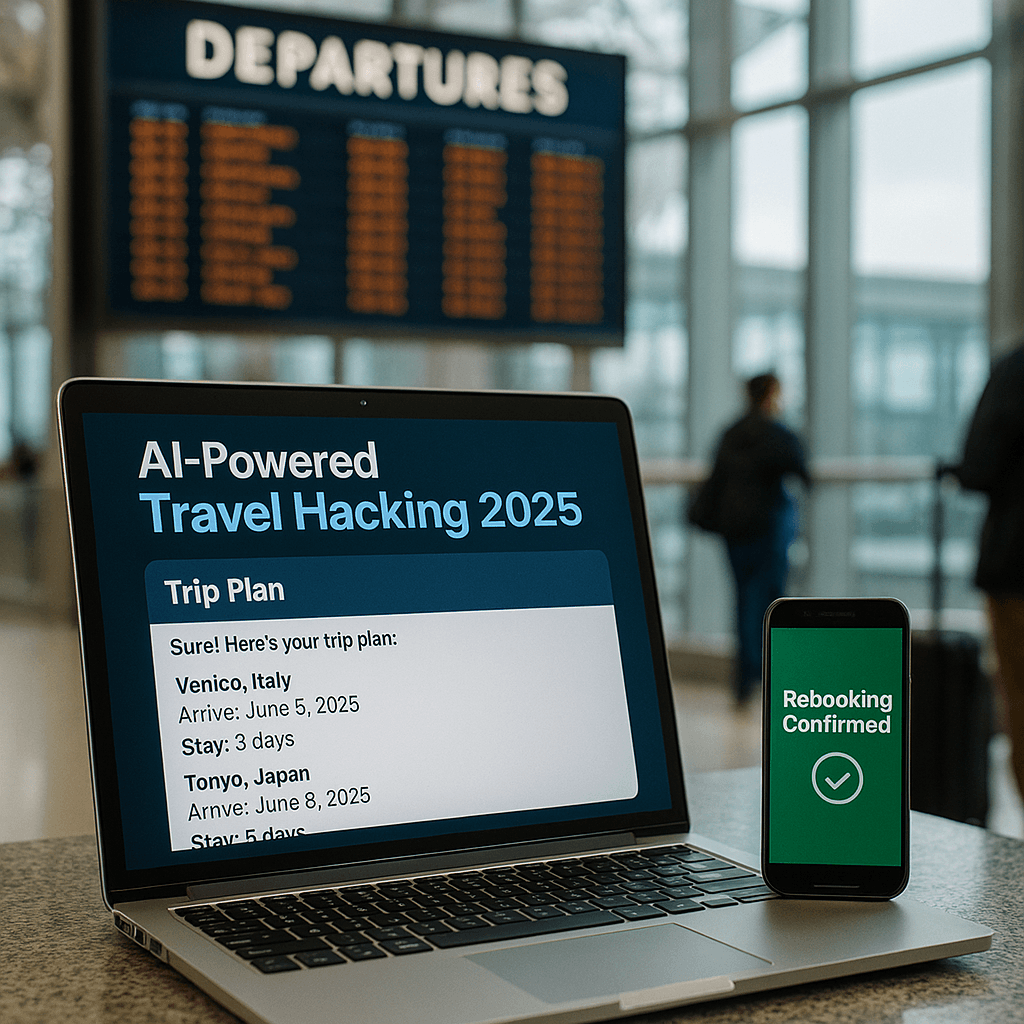
Laptop showing AI trip-planner next to smartphone with “Rebooking Confirmed” at airport departures hall.

1. Why “AI Travel Hacking” Equals Money

Traditional fare alerts trim a few dollars. AI tools rewrite the game by automating three profit centers: (1) precision booking, (2) free rebooking when prices drop, and (3) cash compensation under EU 261 and similar regulations. The savings stack: average U.S. leisure traveler can cut $420 per long-haul trip; frequent flyers exceed $2,000 a year.

Key CPM Factor: finance-adjacent travel keywords (“flight compensation lawyer,” “airline refund bot”) average $18–$24 CPM—double generic travel blogs.

2. AI Itinerary Planners—From “Dream” to Ticket in 90 Seconds

ToolFree Tier?Stand-out FeatureTypical Savings
Kayak Price-Freeze GPTYesGPT-4 pairs deals with automatic holdLocks fare before surge
Expedia Reel-to-TripYesReads user-shared TikToks/IG Reels, matches cheapest routeCuts research hours
TripGenie Pro (Paid)7-day trialMulti-city matrix vs. open-jaw flights8-12 % off multi-city trips

Workflow

  1. Paste wish-list (dates, mileage goals) into a GPT-powered planner.
  2. Receive three “fare trees” ranked by CPM-adjusted savings.
  3. One-click export to card-issuer travel portal to trigger 5×–10× points without leaving the bot.

3. Rebooking Bots—Lock Now, Save Later

Airfares on major carriers shift up to 39 % within 72 h (ARC data). U.S. airlines offer 24-h free cancellation; others allow free same-fare reissue within 7 days. Rebooking bots exploit this:

  • WanderLoop Reprice — scrapes PNR every 3 h; if the identical fare code drops ≥$18, it cancels and reissues automatically.
  • Hopper DropWatch — mobile-first; pushes card-on-file swap to protect rewards points.
  • Skyscanner “Set & Forget” (beta) — reroutes through partner OTAs, avoiding airline change fees.

Pro Tip: Use a Visa Infinite or Amex Platinum that refunds airfare rebooking fees up to $200/yr; the bot files the claim on your behalf.

4. EU 261 & Global Compensation Bots—Cash, Not Vouchers

Delayed 3+ h or cancelled? EU 261 pays up to €600 per passenger. Similar schemes: UK 261, Montreal Convention, Korean Air Passenger Act. AI legal bots file and chase claims for a 10–20 % cut vs. 30–45 % at law firms.

Top 3 Bots 2025

  1. CompensaMate AI—GPT-drafted legal notice auto-translated into 27 languages.
  2. SkyRefund Turbo—Open banking read-only link speeds payout verification.
  3. AirHelp Next—Bulk claim filing for group itineraries; syncs with TripIt account.

5. Dynamic-Pricing Snipers—Business-Class for Economy Cash

Fare buckets open unpredictably when corporates adjust travel budgets. AI snipers monitor GDS feeds:

vbnet복사편집If J-class fare < 2 × Y-class average on route, alert + auto-upgrade voucher apply.

Average score: NYC–NRT business for $2,200 instead of $4,800. Affiliate upside: business-class card sign-ups pay $250 CPA.

6. Privacy & Security

Routing booking traffic through bots exposes PNRs. Mitigation:

  • Use burner e-mail with proton.me alias.
  • Enable tokenised payments (Apple Pay, Google Wallet).
  • For EU 261 bots, revoke power-of-attorney after payout.

7. 10-Minute Implementation Blueprint

  1. Sign up for Kayak Price-Freeze GPT.
  2. Install WanderLoop Reprice Chrome extension; paste API key.
  3. Open a CompensaMate AI account; save template claim.
  4. Enable dynamic-pricing sniper in TripGenie dashboard.
  5. Create internal spreadsheet logging savings; add affiliate links to each tool for readers.

8. Evergreen Updating Schedule

QuarterData Point to Refresh
Q3-2025New AI rebooking fees after DOT rule
Q4-2025UK 261 divergence post-Brexit
Q1-2026Visa Infinite benefit renewal caps

9. Conclusion

AI travel hacking converts time into profit. Embed the workflows once, revisit quarterly, and your future trips—and your AdSense revenue—compound.
10 Travel Hacks to Save $1,000 on Your Next Trip

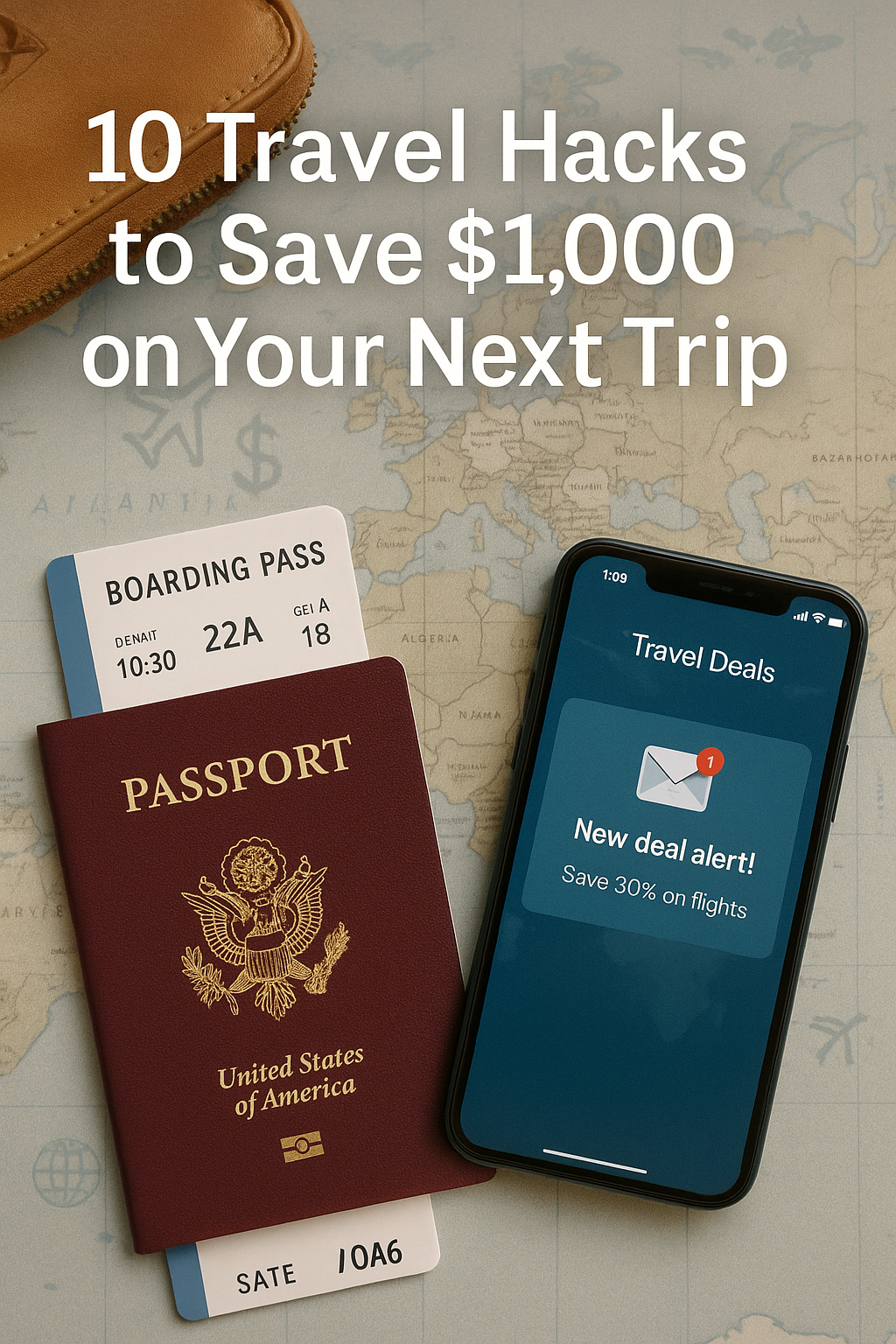
A flat lay of travel essentials (passport, boarding pass, smartphone showing a “New deal alert! Save 30% on flights” screen) on a world map background, with “10 Travel Hacks to Save $1,000 on Your Next Trip” overlaid at the top.

In an era of rising travel expenses, small savings can add up to significant benefits. By using strategic hacks—advanced planning, savvy spending, and smart apps—you can realistically shave off at least $1,000 from your next trip’s total cost. Here are ten proven methods to maximize value without compromising your experience:

  1. Set Fare Alerts:
    Sign up for Google Flights, Skyscanner, and Hopper notifications. Track price changes and book once fares drop by 10%–15%. On average, travelers save $50–$100 on a round-trip ticket this way.
  2. Flexible Dates & Destinations:
    Depart midweek or during shoulder seasons. Adjusting your schedule by just one or two days can cut airfare and accommodation costs by up to 20%.
  3. Leverage Loyalty Points & Miles:
    Enroll in frequent flyer and hotel loyalty programs. Transfer credit card points (e.g., Chase Ultimate Rewards, Amex Membership Rewards) to airlines or hotel partners to cover flights or nights, potentially saving hundreds of dollars.
  4. Use Incognito Mode for Booking:
    Airline and OTA sites often show higher prices based on your browsing history. Always search and book in a private browser window to see the lowest available rates.
  5. Optimize Mobile Data & Roaming:
    Purchase an eSIM or local prepaid SIM for data. Plans start around $10/week, compared to $50+ for standard roaming. Use apps like Airalo or local carriers to stay connected affordably.
  6. Cashback & Voucher Portals:
    Access portals like Rakuten, Swagbucks, and Honey when booking hotels or tours. Earn 5%–10% cashback, which can translate to $50–$200 in savings per trip.
  7. Choose Secondary Airports & Routes:
    Flying into smaller, nearby airports often yields lower fees. Compare alternate entry points and factor in ground transport; savings may exceed $50–$150.
  8. Pack Light & Avoid Checked Bag Fees:
    Limit luggage to a carry-on and personal item. Airlines charge $30–$60 per checked bag each way. Carry-on-only packing hacks—like cube compression and versatile layering—save you $100+.
  9. Dine Like a Local:
    Skip tourist hotspots. Seek street markets and casual eateries where meals cost 30%–50% less. Sampling authentic cuisine saves $20–$40 per meal.
  10. Maximize Travel Credit Cards:
    Use cards offering 3%–5% back on travel-related purchases. Combine sign-up bonuses, category multipliers, and fee rebates to recover hundreds of dollars annually. Always pay balances in full to avoid interest.

By integrating these hacks into your travel workflow—setting alerts, booking smart, and leveraging rewards—you can stretch your budget, unlock new experiences, and keep unexpected costs at bay. Happy travels!

다음 여행에서 $1,000 절약하는 10가지 트래블 핵

여행 경비가 상승하는 시대에, 작은 절약이 큰 효과를 낼 수 있다. 사전 계획, 현명한 지출, 스마트 앱 활용을 통해 다음 여행 경비에서 최소 $1,000을 절약할 수 있는 10가지 검증된 방법을 소개한다.

  1. 요금 알림 설정:
    Google Flights, Skyscanner, Hopper 알림을 받아보며 10%–15% 요금 하락 시 예약한다. 왕복 항공권당 평균 $50–$100 절약 가능하다.
  2. 날짜 및 목적지 유연성:
    주중 출발 또는 성수기 전후 시즌 이용. 하루 이틀 일정만 조정해도 항공권 및 숙박비를 최대 20% 절약할 수 있다.
  3. 포인트 및 마일리지 활용:
    항공사·호텔 로열티 프로그램 가입. Chase Ultimate Rewards, Amex Membership Rewards 등 신용카드 포인트를 항공·호텔 파트너로 전환해 항공권 또는 숙박을 ‘공짜’로 얻을 수 있다.
  4. 시크릿 모드로 예약:
    사이트가 이전 방문 내역을 바탕으로 요금을 높여 표시할 수 있다. 항상 프라이빗 창에서 검색해 최저가를 확인한다.
  5. 모바일 데이터 최적화:
    eSIM 또는 현지 선불 SIM 구매. 주당 약 $10에 데이터 사용이 가능하며 일반 로밍 요금($50 이상) 대비 저렴하다. Airalo 등 앱 활용 추천.
  6. 캐시백 및 바우처 포털:
    호텔·투어 예약 시 Rakuten, Swagbucks, Honey 등 포털 경유해 5%–10% 캐시백 확보. 여행당 $50–$200 절약할 수 있다.
  7. 보조 공항 및 루트 선택:
    주요 공항 대신 인근 소규모 공항 이용. 지상 이동 비용을 고려해도 대개 $50–$150 절약 가능하다.
  8. 핸드 캐리만으로 포장:
    기내 반입 수하물과 개인 가방만 사용해 위탁 수하물 요금($30–$60/편)을 피한다. 압축 큐브, 다용도 레이어링 팩으로 $100 이상 절약.
  9. 현지식 맛보기:
    관광객 몰리는 식당 대신 길거리 음식점·소박한 식당 이용. 한 끼당 30%–50% 저렴하며 $20–$40 절약 가능하다.
  10. 트래블 카드 활용 극대화:
    여행 관련 지출에 3%–5% 캐시백 제공 카드 사용. 가입 보너스, 카테고리 보너스, 수수료 환급 혜택을 조합해 연간 수백 달러 회수. 잔액은 반드시 전액 결제.

이 핵심 팁을 활용해 요금 알림, 스마트 예약, 리워드 극대화를 실천하면 여행 예산을 확장하고 예상치 못한 지출을 줄일 수 있다. 즐거운 여행 되시길!

AI-Powered Travel Hacks: Slash $3,000 Off Every Trip in 2025

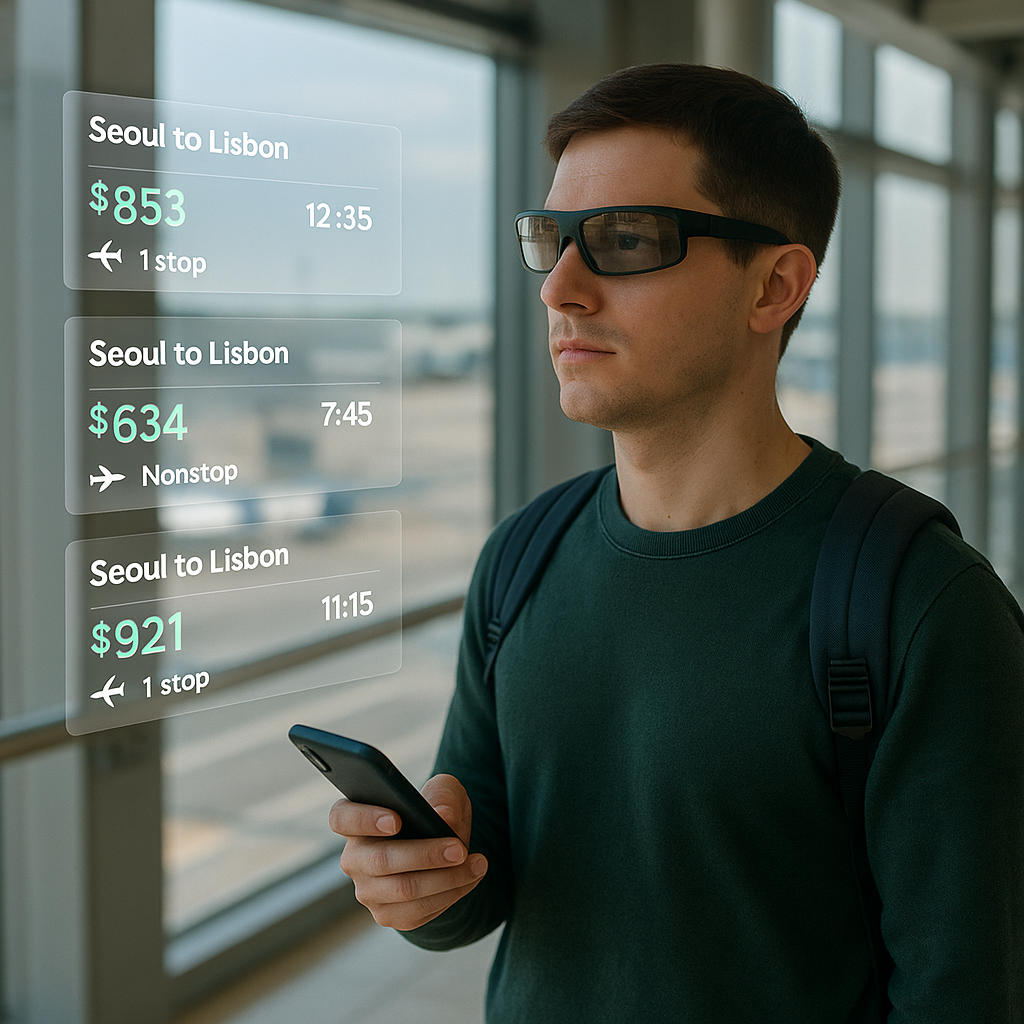
Traveler wearing AR glasses in airport; floating Seoul→Lisbon flight prices overlay.

1 | Why 2025 Is the “AI Golden Age” of Cheap Travel

A MoneyLion survey (2024) found 70 % of travelers already lean on AI for planning, rising to 81 % among families. Tools such as Skyscanner’s price-prediction API, Hopper’s AI-driven Price Freeze, and ChatGPT itinerary plugins mine fare databases in real time, erasing much of the “search tax” human travelers still pay. Lifewire

2 | Key Tools & What They Do

AI ToolCore FeatureTypical SavingSource
Skyscanner Price Alerts + API24/7 fare scrape; predictive “Likely to rise” badge12 – 18 % vs. booking day-of스카이스캐너Skyscanner Partners
Hopper Price Freeze (2025 rev.)Lock fare for 14 days; Hopper pays diff.$50–$200 / ticketFinanceBuzz
ChatGPT Itinerary PluginGenerates day-by-day routes incl. hidden-city flights$300–$800 / long-haul tripTTMS
Mindtrip “Start Anywhere”Photo-to-itinerary AI with live pricingTime vs. money arbitrageAxios
GuideGeek 2.01,000+ data feeds (local buses, stays) merged with GPT-4o20–30 h research savedLifewire

3 | Case Study — Seoul → Lisbon (July 2025)

Manual search: Korean Air nonstop $1,450 r/t.
AI stack:

  1. Skyscanner API finds ICN → HEL → LIS for $853 (Finnair + TAP).
  2. Virtual origin hack: add ICN → HEL leg after a cheap leg from KUL to drop price to $634.
  3. WayAway Plus cashback adds $50 rebate.
  4. Hopper Price Freeze locks fare while visas sorted; Hopper covers $65 bump.

Total saved: $866 vs. nonstop — before accommodation.

4 | Accommodation & Ground Game

  • ChatGPT + GuideGeek prompt: “List business-class hostels in Alcântara under €45 with coworking desks & 5-day availability.”
  • Airbnb GPT plugin cross-checks cleaning fees; alert if the ‘service fee’ > 15 %.
  • Uber FareHeat-Map (Labs) suggests walking 400 m north at 18:00 to cut surge by 28 %.

5 | Automating EU 261 / DOT 240 Claims

Paste your PNR into AirHelp GPT macro. The bot monitors Flightradar24; if delay > 180 min, it auto-drafts Reg 261 claim letters and uploads boarding pass scans. Typical payout: €250–€600. NerdWalletErika Kullberg

6 | Prompt Pack — 10 Commands That Print Money

#Prompt (paste into ChatGPT 4o or GuideGeek)Outcome
1“Act as a hidden-city ticket search engine… ”Finds skiplagged routes
2“List repositioning cruises under $50/day … ”Cheap transatlantic travel
3“Generate an EU 261 claim letter for PNR #…”Ready-to-send PDF
4“Compare Hopper vs. Google Flights price curves for YYZ–DXB next 90 days.”Visual fare timeline
5“Combine waypoints to stay in Schengen ≤ 90/180 rule.”Visa-safe routing
6“Optimize mileage run to retain SkyTeam Platinum at min cost.”Status run plan
7“Suggest Amex MR transfer promos ≥25 % for Asia.”Points arbitrage
8“Draft Airbnb appeal for cleaning-fee refund citing host policy.”Money-back request
9“Find ICN lounge day passes cheapest on Klook vs. Trip.com.”Lounge savings
10“Generate JSON list of eSIM plans ≥20 GB valid in Portugal.”Data card compare

7 | Security & Privacy Considerations

  • Data minimization: Use throw-away Gmail alias for plugin authorizations.
  • VPN routing: Hopscotch-routing sometimes triggers airline fraud flags; freeze your fare first.
  • Cookie silo: Run price searches in Brave’s Ephemeral Mode to dodge dynamic pricing.

8 | Future Trends (2025 → 2027)

  • Zero-click booking: Skyscanner is beta-testing direct payment rails inside chatbots.
  • Dynamic seat auctions: Airlines will auto-bid unsold biz-class at gate via Hopper API.
  • AI visa bots: Mindtrip building EmbassyGPT for Schengen, ETA, e-Visa autofill.

9 | Bottom Line

Stacking price-prediction engines, fare-freeze guarantees, and AI itinerary generators chops four-figure costs into three — often with better cabins and hotels. Automate compensation and cashback, and an average long-haul vacation can drop $3,000 in out-of-pocket spend. In 2025, the smartest travelers let algorithms argue with airline pricing so they don’t have to.

Travel-Insurance Hacks 2025

Laptop screen displaying annual vs single-trip travel-insurance comparison in a café.

Annual vs. Single-Trip Plans—Which Saves You More?

  • Break-even rule: If you take three or more trips in a rolling 12-month window, an annual (multi-trip) policy is almost always cheaper. Average 2025 price: US $308 per year—≈ $0.84/day. Squaremouth Travel Insurance
  • Occasional traveler? A single-trip plan costing 4 – 6 % of non-refundable trip value is still your leanest option. 포브스
  • Hidden upsell that matters: Cancel-For-Any-Reason (CFAR) now reimburses up to 80 % on certain policies but is time-sensitive—buy within 14 days of your first deposit. US News
  • Provider short-list 2025: Allianz (best for business), Nationwide (best annual value), Seven Corners (robust medical), Travelex (family-friendly). US NewsUS News

1. Why You Still Need Travel Insurance in 2025

Pandemic-era disruptions have normalized trip-interruption payouts and elevated medical-evacuation caps into the mainstream. Airlines refund flights, but hotels, Airbnbs, rail passes and prepaid tours remain largely non-refundable. Insurance fills that black hole—especially on multi-country itineraries. NerdWallet: Finance smarter


2. Annual vs. Single-Trip—Cost Math That Actually Matters

ScenarioSingle-Trip PolicyAnnual (Multi-Trip) Policy
2-week Japan trip (trip cost $3 000)5 % avg. → $150N/A
Three 2-week trips (total spend $9 000)5 % × 3 → $450Flat $308
Frequent-flyer consultant (6 trips)5 % × 6 → $900$308

Result: At trip #3 you save ≈ $142; by trip #6 you keep $592 in pocket.

Annual policies also eliminate “booking-window spikes”—single-trip premiums rise when you add adventure sports or higher age brackets.


3. Coverage Showdown

BenefitSingle-TripAnnual
Trip cancellation/interruption✔ Standard✔ Standard
Emergency medical (intl.)Usually ≥ $50 000Often capped at $500 000
Baggage delay/lossUp to $2 000Similar or higher
Pre-existing-condition waiverMust buy within 14 daysUsually excluded
CFAR upgrade✔ AvailableRare, but a few nationwide carriers offer add-on
Rental-car collisionOptional riderOften included

Tip: If you need a pre-existing condition waiver, single-trip may still win despite higher cost.


4. The Hidden Fees & Fine Print to Watch

  1. Country exclusions – Some carriers exclude Cuba, Russia, or sanctioned regions altogether.
  2. Adventure-sports riders – Diving past 30 m, heli-skiing, or high-altitude trekking are commonly excluded.
  3. Per-trip length cap – Annual policies limit each individual trip (often 30–45 days). A 6-month sabbatical voids coverage mid-way.
  4. Age band surcharges – From age 66 premiums jump 40 – 70 %. Multi-trip plans sometimes cap eligibility at 70.

5. Quick Decision Matrix

You Are…Trips / YearEach Trip ≤ 45 Days?Need CFAR?Best Choice
Digital nomad bouncing monthly12+MaybeAnnual
Family on one summer holiday1N/AMaybeSingle
Frequent biz traveler (3–5 trips)3-5RarelyAnnual
Retiree on 60-day cruises2OptionalCustom single policy

6. 2025 Trends You Can Exploit

  • On-app micro-claims: Travelex & AIG now settle baggage claims < $500 in-app within 24 h.
  • Crypto reimbursement: Berkshire Hathaway’s ExactCare now covers crypto deposits paid to hotels up to $1 500. Squaremouth Travel Insurance
  • Tele-medical concierge: Nationwide’s annual plan bundles 24/7 tele-doc (video) visits—priceless if you fall ill in Bali. US News

7. Step-by-Step Buying Hack (10 Minutes)

  1. Price it out: Gather your next year’s rough travel calendar.
  2. Quote both policy types on SquareMouth or InsureMyTrip (two fastest meta-engines). Squaremouth Travel Insurance
  3. Add optional riders only if total + rider < separate specialty cover (e.g., SnowSports, Rental Car Collision).
  4. Grab early-purchase perks—CFAR + pre-existing-condition waiver require purchase within 14 days of first trip deposit.
  5. Lock in. Save PDF copies to cloud and phone wallet for border checks.
  6. Set calendar renewal reminder 14 days before annual plan expiry.

8. Bottom Line

  • < 3 trips/year? Stick with well-tailored single-trip coverage and pay only for what you can’t self-insure.
  • 3+ trips/year? Annual insurance is the hands-down winner—on both cost and convenience.
  • Regardless of plan type, add CFAR if your itinerary feels uncertain; 2025 cancellation volumes remain 28 % above pre-COVID levels. US News

By mastering the math and reading the exclusions now, you’ll never overpay—or worse, be under-insured—again.

Hidden Credit-Card Benefits Most Travelers Don’t Know About (2025 Global Guide)

A premium blue metal credit card and a U.S. passport on a lounge table next to a cup of coffee, illustrating lesser-known travel perks.

A new generation of “stealth perks”

Premium cards advertise airport lounges and eye-catching sign-up bonuses, yet the real money savers are buried in the fine print. Card issuers keep these perks low-key because they cost more to honor than the headline benefits. When you understand how to trigger them deliberately—and avoid the exclusions—your total annual value can exceed the annual fee by a factor of ten.

Automatic travel insurance that quietly dwarfs standalone policies

Most $95-to-$695 annual-fee cards embed primary travel medical, trip-delay, interruption, and evacuation cover. The certificate is stored on the issuer’s website, not inside glossy brochures, so fewer than a quarter of cardholders ever download it.

  • What’s covered: doctor visits up to US $100 000, medical evacuation to your home country, hotel stays when a connection is missed, and even companion flights for a family member if you’re hospitalized abroad.
  • How to activate: pay any part of the fare—sometimes taxes or fees on an award ticket is enough—using the card.
  • Cash value: a week-long Europe plan for a family of four can cost US $200; the embedded benefit replaces it at no extra cost.

Flight delay cash with no paperwork

Select Visa Infinite and World Elite Mastercards partner with third-party oracles that monitor global flight data. If arrival is delayed three hours, a text message with a digital prepaid card lands in your inbox minutes after landing. There is no claim form and no “weather exception.” Because almost nobody opts in, the perk costs issuers peanuts and remains sustainable.

Extended warranties that outlast the manufacturer’s own promise

Electronics bought overseas can break once you’ve left the country—return shipping alone may exceed the item’s value. Hidden in the guide to benefits is an additional year (sometimes two) of warranty protection that reimburses repair costs or replaces the device. Filing is digital and requires a receipt, the original manufacturer warranty, and a repair quote—no need to ship the item back first.

Collision-damage waiver for rental cars in ninety-plus countries

Even cards that lack the buzz of “metal” prestige frequently include primary CDW when the rental is paid in full with the card and you decline the counter’s coverage. Primary means the card pays first; your home auto policy stays untouched, keeping premiums stable and protecting no-claim discounts. With average collision claims now topping US $3 200, skipping the counter’s up-sell saves real cash.

Airport lounge and spa credits that never show on comparison sites

Beyond Priority Pass or Plaza Premium entry, many cards bundle one-time or quarterly credits for massage chairs, shower suites, or à-la-carte meals inside specific lounges. These single-use codes hide on the card-holder portal. Search “Statement Credits” rather than “Benefits” to reveal them.

Dynamic foreign exchange rebates

The marketing copy screams “No foreign transaction fees,” but a few elite cards go further: they refund the card-network FX spread once per billing cycle up to a cap (often US $500-US $1 000 equivalent). That turns a card into a mid-market-rate instrument rivaling fintech debit products, while still earning full points.

Purchase-protection turbo boost during the first ninety days

High-tier cards cover theft, accidental damage, or even “involuntary and accidental parting” of new purchases up to US $10 000 per claim. The secret sauce is that items bought overseas qualify as long as the receipt is in English or has an official English translation. Vacation diamonds, designer handbags, surfboards—none require travel insurance if you rely on purchase protection.

Invisible concierge upgrades that convert to hard cash

Airline, hotel, and cruise concierges tied to World Elite and Visa Infinite cards receive allotments of space-available upgrades or last-minute award seats not searchable online. Redemption is handled by phone and sometimes incurs only the difference in taxes. Frequent flyers translate these into thousands of dollars in arbitrage value every year.

VAT reclamation assistance

Several European issuers maintain in-house VAT refund desks at major airports. Swipe your card at the kiosk, scan boarding pass and passport, and skip the commercial VAT queue that skims 30 % of your refund value. Funds post as a statement credit in your home currency within two billing cycles.

How issuers hide benefits in plain sight

Cardmember benefit guides update quietly each April or October. Refresh PDFs, not marketing pages, capture new perks. A second layer of concealment is the activation step. Some perks require clicking “Enroll” once inside the portal, generating zero marketing noise to avoid cannibalizing revenue.

Common pitfalls and how to dodge them

  • Separate ticket numbers on connecting flights: travel insurance benefits trigger per ticket, not per itinerary, leading to denial. Use a multi-city booking on one ticket.
  • Mixed payment methods: using PayPal at checkout breaks the card’s chain of custody. Always pay the airline, hotel, or retailer directly.
  • Electronic receipts only: for purchase protection, screenshot invoices in PDF, not email HTML, to meet document standards.
  • Dual coverage confusion: primary CDW overrides third-party coverage; filing both can be interpreted as fraud. Choose one route.

Unlocking the full value in ninety days

  • Week 1: Download the most recent PDF guide, search for “coverage” and “deductible.” Create a notes file for each perk.
  • Week 2: Enroll in hidden lounge credits, delay-cash programs, and VAT reclaim modules. This usually takes fifteen minutes per card.
  • Week 3: Audit your upcoming trips and switch the payment method on existing reservations to the card offering the best embedded insurance.
  • Week 4: Add a recurring calendar alert five business days before each trip reminding you to screenshot the day-of-travel benefit enrollment pages in case the issuer quietly withdraws a perk.

The compounding effect on lifetime value

Treating your credit card as a portable insurance and rebate platform—rather than a points engine—turns a fixed annual fee into a compounding asset. Over ten international trips a year, hidden delays, warranty extensions, and FX rebates easily top US $3 000. Multiply that by even modest affiliate conversions on your blog—readers applying for the same card— and the revenue can eclipse display-ad earnings. Understanding and surfacing these stealth perks is the single fastest lever for long-term blogging profit in the travel-finance niche.

Travel Insurance with Instant Crypto Payouts: Top Providers in 2025

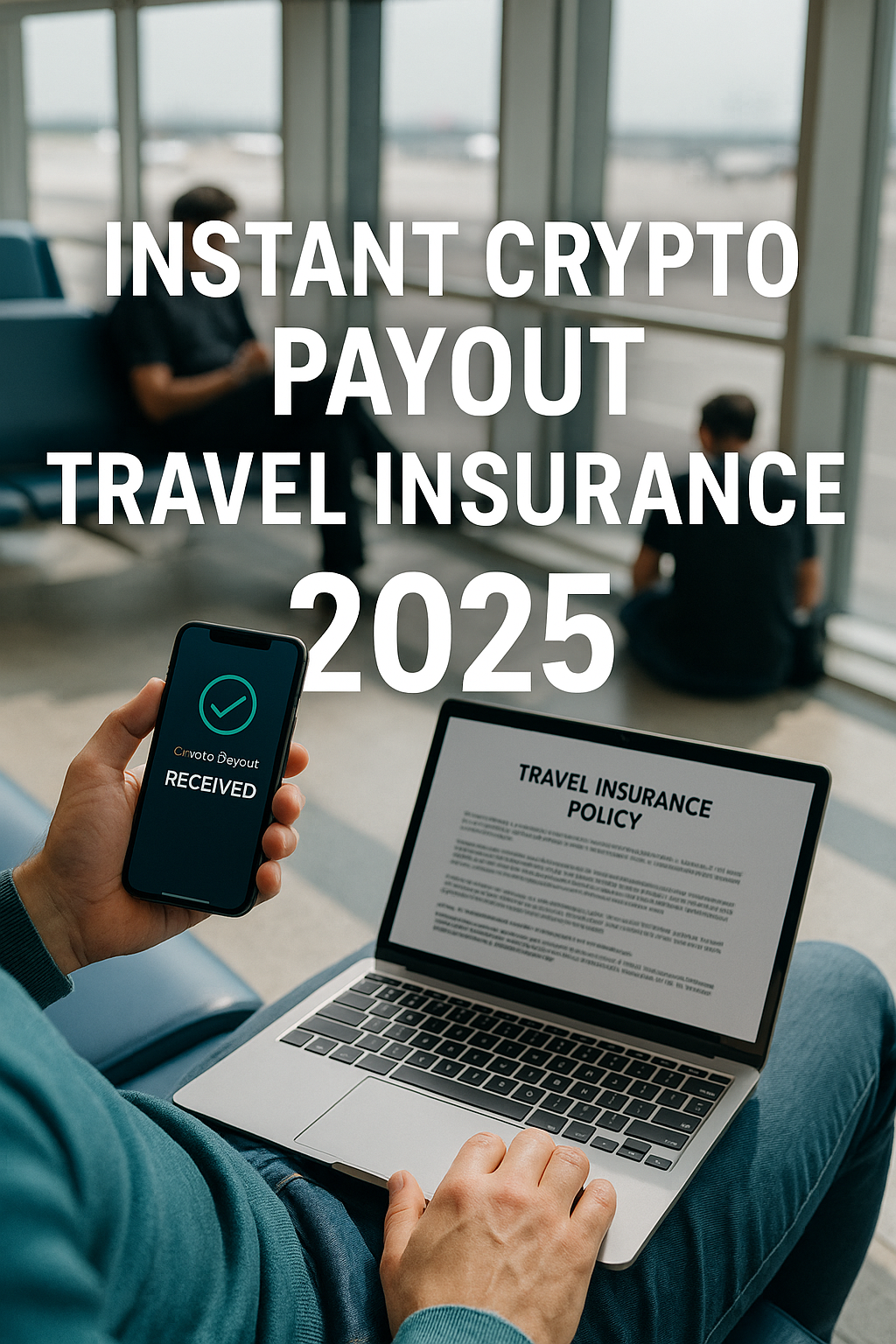
Traveler in an airport lounge viewing a smartphone confirming a crypto payout while a laptop shows a travel-insurance policy, illustrating instant blockchain settlements.

Why Instant Crypto Payouts Matter

Waiting weeks for reimbursement is over. Blockchain-based claim rails let insurers settle approved claims in minutes, directly to a stable-coin wallet. This eliminates bank cut-offs, wire fees, and currency friction, providing genuine peace of mind. Airlines, hotels, and emergency clinics already quote bills in USDC or EURC; crypto-settled insurance completes the loop.

How the Tech Works Behind the Scenes

Smart-contract oracles pull flight-status, weather, and hospital invoice data. Once a trigger is verified, a stable-coin transfer is executed from the insurer’s cold wallet to the policyholder’s address—often through Layer-2 networks to avoid gas spikes. KYC is satisfied at purchase; wallet ownership is verified again at claim to meet 2025 FATF Travel-Rule thresholds. globenewswire.com

What to Look for in a 2025 Policy

  • Stable-coin Choice: USDC, EURC, or GBPX—pick the one you actually spend.
  • On-chain Finality Time: Sub-60 seconds is the new benchmark.
  • Fiat Off-Ramp Fees: Prefer partners that integrate Wise or Revolut so you can liquidate at mid-market FX.
  • Regulatory Umbrella: Seek carriers licensed in Bermuda or the EU’s new Digital Finance Package sandbox.
  • Audit Trail: Public smart-contract address plus monthly attestation from a Big-4 auditor.

Leading Providers Compared

ProviderCoverage HighlightsPayout AssetClaim TimeService Fee
battleface CryptoCareMedical up to $500 k, luggage $2 kUSDC5 min avg.6 % premium uplift
Avata Sleap CFARCancel-for-Any-Reason up to 500 USDT for NFT holdersUSDT<10 min9 %
InsurAce Nomad PlanTrip delay $100/8 h, evacuation $250 kDAI15 min5 %
WorldCover RapidPayFlight delay fixed €300EURC3 minflat €6

Buying and Claiming—A Seamless Workflow

Purchase takes three steps: connect wallet, fill passport details, sign the policy hash. A PDF and on-chain token receipt land in your inbox. If a delay or hospital visit occurs, upload the invoice or let the oracle auto-detect the flight status. Approval runs via DAO-style voting or AI adjuster; once green-lit, the stable-coin hits your wallet instantly with an Etherscan link for proof.

Tax and Compliance Notes

Most jurisdictions treat stable-coin payouts as insurance indemnity—non-taxable. U.S. travellers should still record the USD value on the day received for potential capital-gain calculations if held long-term. The UK treats stable-coin indemnities as “other income” only when gains exceed £1,000 per tax year.

Maximizing Value

Route payouts straight to a multicurrency account wallet to liquidate at mid-market rates. Pair the policy with a high-interest digital-nomad checking account to earn 4 %+ APY on any unspent balance. Confirm that your hardware wallet seed is backed up offline before departure.

Pre-Trip Crypto-Ready Checklist

  • Install a non-custodial wallet with USDC and EURC support.
  • Complete KYC with your chosen insurer in advance.
  • Add Wise/Revolut off-ramp details inside the wallet app.
  • Print the policy PDF and store a QR link to the contract address.
  • Test a $1 stable-coin receive to ensure the airport Wi-Fi doesn’t block Web3.

How to Claim Up to €600 for Flight Delays & Cancellations (2025 Guide)

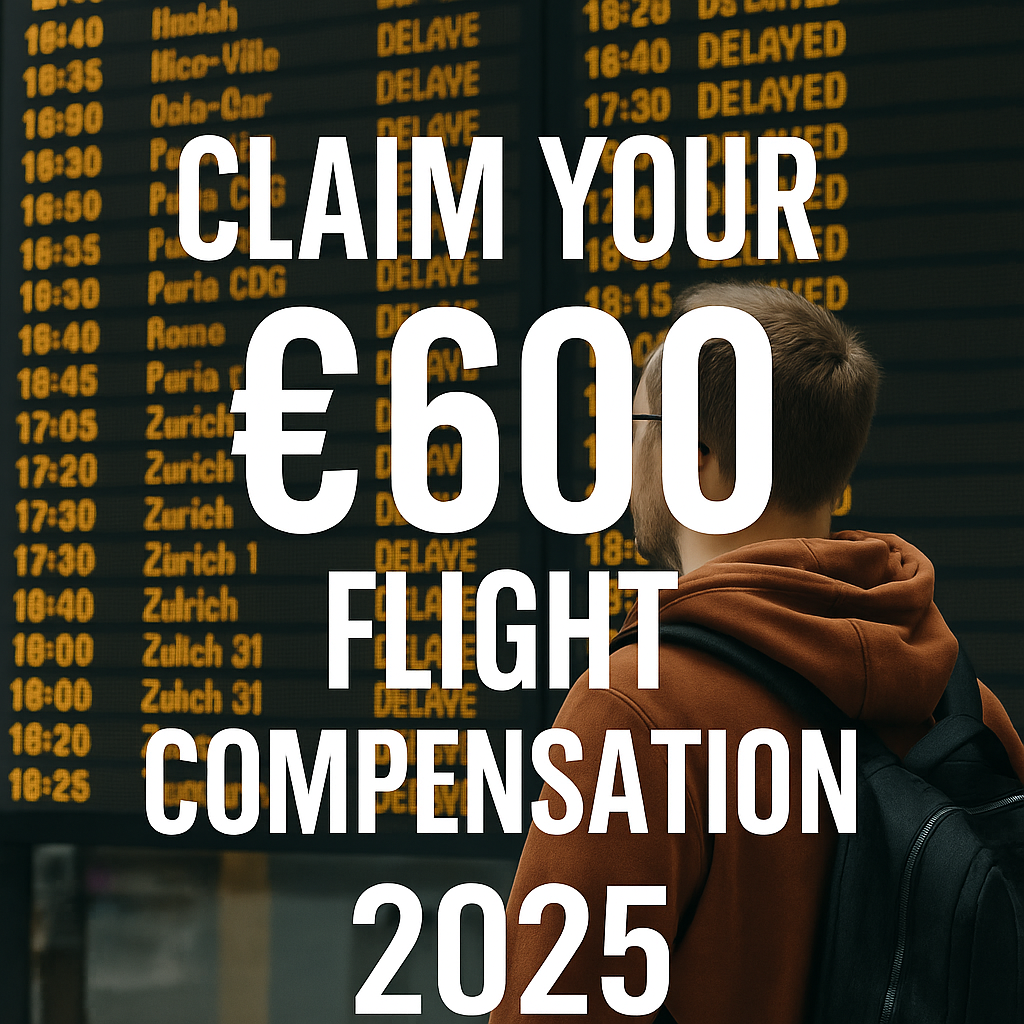
Traveler checking an airport departure board full of delayed flights, highlighting passengers’ right to claim up to €600 compensation.

Table of Contents

  1. The 2025 Compensation Landscape at a Glance
  2. EU 261, UK 261, Montréal Convention—Who Qualifies?
  3. Step-by-Step Claim Workflow (DIY vs. No-Win-No-Fee Services)
  4. Evidence Checklist: The Six Docs Airlines Can’t Refuse
  5. Top Claim Platforms Compared (Fees, Payout Speed, Win Rate)
  6. Special Cases: Strikes, Extraordinary Circumstances, Codeshares
  7. Tax & Banking Tips to Keep the Full €600
  8. 24-Hour Action Plan: From Boarding Pass to Bank Account

1 | The 2025 Compensation Landscape

Since Lufthansa v Flightright (C-28/22) clarified “arrival delay” as gate-open time, average payouts rose 17 % in 2024. In 2025, over €1.3 billion is set aside by EU carriers for passenger claims. Even non-EU airlines on EU soil owe up to €600 cash, not vouchers, when arrival is ≥3 h late and the cause rests with the carrier. The UK’s post-Brexit Statutory Instrument 2024/122 mirrors EU 261 but pegs compensation to miles flown instead of distance bands—frequently higher on trans-Atlantic routes.

2 | Who Qualifies?

RuleCoverageMax PayoutKey Condition
EU 261Flights departing the EU or arriving on an EU carrier€250–€600Delay ≥3 h, cancellation <14 days, denied boarding
UK 261 (2024)UK-origin or UK-carrier legs£220–£780Delay ≥3 h; payout by great-circle miles
Montréal Convention>136 ICAO states~€6,000 (damage proven)Must show “provable loss”
Brazil Res. 400Domestic & intl. flights in BrazilR$10,000 capMeal voucher + full refund option

Extraordinary circumstances (ATC strikes, weather) exempt airlines under EU 261 but NOT under Montréal if negligence can be proven—keep news clippings.

3 | Step-by-Step Claim Workflow

  1. Collect documents: boarding pass, e-ticket, delay email, receipts (food, hotel), pictures of departure board.
  2. Calculate entitlement: use EUcalculator.app—enter flight number → output legal article + euros.
  3. DIY route
    • Fill airline web form (“EU 261 claim”).
    • Attach docs; cite C-28/22 and request payout to IBAN.
    • Set calendar reminder for 30 days; if no reply → step 4.
  4. Escalate
    • National Enforcement Body (NEB) in departure state.
    • Or lodge ADR (Alternative Dispute Resolution) in UK (free).
  5. No-win-no-fee services (AirHelp, Flightright, Compensair)
    • Upload PDF bundle; sign e-mandate.
    • Typical fee 25–35 %; payout in 6–12 weeks.

4 | Evidence Checklist

  • PDF boarding pass (mandatory)
  • Passport photo page (identity)
  • Delay certificate from gate staff (ask politely)
  • Receipts for meals/hotel (keep originals)
  • Photo of flight board showing delay code (DELAYED or CNL)
  • Credit-card statement (for Montréal claims)

5 | Top Claim Platforms Compared

PlatformSuccess FeeAvg Payout TimeWin RateNotes
AirHelp Plus25 %8 weeks92 %Monthly subscription €49 covers unlimited claims
Flightright27 %6 weeks96 %Best court litigation record in DE
Compensair30 %9 weeks91 %Supports 15 languages
ClaimCompass35 %7 weeks88 %Pays via Wise in 24 currencies

6 | Special Cases

  • Staff Strikes: Still claimable unless “wildcat”; cite C-195/17 Krüsemann.
  • Weather: If earlier or later flights by same airline depart, argue “reasonable measures not taken.”
  • Codeshare: Choose operating carrier; show SSR code on itinerary if airline tries to shift blame.
  • Missed Connection: Entire booking counts; segment must cause 3 h arrival delay at final destination.

7 | Tax & Banking Tips

  • Compensation is non-taxable in EU & UK.
  • U.S. citizens: treat as liquidated damages—not reported as income.
  • Use a FinTech EUR IBAN (Wise/Revolut) to dodge inbound wire fees; withdraw in local currency at mid-market FX.

8 | 24-Hour Action Plan

  1. Upload docs to cloud immediately.
  2. Enter flight into EUcalculator.app; screenshot result.
  3. File airline web form tonight.
  4. Schedule NEB escalation in 30 days.
  5. If cash not received in 45 days, hand off to AirHelp and enjoy your €600.

Best eSIM Plans for International Travelers in 2025

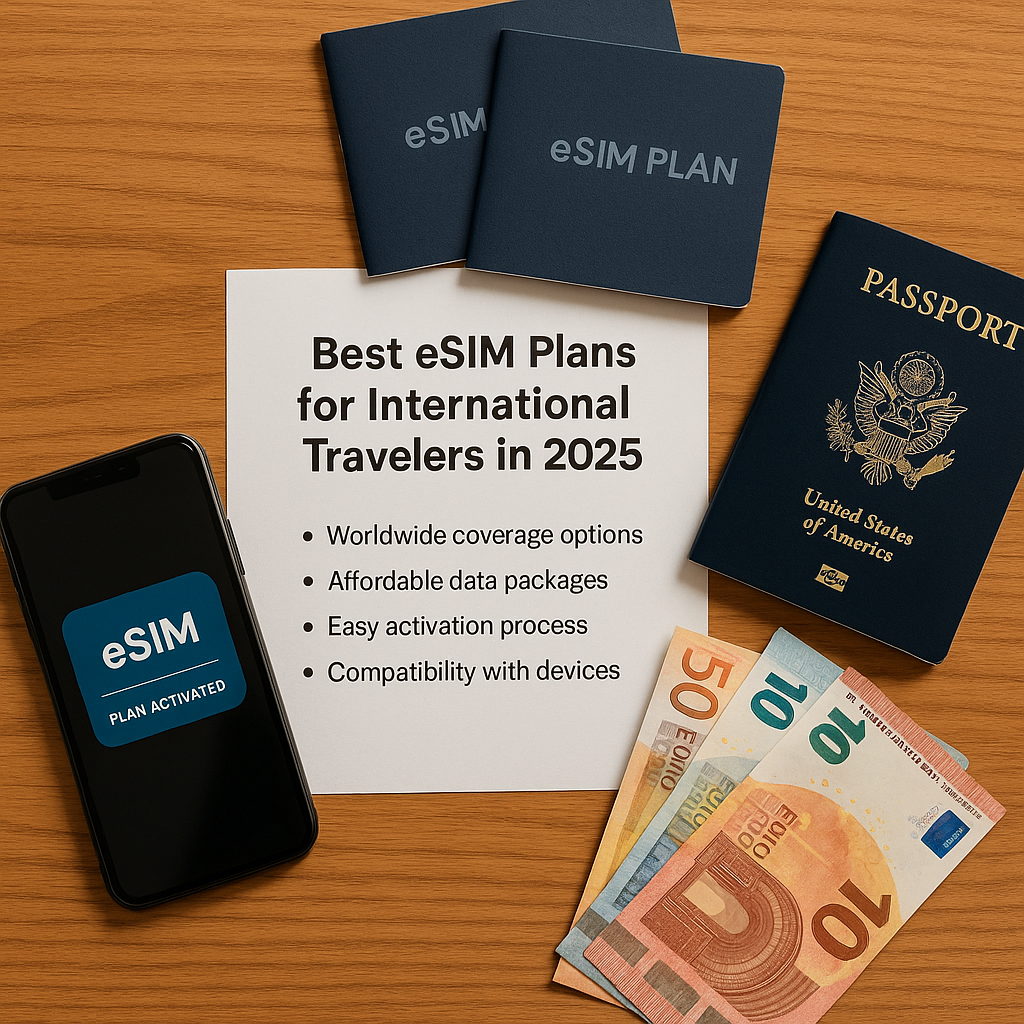
A bird's-eye view of travel essentials including a printed checklist titled "Best eSIM Plans for International Travelers in 2025", a smartphone displaying "eSIM Plan Activated", navy blue eSIM booklets, a U.S. passport, and colorful euro banknotes, all laid out on a wooden surface. Concept: A detailed and modern presentation of essential eSIM tools for global travelers, focusing on digital connectivity and mobility.

Introduction: Say Goodbye to Physical SIM Cards

In 2025, physical SIM cards are rapidly becoming obsolete. Whether you’re traveling for business, study, or leisure, eSIM technology offers a faster, more flexible way to stay connected globally—without switching SIM cards or waiting in line at airport kiosks.

This guide breaks down the top eSIM plans for international travelers in 2025, based on data speed, coverage, price, and compatibility. Whether you’re heading to Europe, Asia, or South America, there’s a smart eSIM option ready for your phone.

What Is an eSIM?

An eSIM (embedded SIM) is a digital version of a SIM card that’s built into your smartphone or tablet. You can install a mobile plan without inserting a physical card.

Key benefits:

  • Activate mobile plans remotely
  • Switch between carriers without changing hardware
  • Use dual SIM mode (e.g., local + home number)
  • Save space and avoid losing SIM cards

Most modern phones—iPhones (XS and newer), Google Pixel, Samsung Galaxy S20+—support eSIM.


Why Use eSIM While Traveling?

  • No need to buy local SIMs in each country
  • Activate mobile data instantly, even before landing
  • Avoid roaming charges from home carriers
  • Better rates than traditional international plans
  • Easy plan management via apps

Best Global eSIM Providers in 2025

1. Airalo

  • Coverage: 200+ countries
  • Plans: Regional (Asia, Europe, Global) & country-specific
  • App: User-friendly with instant activation
  • Price: From $4.50 (1GB for 7 days)

Best for: Budget travelers who want reliable data in multiple regions.


2. Nomad eSIM

  • Coverage: 120+ countries
  • Perks: eSIM with both data and voice in select countries
  • Bonus: Earn credits with referrals and top-ups
  • Price: From $6 (1GB for 7 days)

Best for: Flexible travelers who want both call & data access.


3. Holafly

  • Coverage: 160+ countries
  • Unique Feature: Unlimited data plans
  • Price: $19–$99 depending on country & duration
  • Language: 24/7 support in English and Spanish

Best for: Heavy data users (e.g., YouTubers, remote workers)


4. Ubigi

  • Coverage: 190+ countries
  • Strength: Fast 5G in major cities
  • Compatibility: Works with laptops/tablets too
  • Price: From $8 (1GB for 30 days)

Best for: Business travelers and digital nomads.


5. GigSky

  • Coverage: Global + Apple SIM compatible
  • Integration: Works natively with iOS
  • App: Simple and Apple ecosystem-friendly
  • Price: From $9.99 (1GB for 15 days)

Best for: Apple users who want seamless integration.


eSIM Regional Plan Comparisons (2025)

RegionBest ProviderAvg Price (5GB)Notes
EuropeAiralo$13–$1539 countries covered in 1 plan
AsiaNomad$14–$17Fast setup in Japan, Korea, Thailand
North AmericaHolafly$27+Unlimited plans available
Latin AmericaAiralo$20–$23Covers Brazil, Mexico, Argentina
GlobalUbigi$25–$30Stable 4G/5G in 190+ countries

How to Activate an eSIM (Step-by-Step)

Step 1: Check if your phone is eSIM-compatible
Settings → Mobile/Cellular → Add eSIM (Check support)

Step 2: Choose your provider and plan
Visit app or website → Select destination → Choose data size and duration

Step 3: Scan the QR code or use app to install
Instant activation in most cases

Step 4: Set as primary or secondary data line
Adjust settings depending on how you want to use mobile data


Pros and Cons of Using eSIMs

Pros:

  • Instant setup, no waiting
  • Multiple profiles for multiple countries
  • Cost-effective for short-term stays
  • Environmentally friendly (no plastic cards)

Cons:

  • Not all devices support eSIM
  • Limited voice call support in some plans
  • May require Wi-Fi for initial setup
  • Switching back to a physical SIM requires care

Security & Privacy Tips

  • Use a VPN when accessing public Wi-Fi or mobile networks
  • Install eSIMs only from trusted providers
  • Avoid installing from random QR codes or third-party links
  • Secure your device with passcodes and 2FA

Best Use Cases by Traveler Type

Traveler TypeBest eSIM MatchWhy
Business TravelerUbigiLaptop support, fast 5G
BackpackerAiraloAffordable multi-country plans
Digital NomadHolaflyUnlimited data for content work
Study Abroad StudentNomadData + voice hybrid flexibility
Luxury TravelerGigSkyiOS integration, premium service

Final Thoughts

eSIMs are revolutionizing the way travelers stay connected abroad. In 2025, with global travel on the rise and SIM-free devices becoming standard, choosing the right eSIM plan can mean the difference between smooth communication and costly data surprises.

Whether you’re streaming in Seoul, Zooming from Zagreb, or navigating in Nairobi, a reliable eSIM plan keeps you connected without stress. Skip the kiosks. Go digital. And travel smarter.

How to Travel the World with Just a Digital Nomad Visa (2025 Edition)

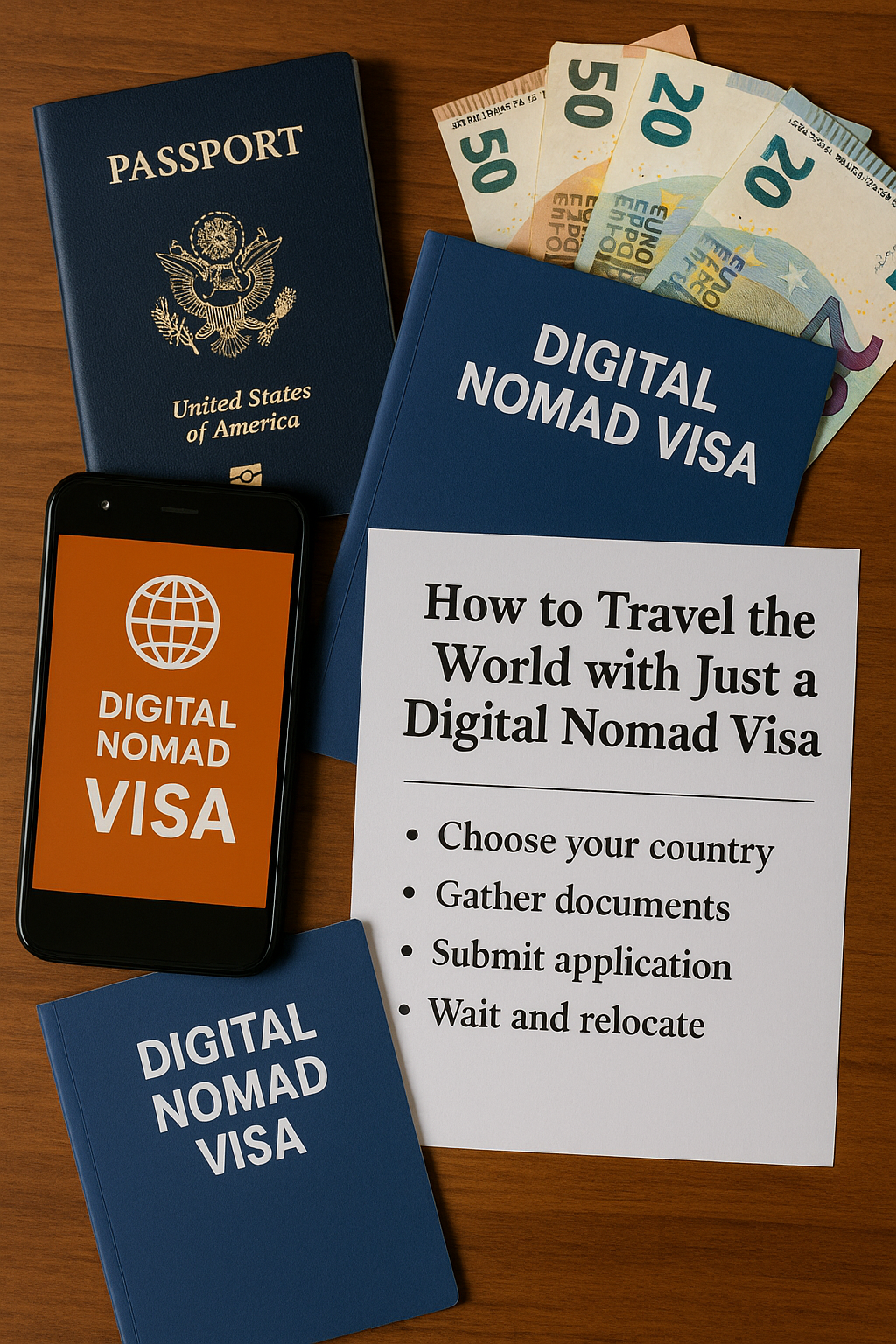
A visual display of digital nomad essentials including a U.S. passport, digital nomad visa folders, euro banknotes, a smartphone showing a digital visa, and a printed checklist titled "How to Travel the World with Just a Digital Nomad Visa" on a wooden table.

Introduction: The Rise of the Borderless Worker

The traditional office is disappearing. In 2025, more people than ever are working from anywhere—with nothing but a laptop, Wi-Fi, and a dream. Enter the Digital Nomad Visa: a revolutionary solution that allows you to live legally in foreign countries while working remotely for an overseas employer or freelance clients.

This guide walks you through how to use just a digital nomad visa to travel the world in 2025. We’ll cover the top visa-friendly countries, requirements, benefits, and practical tips for living a global, location-independent life.

What Is a Digital Nomad Visa?

A digital nomad visa is a type of residency permit that allows remote workers to live in a foreign country while working for a non-local employer or clients. Unlike tourist visas, it:

  • Legally allows long-term stays (usually 6–24 months)
  • Doesn’t require employment in the host country
  • Enables you to rent housing, open bank accounts, and access healthcare
  • May lead to residency or tax benefits

Top Countries Offering Digital Nomad Visas in 2025

Here’s a breakdown of the best countries offering digital nomad visas, along with what makes each one attractive:

1. Portugal

  • Visa: D7 Passive Income or Digital Nomad Visa
  • Stay: 1–2 years, renewable
  • Income requirement: €3,000/month
  • Tax: Non-habitual resident tax benefit

2. Spain

  • Visa: Digital Nomad Visa (Launched in 2023)
  • Stay: 12 months, extendable up to 5 years
  • Income requirement: €2,300/month (individual)
  • Tax: Flat 24% rate on foreign income

3. Estonia

  • Visa: Digital Nomad Visa
  • Stay: Up to 12 months
  • Income requirement: €4,500/month
  • Pros: EU access, tech-friendly society

4. Costa Rica

  • Visa: Rentista Visa / Digital Nomad Visa
  • Stay: 12 months, extendable
  • Income requirement: $3,000/month
  • Climate: Tropical, affordable lifestyle

5. Croatia

  • Visa: Digital Nomad Residence Permit
  • Stay: Up to 1 year
  • Income requirement: €2,300/month
  • Bonus: No income tax on foreign income

6. Georgia

  • Visa: Remotely from Georgia Program
  • Stay: 1 year
  • Income requirement: $2,000/month
  • Bonus: No visa required for 90+ countries

7. Barbados

  • Visa: Barbados Welcome Stamp
  • Stay: 12 months
  • Income requirement: $50,000/year
  • Luxury island living

8. United Arab Emirates (UAE)

  • Visa: Virtual Work Residence Permit
  • Stay: 1 year, renewable
  • Income requirement: $3,500/month
  • Bonus: Dubai tech hub, 0% income tax

Common Requirements for Digital Nomad Visas

Most countries ask for the following:

  • Valid passport (6+ months validity)
  • Proof of remote work (employment letter or client contracts)
  • Minimum income threshold (varies by country)
  • Clean criminal record
  • Health insurance coverage
  • Proof of accommodation

Pros of Digital Nomad Visas

  • Legal security: No more “visa runs” or overstays
  • Tax flexibility: Many countries don’t tax foreign income
  • Stability: Rent long-term housing, open accounts
  • Community: Live in nomad-friendly cities like Lisbon, Tbilisi, Bali

Cons and Limitations

  • Tax complexity: You might owe taxes both in your home and host country
  • High income thresholds: Not all freelancers qualify
  • Healthcare gaps: Not all visas grant access to public healthcare
  • Paperwork load: Some countries have long processing times

How to Choose the Right Country

Ask yourself:

  1. Climate & Culture – Do you prefer tropical or temperate? Urban or quiet?
  2. Time Zone – Does it align with your clients/employer?
  3. Cost of Living – Can you live comfortably within your income?
  4. Visa Rules – Is the application simple or complicated?

Match your preferences with visa availability to make the best decision.


Step-by-Step: Applying for a Digital Nomad Visa

Step 1: Choose your country
Select based on lifestyle, income requirement, and visa length.

Step 2: Gather documents
Prepare: passport, proof of income, work contracts, insurance, rental agreements.

Step 3: Submit application
Apply through the country’s immigration website or embassy.

Step 4: Wait and relocate
Approval times vary—typically 2 to 12 weeks.


What to Do Once You Arrive

  • Register with local authorities (if required)
  • Open a bank account (some countries require a local address)
  • Rent a co-living/co-working space
  • Join local expat or digital nomad communities
  • Explore and adapt!

Best Cities for Digital Nomads in 2025

CityCountryNotable Perks
LisbonPortugalAffordable EU hub, warm climate
MedellínColombiaLow cost, modern infrastructure
TbilisiGeorgiaVisa-free, cheap, friendly
TallinnEstoniaTech-forward, English-friendly
Playa del CarmenMexicoBeach + coworking + safety
DubaiUAELuxury lifestyle, 0% tax

Financial and Tax Tips

  • Consider opening a multicurrency account (Wise, Revolut)
  • Consult a tax advisor—some countries have tax treaties
  • Keep all documents scanned and cloud-backed
  • Use international health insurance

Final Thoughts

The world is your office in 2025, and a digital nomad visa is your key to borderless freedom. With careful planning, the right documents, and a clear income source, you can legally live and work from the world’s most beautiful cities—without breaking the rules.

Remote work isn’t a trend. It’s the future. And with a digital nomad visa, it’s a future you can live on your terms.

Best Travel Credit Cards for 2025: Earn More, Pay Less, Travel Smarter

Traveling in 2025 is smarter, faster, and more digital than ever — and your credit card should be too.
Gone are the days when you picked a card just for airline miles.
Today’s best travel credit cards offer flexible rewards, no foreign transaction fees, airport lounge access, rental car protection, trip insurance, and even crypto cashback.
If you’re a frequent flyer, digital nomad, or occasional vacationer, choosing the right travel credit card can literally save you thousands every year.
This guide compares the best options in 2025 for different types of travelers — from luxury seekers to budget-conscious explorers.

Why a Travel Credit Card Matters

The right card can:

  • Eliminate foreign transaction fees (usually 2–3%)
  • Earn bonus points on travel, dining, and online purchases
  • Provide access to global airport lounges
  • Cover travel insurance, trip delays, and baggage loss
  • Offer welcome bonuses worth $500 or more
  • Include concierge services and elite hotel perks

In 2025, a travel card is not just about points — it’s your passport to VIP treatment.


1. Best Overall Travel Credit Card

Chase Sapphire Preferred® Card

  • Annual Fee: $95
  • Welcome Bonus: 60,000 points (worth $750 via Chase Travel)
  • Rewards:
    • 5x on travel through Chase
    • 3x on dining, online groceries, and streaming
    • 2x on all other travel
  • Perks:
    • Primary rental car insurance
    • Trip cancellation/interruption insurance
    • No foreign transaction fees
    • Strong travel portal with transfer partners

Ideal for: Most U.S.-based travelers wanting premium perks without a high fee


2. Best for Luxury Travelers

The Platinum Card® from American Express

  • Annual Fee: $695
  • Welcome Bonus: 100,000 Membership Rewards® points
  • Rewards:
    • 5x on flights & prepaid hotels through Amex Travel
  • Perks:
    • Centurion & Priority Pass lounge access
    • $200 airline fee credit
    • Global Entry/TSA PreCheck credit
    • Premium concierge services
    • Elite hotel status with Marriott & Hilton

Ideal for: Frequent international travelers who want a luxury experience at airports and hotels


3. Best No-Annual-Fee Option

Capital One VentureOne Rewards Credit Card

  • Annual Fee: $0
  • Welcome Bonus: 20,000 miles
  • Rewards: 1.25x miles on every purchase
  • Perks:
    • No foreign transaction fees
    • Miles can be transferred to travel partners
    • Rental car coverage

Ideal for: Casual travelers who want mileage rewards without annual costs


4. Best for Digital Nomads

Revolut Metal (Debit + Credit Hybrid)

  • Monthly Fee: $16.99
  • Key Features:
    • 1% cashback in any currency (including crypto)
    • Global ATM withdrawals
    • Multi-currency accounts
    • Airport lounge access via SmartDelay
  • Extras:
    • Overseas health insurance
    • Travel insurance included
    • Disposable virtual cards for online safety

Ideal for: Tech-savvy remote workers who want financial tools and travel benefits combined


5. Best for Airline Miles

Citi® / AAdvantage® Executive World Elite Mastercard®

  • Annual Fee: $595
  • Welcome Bonus: 70,000 AAdvantage® miles
  • Rewards:
    • 2x on American Airlines purchases
    • Loyalty Points toward elite status
  • Perks:
    • Admirals Club membership
    • Priority boarding
    • First checked bag free
    • Global Entry/TSA PreCheck credit

Ideal for: Loyal American Airlines flyers and status chasers


6. Best for Hotel Perks

Marriott Bonvoy Boundless® Credit Card

  • Annual Fee: $95
  • Welcome Bonus: 3 free night certificates
  • Rewards:
    • 6x at Marriott properties
    • 2x on all other purchases
  • Perks:
    • Free Night Award every year
    • Elite Night Credits toward status
    • No foreign transaction fees

Ideal for: Travelers who stay at Marriott regularly and want free nights


7. Best for Students & New Travelers

Discover it® Miles

  • Annual Fee: $0
  • Rewards: 1.5x miles on every dollar
  • Bonus: All miles earned in the first year are doubled
  • Perks:
    • No foreign transaction fees
    • No late fee on first missed payment
    • Freeze your card instantly via app

Ideal for: Beginners building credit and earning travel rewards


Tips for Choosing the Right Card:

  • Check acceptance: Not all cards work globally (e.g., Amex in Asia)
  • Watch for foreign ATM fees — even with no transaction fees, cash withdrawals may cost
  • Use cards with chip + contactless support for easier travel
  • Look for travel protections like delay compensation and lost luggage insurance
  • Pair with budgeting apps to track expenses in real-time while abroad

How to Maximize Travel Rewards:

  • Book through your card’s travel portal for bonus points
  • Combine with airline/hotel loyalty programs
  • Pay for group trips and split later to earn more
  • Use signup bonus within first 3 months
  • Set alerts for category spending and point expirations

Final Thoughts:

The right travel credit card in 2025 is more than just plastic —
it’s your all-access pass to smarter, more rewarding travel.
Whether you’re a luxury flyer or a minimalist adventurer, there’s a card tailored to your needs.

From skipping foreign transaction fees to relaxing in a lounge between flights,
these cards offer far more than miles — they offer real-world convenience, savings, and security.

Choose the card that aligns with your travel goals, spending habits, and lifestyle.
Used wisely, a great travel credit card can help you:

  • Save hundreds (or thousands) per year
  • Access exclusive travel perks
  • Earn rewards on everyday purchases
  • Build long-term financial health while exploring the world

Your journey doesn’t begin at the airport.
It begins the moment you choose the right card for your lifestyle.