How to Avoid Hidden Currency Exchange Fees – A 2025 Guide for Global Freelancers and Expats

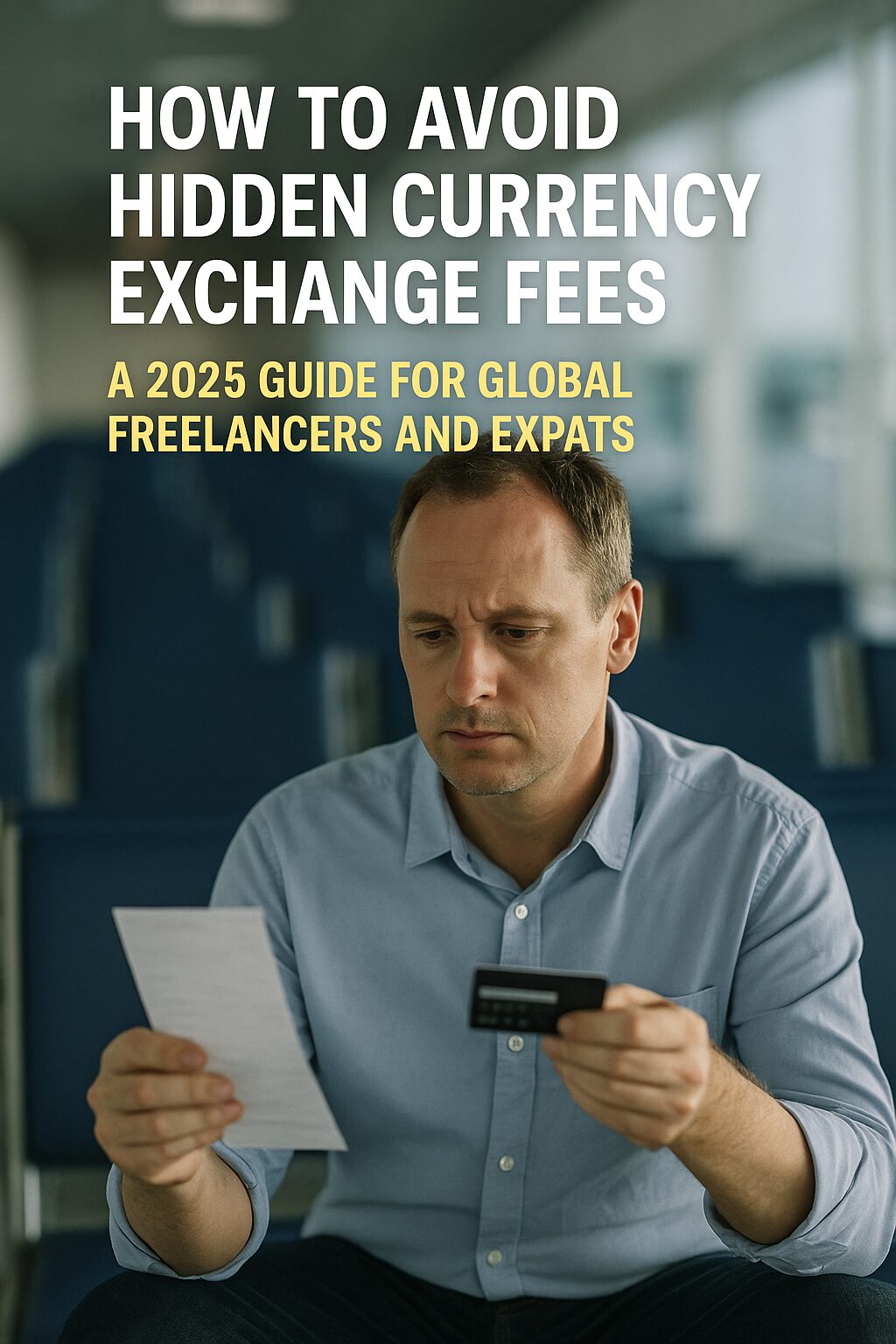
A man sitting in an airport, holding a credit card and a paper, reviewing exchange fees with serious expression.

Why Most People Lose Money When Exchanging Currency

Every time you send money, withdraw cash abroad, or pay in a different currency, you might be losing more than you think.

In 2025, global workers, remote freelancers, international students, and long-term travelers make payments in multiple currencies every month.
But without a strategy, most people lose 3–7% of their money to exchange rate spreads, ATM fees, and hidden markups.

This guide shows you exactly how to minimize currency conversion losses, whether you live abroad, work globally, or travel full-time.


1. Understand the Real Cost: It’s Not Just the Fee

Most banks and services advertise “low fees,” but the real profit is hidden in the exchange rate.

For example:

  • Bank rate: 1 USD = 1.30 CAD
  • Mid-market rate: 1 USD = 1.35 CAD
  • Real loss: You pay a hidden 3.7% markup

Even when fees look small, the spread can cost you more.
That’s why the “mid-market rate” or “interbank rate” is the only fair reference. Services like Wise or Google show this live.

Rule 1: Always check the real exchange rate before converting anything.


2. Use Multi-Currency Accounts to Control Timing

One powerful way to reduce exchange loss is to hold multiple currencies and convert them only when rates are favorable.

Apps that support this:

  • Wise: Hold 50+ currencies, convert anytime
  • Revolut: Lock in rates and set alerts
  • Payoneer: Accept foreign payments in USD, EUR, GBP

If you’re paid in foreign currency, don’t convert immediately.
Wait for a good rate, then convert a large amount at once.

This simple timing strategy can save hundreds of dollars per year.


3. Avoid Airport and Bank Kiosks at All Costs

Physical currency exchange booths often charge:

  • A terrible exchange rate
  • Up to 10% markup
  • Fixed fees on top

Instead:

  • Use your Wise or Revolut card for direct local currency spending
  • Or withdraw from local ATMs using cards with no foreign ATM fee

If you absolutely need cash, withdraw from a local bank ATM, not an airport.

Never exchange money at airports unless you’re in an emergency.


4. Match Currency with Spending Region

Avoid unnecessary double conversions.

Example:

  • You have USD but need to spend in KRW (Korean won)
  • PayPal → USD → KRW → Local vendor = double conversion

Instead, use:

  • Wise: Pay directly in KRW
  • Revolut: Activate KRW balance and spend from there
  • Crypto debit cards (Binance, Coinbase): Can auto-convert from stablecoins

Align the payment currency with your location.


5. Watch Out for DCC (Dynamic Currency Conversion)

When traveling, you’ll often be asked:
“Do you want to pay in your home currency?”

Always say NO.

DCC is a trick that lets local vendors convert the currency for you—at a worse rate than your bank would.
Even if you’re offered convenience, you’ll often pay 5–8% more.

Tip: Always pay in the local currency. Your card will handle the conversion better.


Bonus: Use Tools to Compare Real-Time Exchange Rates

To track live exchange rates and fees, use:

  • Wise Rate Checker
  • XE.com / Google
  • Monito.com: Compare 30+ providers instantly
  • Revolut Alerts: Set notifications when your preferred rate is reached

These tools help you delay or switch providers at the right time—turning casual payments into smart decisions.


Conclusion: Don’t Pay to Give Away Your Money

You worked for that money. Don’t let 5% disappear every time you spend.

In 2025, smarter tools exist for anyone to control when, where, and how they exchange money.
If you’re earning globally or living abroad, this isn’t optional—it’s essential.

Your income is already international.
Now make your currency management just as smart.
Top 5 Credit Cards Without Foreign Transaction Fees in 2025

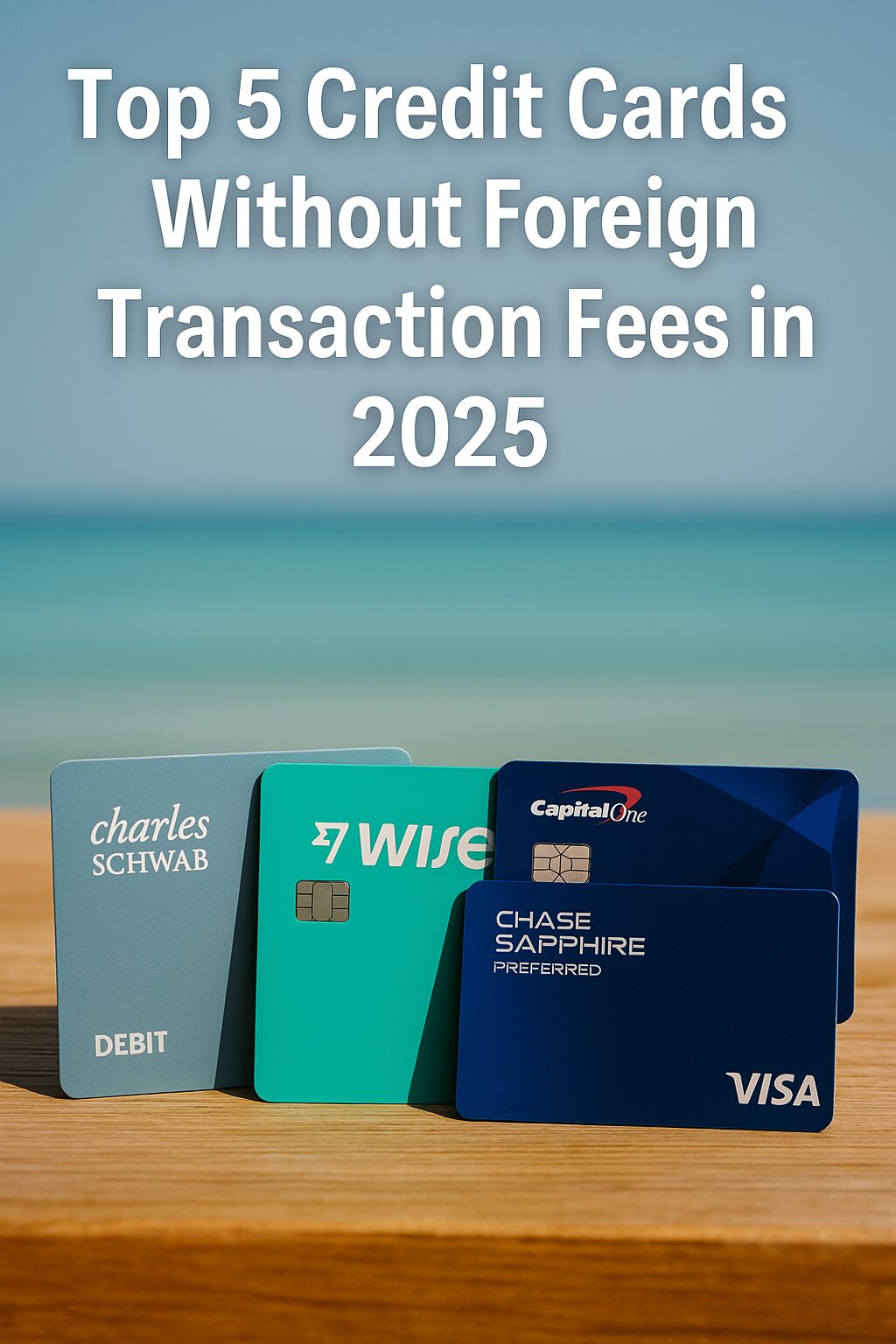
Four travel-friendly credit cards displayed on a wooden surface with a beach backdrop, promoting zero foreign transaction fees.

If you’re spending money abroad — whether as a digital nomad, traveler, or remote worker — foreign transaction fees can quietly drain your wallet. These charges (typically 1–3%) may seem small but can add up quickly over time.

Here are the top 5 credit cards in 2025 that do not charge foreign transaction fees, saving you real money while traveling the world.


1. Chase Sapphire Preferred® Card

Best for: Frequent travelers who want rewards and travel insurance

  • No foreign transaction fees
  • 2x points on travel & dining
  • Built-in trip delay/cancellation/interruption coverage
  • Primary rental car insurance

Annual Fee: $95

Why it’s great:
You earn points on everyday travel spending and get premium protection without the premium card fee.


2. Capital One Venture Rewards Credit Card

Best for: Simple rewards system with flexible redemptions

  • No foreign transaction fees
  • 2x miles on all purchases
  • Redeem miles for travel, statement credit, or gift cards
  • Global Entry/TSA PreCheck credit

Annual Fee: $95

Why it’s great:
Flat-rate miles means you don’t have to memorize categories — spend freely anywhere in the world.


3. Citi Premier® Card

Best for: Maximizing points on international expenses

  • No foreign transaction fees
  • 3x points on airfare, hotels, gas, and restaurants
  • Points can be transferred to travel partners (including international airlines)

Annual Fee: $95

Why it’s great:
Earn more in the categories you actually use abroad — like flights and food.


4. Charles Schwab Debit Card (Not a credit card, but a secret weapon)

Best for: ATM cash withdrawals without fees anywhere in the world

  • No foreign transaction fees
  • Unlimited worldwide ATM fee reimbursements
  • No monthly fees or minimum balance
  • Great for cash-heavy countries

Annual Fee: $0

Why it’s great:
You’ll get ATM fees reimbursed automatically, even in remote places. An excellent backup to any travel card.


5. Wise Travel Card

Best for: Currency conversion transparency and global accessibility

  • Not technically a credit card (prepaid debit), but excellent for foreign use
  • No markup on currency conversion (real exchange rate)
  • Supports 50+ currencies
  • Instant freeze/unfreeze via app

Annual Fee: $0 (no ongoing fee)

Why it’s great:
Ideal for digital nomads who want to manage multiple currencies while avoiding banks altogether.


Final Tip: Always Notify Your Bank Before Traveling

Even if your card has no foreign transaction fees, a flagged international transaction could result in a blocked card. Use your banking app or call ahead.


Conclusion: Avoid Fees, Keep More

You don’t have to pay extra just for using your card overseas.
By choosing the right credit card — or card combination — you can save hundreds of dollars a year, without changing how you spend.

Want to be smart about your money abroad? Start by eliminating unnecessary fees.

Zero-Fee Foreign Transactions: What You Need to Know in 2025

Credit card with globe and digital icons representing global transactions

For global travelers, expats, and digital nomads, foreign transaction fees can quietly drain your finances. In 2025, zero-fee payments abroad are not a luxury—they’re a necessity. But how do you actually achieve that?

Here’s what you must know if you want truly zero-fee international spending:

1. The Hidden Architecture of Foreign Fees

Most people are shocked to learn that a single international transaction can include up to three layers of fees:

  1. Bank Fee – Charged by your issuing bank, often 1–3%
  2. Card Network Markup – Visa, Mastercard, or Amex typically add 0.2–1.0%
  3. DCC Fee (Dynamic Currency Conversion) – Up to 6–8% if you select your home currency at foreign terminals

A payment that looks fee-free may actually cost you 8–12% more in the background.


2. Zero-Fee Doesn’t Mean What You Think

Many “zero-fee” cards only remove the bank’s fee, leaving the other two layers untouched. That means you might still be paying hidden conversion markups, especially if you’re unaware of how the terminal processes your currency.

True zero-fee means:

  • No issuing bank fee
  • No network markup or mid-market rate used
  • DCC rejected at every point of sale

3. The Multi-Currency Wallet Revolution

Fintech is rewriting the rules of international payments. Services like Wise, Revolut, N26, and Charles Schwab now allow users to:

  • Hold multiple currencies in one wallet
  • Convert funds at real-time mid-market rates
  • Spend globally with physical or virtual cards
  • Avoid ATM withdrawal fees (Schwab refunds all fees globally)

Example: A U.S. digital nomad in Spain using a Wise card paid only $0.50 on a $1,000 hotel booking due to mid-market conversion + no bank fee. A traditional bank would have charged $30+.


4. How to Completely Avoid DCC Traps

DCC is a common scam that sounds helpful. At checkout or ATMs, you’ll be asked:

“Would you like to pay in USD?”

It feels familiar—but saying “Yes” triggers a foreign bank’s exchange rate, which is often 5–8% worse than real-time FX. Always choose “Local Currency” (e.g., EUR, KRW, JPY).

Tip:
Add a sticker to your physical card:

“ALWAYS DECLINE DCC – Choose Local Currency”

This small step can save you hundreds annually.


5. Know Your Card’s Fine Print in 2025

Even in 2025, many banks still charge hidden fees. Here’s what to check before any international use:

Card FeatureIdeal ValueWhy It Matters
Foreign Transaction Fee0%Anything above 0.5% eats your margin
ATM Withdrawal Fee$0 + Global RefundTravel often? This is key
FX Rate TypeMid-Market RateAvoid “retail” bank rates
DCC PolicyUser OverrideMust let you choose local currency
Monthly Maintenance$0No account-keeping charges

Action:
Before traveling, call your bank and ask:

“Does this card charge foreign transaction fees? What FX rate does it use? Is there a DCC override?”


6. Use Fintech + Strategy Together

Tools alone don’t save you money. You need the right behavior + tools:

Right Tools

  • Wise: Best for multi-currency use and sending money
  • Revolut: For travelers who want analytics + instant budgeting
  • Charles Schwab: ATM fee reimbursement globally
  • Capital One Venture: Great travel perks + no FX fee

Right Behavior

  • Always decline DCC
  • Check currency before confirming payment
  • Avoid using debit cards with poor overseas support

7. Real-World Case Study: Two Travelers, Two Outcomes

Traveler A:

  • Uses Chase Visa
  • Accepts DCC in London
  • Pays in USD
    → Hotel charges 7.5% higher rate
    → Additional 3% FX fee from bank
    → Total overpayment: $105 on $1,000

Traveler B:

  • Uses Wise multi-currency card
  • Pays in GBP
    → No bank fee, real-time rate
    → Total fee: $0.75

Conclusion: Knowing what to reject is as important as what to use.


8. Building a 100% Fee-Free Setup (Starter Checklist)

Open a Wise or Revolut account
Order a multi-currency debit card
Activate virtual cards for online purchases
Link to your travel wallet (Apple Pay, Google Pay)
Avoid cards with ATM restrictions
Use local currency only
Research each country’s DCC practices (Japan, South Korea = very common)


9. Bonus: The Countries with the Worst DCC Rates

Some nations have notoriously aggressive DCC schemes. Be extra alert here:

CountryAvg DCC FeeRisk Level
Thailand7.5% Very High
UK6.2% High
Japan5.9% High
Spain5.5% Medium
South Korea4.8% Medium

Source: DCCGlobalIndex.com, 2025 Annual Report


Final Thoughts

Fee-free international payments are no longer reserved for financial nerds or crypto maximalists. With the right planning and habits, any traveler, expat, or global citizen can save hundreds each year. In 2025, it’s about awareness, preparation, and smart execution.

Don’t let outdated banks or sneaky merchants rob you of your money.
Take control of your global payments.

Want to see how real travelers stretch every dollar while living abroad?
Check out how Koreans thrive on tight budgets overseas — with practical lessons in survival budgeting and smart spending.

The Ultimate Global Finance Toolkit – Part 2

foreign currency exchange inkorea focusing on US dollars for travelers

Top Multi-Currency Cards With No FX Fees

A 2025 guide to spending globally without wasting money on hidden charges

Introduction

When living or traveling abroad, currency exchange fees can silently drain your finances. Most people don’t realize how much they lose through foreign transaction fees, poor exchange rates, and unnecessary markups. The solution? A reliable multi-currency card with zero FX fees.

In this guide, we highlight the top global cards for 2025 that let you spend like a local — no matter where you are in the world — while keeping your money safe, accessible, and efficient.


1. Why Multi-Currency Cards Matter

Most standard debit or credit cards charge 1–3% foreign transaction fees. Add on ATM fees, currency conversion spreads, and bank markups, and you could be losing $100s per year.

Multi-currency cards solve this by offering:

  • Zero FX fees or real mid-market rates
  • The ability to hold multiple currencies
  • Real-time exchange at fair rates
  • Global ATM access
  • Digital control via mobile apps
  • Security features like card freezing and virtual cards

These cards are essential for expats, digital nomads, frequent travelers, and even international freelancers.


2. Best Multi-Currency Cards in 2025

Wise Debit Card (Global)

  • Hold and convert 50+ currencies at real rates
  • Available in the US, UK, EU, Australia, and more
  • Connects with Wise multi-currency account
  • Virtual and physical cards
  • Apple Pay and Google Pay supported
    Best For: Freelancers, travelers, international transfers

Revolut Card (UK, EU, US)

  • Up to 30 currencies
  • Zero FX fees up to a monthly limit (then small fee)
  • Real-time analytics and budgeting
  • Disposable virtual cards for online security
  • Premium options with travel insurance
    Best For: EU/UK residents who travel often

🇺🇸 SoFi Debit Card (US)

  • No foreign transaction fees
  • Cashback on spending
  • Links to SoFi Money account
  • Unlimited ATM reimbursements (US and internationally)
    Best For: US-based travelers who want simple global access

🇨🇦 Stack Prepaid Mastercard (Canada)

  • No FX fees
  • Free ATM withdrawals in partner networks
  • Prepaid structure = no overdraft risk
    Best For: Canadian travelers on a budget

N26 Debit Card (EU)

  • Fully digital German bank
  • No FX fees within Eurozone
  • Free withdrawals within EU
  • Integration with Wise for other currencies
    Best For: EU digital nomads

3. What to Look For When Choosing

  • FX Fee Policy: Truly zero or just up to a limit?
  • Supported Currencies: USD, EUR, GBP, AUD, JPY, etc.
  • ATM Access: How many free withdrawals per month?
  • Security: App controls, instant lock, 2FA, virtual cards
  • Availability: Can you get it as a non-resident or expat?

4. Smart Card Strategy (Combine for Coverage)

No one card is perfect. Here’s a recommended combo for global spenders:

RoleRecommended Card
Daily SpendWise Card
ATM AccessSoFi or Charles Schwab
Backup / Online UseRevolut Virtual Card
Long-Term EUN26 or Revolut Premium

This combo ensures low fees, wide acceptance, and redundancy.


5. Final Advice

Don’t use your home-country bank card for international purchases unless you’re sure it’s FX-free.
Even then, consider using multi-currency tools like Wise or Revolut for better control.

Rule #2: Every 1% in fees you avoid is 1% back into your pocket. Over time, that’s serious money.

In 2025, your money should move as freely as you do.