The Most Overrated vs Underrated Summer Destinations – Timeless Travel Wisdom for Smarter Trips

A peaceful beach town with minimal tourists, representing underrated summer destinations

What travel blogs won’t tell you—but your wallet will thank you for.

Why This Matters Every Summer

Every summer, millions of travelers flock to the same trendy destinations—only to be met with overpriced hotels, packed beaches, and Instagram-fueled disappointment.
Meanwhile, lesser-known places offer better value, authentic culture, and a more relaxed pace of life.

In this guide, we’ll compare 5 of the most overrated summer destinations with 5 underrated alternatives based on four key factors:
Cost
Crowd Levels
Digital Nomad Readiness
Cultural Depth


1. Santorini, Greece 🇬🇷

Overrated: Santorini

  • Hotels often exceed $400 per night during peak season
  • Crowds dominate the island’s narrow streets
  • Sunset spots are filled with selfie sticks and noise
  • Mass tourism has diluted local traditions

Try Instead: Paros or Naxos

  • Similar Cycladic views and crystal waters
  • Boutique beachfront stays for $120–$150 per night
  • Quiet fishing villages and family-run tavernas
  • Ferry ride from Athens takes just 3–4 hours

Monthly apartment rental: $800–$1,000
Coworking scene: Small but growing
Best for: Couples and creatives seeking peace


2. Bali, Indonesia 🇮🇩

Overrated: Bali (Ubud, Canggu)

  • Dense tourism with inconsistent infrastructure
  • Price inflation on food, lodging, and transport
  • Traffic congestion turns short trips into hours
  • Increasing visa enforcement makes long stays harder

Try Instead: Lombok or Flores

  • Breathtaking beaches and volcano views
  • Traditional villages with rich ceremonies
  • Diving, hiking, and nature without Instagram mobs

Monthly stay cost: ~$500–$700
Coworking: Basic, but fast Wi-Fi at guesthouses
Best for: Nature lovers, solo travelers


3. Barcelona, Spain 🇪🇸

Overrated: Barcelona

  • Tourist taxes, heavy police presence near Airbnbs
  • Overcrowded beaches and long lines at landmarks
  • High prices in peak season (June–August)

Try Instead: Valencia

  • Similar Mediterranean coast with fewer tourists
  • Flat, walkable city with historic charm
  • Famed for authentic Paella and Las Fallas festival

One-bedroom rental: ~$700–$900/month
Coworking hubs: Multiple modern spaces
Best for: Remote workers, food lovers


4. Tulum, Mexico 🇲🇽

Overrated: Tulum

  • Party-heavy scene, rising crime, inflated prices
  • Ecological degradation from overbuilding
  • Disconnect between tourism and local community

Try Instead: Mérida or Bacalar

  • Vibrant colonial city (Mérida) with low crime
  • Bacalar’s Lagoon of Seven Colors is a dream for swimmers
  • Cost of living is half that of Tulum

Monthly cost: ~$600–$850
Wi-Fi: Stable in most rentals, coworking optional
Best for: Cultural travelers, expats


5. Dubrovnik, Croatia 🇭🇷

Overrated: Dubrovnik

  • Massive cruise ship traffic overwhelms the Old Town
  • Game of Thrones fans flood every alley
  • Lodging is limited and expensive in summer

Try Instead: Šibenik or Zadar

  • Quieter Adriatic towns with real Croatian life
  • Beautiful harbors, fewer tourists, affordable cafes
  • Great base for island hopping or slow travel

Average apartment: ~$600/month
Nomad network: Emerging, with quiet cafés to work from
Best for: Budget-conscious travelers, digital nomads


How to Find Underrated Destinations on Your Own

Here’s how seasoned travelers identify hidden gems without relying on travel influencers:

Checklist:

  • Can you find monthly rentals under $900?
  • Is Wi-Fi speed over 30 Mbps?
  • Are there coworking spaces or active expat forums?
  • Can you eat out for under $10 a meal?
  • Are locals welcoming to long-stay foreigners?

Search tips:

  • Use Reddit or Facebook groups like “Digital Nomad XYZ”
  • Search “city name + coworking” instead of “top 10 travel”
  • Check visa policies—some countries offer 6–12 month stays for remote workers

Final Tip: Follow Function, Not Fame

In today’s world, the best travel isn’t about chasing Instagram views—it’s about longer, meaningful, and financially smart stays.

If a place offers clean food, stable internet, local connection, and peace of mind—it wins.
Travel deeper, not wider.


📌 Next Up:
Hunting for a last-minute flight deal without getting ripped off?
In our next post, we’ll break down live tools and strategies to catch the cheapest flights before prices spike.
How to Plan a Workcation Without Burning Out – Tools, Locations, and Schedules That Work

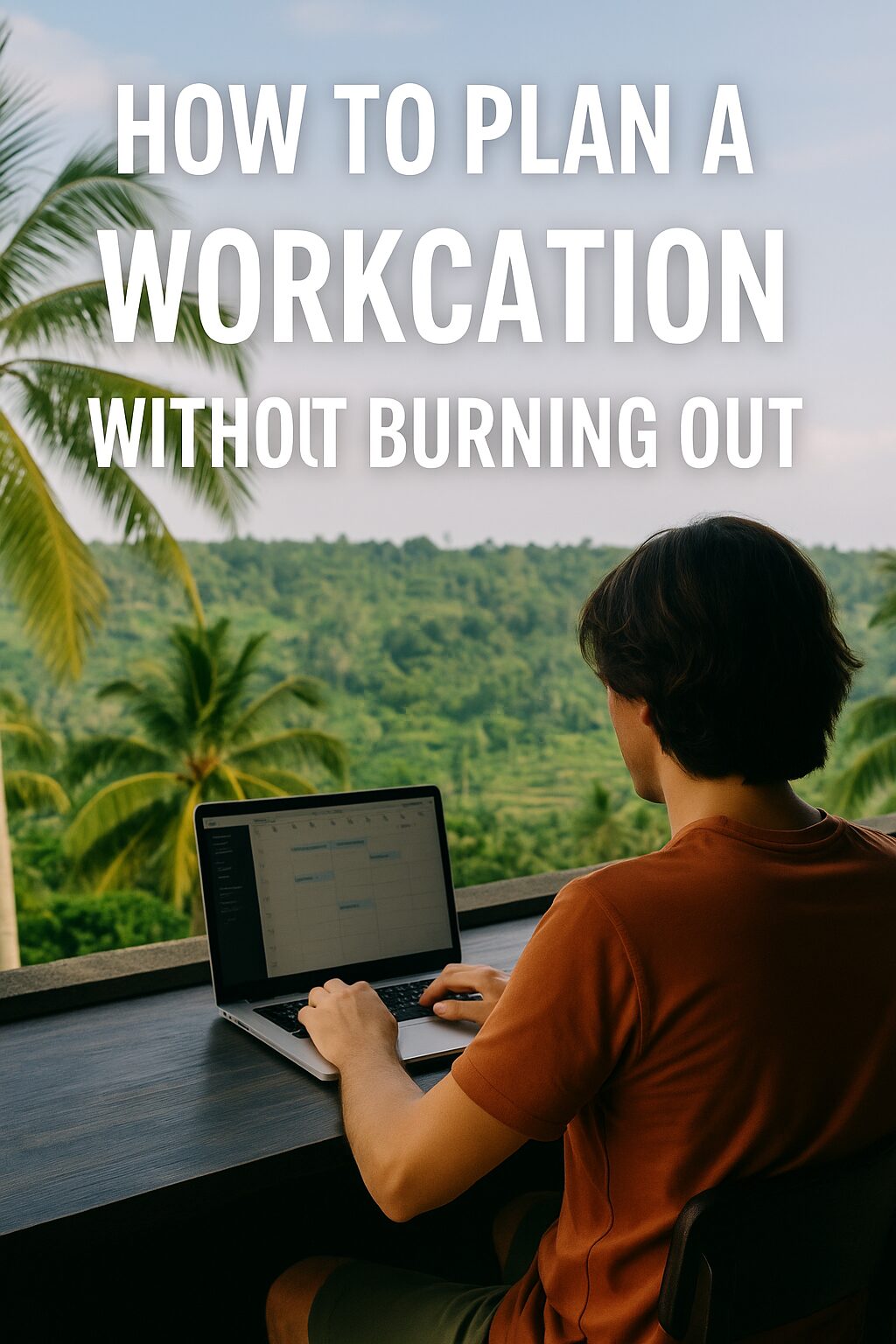
A remote worker planning their day at a laptop with a tropical view in the background

The Rise of the Workcation Lifestyle

Working remotely while traveling the world sounds like a dream. And for many, it’s becoming reality. But blending work with vacation can backfire—unless you plan it right.
In this guide, we’ll show you how to design a sustainable, productive, and enjoyable workcation with the right tools, schedules, and global destinations. Whether you’re freelancing or employed full-time, these tips help you travel smarter—without sacrificing performance or peace.


1. Understand What a Workcation Is—and What It Isn’t

A workcation isn’t just working from the beach. It’s a temporary setup where you balance focused work with quality exploration.

Key elements of a successful workcation:

  • Stable internet connection
  • Work-friendly accommodations
  • Clear expectations (from clients, teams, or yourself)
  • Prioritized schedule that protects both work and leisure

2. Choose the Right Type of Workcation for You

There’s no one-size-fits-all. Consider these workcation styles:

TypeBest For
City-basedRemote workers who need fast internet and coworking hubs (e.g. Lisbon, Seoul)
Nature-focusedBurnout recovery, writing, solo deep work (e.g. Bali, Costa Rica)
Mobile/NomadicFrequent movers, short-term rentals (e.g. Mexico, Thailand)
Group WorkcationTeams, friends, or communities (e.g. remote startup retreats)

3. Pick the Right Location (Criteria That Matter)

Use these criteria when choosing a destination:
Reliable Wi-Fi
Affordable short-term rentals
Time zone overlap (for meetings)
Local SIM card or eSIM availability
Easy visa rules or long-stay permits
Access to coworking spaces or cafes
Nearby nature or culture to recharge

Bonus Tip: Use websites like NomadList, Workfrom, or Teleport to compare digital nomad readiness.


4. Build a Flexible But Focused Schedule

Don’t try to work 9-to-5 in a new time zone. Instead, build a rhythm that fits your energy and location.

Workcation Schedule Framework:

  • Morning (High Focus): Deep work, writing, creative tasks
  • Midday (Light Work + Local Food): Emails, admin tasks
  • Afternoon (Adventure Block): Hikes, museums, beach
  • Evening (Soft Closure): Light planning or social time

Tip: Use the “two-core-block” system: one 3-hour work block + one flexible block.


5. Use the Right Tools to Stay Productive and Connected

Success on a workcation depends on good tech. Use lightweight, mobile-friendly tools that work from anywhere.

Top Tools:

  • Project Management: Trello, Asana, Notion
  • Time Tracking: Toggl, Clockify
  • Focus Tools: Forest App, Cold Turkey
  • Communication: Zoom, Slack, Loom
  • Cloud Storage: Google Drive, Dropbox

For internet backup: Carry a portable Wi-Fi router or SIM-ready travel hotspot.


6. Book Accommodations Built for Remote Work

Not all Airbnbs or hotels are remote-worker friendly.

Look for:

  • Large desk or dining table
  • Strong Wi-Fi with speed test screenshots
  • Quiet surroundings
  • Kitchen access (to reduce cost + time)
  • Nearby coworking spaces

📌 Use platforms like Flatio, Outsite, or Selina for digital nomad rentals.


7. Budget Your Time and Energy (Not Just Money)

Burnout during a workcation usually comes from overcommitment, not overspending.

Balance checklist:

  • Limit meetings per day
  • Alternate high-focus days with light ones
  • Use time-tracking to protect your personal time
  • Say “no” to unnecessary video calls

Remember, your energy is your real currency.


8. Know the Legal & Financial Basics

Depending on your passport and work type, you may need to understand:

  • Visa types (tourist vs digital nomad visas)
  • Tax residency rules if staying over 183 days
  • Health insurance coverage abroad
  • Data security laws when handling client info

Always check your legal situation before settling somewhere.


Final Thoughts: Work Smarter, Live Fuller

A workcation is one of the most rewarding ways to work and live—if done right.
With proper planning, the right mindset, and a balance between productivity and presence, you can create memories while maintaining momentum in your career.
It’s not a vacation. It’s a smarter life strategy.


📌 Next Up:
Summer travel can get expensive fast. In our next post, discover a full guide to saving money across flights, food, lodging, and transportation—so you can make every trip more affordable.

Top Countries Offering Digital Nomad Visas in 2025

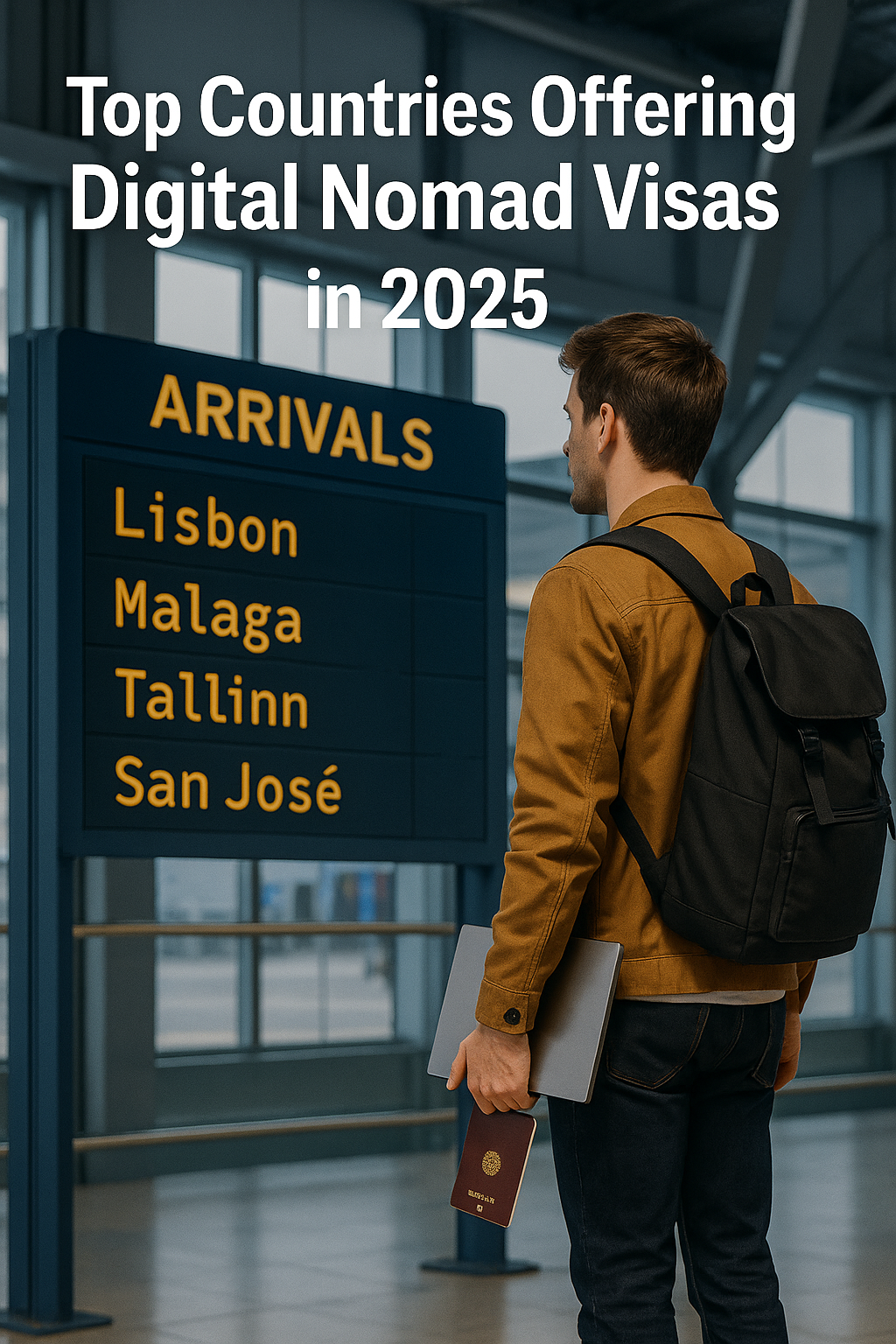
"A digital nomad looking at an airport arrivals screen showing countries that offer digital nomad visas in 2025."

In 2025, more countries are welcoming digital nomads with special visas. These visas let you live and work abroad legally—even if your job is online.

Here are some of the best countries offering digital nomad visas this year:

1. Portugal

Portugal offers the D7 visa. If you earn income online or from remote work, you can stay long-term. It’s affordable, safe, and has great internet.

2. Spain

Spain now has a digital nomad visa for remote workers. You must show proof of income and work for a company outside Spain. Cities like Valencia and Malaga are popular choices.

3. Costa Rica

With its “Rentista” visa and newer nomad options, Costa Rica lets remote workers enjoy tropical life while working legally. Great for nature lovers.

4. Estonia

Estonia was one of the first to launch this kind of visa. It’s perfect for tech-savvy nomads looking for a low-cost, efficient European base.

5. Mexico

Mexico offers a temporary resident visa that suits online workers. The cost of living is low, and beach cities like Playa del Carmen are remote-work friendly.

Tip: Always check income requirements, tax rules, and health insurance needs before applying. Every country has its own rules.

How to Travel the World with Just a Digital Nomad Visa (2025 Edition)

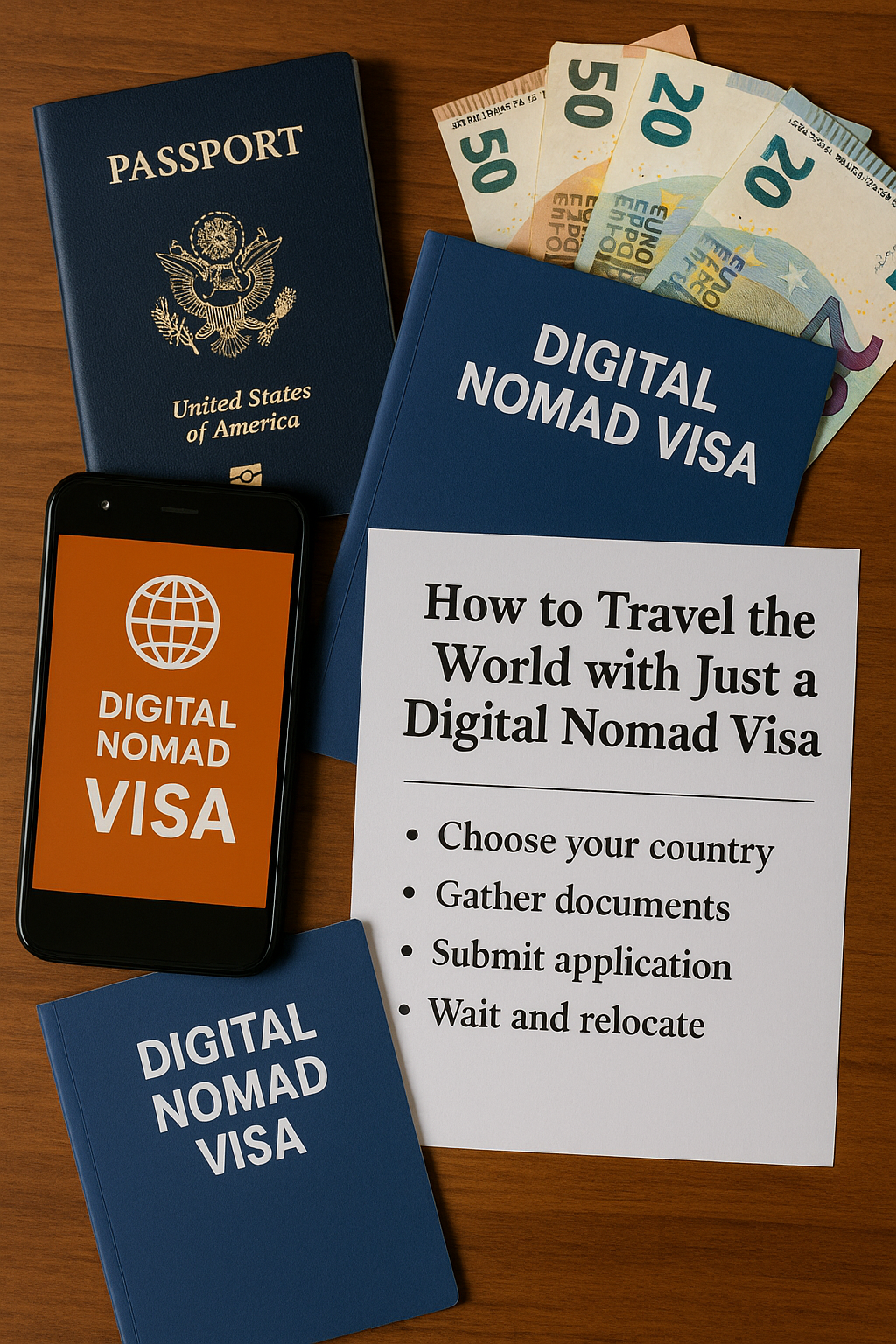
A visual display of digital nomad essentials including a U.S. passport, digital nomad visa folders, euro banknotes, a smartphone showing a digital visa, and a printed checklist titled "How to Travel the World with Just a Digital Nomad Visa" on a wooden table.

Introduction: The Rise of the Borderless Worker

The traditional office is disappearing. In 2025, more people than ever are working from anywhere—with nothing but a laptop, Wi-Fi, and a dream. Enter the Digital Nomad Visa: a revolutionary solution that allows you to live legally in foreign countries while working remotely for an overseas employer or freelance clients.

This guide walks you through how to use just a digital nomad visa to travel the world in 2025. We’ll cover the top visa-friendly countries, requirements, benefits, and practical tips for living a global, location-independent life.

What Is a Digital Nomad Visa?

A digital nomad visa is a type of residency permit that allows remote workers to live in a foreign country while working for a non-local employer or clients. Unlike tourist visas, it:

  • Legally allows long-term stays (usually 6–24 months)
  • Doesn’t require employment in the host country
  • Enables you to rent housing, open bank accounts, and access healthcare
  • May lead to residency or tax benefits

Top Countries Offering Digital Nomad Visas in 2025

Here’s a breakdown of the best countries offering digital nomad visas, along with what makes each one attractive:

1. Portugal

  • Visa: D7 Passive Income or Digital Nomad Visa
  • Stay: 1–2 years, renewable
  • Income requirement: €3,000/month
  • Tax: Non-habitual resident tax benefit

2. Spain

  • Visa: Digital Nomad Visa (Launched in 2023)
  • Stay: 12 months, extendable up to 5 years
  • Income requirement: €2,300/month (individual)
  • Tax: Flat 24% rate on foreign income

3. Estonia

  • Visa: Digital Nomad Visa
  • Stay: Up to 12 months
  • Income requirement: €4,500/month
  • Pros: EU access, tech-friendly society

4. Costa Rica

  • Visa: Rentista Visa / Digital Nomad Visa
  • Stay: 12 months, extendable
  • Income requirement: $3,000/month
  • Climate: Tropical, affordable lifestyle

5. Croatia

  • Visa: Digital Nomad Residence Permit
  • Stay: Up to 1 year
  • Income requirement: €2,300/month
  • Bonus: No income tax on foreign income

6. Georgia

  • Visa: Remotely from Georgia Program
  • Stay: 1 year
  • Income requirement: $2,000/month
  • Bonus: No visa required for 90+ countries

7. Barbados

  • Visa: Barbados Welcome Stamp
  • Stay: 12 months
  • Income requirement: $50,000/year
  • Luxury island living

8. United Arab Emirates (UAE)

  • Visa: Virtual Work Residence Permit
  • Stay: 1 year, renewable
  • Income requirement: $3,500/month
  • Bonus: Dubai tech hub, 0% income tax

Common Requirements for Digital Nomad Visas

Most countries ask for the following:

  • Valid passport (6+ months validity)
  • Proof of remote work (employment letter or client contracts)
  • Minimum income threshold (varies by country)
  • Clean criminal record
  • Health insurance coverage
  • Proof of accommodation

Pros of Digital Nomad Visas

  • Legal security: No more “visa runs” or overstays
  • Tax flexibility: Many countries don’t tax foreign income
  • Stability: Rent long-term housing, open accounts
  • Community: Live in nomad-friendly cities like Lisbon, Tbilisi, Bali

Cons and Limitations

  • Tax complexity: You might owe taxes both in your home and host country
  • High income thresholds: Not all freelancers qualify
  • Healthcare gaps: Not all visas grant access to public healthcare
  • Paperwork load: Some countries have long processing times

How to Choose the Right Country

Ask yourself:

  1. Climate & Culture – Do you prefer tropical or temperate? Urban or quiet?
  2. Time Zone – Does it align with your clients/employer?
  3. Cost of Living – Can you live comfortably within your income?
  4. Visa Rules – Is the application simple or complicated?

Match your preferences with visa availability to make the best decision.


Step-by-Step: Applying for a Digital Nomad Visa

Step 1: Choose your country
Select based on lifestyle, income requirement, and visa length.

Step 2: Gather documents
Prepare: passport, proof of income, work contracts, insurance, rental agreements.

Step 3: Submit application
Apply through the country’s immigration website or embassy.

Step 4: Wait and relocate
Approval times vary—typically 2 to 12 weeks.


What to Do Once You Arrive

  • Register with local authorities (if required)
  • Open a bank account (some countries require a local address)
  • Rent a co-living/co-working space
  • Join local expat or digital nomad communities
  • Explore and adapt!

Best Cities for Digital Nomads in 2025

CityCountryNotable Perks
LisbonPortugalAffordable EU hub, warm climate
MedellínColombiaLow cost, modern infrastructure
TbilisiGeorgiaVisa-free, cheap, friendly
TallinnEstoniaTech-forward, English-friendly
Playa del CarmenMexicoBeach + coworking + safety
DubaiUAELuxury lifestyle, 0% tax

Financial and Tax Tips

  • Consider opening a multicurrency account (Wise, Revolut)
  • Consult a tax advisor—some countries have tax treaties
  • Keep all documents scanned and cloud-backed
  • Use international health insurance

Final Thoughts

The world is your office in 2025, and a digital nomad visa is your key to borderless freedom. With careful planning, the right documents, and a clear income source, you can legally live and work from the world’s most beautiful cities—without breaking the rules.

Remote work isn’t a trend. It’s the future. And with a digital nomad visa, it’s a future you can live on your terms.