Tax-Free Residency Showdown: Dubai vs Puerto Rico (2025 Guide)

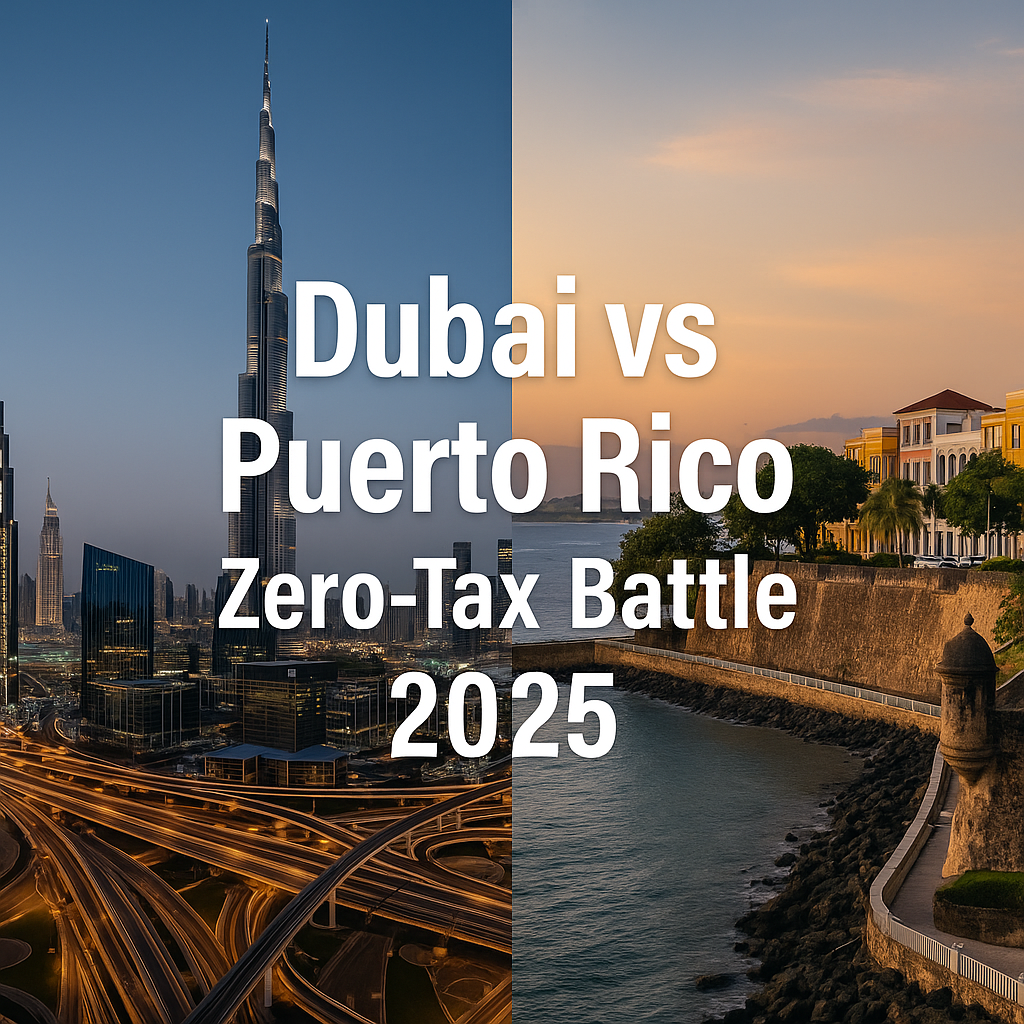
Split image—Burj Khalifa skyline vs. Old San Juan coast; overlaid title “Dubai vs Puerto Rico Zero-Tax Battle 2025”.

1 | The Two Titans of Zero-Tax Life

For location-independent entrepreneurs, Dubai and Puerto Rico (PR) top every “where do I pay 0 % on capital gains?” forum thread. Each jurisdiction lets you legally shelter foreign-sourced or investment income at 0 %, but the paths, costs, and lifestyle trade-offs differ sharply.

  • Dubai – Territorial system; no personal income tax, no capital-gains tax, and zero withholding on dividends.
  • Puerto Rico – U.S. territory with its own tax code: Act 60 slashes long-term capital gains to 0 % and dividends/interest to 0 % if you qualify as a bona-fide resident. 고든 로 그룹PwC 세무 요약

2 | Quick-Stats Table

ItemDubai Golden VisaPuerto Rico Act 60Why It Matters
Up-front costAED 2 M (≈ USD 545 k) real-estate buy in 두바이 토지 및 재산 부Immigrant InvestUSD 10 k annual NGO donation + USD 5 k filing fee DominionDefines cash hurdle
Residency term10-year renewable visaIndefinite (so long as 183 days/yr in PR)Long-term stability
Tax headline0 % income, CGT, inheritance (territorial)0 % on PR-sourced dividends/ capital gains post-moveCore benefit
CurrencyAED (pegged to USD)USD (official)FX risk
Broadband235 Mbps avg fiber (Ookla Q1 2025)118 Mbps avg cableRemote work
Safety index (Numbeo)84/100 (very high)63/100 (moderate)Physical security
Year-round temp22–42 °C desert24–31 °C tropicalClimate tolerance

3 | Tax in Detail

Dubai – Because the UAE is fully territorial, only local companies pay the new 9 % corporate tax on UAE-sourced profits. Personal income, worldwide dividends, and capital gains are untaxed. No CFC rules, no wealth tax, no estate tax.

Puerto Rico – Under Act 60 Subchapter D (Resident Individual Investor), long-term capital gains realized after you become a bona-fide resident are taxed at 0 %; pre-move gains remain U.S. taxable if you’re a U.S. citizen. Dividend and interest income from anywhere is tax-free for 20 years. 고든 로 그룹PwC 세무 요약

4 | Entry Requirements & Ongoing Duties

StepDubaiPuerto Rico
1. ApplicationUpload title deed (AED 2 M+) to Dubai Land Dept. portal; pay AED 4,000 fee.File Act 60 decree; pay USD 5 k + USD 10 k annual donation pledge.
2. BiometricsIn-country medical + Emirates ID.Standard U.S. fingerprinting (if required)
3. Days in countryNone to maintain visa; but 90 days+ helps banking.183 days/year + closer connection test (IRS Pub 570). 국세청
4. ReportingNo personal tax returnPR Form 482 + possibility of U.S. Form 709 gift, FBAR, CFC filings
5. RenewalAutomatic at 10 yrs if property heldAnnual compliance certificate + donation receipt

5 | Lifestyle & Cost-of-Living Comparison

Numbeo 2025 shows rent 102 % higher in Dubai, while groceries are 32 % cheaper. Overall CPI basket including rent is only ~12 % higher in UAE because higher housing is offset by lower food, fuel, and sales tax. Numbeo

MetricDubaiPuerto RicoNote
One-bed city-center rentUSD 2,350 /moUSD 1,140 /moHousing gap
Broadband 500 MbpsUSD 100USD 69UAE premium fiber
Petrol (1 L)USD 0.88USD 1.23UAE subsidy
International schoolUSD 12 k–20 k /yrUSD 8 k–14 k /yrFamily factor

6 | Banking & Currency Mobility

  • Dubai – AED is USD-pegged (3.6725). Local banks (Emirates NBD, Mashreq) open expat accounts within 48 h once Emirates ID issued. Multicurrency accounts and instant USD wires available.
  • Puerto Rico – Dollar jurisdiction; you keep U.S. checking, Schwab, IBKR accounts open. Act 60 investors often open Banco Popular or FirstBank for local formalities.

7 | Compliance & Pitfalls

  • Controlled-Foreign-Corporation (CFC) – U.S. citizens in PR can still trigger CFC Subpart F income on non-PR companies; consult a U.S. international tax lawyer.
  • Closer-Connection audit – Maintain PR driver’s licence, PR voter reg, PR doctors.
  • Dubai substance – While no minimum stay, banks increasingly request 30-day passport stamps for “active resident” classification.
  • Estate planning – Dubai follows Sharia succession unless you register a DIFC Will; PR follows U.S. probate.

8 | Decision Matrix

You are…Income SourcePreferred ClimateRecommendation
High-net-worth investor needing 0 % CGT on cryptoCapital gains, no payrollDry–hot OKDubai (no 183-day rule, 0 % worldwide CG)
U.S. citizen with SaaS dividendsDividends, stock saleTropical OKPuerto Rico (keeps U.S. passport/EIN access + 0 % dividends)
Remote employee paid salarySalary incomeEitherNeither offers salary exemption; consider Portugal NHR (10 % flat)

9 | Step-by-Step Relocation Checklist

  1. Pre-move tax audit – Sell or step-up assets before PR move.
  2. Open a multicurrency account for AED↔USD hedging (Wise, HSBC Global Money).
  3. Secure housing – Dubai: escrow 10 % and close in 4 weeks; PR: rent first (supply tight).
  4. Healthcare – Dubai: mandatory private cover (~USD 2 k/yr). PR: enroll in local insurer or retain U.S. plan.
  5. Schooling – Book seats a year ahead in Dubai; PR public schools Spanish-medium.
  6. Finalize compliance – DIFC Will (Dubai) or PR estate plan; keep digital archive of utility bills for IRS closer-connection test.

10 | Bottom Line

Both hubs can erase your capital-gains tax bill, but they reward different profiles: Dubai for fast-track global mobility and luxury infrastructure (at a property-buy price tag); Puerto Rico for U.S. citizens who need to stay under the Stars-and-Stripes but shrink their IRS bill. Map your income mix, family size, climate preference, and regulatory tolerance—then pick the flag that lets your money compound untaxed.

Seamless Cross-Border Healthcare: Best Pay-Per-Day Insurance Plans for Long-Term Travelers in 2025

Traveler in an airport holding a passport wrapped with a stethoscope and a blue health-insurance card, luggage by their side, digital world-map medical icon in the background

1 | Why “Pay-Per-Day” Insurance Dominates 2025

Rising residency-visa rules now require proof of ongoing medical cover, yet most nomads change countries every 90 days. Subscription-style, daily-billed travel medical plans are the only product that scales with that lifestyle. SafetyWing’s Nomad Insurance renews automatically every 28 days at US $2.01 per day for ages 18-39 SafetyWingNomadic Matt’s Travel Site, while Genki Explorer clocks in at €2.80 per day after its 2025 price bump The Broke BackpackerReddit. Traditional annual policies still front-load a US$600–1,200 premium, pricing out multi-stop gap-year and “golden sabbatical” travelers 가디언.

2 | Core Screening Matrix—Eight Questions to Ask

  1. Daily Cost vs. Cap – True pay-per-day lets you pause anytime; some “daily” plans still charge 28-day blocks.
  2. U.S. Add-On – Pay only when you enter the high-cost zone; SafetyWing adds US$2 a day for U.S. cover.
  3. Emergency Evacuation Limit – Minimum US$250 k; top tier hits US$1 m US News.
  4. Home-Country Return Days – SafetyWing: 30 days/90; Genki: none.
  5. Adventure Sports Rider – Needed for trekking > 3,000 m or scuba > 30 m.
  6. Covid & Mental Health – Still excluded by some budget plans.
  7. Direct-Pay Network – IMG & Seven Corners settle bills so you avoid cash up front Squaremouth Travel Insurance.
  8. Age Bracket Jumps – Costs step-change at 39, 49, 59; plan ahead.

3 | 2025 Leaderboard: Best Pay-Per-Day Options

RankPlanDaily Cost (Age 30)Max Medical / EvacKey StrengthDrawback
SafetyWing Nomad (Essential)US$2.01US$250 k / US$100 kAuto-renew, U.S. add-on toggle, covers 180+ countriesNo baggage cover
2Genki Explorer€2.80€1 m / €500 kEurope-based insurer, cancel anytime, no deductiblePrice rise, 12-month max Reddit
3IMG Global Medical Patriot Lite (Daily)US$2.95US$1 m / US$1 mDirect-pay network in 130 countries10-day minimum buy
4Seven Corners Travel Medical EcoUS$2.60US$500 k / US$500 kCustomisable sports riderPre-pay 5 days
5Faye Pay-Per-Trip MedicalUS$3.40US$250 k / US$250 kAll-app claims + instant reimburse to digital walletOnly 180-day trips

4 | Cost Calculator—Daily vs. Monthly vs. Annual

ScenarioLengthSafetyWingGenkiAverage Annual Plan
Bali staycation60 daysUS$120.6€168US$600 (flat)
Europe rail loop150 daysUS$301.5€420US$780
Full-year nomad365 daysUS$733.6€1,022US$1,200

Pay-per-day wins until about the 11-month mark; after that, switch to full-year expat health.

5 | Setup Sprint—Insuring Yourself in 20 Minutes

  1. Buy while already abroad – Both SafetyWing & Genki allow sign-up post-departure.
  2. Tick U.S. days only when booked – De-select until you buy the ticket.
  3. Screenshot confirmation for immigration officers.
  4. Store e-card in Apple / Google Wallet (Faye, Seven Corners).
  5. Enable direct-pay – Upload passport + insurer letter to big-city hospitals ahead of arrival.
  6. Calendar reminder – Review age-bracket price jumps 30 days before birthday.

6 | Real-World Claim Walk-Through

Case: 33-year-old designer, Chiang Mai; scooter crash, fractured wrist.
Plan: SafetyWing Essential
Bill: THB 92,000 (≈ US$2,500) at Bangkok Hospital
Process: Hospital emailed invoice to SafetyWing, insurer wired payment same day; traveler paid US$250 deductible only.
Total out-of-pocket: US$250. Claim closed in 48 hours.

7 | Advanced Optimization Hacks

  • Stack with local cashless clinics – In Vietnam, buy a VND 650 k annual “Family Medical Practice” card; SafetyWing refunds out-of-pocket anyway.
  • Combine with credit-card primary cover – Use Chase Sapphire Reserve for trips under 30 days, fall back to SafetyWing beyond.
  • Self-fund routine care – Pay cash for dental / physio; keep insurance for catastrophes only.
  • Use deductible tweaks – IMG lets you raise the excess to US$500 to cut the daily cost 18 %.

8 | Legal & Tax Footnotes

  • Proof for digital-nomad visas – Spain & Portugal require min. €30 k cover; all listed plans qualify.
  • ACA exemption (U.S.) – Continuous travel makes you a non-resident for Affordable Care Act penalties.
  • Korea NHIS – Staying abroad > 183 days suspends compulsory Korean health contributions; keep boarding-pass records.

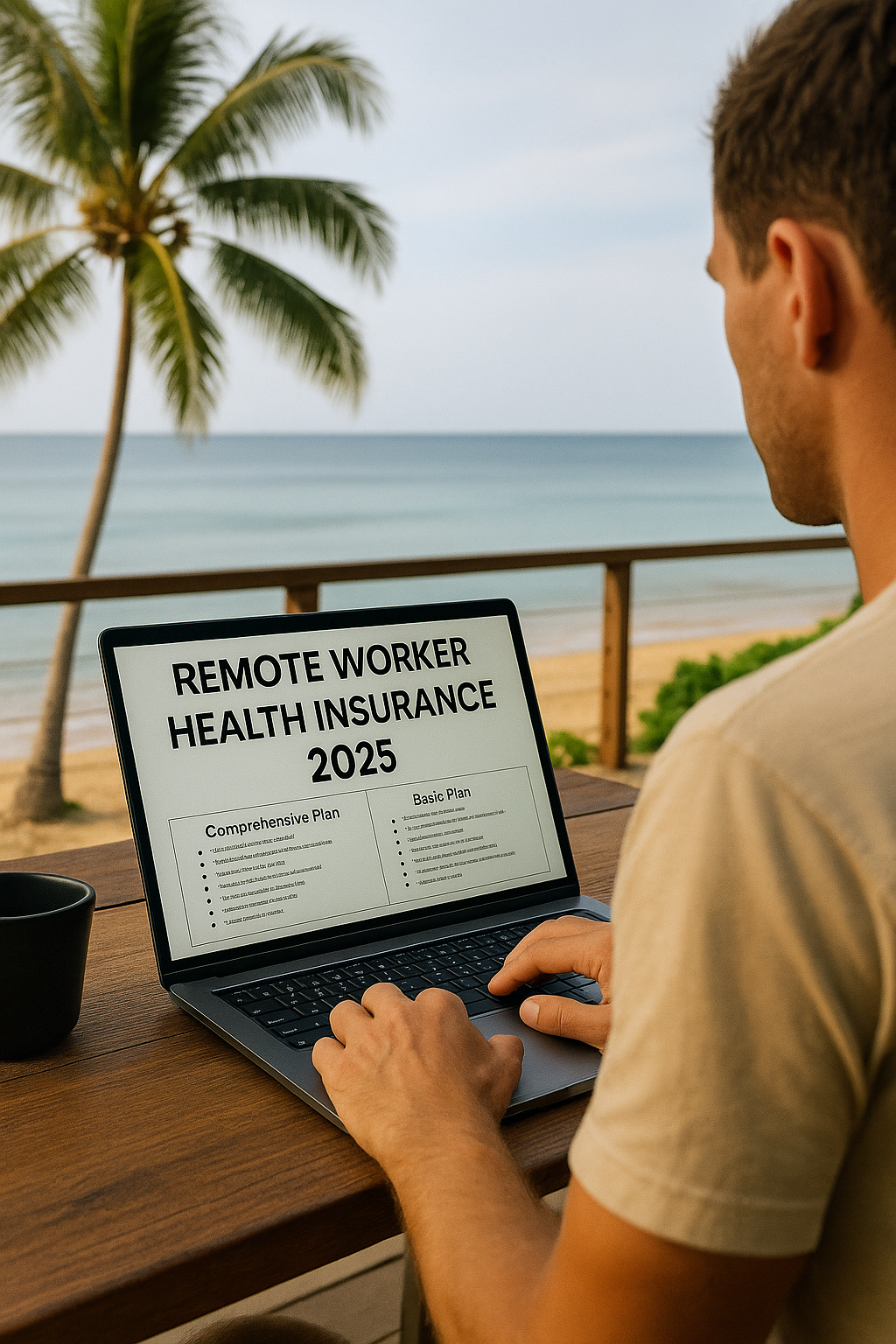
Private Health Insurance for Remote Workers Abroad (2025 Guide)

Remote worker reviews 2025 health-insurance plans on a laptop at a tropical beachside workspace.

Cut Costs, Keep Coverage—Build a Bullet-Proof Medical Safety Net Anywhere

Average 2025 premium: US $88 – $230 per month for global nomad-specific plans such as SafetyWing Remote Health (ages 18-39) and IMG Global Medical. safetywing.comNomads Embassy

Key break-point: If you stay outside your passport country ≥ 90 days/year, travel-medical insurance alone is legally inadequate in 16 visa-hosting nations (Spain, Portugal, Croatia, etc.). You need full private international cover that includes routine care. Nomads Embassy

Top 2025 providers: SafetyWing Remote Health (subscription flexibility), Cigna Global (tailor-made modules), Allianz Care (robust network), GeoBlue Xplorer (U.S. anchor), AXA Global Nomad (mental-health heavy). cignaglobal.comAXA – Global HealthcareNerdWallet: Finance smarter

Fastest cost-cut: Raise your deductible from US $250 to US $2 500 and pay annually—typical premium drops 18 – 35 % across major carriers. Nomadic Matt’s Travel Site

1 | Why “Remote-Worker” Insurance Differs From Ordinary Travel Medical

FeatureShort-Trip Travel InsurancePrivate International Health Insurance
Trip length allowed≤ 180 days (most plans)Unlimited; residency-style
Routine GP visitsNot coveredCovered or add-on
Chronic diseaseUsually excludedCover available (after waiting period)
Visa complianceOften rejected for D7, digital-nomad, golden visasAccepted proof in 20+ countries
Premium basisTrip cost + lengthAge + area of cover + deductible

Bottom line: Once you cross the 90-day remote-worker threshold, you need long-term medical coverage that treats you like a resident, not a tourist.


2 | Cost Benchmarks 2025

AgeGlobal Cover excl. USA (mid-range deductible)Global Cover incl. USANomad-Only Subscription*
25US $118 / mo (Cigna Silver)$238 / mo$56.28 / 4 wks (SafetyWing Essential)
35$134 / mo$268 / mo$56.28 / 4 wks
45$188 / mo$327 / mo$96.32 / 4 wks
55$302 / mo$472 / mo$178.40 / 4 wks

*Nomad subscriptions cap most benefits at US $250 000 and exclude elective care in the U.S. safetywing.comNomadic Matt’s Travel Site

Premium drivers:

  1. Coverage area—including the U.S. adds 55 – 80 %.
  2. Deductible—each US $1 000 step saves ~8 % premium.
  3. Out-patient + maternity add-ons—+12 % and +18 % respectively.

3 | Plan Types Remote Workers Actually Use

Plan ModelBest ForSignature Providers
Nomad Subscription (cancel any month)First-year digital nomads, uncertain itinerariesSafetyWing Nomad Insurance, AXA Nomad
Modular Expat MedicalLong-term base abroad, familiesCigna Global, Allianz Care, Aetna International
Geo-Anchored Major MedicalU.S. taxpayers needing ACA-credible coverGeoBlue Xplorer, IMG Global Medical
Local Private PlanCountries with cheap high-quality domestic care (e.g., Thailand, Mexico)Bupa TH, GNP Mexico

4 | 2025 Leaderboard (Quick-Compare)

ProviderCore Medical LimitOut-patientTele-medicineEvacuationMonthly Premium 30 y/o*Notable Edge
SafetyWing Remote HealthUS $1 000 000✔ 24/7$119Cancel anytime
Cigna Global SilverUnlimitedModule add-on✔ Doctor-chat$134Tailored modules
Allianz Care “Care Pro”€1.5 MApp claim$152Wide visa acceptance
AXA Global NomadUS $1 M$143Mental-health 20 sessions
GeoBlue XplorerUnlimited†$268 (incl. USA)US PPO network

*Global cover, excl. USA unless noted; $500 deductible; male non-smoker. †Lifetime maximum. Sources: carrier calculators Jan–Apr 2025. cignaglobal.comAXA – Global Healthcaresafetywing.comNerdWallet: Finance smarterNomadic Matt’s Travel Site


5 | Hidden Clauses That Cost Remote Workers Money

  1. Home-country coverage cap (e.g., SafetyWing only 30 days/yr).
  2. Adventure sports riders—kite-surfing, diving >18 m often excluded by default.
  3. Pre-existing condition waiting periods—typically 24 months; waive at sign-up with medical questionnaire (premium +10 %).
  4. Area of cover tricks—Middle East usually classed as “Worldwide” even if U.S. excluded.
  5. Mental-health session limits—often 5–10 visits; AXA offers 20.

6 | Cost-Cutting Blueprint (Practical Hacks)

TacticAvg. Savings
Increase deductible from $250 → $2 50018 – 35 %
Pay annually vs. monthly8 – 12 %
Exclude U.S. if visits ≤ 30 days/yr30 – 55 %
Choose tiered out-patient cap (e.g., $5 k)6 – 10 %
Bundle with employer remote-benefit platformUp to 25 %

7 | Visa & Tax Compliance Checklist (2025)

Visa CategoryMinimum CoverExtra Requirement
Spain Digital-Nomad€30 000 medical + repatriationProof paid 12 months in advance
Portugal D7Same as aboveInclude out-patient; deductible ≤ €150
Greece Nomad€30 000Letter of coverage in Greek
Bali Second-HomeUS $100 000 hospitalisationNA
South Korea D-10 FreelancerNo official minimum, but immigration asks for “comprehensive” proof if > 1 year stay

Tip: Pay the full 12-month premium up front and request a signed confirmation letter—90 % of visa denials stem from “pay-monthly” policies.


8 | Sample Budget Scenarios

PersonaBaseCoverage ChoiceAnnual PremiumRationale
28-y/o coder, multi-countrySEA + EuropeSafetyWing Essential + $500 deductible$738Needs flexible cancel-any-time
40-y/o designer, Portugal D7Portugal + EU travelCigna Silver + out-patient$1 632Meets visa deductible rule
52-y/o U.S. citizen, MexicoMexico + U.S. visitsGeoBlue Xplorer$3 216Maintains U.S. PPO network
Family of 3, Spain nomadSpain + EUAllianz Care “Care Pro Family”$4 980High child wellness limits

9 | Fast Claiming in 2025

Major carriers now use phone-camera AI to OCR receipts under US $800, approving 48-hour reimbursements. Allianz and AXA announced direct-pay partnerships with 1 300 private clinics, eliminating up-front payment for emergency surgeries. cignaglobal.com


10 | Step-by-Step Purchase Workflow (15 min)

  1. List destinations + expected U.S. days.
  2. Run dual quotes on ExpatInsurance.com and SafetyWing for baseline.
  3. Add visa filter (deductible ≤ €150 if EU).
  4. Pick deductible you can cash-flow from emergency fund.
  5. Add riders (evacuation, adventure) only if self-insurance impractical.
  6. Pay annually + request visa letter PDF.
  7. Set calendar renewal 30 days before expiration.

11 | Bottom Line

  • Remote ≠ tourist: After 90 days abroad, switch from travel-medical to true international health insurance.
  • Control premiums by excluding the U.S., raising deductibles, and paying annually.
  • Match visa fine-print, or risk rejection at the consulate.
  • With a structured approach, you can secure hospital-grade care worldwide for < US $150 a month while protecting your wallet from medical catastrophe.

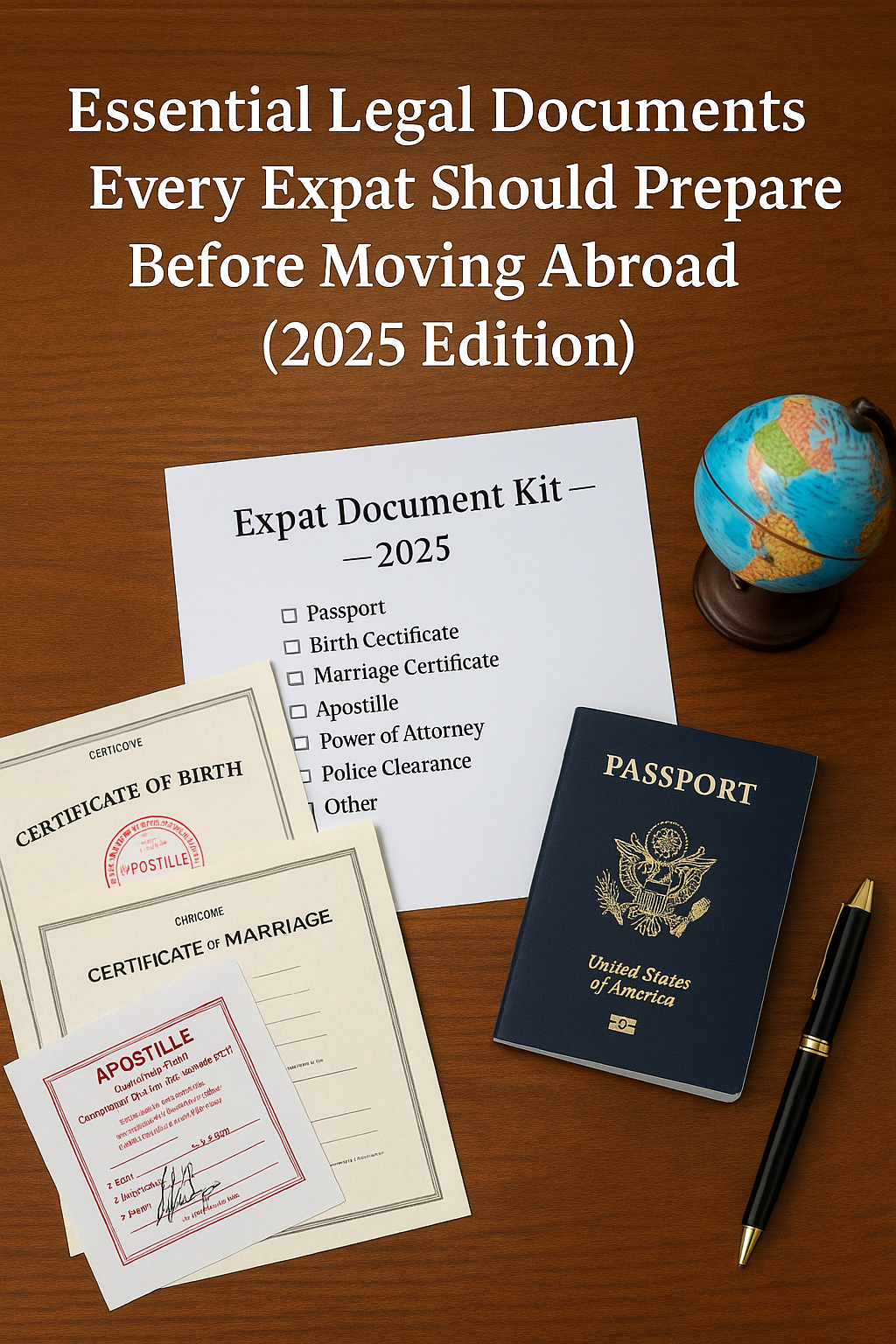
Essential Legal Documents Every Expat Should Prepare Before Moving Abroad (2025 Edition)

A neatly arranged wooden desk featuring certified birth and marriage certificates with apostille stamps, a U.S. passport, a checklist titled “Expat Document Kit — 2025,” a small globe, and a fountain pen. Large white text across the top reads “Essential Legal Documents Every Expat Should Prepare Before Moving Abroad (2025 Edition).”

Why These Documents Still Matter in a Digital-ID World

Digital wallets, e-Residency cards, and remote onboarding make relocation simpler than ever, yet immigration officers, banks, and landlords still demand original signatures, embossed stamps, or apostilles at critical moments. Missing a single sheet can freeze a visa, delay utilities, or lock funds for weeks. A well-curated document kit protects mobility, credit, and even medical autonomy when you need it most.

Core Document Set for Every Country

DocumentPurpose in 2025Mistakes to AvoidRenewal Tip
Passport + Two Notarised CopiesPrimary ID for entry, banking, SIM registrationStapled pages; expired passport with valid visaApply for a ten-year book even if your home country offers five; renew with at least 18 months left
Birth Certificate (Long Form)Confirms citizenship for dependent visas, school admissionShort form without parental dataOrder certified copies with security paper before departure
International Driving Permit (IDP)Car rental, local license conversionUsing the 1949 version where 1968 is requiredCarry the physical booklet—digital scans are not recognised
Police Clearance / FBI Background CheckWork visas, long-term rentals, volunteeringIssued >6 months agoRequest a digital PDF plus a sealed hard copy for apostille
University Diplomas + TranscriptSkilled-worker visas, job offers, licensing boardsUnofficial scansUse color scans certified by your alma mater registrar
Power of Attorney (Financial & Medical)Authorises a trusted person to sign or make decisions if you can’tCountry-specific wording gapsSign in presence of a notary who can issue an apostille immediately
Advance Healthcare Directive / Living WillEnsures medical wishes are respected across jurisdictionsMissing language about “international portability”Keep English + local language versions attached
Marriage / Divorce / Adoption CertificatesFamily visas, inheritance, school enrolmentIncomplete translations, no apostilleTranslate through a court-certified linguist only
Proof of Income / Employment ContractOpening bank accounts, renting propertyScreenshot of online payslip without employer sealAsk HR for a PDF on letterhead with wet signature
Proof of Address (Utility Bill or Bank Statement)KYC for fintech apps, post office box setupBill older than 90 daysSwitch to e-bills so you can regenerate clean copies on demand

Country-Specific Extras You’ll Regret Forgetting

Gulf States (UAE, Qatar, Saudi Arabia)

  • Degree attestation by embassy + Ministry of Foreign Affairs.
  • Blood-type card for driver’s licence processing.

EU Blue-Card Applicants

  • Employment reference letters detailing exact job classification (ISCO code) and salary band.
  • Health-insurance certificate with minimum €34 000 coverage.

Japan

  • Original university syllabus in English and Japanese for Engineer/Specialist visa.
  • Pension “kikan kempi” record if converting from student to work status.

Brazil

  • Polio vaccination certificate for dependents under five.
  • CPF tax ID issued before signing a lease or opening a bank account.

Apostille vs. Consular Legalisation in 2025

More than 125 countries now recognise the e-Apostille, a tamper-proof QR code you can scan at customs. When your destination is not a Hague member (e.g., China, Vietnam, UAE), you still need dual-step consular legalisation. Factor in ten business days if couriers are involved and never laminate an apostilled document—customs may reject it as “altered.”


Digital Back-Up Strategy That Actually Works

  1. Copy every file in colour at 300 dpi PDF/A-1.
  2. Encrypt the folder with a 25-character passphrase via 7-Zip or VeraCrypt.
  3. Store in two clouds (e.g., Proton Drive in Switzerland + OneDrive) and one hardware SSD you keep in carry-on.
  4. Print a one-page “key sheet” listing filenames and encryption hint—leave it with a trusted family member under seal.

Quick-Start Checklist Before Departure

  • Double-check passport expiration > 18 months.
  • Request a background check and pay for overnight apostille service.
  • Notarise power of attorney and healthcare directive in duplicate.
  • Order three certified copies of each vital record.
  • Scan, encrypt, and upload everything to dual cloud accounts.
  • Schedule embassy legalisation appointments if your country is outside the Hague Convention.
  • Pack original documents in a waterproof folder and keep in carry-on, not checked luggage.

What to Do If You Arrive Without a Required Document

Most embassies abroad can issue an Emergency Travel Document or notarised copy within 48 hours, but they cannot apostille foreign records. Use a professional courier in your home country (DHL / FedEx Priority) and request “copy certification” to bridge the gap while the original is en route. Always carry digital, signed PDFs on an encrypted USB to satisfy interim KYC checks at banks or telecom shops.


Turning Paperwork Into Peace of Mind

Legal documents are the bedrock of residency, finance, health care, and family stability abroad. Treat them like a well-diversified portfolio: multiple originals, multiple formats, multiple jurisdictions. With a complete kit, you can secure a SIM card, sign a lease, open a multicurrency account, and even undergo surgery without bureaucratic gridlock—freeing you to focus on the reason you moved in the first place.

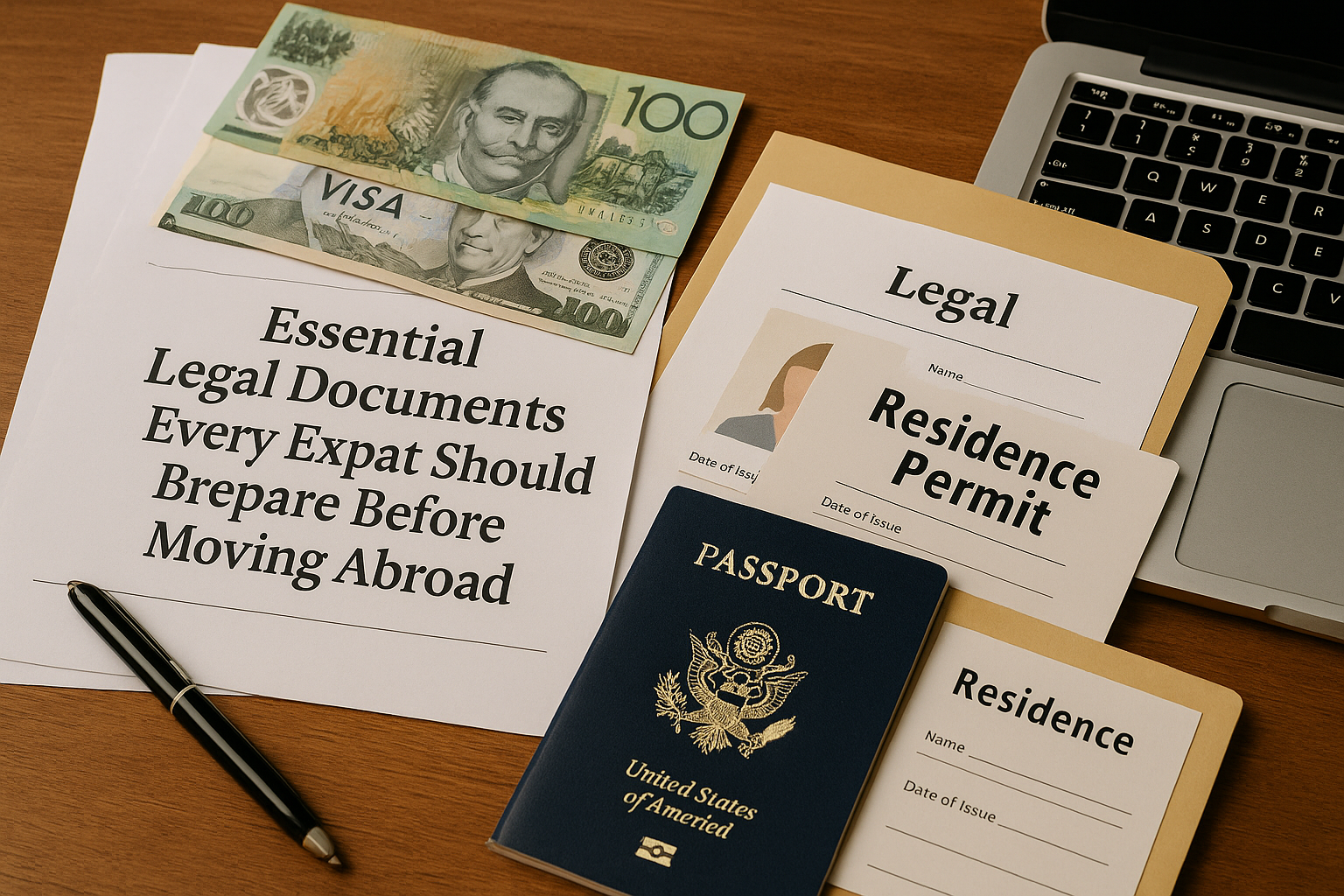
Essential Legal Documents Every Expat Should Prepare Before Moving Abroad

A neatly arranged layout of critical legal documents for expats, including a U.S. passport, residence permit, immigration forms, foreign currency, and a printed checklist titled “Essential Legal Documents Every Expat Should Prepare Before Moving Abroad.”

Introduction: Legal Preparation Is Everything

Moving abroad is an exciting life decision, but without the right legal documents in place, it can quickly become a bureaucratic nightmare. Whether you’re relocating for work, education, retirement, or a lifestyle change, having your legal paperwork organized is critical to avoiding visa issues, denied services, or worse—deportation.

This comprehensive guide outlines all the essential legal documents every expat needs before setting foot in a new country. It’s not just about passports and visas—this is the checklist that protects your finances, your rights, and your future.

1. Passport (With Validity & Extra Pages)

Your passport is your most critical legal document abroad. Before moving, make sure:

  • It has at least 6 months of validity remaining.
  • There are extra blank pages for visa stamps and extensions.
  • It’s not damaged, bent, or watermarked (some immigration officials are strict).

Many countries won’t even allow entry if your passport is near expiration, so renew it early.


2. Long-Term Visa or Residency Permit

Tourist visas are not designed for expats. Depending on your reason for moving, you’ll need:

  • Work visa
  • Student visa
  • Family reunion visa
  • Digital nomad visa
  • Retirement visa
  • Entrepreneur visa

Each has different eligibility requirements, such as proof of income, background checks, or sponsor documents. Apply well in advance, and always keep digital + printed copies.


3. International Birth Certificate

Some countries require an apostilled or translated version of your birth certificate. This may be necessary for:

  • Visa processing
  • Bank account opening
  • Health insurance
  • Marriage registration

Ensure the certificate is official and less than 6 months old (some countries have recency requirements).


4. Police Background Check

This is a must-have for many visa applications. You’ll need a clean criminal record from your home country—usually from a national police agency (e.g., FBI in the U.S.).

  • Should be issued within 3–6 months of your move
  • May need to be apostilled or translated

5. Health and Vaccination Records

Some countries require proof of immunization or a clean bill of health. Keep a document file with:

  • General medical history
  • Vaccination records (COVID-19, Yellow Fever, etc.)
  • Recent physical exam
  • Health certificates (for pets too, if relocating with animals)

Bring both digital and physical copies, and translate them if required.


6. Proof of Income or Financial Stability

Many visas require financial proof to ensure you won’t become a burden. This may include:

  • Bank statements (past 3–6 months)
  • Tax returns
  • Proof of employment or contracts
  • Letters from your accountant or employer

Having documents in both your local language and English is advisable.


7. International Driver’s License

If you plan to drive, bring:

  • Your home country driver’s license
  • An International Driving Permit (IDP)

In some countries, you’ll need to convert your license within a set time. Check local laws to avoid fines or confiscation.


8. Education and Degree Certificates

If you’re relocating for work or study:

  • Bring original diplomas and transcripts
  • Get official translations and apostilles
  • Some employers or visa offices require sealed academic records

Store scanned copies online in case of loss.


9. Marriage and Divorce Certificates

If your legal status affects your visa (e.g., spousal visa), bring:

  • Official marriage certificate
  • Divorce decree (if applicable)
  • Custody documents if relocating with children

All must be certified, translated, and apostilled if necessary.


10. Power of Attorney and Will

You may need to assign someone to handle affairs in your home country:

  • Create a Power of Attorney document for a trusted individual
  • Consider writing or updating your Will, especially if you own property

These documents protect your assets while you’re abroad.


11. Health Insurance Documentation

Never move abroad without coverage. Ensure you carry:

  • Health insurance policy (digital & printed)
  • Emergency contact details
  • Claim process instructions

Many countries require proof of insurance before issuing a visa.


12. Rental Contracts or Housing Proof

Some visa types require you to show where you will be staying. Prepare:

  • Lease agreements
  • Temporary housing bookings
  • Invitation letters if staying with friends/family

Make sure your name, address, and dates are clearly visible.


13. Employment Contracts or Study Acceptance Letters

For work and student visas:

  • Carry official offer letters
  • Include salary details, job title, and duration
  • Academic admission letters with clear start/end dates

Always bring both printed and digital versions.


Pro Tip: Use Cloud Backup

Scan all legal documents and upload them to:

  • Google Drive
  • Dropbox
  • iCloud
  • External USB (as a physical backup)

Losing paperwork overseas can cause serious delays and complications.


Country-Specific Legal Considerations

  • Germany: Requires translated and apostilled documents.
  • South Korea: Often needs notarized background checks and income proof.
  • Thailand: Visa run rules frequently change—monitor embassy updates.
  • UAE: May ask for employer sponsorship and bank account history.

Always check the official immigration website of your destination.


Final Thoughts

Paperwork may not be exciting, but it’s your foundation for a legal and stress-free life abroad. Every document you prepare today prevents a crisis tomorrow.

Before your flight, print two copies of every document, upload backups, and confirm translation/apostille needs. Being over-prepared is better than being denied entry at immigration.

Your new life abroad deserves a smooth, lawful start—begin it with a complete, secure legal document file.

Top VPNs and Privacy Tools for International Banking & Travel (2025 Edition)

A realistic desktop photo featuring multiple VPN apps open on a laptop, a smartphone displaying a password manager, and a digital nomad passport—representing global privacy and banking security.

Secure Your Money, Data, and Identity While Living Abroad

If you live, work, or travel internationally, there’s one silent threat following you everywhere: unsecured public networks.

From checking your online banking in a café in Bangkok to sending crypto from a co-working space in Lisbon, your financial data is vulnerable without proper digital protection.

This guide reveals the top VPNs and privacy tools that protect your identity and transactions while you live a global life in 2025.
Because in the digital age, privacy equals security—and security equals financial survival.

Why Privacy Tools Are No Longer Optional

In 2025, digital threats are more subtle—and more dangerous—than ever:

  • Public Wi-Fi sniffing can expose bank logins
  • Geo-blocked financial services (e.g., US banks rejecting foreign logins)
  • Data harvesting by apps and unsecured extensions
  • Government surveillance in certain countries

Without a strong privacy setup, you risk:

  • Account lockouts
  • Identity theft
  • Financial loss
  • Permanent service bans

The 5 Best VPNs for Digital Banking and Travel (2025)

These VPNs have been selected based on security, speed, usability, and real-world testing for travelers and digital nomads:


1. NordVPN

  • Strengths: AES-256 encryption, Meshnet for remote access, double VPN
  • Why it’s best: Works with US banking sites, blocks trackers, offers fastest server switching
  • Bonus: Kill switch to prevent data leak on drop

2. ExpressVPN

  • Strengths: TrustedServer tech, no logs, ultra-fast on mobile
  • Why it’s best: Reliable access to blocked services, great for high-speed streaming + banking
  • Bonus: 24/7 live chat support for connection issues abroad

3. Surfshark

  • Strengths: Unlimited device support, CleanWeb ad-blocking
  • Why it’s best: Best value for money; reliable on weak networks
  • Bonus: “Camouflage mode” hides VPN use from government firewalls

4. ProtonVPN

  • Strengths: Built by CERN scientists, no logs, high transparency
  • Why it’s best: Great for EU-based nomads & crypto users
  • Bonus: Free plan available with solid protection

5. Mullvad

  • Strengths: Fully anonymous sign-up (no email), open-source clients
  • Why it’s best: Extreme privacy for tech-savvy users
  • Bonus: Pay with cash or crypto for total anonymity

Other Privacy Tools Every Traveler Should Use

1. Secure Password Manager

  • Best options: Bitwarden, 1Password, Dashlane
  • Why: Syncs strong passwords across devices + stores 2FA tokens
  • Tip: Never store passwords in browsers

2. Encrypted Messaging Apps

  • Best options: Signal, Threema, Session
  • Why: Communicate with banks, landlords, or teams safely abroad

3. Virtual Mailbox Services

  • Best options: Earth Class Mail, Anytime Mailbox
  • Why: Receive US or UK mail digitally—great for bank correspondence while overseas

4. Device Security Tools

  • Use: Enable full-disk encryption (Mac FileVault, Windows BitLocker)
  • Add-on: Prey Project or Apple Find My for remote wipe capabilities

Real-World Scenario: Banking Blocked Abroad

Scenario:
Josh, an American freelancer living in Vietnam, tried to log into his US bank account—only to be blocked due to suspicious location.

Solution:
He connected to NordVPN’s New York server and logged in without issue. He now uses NordVPN for all financial logins and has set up Bitwarden for added 2FA.

Result:
Zero disruptions, zero lockouts, and full peace of mind.


Cost Comparison of VPNs (2025)

VPNMonthly CostFree Trial# of DevicesTrusted for Banking
NordVPN$3.49/mo30-day6 Yes
ExpressVPN$6.67/mo30-day5 Yes
Surfshark$2.29/mo30-dayUnlimited Yes
ProtonVPN$5.00/moYes (Free Plan)10 Yes
Mullvad$5.50/moNo5 Yes

Essential Tips for Global Privacy in 2025

  • Avoid logging into banking apps on hotel Wi-Fi
  • Always enable kill switch in your VPN
  • Change VPN servers regularly to avoid fingerprinting
  • Use 2FA apps (not SMS) for critical accounts
  • Avoid Chrome extensions that ask for ‘read all data’ permissions

Final Thought

Whether you’re managing international bank transfers or just checking your balance over coffee, your financial data is a target.

With the right VPN and privacy tools, you can:

  • Secure your income
  • Protect your identity
  • Access your financial services globally—without fear

In 2025, smart money isn’t just about earning more.
It’s about protecting what you already earned.

Real-World Scenarios: How to Pay Smart While Traveling, Studying, or Running a Business Abroad

A real-life photo of a traveler’s desk featuring a laptop, passport, credit cards, and local currency bills, visually representing international payment strategies across different lifestyles.

Your Practical Guide to Saving Money Across Borders (2025 Edition)

In today’s globalized world, money moves as fast as people. Whether you’re backpacking across Southeast Asia, studying in a European city, or operating a cross-border business, how you spend your money abroad determines how much you keep.

In this guide, we break down real-life payment strategies used by international travelers, students, and entrepreneurs. These aren’t generic tips—they’re field-tested combinations of cards, wallets, and platforms that actually save money.

Why “Smart Payment Strategy” Matters More Than Ever

Even in 2025, international fees haven’t disappeared. Many banks still charge:

  • Foreign transaction fees (1%–5%)
  • Currency conversion markups
  • ATM withdrawal charges
  • Hidden fees through poor exchange rates

If you don’t have a clear strategy, you’re losing money with every purchase, every cash withdrawal, and every online transaction in another currency.


Section 1: Travelers – Short-Term Stays in Multiple Countries

Scenario: Sarah, a U.S. citizen, is on a 3-month trip across Japan, Thailand, and Vietnam. She doesn’t have time to open local bank accounts but wants to avoid FX fees.

Strategy:

  • Primary Payment: Wise multi-currency debit card
  • Backup: Curve card linked to her U.S. credit card
  • ATM Cash: Use Charles Schwab debit for free global withdrawals

Why It Works:

  • Wise avoids FX fees and shows real-time exchange rates
  • Curve lets her switch payment cards if one fails
  • Charles Schwab refunds ATM fees worldwide

Bonus Tip:

Use hotel or cafe Wi-Fi to check exchange rates before withdrawing.
In cash-heavy countries (like Vietnam), withdraw slightly more to reduce frequency.


Section 2: International Students – Mid-Term Stays With Limited ID

Scenario: Leo, from Brazil, is studying in South Korea. He has a student visa but not a local ID card yet. He needs to pay tuition, rent, and groceries.

Strategy:

  • Tuition: Wise account with KRW transfer option
  • Daily Spend: KakaoBank debit card (opened with student visa + housing contract)
  • Rent: Monthly wire via Wise or Revolut

Why It Works:

  • Wise converts BRL to KRW at the market rate
  • KakaoBank gives him access to Korean apps and QR payments
  • No FX fees on monthly large transfers with Wise/Revolut

Bonus Tip:

Always ask your school if they accept international bank wires or third-party payment gateways like Flywire or PayMyTuition.


Section 3: Digital Nomads – Long-Term Remote Workers

Scenario: Priya, an Indian software engineer, lives in Lisbon, Portugal but works remotely for clients in Canada and the U.S.

Strategy:

  • Income: Payoneer and Wise (USD receiving accounts)
  • Spending: Revolut debit for local EUR expenses
  • Savings: Transfer earnings monthly to Indian bank via Wise

Why It Works:

  • No need to open a Portuguese bank
  • Converts USD to EUR at interbank rate
  • Keeps full control of cash flow via apps

Bonus Tip:

Use Revolut’s vault feature to auto-save in multiple currencies.
It helps build local reserves and hedge against rate fluctuations.


Section 4: Entrepreneurs – Cross-Border Business Owners

Scenario: David, a British entrepreneur, sells products in the U.S. and Canada while managing operations from Dubai.

Strategy:

  • Receiving Payments: Stripe + Payoneer (USD + CAD)
  • Supplier Payments: Wise for mass payouts
  • Team Payroll: Revolut Business or Deel

Why It Works:

  • Stripe connects with Payoneer for low-fee transfers
  • Wise supports bulk payments in 70+ countries
  • Revolut Business gives dashboards, team permissions, and payroll flexibility

Bonus Tip:

If using Shopify or Amazon, integrate payouts directly to Payoneer to avoid U.S. bank routing delays.


Section 5: Retirees & Long-Term Residents

Scenario: Marie, a Canadian retiree, moves to Costa Rica for the winter season each year. She receives her pension in CAD.

Strategy:

  • Pension Deposit: Remains in Canada
  • Transfer to Costa Rica: Wise monthly to local account
  • Daily Spend: Local debit card + some cash from ATM

Why It Works:

  • Retains control over pension income
  • Avoids monthly international bank fees
  • Spends in local currency without high conversion costs

Bonus Tip:

For pensioners, Wise’s scheduled payments reduce effort and allow for budget automation.


Tools That Work Across All Scenarios

ToolBest UseFX FeesAvailability
WiseTransfers + spendingNone (real rate)Global
RevolutMulti-currency wallet + savingsFree under limitsUS, EU, Asia
PayoneerFreelance incomeFree internal190+ countries
CurveCard consolidation + FX savingFree up to limitsUK, EEA, US (beta)
Charles SchwabATM withdrawalsNone (reimbursed)US residents

Final Thoughts

Smart payment strategies in 2025 aren’t just “nice to have”—they’re essential for financial survival and freedom abroad.
By combining fintech tools, zero-FX cards, and practical scenario-based thinking, you can eliminate fees, boost savings, and reduce stress.

Whether you’re moving around the world or simply staying overseas for a few months, your money should travel smarter than ever.
Because the only thing worse than wasting money… is not even realizing you’re wasting it.

How Foreigners Can Legally Save on Taxes While Living in Korea (2025 Guide)

A Korean Alien Registration Card, U.S. hundred-dollar bill, and tax documents arranged on a desk, highlighting tax-saving strategies for foreigners in Korea.

Introduction
If you’re a foreigner living in South Korea—whether as a student, expat worker, remote freelancer, or long-term traveler—you may be overpaying your taxes without realizing it. Korea’s tax system can be confusing, especially if you don’t speak the language or understand your residency status. But here’s the good news: you don’t have to be a tax expert to save hundreds or even thousands of dollars per year. This guide shows you the most practical, legal, and updated ways to reduce your tax burden in 2025—no matter your visa type.

1. Understand Your Tax Residency Status First

The Korean National Tax Service (NTS) determines your tax obligations based on how long you stay in Korea and where your income is generated. There are two key categories:

  • Resident: You’ve stayed in Korea more than 183 days in a year and have “center of life” in Korea
  • Non-resident: You stay less than 183 days or do not have your main life and income based in Korea

Why this matters:

  • Residents are taxed on worldwide income
  • Non-residents are taxed only on Korean-sourced income

Tip: If you’re a digital nomad working for overseas clients, maintaining non-resident status could dramatically reduce your tax liability.


2. Use the Korea-U.S. Tax Treaty (or Other Bilateral Agreements)

Korea has tax treaties with over 90 countries, including the United States, UK, Canada, and Australia. These treaties prevent double taxation, meaning you might not have to pay taxes in both Korea and your home country.

Key benefits of the treaty:

  • Lower or zero withholding tax on dividends, royalties, and service fees
  • Credit for taxes paid abroad
  • In some cases, full exemption from Korean income tax (up to 2 years for U.S. professors, researchers, etc.)

How to use it:

  • Download Form 2 (Application of Tax Treaty) from NTS
  • Submit it with your Certificate of Tax Residency from your home country
  • File this with your employer or income source in Korea

3. Deduct Allowable Expenses as a Freelancer or Business Owner

If you’re self-employed or registered as a business in Korea (even as a foreigner), you can deduct business-related expenses:

  • Coworking space fees
  • Online tools and subscriptions
  • Professional translation or consulting services
  • Transportation and business meals (with receipts)

Important:
Keep documentation and register as a 사업자 (self-employed license) at the tax office or online through Hometax.go.kr

Even if you don’t have an ARC, you may still be eligible to register depending on visa type (F-2, D-10, etc.)


4. Take Advantage of Tax-Free Thresholds and Credits

South Korea offers basic income deductions and tax credits, which reduce your final tax payment:

Type2025 Value (KRW)Notes
Basic deduction₩1,500,000Per person (including dependents)
Earned income deductionUp to ₩12,000,000Based on income amount
Tax credit for wage earnersUp to ₩660,000For workers only
Medical expense deductionOver 3% of incomeFor registered taxpayers only

If your employer withholds tax monthly, you can file for an annual year-end settlement in January–February to reclaim overpaid taxes.


5. Foreigners’ Benefit: The 5-Year Tax Exemption for Engineers & Tech Experts

Did you know that some foreigners can legally earn income tax-free in Korea for up to 5 years?

According to Korean law (Income Tax Act Article 18-2), foreign engineers or professionals in high-tech industries who are invited by Korean companies may be exempt from income tax for five years on wages from those employers.

Requirements:

  • Be officially invited by a Korean company
  • Work in R&D, semiconductor, AI, biotech, or similar sectors
  • Apply within 1 month of arrival via local tax office

Check with a tax advisor or your employer’s HR department—this is one of the most powerful benefits available to foreign experts.


6. Avoid Common Tax Traps: AirBnB, Crypto, and Wire Transfers

While Korea offers great tax benefits, it also monitors several high-risk areas:

  • AirBnB/short-term rentals: Must be declared as business income
  • Crypto: Capital gains on virtual assets are taxable if exceeding ₩2.5 million
  • International wire transfers: Amounts over ₩50 million/year may trigger reporting to NTS

Tip: If you’re receiving money from overseas, always keep a record and be ready to explain the purpose to banks or authorities.


7. Consult English-Speaking Tax Professionals in Korea

Even with the best information, professional help saves time, errors, and penalties. In major cities like Seoul and Busan, many certified tax firms offer English services.

Where to find help:

  • KOVA (Korean CPAs with international practice)
  • Foreigners’ Tax Centers in Seoul
  • Business support desks in co-working spaces (WeWork, FastFive, etc.)

Prices for tax consulting range from $80 to $300 per session, but well worth it if you’re dealing with multi-country income, digital business, or large transfers.


Final Advice: Simplify, Document, and Don’t Overpay

Korean tax law may seem complex at first, but by understanding your status and leveraging legal benefits, you can keep more of what you earn. Whether you’re in Korea short-term or building a long-term life, the right tax moves can make a difference of thousands of dollars per year.

Start with what applies to you, document everything, and file smart.

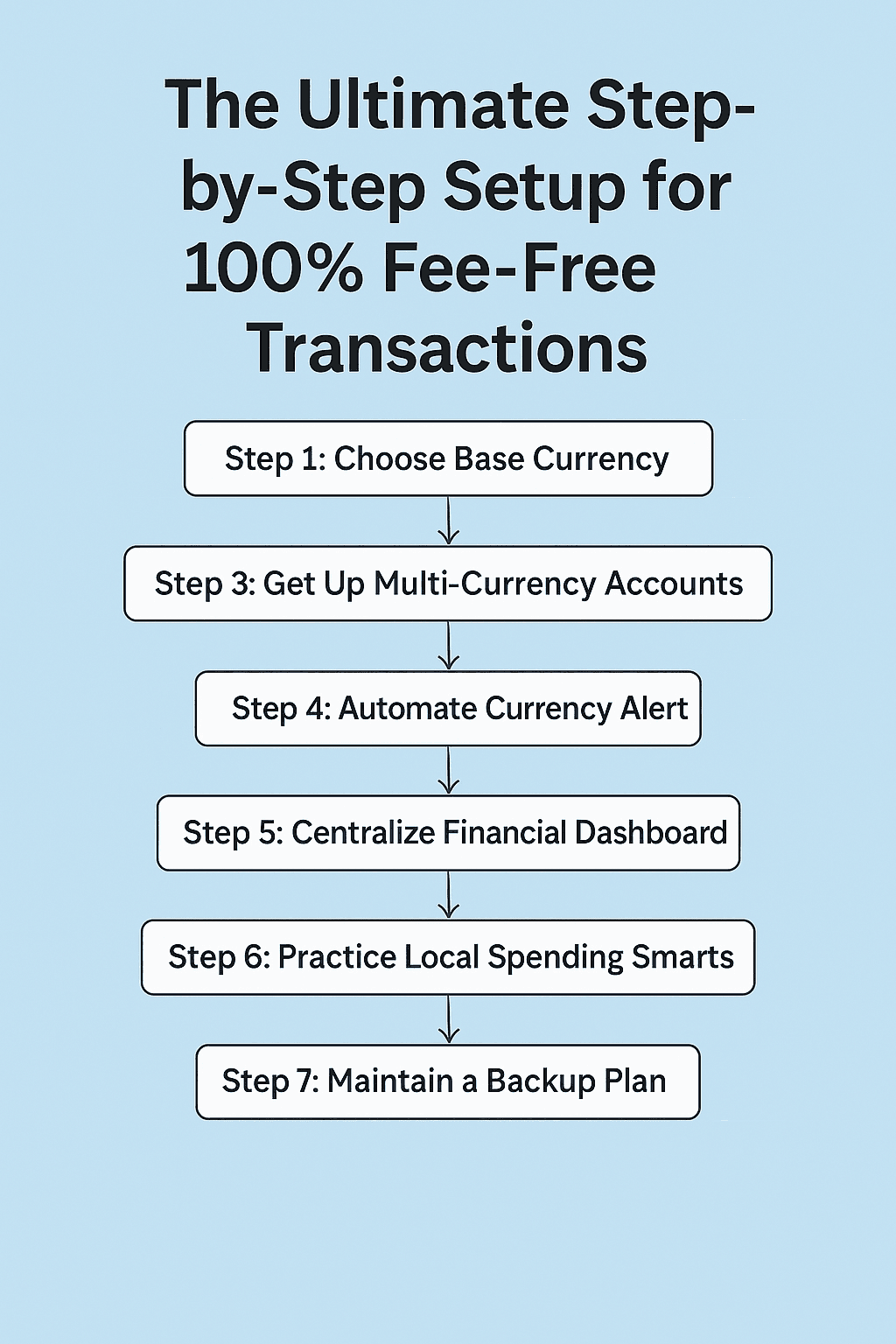
The Ultimate Step-by-Step Setup for 100% Fee-Free Transactions

A vertical infographic showing seven steps to achieve fee-free transactions, with each step listed in a separate outlined box against a light blue background

By now, you’ve learned about hidden fees, the best fintech tools, and the top cards available in 2025. But knowing isn’t enough. If you want to actually achieve zero-fee global transactions, you need a clear, action-oriented setup.

This final part of the series lays out a step-by-step system you can implement today—whether you’re preparing for international travel, studying abroad, freelancing globally, or managing cross-border business. It’s practical, adaptable, and designed for real-world use.

Step 1: Choose Your Base Currency (and Account Country)

Start by identifying your primary source of income and your most frequently used spending currency.

Why this matters:

  • Some cards perform better in specific currencies (USD, EUR, GBP)
  • Your “home” currency affects exchange timing, fees, and compliance
  • Regulatory access may depend on your country of residence

Action:
Open a Wise or Revolut account based on where you earn and spend most often. Choose one that offers local account details in the currencies you need.


Step 2: Set Up Multi-Currency Accounts

Avoid forced, automatic conversions. Instead, hold balances in multiple currencies and convert only when the rate is favorable.

Tools:

  • Wise multi-currency account
  • Revolut currency spaces
  • Crypto-stablecoin wallet (optional, e.g., USDC)

Action:
Enable accounts in your most-used currencies. Keep a buffer in each to avoid urgent conversions during bad rates.


Step 3: Get the Right Cards (Physical and Virtual)

Use one card for ATM withdrawals, another for spending, and a virtual card for online purchases and security.

Recommended Setup:

  • Charles Schwab debit card → Fee-free cash withdrawals (U.S. users)
  • Revolut or Wise card → Real-time currency conversion for daily purchases
  • Virtual card (from Wise or Revolut) → Safe online shopping or travel bookings

Action:
Order both physical and virtual cards. Link them to the appropriate accounts.


Step 4: Automate Currency Alerts and Transfers

Let technology work for you. Use automation to convert currencies only when favorable.

Tools:

  • Revolut exchange alerts
  • Wise rate notification + auto-convert
  • Google Finance widgets for monitoring

Action:
Set alerts at your target exchange rate. Automate conversions with limits to avoid emotional decisions.


Step 5: Centralize Your Financial Dashboard

Stop jumping between apps. Use a centralized tool to see all your balances, transactions, and rates.

Options:

  • Revolut’s built-in dashboard
  • Budgeting apps like YNAB or Monarch
  • Spreadsheet synced via Wise/Revolut exports

Action:
Build or install a personal finance dashboard that shows everything at a glance—cards, accounts, currencies, fees.


Step 6: Practice Local Spending Smarts

Even with the best tools, poor in-person decisions can waste money.

Rules to remember:

  • Always pay in local currency, not your home currency
  • Avoid Dynamic Currency Conversion (DCC) at all costs
  • Don’t withdraw small cash amounts repeatedly—withdraw strategically
  • Ask: “Does this card charge me for foreign use?” before traveling

Action:
Build habits: check settings, receipts, and ATM options every time.


Step 7: Maintain a Backup Plan

Cards can be lost. Apps can crash. Travel plans change. Always prepare a secondary method.

Your safety net:

  • A secondary card with emergency funds (Capital One or backup Revolut)
  • A small amount of physical cash in USD or EUR
  • Screenshots of key account numbers or card info (securely stored)

Action:
Keep your backup setup somewhere accessible but safe. Review it monthly.


Sample Setup for Different User Types

User TypeRecommended Setup
Digital NomadWise + Revolut (Premium) + virtual card + crypto wallet
International StudentWise multi-currency + physical & virtual card + budget app
Retiree AbroadCharles Schwab card + Wise account + minimal app use
FreelancerWise Business + Revolut + dashboard for invoicing & conversion
Business OwnerWise Business + Revolut Business + automated workflows

Final Checklist: Your 100% Fee-Free Toolkit

  • Multi-currency account (Wise or Revolut)
  • Physical and virtual cards (at least 2)
  • Currency alerts set and working
  • Backup funds and method secured
  • Real-time financial dashboard
  • Healthy spending habits developed

Conclusion

Zero-fee global transactions are not a fantasy. They are absolutely achievable with the right tools, habits, and setup.

This isn’t just about saving a few dollars—it’s about taking complete control of your money across borders, platforms, and currencies.

If you’ve read all seven parts of this series, you’re now ahead of 99% of global consumers.
Now take the final step: implement it. Your global wallet is waiting.