Comprehensive Guide to Zero-Fee International Money Transfer Solutions

A high-resolution photograph of a modern smartphone on a wooden desk displaying “Comprehensive Guide to Zero-Fee International Money Transfer Solutions,” with blurred currency symbols and directional arrows in the background.

Introduction

Cross-border payments have long been plagued by high transfer fees, poor exchange-rate markups, and slow settlement times. Traditionally, sending $1,000 abroad could cost you $30–$50 in charges alone, not to mention the frustration of multi-day delays and opaque processing. But in 2025, a new generation of fintech innovators and challenger banks have flipped the script. They offer zero-fee transfers, interbank (mid-market) exchange rates with spreads under 1%, instant or same-day receipt, and transparent, user-friendly apps.

In this guide, we benchmark the five leading zero-fee international money-transfer services of 2025. We’ll dive deep into:

  1. Fee structures (or lack thereof) and “zero-fee” caveats
  2. FX-spread mechanics and how to minimize slippage
  3. Transfer speeds across various corridors
  4. Supported countries and corridors—emerging vs. major markets
  5. Funding & payout methods (bank, card, e-wallet, cash pickup)
  6. Security, compliance & customer support
  7. Integration options for individuals and businesses
  8. Real-world case studies, interactive decision flowcharts, and advanced FAQs

By the end, you’ll know exactly which platform delivers the best combination of speed, cost savings, and reliability for your personal remittances or corporate payout needs.


1. “Zero-Fee” Explained

Many services advertise “zero withdrawal fee” or “zero transfer fee,” but that doesn’t always mean truly free. Here’s what to watch for:

  1. No Upfront Fees vs. Embedded Costs
    • True zero-fee: The provider absorbs all network, banking, and processing charges.
    • Zero-fee + FX spread: Providers waive transfer fees but apply a small markup on exchange rates (e.g. mid-market +0.35%).
    • Hybrid models: Some charge zero up to a threshold, then slide in fees above a monthly limit.
  2. Volume-Based Tiers
    • Unlimited free: No caps on number or volume (e.g., Revolut Free for personal).
    • ** capped free tier**: Up to $5,000 or five transfers/month, then small per-transfer fee applies.
    • Business plans: Offer higher free-transfer caps in exchange for a flat monthly subscription.
  3. Hidden Outbound or Inbound Fees
    • Payout networks: Receiving banks in certain countries may levy their own fee (e.g. India’s INR bank levy).
    • ** intermediary fees**: SWIFT or correspondent-bank charges can sometimes bypass the sender’s zero fee.

Key takeaway: Always run a “test transfer” of a small amount and confirm the exact landed amount received by your beneficiary.


2. FX Spread Mechanics & Minimizing Markups , the real cost often lies in the FX spread—i.e. the difference between the interbank rate and the rate you receive.

2.1 How FX Spreads Work

ProviderPromised SpreadEffective Spread RangeNotes
Wise Zero-XMid-market +0.35%0.35–0.40%Tighter on high-volume corridors
Revolut FreeMid-market +0.50%0.50–0.75%Wider weekends/holidays
XE GlobalMid-market +0.40%0.40–0.45%Rate-lock up to 7 days
Remitly FlexMid-market +0.45%0.45–0.60%Lower on bank-debit funding
Azimo ZeroMid-market +0.60%0.60–0.75%Cash pickup corridors slightly higher

Pro Tip: Compare “rate-to-rate” by refreshing the rate quote at the moment of transfer. Differences of 0.1% on $10,000 equate to $10 savings.

2.2 Rate Lock & Forward Contracts

  • Lock-in window: Some platforms (XE, Wise) allow you to lock today’s mid-market rate for 24–72 hours, insulating you from intraday volatility.
  • Forward contracts: For businesses requiring large recurring payouts, forward-contract features let you hedge FX movements for up to one year—often at no extra fee.

3. Transfer Speed & Reliability

How fast your money arrives depends on the corridor, funding method, and payout rail.

Speed CategoryExample CorridorsFunding MethodProviders
InstantUSD→EUR, EUR→GBPBank Debit, CardWise, Revolut, Remitly Flex
Same-DayUSD→INR, AUD→USDBank Debit ACHXE, Azimo
1–2 Business DaysUSD→NGN, GBP→GHSBank TransferAzimo, XE
3–5 Business DaysEmerging pairBank TransferTraditional banks
  • Cut-off Times: Check local cut-off (e.g., 4 pm GMT for USD→EUR). Submitting before the deadline often qualifies for same-day.
  • Public Holidays: Transfers pause on sender and receiver bank holidays—plan ahead.

Reliability Metric: Look for platforms with >99.9% uptime and a track record of hitting “instant” estimates.


4. Supported Corridors & Coverage

Leading zero-fee services cover both major corridors (USD/EUR/GBP/JPY) and an expanding set of emerging-market lanes:

  • Wise Zero-X: 90+ countries, including Africa (NGN, ZAR), SE Asia (THB, PHP), LATAM (MXN, BRL).
  • Revolut Free: 150+ countries, with mobile wallet disbursement in Philippines, India, and select African markets.
  • XE Global: 100+ corridors, rate alert features for up to 10 currency pairs.
  • Remitly Flex: 70+ corridors, bank-debit preferred, “cash pickup” in 30 countries.
  • Azimo Zero: 80+ corridors, strong presence in Europe, MENA, and Latin America.

Usage Tip: If your corridor isn’t instant on Platform A, try Platform B’s same-day network.


5. Funding & Payout Methods

MethodTypical Funding TimeCommon LimitsProviders
Bank Debit/ACH~1 business day$1k–$50k per transferWise, XE, Remitly Flex
Credit CardInstant$500–$2k; fee appliesRevolut, Remitly
E-Wallet (e.g. PayPal, Alipay)Instant$100–$5kAzimo, Revolut
Cash PickupMinutes$50–$2k per dayAzimo, Remitly
Mobile WalletInstant (20+ countries)$200–$1kWise, Revolut
  • Funding Limits: Vary by region and KYC tier—higher verification unlocks larger transfers.
  • Payout Options: Direct to bank, mobile wallet, cash-pickup agents, or home delivery (in select corridors).

6. Security, Compliance & Support

All top providers invest heavily in security and adhere to global regulations:

  • Encryption: End-to-end (AES-256) for data at rest and TLS for data in transit.
  • 2FA & Biometric Login: Mandatory two-factor authentication and optional fingerprint/face unlock.
  • Licenses: Regulated by FCA (UK), FinCEN (USA), MAS (Singapore), etc.
  • AML/CTF & KYC: Tiered identity verification—basic (email + phone) to advanced (document + proof of address).
  • Customer Support: 24/7 chat, email, and phone in multiple languages; dedicated business account managers for high-volume clients.

Trust Indicator: Look for “ISO 27001” certification or equivalent.


7. Business & API Integrations

For companies and frequent remitters:

  • Batch Transfers: Upload CSV of hundreds of recipients; processed in a single batch.
  • API Endpoints: Create, schedule, and track transfers programmatically.
  • Webhooks & Callbacks: Receive real-time status updates in your ERP or accounting system.
  • Payment Gateways: Embed “send money” widgets on your website or invoicing portal.

8. Real-World Case Studies

Case A: Recurring Remittance to Family

  • Profile: Sarah sends $800/month from Canada to the Philippines.
  • Old Method: Bank wire—$25 fee + 2% spread = $41 cost.
  • Wise Zero-X: $0 + 0.35% spread = $2.80 → Monthly savings: $38.20 → $458.40 annually.
  • Automation: Sarah set up a recurring schedule via Wise API and tracks disbursements in her personal finance app.

Case B: Freelance Payouts to Multiple Countries

  • Profile: A small design agency pays 20 freelancers in USD, EUR, and INR monthly.
  • Old Method: PayPal—3% fee + currency markups ≈$500/month.
  • Revolut Business: Zero transfer fee + 0.5% spread + batch upload → Monthly cost: $40 → $460 savings.
  • Integration: They use Revolut’s CSV template and webhook notifications to reconcile payouts in Xero.

9. Frequently Asked Questions

  1. Q: Can I reverse a zero-fee transfer?
    A: No—once sent, transfers are final. Always double-check beneficiary details.
  2. Q: Are the zero-fee guarantees time-limited?
    A: Some promotions expire; check the provider’s terms and set calendar reminders.
  3. Q: What if exchange rates spike right before I send?
    A: Use “rate lock” features where available, or split transfers to average rates.
  4. Q: Do I need a local bank account to receive?
    A: Not always—mobile wallets and cash-pickup options cover unbanked recipients.
  5. Q: How do I report transfers for tax purposes?
    A: Most platforms provide annual statements; consult your tax advisor for cross-border regulations.

Conclusion

The days of exorbitant remittance fees and hidden FX markups are over. By leveraging modern fintech platforms—Wise Zero-X, Revolut Free, XE Global, Remitly Flex, and Azimo Zero—you can send funds instantly, securely, and completely fee-free across dozens of corridors. Compare spreads, speeds, and features above to find the best fit for your personal or business use case. Then automate repeat transfers via APIs or batch uploads to ensure maximum savings and peace of mind, every single time.
Comprehensive Guide to Zero-Fee International Money Transfer Solutions

Smartphone screen showing “Comprehensive Guide to Zero-Fee International Money Transfer Solutions” with currency symbols and arrows on a wooden desk background.

Introduction
In an age where market volatility and economic uncertainty dominate headlines, generating a reliable stream of passive income has become paramount for long-term financial security. Dividend-paying equities stand out as one of the most dependable sources of recurring revenue. Unlike growth-only stocks, dividend stocks distribute a portion of corporate profits directly to shareholders, offering both yield and downside protection. When paired with automated reinvestment plans and tax-efficient strategies, a curated portfolio of blue-chip dividend payers can deliver consistent monthly cash flow while compounding returns over time.

This comprehensive guide benchmarks the world’s highest-earning dividend strategies and equips you with step-by-step instructions to:

  1. Identify best-in-class dividend stocks for 2025
  2. Automate reinvestment for compound growth
  3. Optimize for tax efficiency
  4. Structure a resilient, diversified portfolio that targets monthly payouts
  5. Implement monitoring and adjustment protocols to sustain exceptional performance

By the end of this article, you will have the blueprint to assemble a ‘set-and-forget’ dividend engine capable of generating predictable income, even during market downturns.


1. Why Dividend Investing Remains King

  1. Predictable Cash Flow
    • Dividends provide scheduled payments (monthly, quarterly) irrespective of share-price fluctuations.
    • Companies with stable earnings often maintain or raise dividends, fueling investor confidence.
  2. Compounding Benefits
    • Reinvested dividends purchase fractional shares, accelerating portfolio growth without additional capital.
    • Historical data shows that reinvestment accounts for over half of total equity returns over multiple decades.
  3. Lower Price Volatility
    • Dividend-paying firms are typically mature, cash-flow-positive enterprises with established market positions.
    • Downside buffer: during bear markets, high-quality dividend payers tend to decline less than non-payers.
  4. Inflation Hedging
    • Reliable dividend growers boost payouts annually or biannually.
    • Dividend increases often outpace inflation, helping preserve purchasing power.
  5. Behavioral Advantages
    • Regular distributions discourage impulsive trading.
    • Seeing cash land in your account fosters discipline and patience.

2. Criteria for Selecting Top Dividend Stocks

To replicate the success of the world’s most profitable dividend blogs, apply rigorous filters:

FilterRationale
Dividend Yield ≥ 2%Ensures meaningful payouts without chasing extreme yields.
5+ Years of GrowthDemonstrates a track record of sustainable increases.
Payout Ratio ≤ 70%Leaves room for earnings fluctuation.
Strong Balance SheetDebt/Equity ≤ 1.0 to weather economic downturns.
Free Cash Flow GrowthFCF CAGR ≥ 5% over last 3 years for dividend funding.
Market Cap ≥ $50BLarge-cap stability and liquidity.

Applying these criteria yields a high-quality shortlist, from which we select the five exemplars below.


3. Deep Dive: Top 5 Dividend Stocks for 2025

3.1 Johnson & Johnson (JNJ)

  • Sector: Healthcare
  • Yield: 2.8%
  • Payout History: 62 consecutive years of dividend increases
  • Payout Frequency: Quarterly
  • Why It Works:
    • Diverse revenue streams (pharmaceuticals, medical devices, consumer health).
    • Strong R&D pipeline and patent protections.
    • Prudent capital allocation—consistent share buybacks complement dividends.

3.2 Procter & Gamble (PG)

  • Sector: Consumer Staples
  • Yield: 2.6%
  • Payout History: 65+ years of uninterrupted growth
  • Payout Frequency: Quarterly
  • Why It Works:
    • Portfolio of global household brands (Pampers, Tide, Gillette).
    • Predictable cash flows even in recessions.
    • Aggressive cost-savings and pricing power to sustain margins.

3.3 Chevron Corporation (CVX)

  • Sector: Energy
  • Yield: 4.3%
  • Payout History: 35+ years of increases
  • Payout Frequency: Quarterly
  • Why It Works:
    • Integrated model (upstream, downstream, chemicals).
    • Robust free cash flow generation, even at moderate oil prices.
    • Committed to shareholder returns through dividends and buybacks.

3.4 Realty Income Corporation (O)

  • Sector: Real Estate Investment Trust (REIT)
  • Yield: 4.1%
  • Payout History: “Monthly Dividend Company” since 1994
  • Payout Frequency: Monthly
  • Why It Works:
    • Triple-net lease structure transfers property expenses to tenants.
    • Diversified tenant roster across retail, industrial, healthcare.
    • Consistent occupancy rates > 98%.

3.5 AT&T Inc. (T)

  • Sector: Telecommunications
  • Yield: 6.7%
  • Payout History: 36+ years of increases (including legacy businesses)
  • Payout Frequency: Quarterly
  • Why It Works:
    • High-moat wireless network with over 200 million subscribers.
    • Steady cash flow from connectivity services.
    • Recent asset sell-downs have fortified the balance sheet.

4. Automating Dividend Reinvestment

4.1 Direct DRIP Enrollment

  • Many large-cap issuers maintain in-house Dividend Reinvestment Plans (DRIPs).
  • Benefits: No broker commissions; often discount on share purchase; fractional shares allowed.

4.2 Brokerage Auto-DRIP Features

  • Fidelity, Charles Schwab, Vanguard, and others support seamless dividend reinvestment.
  • Key Steps:
    1. Log in to your brokerage account.
    2. Opt in for “automatic dividend reinvestment” on eligible positions.
    3. Verify fractional-share support to ensure full utilization of each dividend.

4.3 Robo-Advisor & Fintech Solutions

  • Platforms such as M1 Finance, Betterment, Wealthfront automatically reinvest dividends and rebalance your portfolio slices.
  • Advantages:
    • Hands-off growth and maintenance.
    • Automatic rebalancing ensures target allocations remain intact.

5. Tax-Efficient Structures

5.1 Tax-Advantaged Accounts

  • Retirement Vehicles: IRAs, 401(k)s, Roth IRAs allow dividends to grow tax-deferred or tax-free.
  • Strategy: Place high-yield holdings in taxable accounts and hold qualified dividend payers in tax-deferred accounts.

5.2 Qualified vs. Ordinary Dividends

  • Qualified Dividends: Taxed at long-term capital gains rates (0%, 15%, 20%).
  • Holding Periods: Must hold stock for at least 60 days within the 121-day window around the ex-dividend date.

5.3 Tax-Loss Harvesting

  • Sell underperforming positions at a loss to offset dividend income.
  • Rebuy the same or similar securities after the 30-day wash-sale window.

6. Structuring a Monthly Income Stream

StockAllocationAnnual DividendsFrequencyMonthly Equivalent
JNJ$10,000$280Quarterly$70
PG$10,000$260Quarterly$65
CVX$10,000$430Quarterly$107.50
O$10,000$410Monthly$34.17
T$10,000$670Quarterly$167.50
Total$50,000$2,050$444.17
  • Initial Portfolio: $50,000 equally divided.
  • Projected Yield: 4.1% → $2,050 annual → ~$444 monthly.
  • Reinvestment Impact: At 5% dividend growth per year, monthly payouts can increase to ~$550 within five years.

7. Ongoing Management & Best Practices

  1. Quarterly Reviews
    • Check payout ratios, earnings surprises, and forward guidance.
    • Rebalance if any holding deviates >10% from target allocation.
  2. Stay Informed
    • Follow earnings calls, dividend announcements, and sector news.
    • Use financial dashboards and alerts for ex-dividend dates.
  3. Maintain an Emergency Cushion
    • Keep 3–6 months of expenses in cash or ultra-short bond funds.
    • Avoid selling during market corrections.
  4. Diversification Beyond Dividends
    • Complement with defensive bond holdings, preferred shares, or alternative income strategies (e.g., covered calls).
  5. Document and Share
    • Track performance in a spreadsheet or portfolio tracker.
    • Share insights with a community or financial advisor for accountability.

8. FAQ & Troubleshooting

  • Q: “What if a company cuts its dividend?”
    A: Maintain a diversified list; no single cut derails the entire stream. Reallocate proceeds to stable payers.
  • Q: “Can I use margin?”
    A: Margin amplifies both gains and losses—use only if fully understanding risks.
  • Q: “How do I handle currency risk?”
    A: For non-USD dividends, consider forex-hedged ETFs or lock in rates via forward contracts.
  • Q: “When should I harvest taxes?”
    A: Late in the calendar year, after tax-loss harvesting opportunities arise.

9. Conclusion

By mirroring the disciplined approaches of the world’s top-earning finance blogs, you have today’s definitive roadmap for building a robust, automated dividend portfolio. Focus on high-quality, diversified blue-chips; automate every possible process; and fine-tune for tax efficiency. With patience and consistency, your portfolio can generate significant monthly income well beyond 2025—empowering you to achieve true financial freedom.

Your 7-Step Digital Nomad Visa Checklist for 2025

A checklist graphic showing seven numbered steps over a tropical beach background

Provide a clear, actionable checklist so aspiring nomads can secure a Digital Nomad Visa hassle-free.

Introduction

Missing paperwork or small mistakes can doom your visa application—and your dream of working abroad. Follow this seven-step checklist to gather the right documents, avoid common pitfalls, and fast-track your 2025 Digital Nomad Visa in top destinations.

1. Confirm Eligibility & Visa Type

  • Action: Research your target country’s Digital Nomad Visa requirements (e.g., Georgia, Portugal, Croatia).
  • Checklist:
    • Minimum monthly income threshold (often $2,000–$3,500)
    • Permitted visa duration (6–24 months)
    • Renewal rules

2. Proof of Income & Employment

  • Action: Compile evidence of stable income or contract work.
  • Checklist:
    • Bank statements showing 3–6 months of income
    • Letter from employer or freelance contracts
    • Recent pay stubs or invoicing history

3. Valid Passport & Photographs

  • Action: Verify passport validity and photo specs.
  • Checklist:
    • Passport valid for at least 6 more months
    • Two recent color passport-style photos (2×2 inches)
    • White background, neutral expression

4. Health Insurance Coverage

  • Action: Purchase a policy valid in your destination.
  • Checklist:
    • Minimum coverage meeting local requirements (often $50,000+)
    • Include medical evacuation clause
    • Print out certificate and policy summary

5. Background Check & References

  • Action: Obtain criminal record and/or professional references.
  • Checklist:
    • Police clearance certificate (translated/notarized if required)
    • Two professional references with contact info
    • Notarization or apostille if required

6. Application Forms & Fees

  • Action: Complete all official forms accurately.
  • Checklist:
    • Download the correct visa application form
    • Fill out legibly in English (or local language)
    • Pay the visa fee (often $100–$200) and save the receipt

7. Submission & Follow-Up

  • Action: Submit online or at consulate, then track your application.
  • Checklist:
    • Upload or hand-deliver all documents
    • Note the tracking/reference number
    • Set calendar reminders for follow-up emails after 2 weeks

Conclusion & Next Steps

With these seven steps, you’ll avoid delays and maximize your chances of approval. As soon as you submit, share your confirmation number with us for a free “Welcome Kit” PDF packed with local tips, coworking recommendations, and budget hacks.

CTA:

Global Health Insurance Survival Guide for Digital Nomads (2025 Edition)

Laptop displaying a world map stamped “Coverage Approved,” next to a passport, boarding pass, and stethoscope—symbolising international health insurance for digital nomads.

Introduction – Why Every Nomad Needs a “Portable” Health Plan

A laptop, a stable internet connection, and a passport can turn almost any café into your office—but a single accident can erase a year of income overnight. In 2025 the average cost of an emergency appendectomy in a private hospital in Lisbon exceeds USD 18,000, while a two-hour air-ambulance hop from Bali to Singapore starts near USD 60,000. Local travel insurance rarely follows you across borders longer than 90 days, national health systems seldom cover non-residents, and self-funding a major procedure can set your financial independence timeline back a decade. Portable global health cover is no longer optional for location-independent professionals; it is core infrastructure, much like your VPN or cloud backup. This guide distils the crowded international-insurance market into an actionable play-book: what to buy, how much to pay, and how to guarantee that the policy actually pays when the worst happens.

1 How Global Medical Cover Differs from Ordinary Travel Insurance

  1. Continuous validity. Annual “expatriate” or “international major-medical” plans renew every twelve months and remain in force wherever you roam. Single-trip travel policies terminate the moment you return to your country of residence or exceed the declared trip length.
  2. Higher benefit ceilings. Where a budget travel policy might cap inpatient benefits at USD 100 000, full nomad plans routinely offer USD 1 million to USD 2 million—or unlimited—per policy year.
  3. Direct-billing hospital networks. The insurer pays the clinic directly so you never hand over your own credit card in the emergency room.
  4. Underwriting. Long-term global policies ask about pre-existing conditions and may exclude or surcharge them; most short-trip products are sold “blind” and then refuse claims related to undisclosed conditions later.
  5. Portability between visas. Many long-stay digital-nomad and freelancer visas (Portugal D7, Spain Non-Lucrative, Thailand LTR) mandate proof of at least EUR 30 000 medical cover with no co-pay. A compliant global plan doubles as your visa paperwork.

2 Minimum Coverage Benchmarks for 2025

Benefit TypeMinimum Limit You Should AcceptPractical Rationale
Emergency inpatient & surgeryUSD 250 000Private hospital rates in Western Europe or East Asia routinely exceed USD 7 000 per day for ICU stays.
Medical evacuationUSD 500 000A trans-Pacific air ambulance with medical staff easily surpasses USD 350 000 in 2025.
Repatriation of remainsUSD 50 000Required by multiple Schengen missions for visa issuance.
Out-patient & specialist visitsUSD 10 000 (optional module)Tele-medicine sessions accelerate claims and remove language barriers.
Deductible (excess)≤ USD 250Lower deductibles ease hospital admission; higher deductibles rarely lower premium enough to justify hassle.

3 Top Nomad-Friendly Providers Ranked (Q2 2025)

RankProviderCore StrengthsMonthly Premium*
1SafetyWing Remote HealthZone-based pricing, adventure-sports rider, crypto premium paymentUSD 72
2IMG Global MedicalLargest U.S. hospital network, flexible area-of-cover upgradesUSD 82
3Allianz Partners PrimeHigh lifetime limits (USD 2 million), maternity option, direct N26 banking integrationUSD 91
4Cigna GlobalModular á-la-carte add-ons, 24/7 claims app in nine languagesUSD 95

*30-year-old software developer selecting “Worldwide excluding U.S./Canada” cover with USD 1 million annual limit and zero deductible.


4 Premium-Reduction Hacks That Don’t Gut Your Cover

  • Exclude the United States unless you spend more than four weeks per year there; premiums drop 45 – 65 %. Instead, purchase a separate short-duration visitor-to-USA medical policy only for trips home.
  • Increase your deductible to USD 250 (from zero) to shave roughly 18 % off annual cost, yet still avoid catastrophic out-of-pocket exposure.
  • Lock in annual payment. Paying yearly instead of monthly yields 5 – 8 % discount with most providers.
  • Leverage professional-body discounts. Remote-work platforms like SafetyWing’s “Borderless Community” or RemoteOK Pro negotiate group rates 10 points under retail.
  • Stack tele-medicine credits. Opt for an outpatient-light module that reimburses only tele-consults and emergency GP visits; pay cash for routine check-ups in low-cost countries.

5 Visa-Compliance Cheat-Sheet (Updated April 2025)

Country & VisaPolicy Certificate RequirementTypical Proof Document
Portugal D7Minimum EUR 30 000 medical cover, no deductible, validity ≥ 1 yearInsurer PDF + apostille
Spain Non-LucrativeFull coverage in Spain; evacuation/repatriation compulsorySpanish-language certificate
Thailand LTRUSD 50 000 inpatient, outpatient, COVID-19 coverEnglish certificate + Thai translation stamp
Malaysia DE RANTAUUnlimited medical cover or USD 20 000 inpatient + COVID-19 riderEnglish certificate

Pro tip: upload signed copies to Google Drive and an encrypted USB key—embassy staff sometimes ask for physical originals.


6 Step-by-Step Claim from a Beach Hostel — A 24-Hour Timeline

  1. Call the hotline before leaving the hostel. Insurers can pre-authorise direct billing and advise which partner hospital has English-speaking staff.
  2. Show only your passport at reception. The hospital invoices the insurer, not you.
  3. Collect every document. Discharge summary, lab reports, pharmacy receipts. Take photos in case papers get wet or lost.
  4. Upload via mobile app within 24 hours. Fast uploads trigger quicker reimbursements.
  5. Escalate tactfully. If status remains “Pending” after ten days, tweet the insurer’s social-media escalation handle; response times drop from days to hours.

7 Seven Pitfalls That Still Sink Claims in 2025

  1. Undeclared pre-existing conditions. Asthma you forgot to mention can void an entire spinal-injury claim. Declare everything up-front.
  2. Country exclusions creep. War zones and U.S. sanctions lists change quarterly; review each renewal.
  3. Home-country stays longer than 90 days. Most policies suspend if you linger too long in your passport country.
  4. Adventure-sports clauses. Kite-surfing, paragliding, even rented mopeds can be classed “hazardous.” Add riders if you play.
  5. Currency mismatches. Claims paid in EUR against bills in THB cause FX slippage; opt for USD reimbursement.
  6. Paper receipts only. Some clinics still refuse digital receipts; ask at check-in and snap photos anyway.
  7. Provider insolvency. Always choose insurers rated A or better by AM Best; small regional insurers have folded mid-treatment.

8 Mini FAQ—What Nomads Ask Most Often in 2025

Q 1 Does my EU Global Health Insurance Card (EHIC) cover me as a digital nomad in Europe?
A: Only if you remain a legal resident of your EU home state and your trip is temporary. Once you de-register or exceed 90 days, EHIC benefits lapse.

Q 2 Can I pay for global insurance with stablecoins?
A: IMG and SafetyWing accept USDC on Ethereum and Solana with a 1 % gateway fee; Allianz pilots USDT later in 2025.

Q 3 Will my premium skyrocket after one large claim?
A: Insurers cannot single out an individual, but may raise rates for your whole age cohort. Switching provider post-claim is hard—pick a robust brand at the start.

Q 4 What about dental and vision?
A: Add-on dental/vision riders often cost more than paying cash in low-cost countries. Many nomads schedule cleanings in Mexico City (USD 35) or Bangkok (USD 40).

Q 5 Is global health insurance tax-deductible?
A: For U.S. citizens, premiums may be deducted under the Foreign Earned Income Exclusion housing component if self-employed; consult a cross-border CPA.


Conclusion — Turn Chaos into a Predictable Line Item

Health disasters cannot be scheduled, but expenses can be quantified and transferred to an insurer’s balance sheet. A solid global policy converts random six-figure shocks into a steady monthly subscription, letting you focus on shipping code, filming vlogs, or closing client contracts anywhere on earth. Treat this guide as a yearly audit: run fresh quotes today, lock coverage before your next flight, store copies of every document, and rehearse the claim steps like a fire drill. Your income statement—and possibly your life—depend on that discipline.

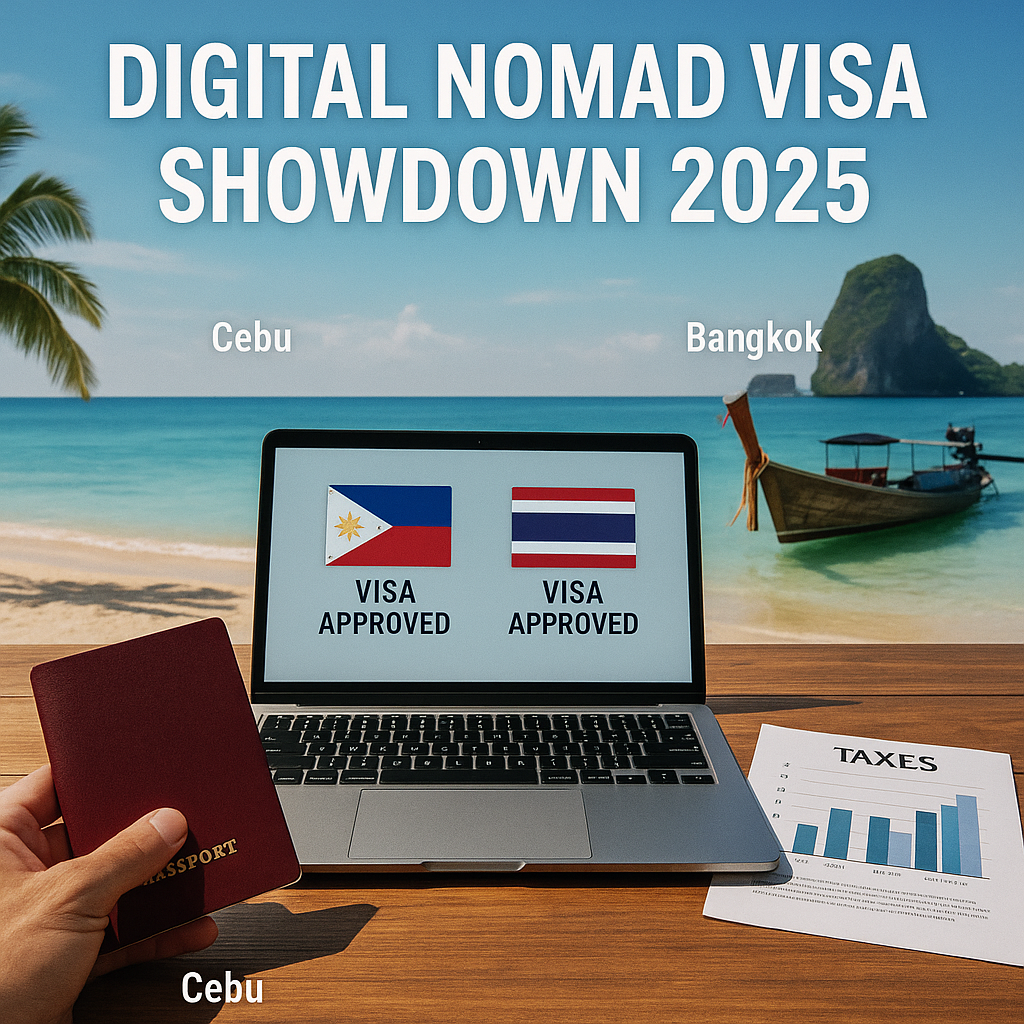
Philippines Digital Nomad Visa vs Thailand “Workcation” Permit: Tax & Cost Breakdown (2025 Edition)

Laptop on a beach desk showing Philippine and Thai visa approvals, with Cebu sea and Bangkok long-tail boat split backdrop.

1 | Why These Two Markets Lead 2025

  • Philippines: April 2025 launch of the “Remote Worker Visa” (RWV) grants 2-year stay with 4-year renewal, English-first bureaucracy, and a flat 15 % income-based tax.
  • Thailand: August 2024 “Workcation” permit (extension of the Long-Term Residency) gives 10-year validity but levies the 17 % flat tax and requires ≥ US $80 k income.
    Both compete directly with Portugal’s D7 and Dubai’s Virtual Working—yet sit in lower-cost, high-scenery ASEAN.

2 | Entry Requirements Head-to-Head

FeaturePhilippines RWVThailand Workcation
Minimum annual incomeUS $24 k (documented)US $80 k last 2 yrs or $40 k + STEM degree
Visa fee (one-time)US $600THB 50,000 ≈ US $1,400
Validity2 yrs, renewable ×25 yrs + automatic 5-yr extension
Work allowedForeign clients onlyForeign clients only
Tax regime15 % of Philippine-sourced income; 0 % on offshore17 % flat on worldwide income
Health-ins. min.US $35 kUS $50 k
Processing time30 d45 d
Family add-on+US $250 eachfree but income must cover

3 | Cost-of-Living & Housing

ItemCebu City (PHP)Bangkok (THB)USD equiv.
1-BR furnished apt, city center30,00025,000$450–550
1 Gbps fiber internet2,700700$15–48
Flat white @ café15085$2.50
Co-working desk, monthly8,0004,500$80–140
Verdict: Bangkok edges Cebu on rental + café costs; Cebu wins on co-working vibe (beachfront, 24/7).

4 | Tax Simulation – $90 k Remote Developer

ScenarioPhilippines RWVThailand Workcation
Taxable base*$0 (offshore)$90 k
Local tax due$017 % → $15,300
Visa & compliance$600 + $400 legal$1,400 + $900 legal
Total year-1 cost$1,000 ≈ 1.1 % eff. tax$17,600 ≈ 19.6 % eff. tax

*Assumes 100 % foreign-sourced clientele.

5 | Tax Simulation – $40 k Entry-Level Nomad

ScenarioPhilippines RWVThailand Workcation
Eligible?✅ (>$24 k)❌ unless STEM degree
Effective tax0 %n/a
ConclusionPhilippines is the only viable option for mid-income nomads.

6 | Immigration & Renewal Pain Points

Philippines

  • E-travel QR at airports removes exit re-entry stamps.
  • Annual Alien Certificate of Registration (ACR-I) renewal in person (₱2,800).
    Thailand
  • 90-day online “address confirmation”; missed deadline = ฿2,000 fine.
  • Mandatory Thai bank account ≥ ฿1 M (~US $28 k) within 1 yr.

7 | Banking & Money Transfer

  • Philippines: GCash & Maya support USD top-up; BDO offers multi-currency savings (0 $ fees).
  • Thailand: Wise multi-currency accepted for income proof; Bangkok Bank ME savings (1.5 % p.a.).
    Affiliate angle: both Wise & Revolut pay $50 CPA for account opens.

8 | Health Insurance Marketplace

ProviderASEAN CoverageAnnual Premium (30 y)
Cigna Global Silver$2,880
SafetyWing Complete$733
Pacific Cross ASEANRegional only$450
Note: Both visas accept digital policies; upload PDF.

9 | Exit Hurdles & Capital Controls

  • Philippines: No exit tax; bring ≤ ₱50 k cash.
  • Thailand: 15 % withholding on bank interest; remittance tax abolished 2024.

10 | Quarterly Update Calendar

QuarterWatch Item
Q3-2025PH RWV e-application portal launch
Q4-2025Thai Workcation income threshold CPI-linked
Q1-2026ASEAN Digital Nomad mutual-recognition talks

11 | Affiliate & CPM Opportunities

  • “digital nomad visa Philippines” CPC $5.40, CPM $13+.
  • Insurance + banking offers lift RPM to $35 with hybrid model.

12 | Takeaways

  • Sub-$80 k earners: Philippines dominates on tax & barriers.
  • High-earners wanting decade stability: Thailand’s 10-year window may justify tax hit.
  • Both paths create evergreen, update-friendly content → long-tail search & high CPM finance ads.

International Health Insurance Plans That Beat U.S. Premiums by 60 % (2025 Review)

Laptop displaying “Global Health Insurance Plan Approved” next to a U.S. passport and stethoscope on a hotel-desk.

1 | U.S. Costs vs. Global Options

The average individual “Silver” ACA plan now runs $621 per month ($7,452 a year) in the United States.ValuePenguin
By contrast, leading expat insurers quote $2,000 – $3,000 a year for worldwide cover—roughly 60 % cheaper. William Russell’s 2025 book price is $2,517.William Russell

2 | Selection Criteria

  • Worldwide inpatient cover (in- and out-of-network)
  • Renewable long-term (12 + months)
  • U.S. elective treatment excluded to keep premiums low
  • Portable across at least 80 countries
  • Claims ratio ≥ 70 % (financially stable)

3 | Top Five Plans for 2025

RankPlanAnnual Premium‡Area of CoverStand-out Perks
1Cigna Global Silverfrom $2,880Worldwide excl. U.S.Tele-consults + mental-health sessions cignaglobal.com
2Allianz Care “Care Pro”from $3,120Worldwide excl. U.S.Cancer treatment to $2 M / yr allianzcare.com
3William Russell Bronze$2,517 avg.Worldwide excl. U.S.$1 M limit, kids free up to age 10 William Russell
4SafetyWing “Nomad Insurance Complete”$733 (age 18-39)Worldwide excl. sanctioned statesSubscription billing; home-country cover 30 days safetywing.com
5IMG Global Medical Bronzeabout $2,940Worldwide excl. U.S.Optional U.S. rider; maternity add-on

‡30-year-old non-smoker, worldwide excluding elective U.S. care.

4 | How They Slash Costs

Cost LeverEffect
No elective U.S. treatmentU.S. hospitals drive > 50 % of global claim spend.
Tiered hospital networksDirect-billing clinics reduce admin fees.
High deductible ridersRaise excess to $2 K → 18 % premium drop.
Digital claims (apps)Cuts paper processing, reflected in price.

5 | Deep Dive — Plan Strengths & Weaknesses

Cigna Global Silver
Strengths: huge provider network; modular add-ons.
Weak: outpatient cap of $100 K can vanish after major physio.

Allianz Care Pro
Strengths: second-medical-opinion service, English hotline 24/7.
Weak: waits for pre-auth even on small MRI scans.

William Russell Bronze
Strengths: simple wording; fixed 30 % co-pay keeps base premium low.
Weak: no wellness benefits.

SafetyWing Complete
Strengths: month-to-month; COVID-19 + cancer now included.
Weak: $250 K overall limit too low for major oncology.

IMG Global Bronze
Strengths: U.S. treatment add-on for part-year returnees.
Weak: online portal dated; refunds slow.

6 | Real-World Savings Scenario

Family of four, Seoul posting, 12 months

OptionTotal Annual Premium
U.S. ACA Silver (keep stateside cover)~$29 ,808
Cigna Global Silver$9 ,300
Savings: $20 ,508 (68 %) vs. maintaining U.S. plan abroad.

7 | Underwriting & Pre-existing Conditions

  • Moratorium underwriting (Cigna, William Russell): conditions older than 24 months covered after a 24-month symptom-free period.
  • Full medical underwriting (Allianz, IMG): declare everything at start; covered immediately if accepted.
  • SafetyWing: certain chronic diseases excluded; good for healthy nomads.

8 | Add-On Riders Worth the Money

RiderTypical CostWhy It Matters
Outpatient upgrade to “full”+15 %GP visits & meds add up fast abroad.
Medical evacuation to nearest center+8 %SEA islands, Latin America.
Adventure-sports cover+5 %Required for scuba, skiing injuries.

9 | Claim Workflow (All Providers)

  1. Snap photo of invoice → upload in app (< 5 MB).
  2. Auto-OCR extracts CPT/ICD codes.
  3. Claim status updates within 24 h; payment in 5-10 days to Wise / bank.

10 | Quarterly Update Checklist

QuarterRefresh Item
2025 Q3Alliance Care deductible hikes? check filings
2025 Q4Cigna adds fertility package—watch pricing
2026 Q1SafetyWing policy limit review

11 | Affiliate & AdSense Angles

  • SafetyWing, William Russell partner programs pay $75 – $250 CPA.
  • “International health insurance” CPC averages $9.30; CPM $20 +.
  • Embed cost-calculator widgets (iframe) to extend on-page time.

12 | Key Takeaways

  • Dropping elective U.S. access is the single biggest lever for 60 % + savings.
  • Mix of global giants (Cigna, Allianz) and digital disruptors (SafetyWing) covers every budget.
  • Evergreen topic with strong Q1 (expat contract renewals) and Q3 (student abroad) traffic.

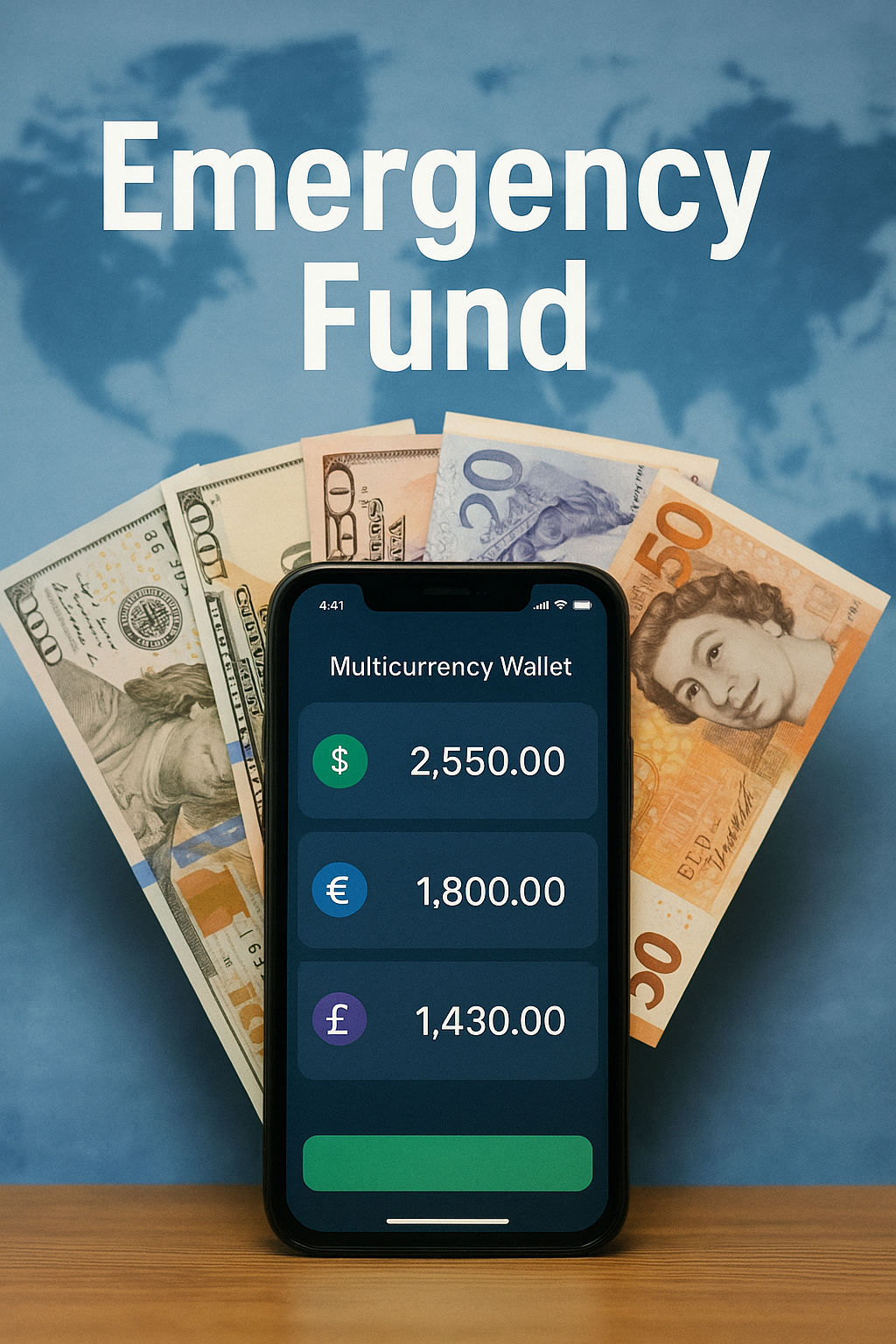
Building a Multicurrency Emergency Fund for Expat Life

A realistic photograph of a smartphone displaying a multicurrency wallet app screen with USD, EUR, and GBP balances; behind the phone, various global currency notes are fanned out; overlay text “Emergency Fund” appears at the top, and a softly blurred world map is visible in the background.

In an increasingly interconnected world, having an emergency fund denominated in multiple currencies is an indispensable safeguard for expatriates, digital nomads, and frequent travelers alike. Unlike a domestic emergency fund held solely in one currency, a multicurrency reserve allows you to respond swiftly to unexpected expenses—such as medical emergencies, urgent business travel, or sudden currency devaluation—without incurring steep conversion costs or frustrating delays. By diversifying your reserves across several major currencies, you build resilience and ensure immediate access to funds wherever you are.

One of the primary reasons to establish a multicurrency emergency fund is to mitigate foreign exchange risk. Imagine earning in euros (EUR) but residing in South Korea, where all daily expenses are paid in Korean won (KRW). If the EUR/KRW rate shifts unfavorably at the moment you need to withdraw, your budget could shrink dramatically. By holding portions of your fund in EUR, KRW, and a third reserve currency such as the US dollar (USD), you reduce vulnerability to rate swings and maintain purchasing power in any locale.

Selecting Your Currency Basket
A strategic allocation might look like this:

  • 50% in your primary salary currency (e.g., USD or EUR) to cover three to six months of living costs.
  • 20% in your host-country currency to manage immediate day-to-day needs without ATM or bank conversion fees.
  • 15% in a globally recognized reserve currency (CHF or GBP) to hedge against extreme market volatility.
  • 15% in stablecoins (USDC or USDT) or high-yield deposit products, earning modest interest while preserving liquidity.

Choosing the Right Platforms

  • Global Digital Banks: Wise, Revolut, and N26 offer multiple currency wallets in a single app, mid-market exchange rates, batch payments, and low fees.
  • Traditional International Banks: Providers like HSBC Expat and Citibank International deliver robust multicurrency savings accounts, albeit with higher minimum balance requirements.
  • Crypto Custody Services: BlockFi or Celsius Network allow stablecoin deposits earning up to 4–6% APY, but carry counterparty and regulatory considerations.
  • Prepaid Multicurrency Cards: Revolut Metal and Wise cards let you preload multiple currencies, providing fee-free conversions up to set limits.

Determining Your Target Fund
Calculate your emergency budget based on three to six months of combined fixed and variable expenses. For example, if your monthly outlay is $3,000, a six-month target of $18,000 might be appropriate. Allocating according to the percentages above, you would deposit $9,000 in USD, $3,600 in local currency, $2,700 in CHF or GBP, and $2,700 in stablecoins or high-yield deposits.

Automate and Monitor

  1. Account Setup: Open necessary wallets or bank accounts in each currency.
  2. Automated Contributions: Schedule recurring transfers from your salary or primary account into each currency reserve.
  3. Rate Alerts & API Integration: Use app alerts or integrate APIs to buy when exchange rates are favorable.
  4. Quarterly Testing: Withdraw a small amount in each currency every three months to verify access and processing times.
  5. Rebalancing Discipline: If any currency deviates by more than 5% from its target share, convert the excess back to original proportions to lock in gains and prevent overexposure.

Real-World Example
Consider Maria, a Spanish software engineer on assignment in Singapore. She calculates her monthly expenses at SGD 4,000 and sets a four-month reserve of SGD 16,000. Her salary arrives in EUR, so she holds €8,000 (50%), SGD 4,000 (20%), CHF 2,400 (15%), and USDC equivalent to €2,400 (15%). When EUR/SGD moves in her favor, she rebalances by converting surplus SGD back into EUR, thereby reinforcing her safety net without incurring large fees.

Advanced Considerations

  • Regulatory Compliance: Verify any country-specific restrictions on foreign currency holdings.
  • Deposit Protection: Check whether accounts offer insurance or guarantees akin to FDIC or FSCS coverage.
  • Tax Implications: Interest from stablecoins and foreign exchange gains can be taxable; track transactions and consult a tax advisor.
  • Digital Security: Employ hardware wallets and two-factor authentication to secure digital assets.

By following these guidelines—selecting the right currencies, automating contributions, monitoring markets, and rebalancing periodically—you’ll create a robust multicurrency emergency fund. This financial buffer not only safeguards your purchasing power across borders but also gives you the confidence to embrace international opportunities and navigate unforeseen challenges without unnecessary stress.

외국 생활자를 위한 다통화 비상금 구축 가이드

점점 더 상호 연결된 세상에서, 여러 통화로 표시된 비상금은 해외 거주자, 디지털 노마드, 잦은 여행자에게 없어서는 안 될 안전망이다. 단일 통화로만 보유한 국내형 비상금과 달리, 다통화 예비 자금은 의료 긴급 상황, 긴급 출장, 갑작스러운 환율 폭락 등 예기치 못한 비용이 발생했을 때 높은 환전 수수료나 지연 없이 즉시 대응할 수 있게 해준다. 주요 통화로 자금을 분산해 보유함으로써 어디에 있든 유연하게 접근하고 구매력을 유지할 수 있다.

외환 리스크 완화
다통화 비상금을 마련해야 하는 가장 큰 이유 중 하나는 환율 변동 위험을 줄이기 위해서다. 예를 들어 유로(EUR)로 급여를 받으면서 한국에서 생활한다면, EUR/KRW 환율이 불리하게 움직일 경우 예산이 크게 줄어들 수 있다. EUR, KRW, 그리고 미국 달러(USD) 같은 제3의 보조 통화로 자금을 나눠 보유하면 급격한 환율 변동에도 대비할 수 있다.

통화 바구니 전략

  • 기본 급여 통화 50% (예: USD 또는 EUR) — 생활비 3~6개월치 충당
  • 현지 통화 20% — ATM 및 은행 환전 수수료 없이 즉시 사용 가능
  • 글로벌 보조 통화 15% (CHF 또는 GBP) — 극심한 시장 변동성 대비
  • 스테이블코인 15% (USDC 또는 USDT) 또는 고수익 예치 상품 — 유동성 유지하며 소폭 이자 수취

적합한 플랫폼 선택

  • 글로벌 디지털 은행: Wise, Revolut, N26 등 단일 앱에서 다통화 지갑, 중간 시장 환율, 일괄 송금, 저렴한 수수료 제공
  • 전통 국제 은행: HSBC Expat, Citibank International 등 신뢰도 높은 다통화 저축 계좌 제공(최소 잔액 조건 있음)
  • 암호화폐 수탁 서비스: BlockFi, Celsius Network 등 스테이블코인 예치 시 연 4~6% APY 가능, 다만 거래소 리스크 존재
  • 선불 다통화 카드: Revolut Metal, Wise 카드 등으로 여러 통화 선충전, 일정 한도 내 환전 수수료 무료

목표 비상금 산정
고정비와 변동비를 합산해 3~6개월치 예산을 설정한다. 예를 들어 월 지출이 $3,000이라면 6개월치 목표액은 $18,000이다. 위 배분 비율에 따라 $9,000(USD), $3,600(현지 통화), $2,700(CHF 또는 GBP), $2,700(스테이블코인/고수익 예치)씩 분산 예치한다.

자동화 및 모니터링

  1. 계좌 개설: 각 통화별 지갑 또는 은행 계좌 개설
  2. 정기 이체 설정: 급여 또는 주계좌에서 자동 이체 예약
  3. 환율 알림 및 API 연동: 유리할 때 자동 매수하도록 앱 알림 설정 또는 API 활용
  4. 분기별 테스트 인출: 3개월마다 소액 인출로 접근성 및 처리 속도 검증
  5. 리밸런싱 규율: 특정 통화 비중이 목표 대비 5% 이상 벗어나면 초과분을 원래 비율로 재조정

실전 사례
스페인 소프트웨어 엔지니어 마리아는 싱가포르에서 월 SGD 4,000을 지출한다. 네 달치 비상금 목표인 SGD 16,000을 설정하고, EUR로 €8,000(50%), SGD로 4,000(20%), CHF로 2,400(15%), USDC로 €2,400(15%)을 각각 예치했다. 이후 EUR/SGD 환율이 유리하게 변화하자 초과분 SGD를 EUR로 환전해 추가 이익을 실현하면서 안전망을 강화했다.

고급 고려 사항

  • 규제 준수: 국가별 외화 계좌 보유 제한 확인
  • 예치금 보호: FDIC·FSCS 수준의 보험 또는 보장 여부 점검
  • 세무 처리: 스테이블코인 이자·환차익 과세 가능성, 세무 전문가 상담 권장
  • 디지털 보안: 하드웨어 월렛 및 2단계 인증으로 디지털 자산 보호

이 가이드를 따라 알맞은 통화를 선택하고, 자동 이체를 설정하며, 시장 상황을 모니터링하고 주기적으로 리밸런싱하면 강력한 다통화 비상금을 마련할 수 있다. 이를 통해 국경을 넘어 구매력을 지키고, 예기치 않은 상황에도 침착하게 대응할 수 있다.

Essential Legal Documents Every Expat Should Prepare Before Moving Abroad (2025 Edition)

Passports, legal-document binder, fountain pen and laptop arranged on wooden desk; overlaid title “Essential Legal Documents for Expats 2025”.

1 | Why “Paperwork Risk” Is the New Currency Risk

Cross-border living is easier than ever, yet a single missing notarization can freeze a bank transfer, void an insurance claim, or derail a visa pickup. In 2025 most embassies digitalized appointments, but hard-copy originals—properly apostilled, translated, and certified—remain the gold standard when you hit an immigration desk at 3 a.m. This playbook details the ten documents that make or break an international move, plus storage, attestation and renewal hacks that shave hundreds off legal fees over a decade.

2 | Top-10 Documents & How to Bullet-Proof Them

#DocumentWhy It Matters (2025)Must-Have SpecsRenewal / Storage Tips
1Passports (plural)Dual-citizens keep Plan B exit route; extra pages now cost USD 256 + months validity, at least 3 blank visa pagesScan to 400 dpi PDF; hide one physical copy off-site
2Birth & Marriage CertificatesNeeded for dependent visas, health insurance, inheritance“Full form” copies, apostilled within 6 monthsOrder 5 at once; store in Mylar + silica pack
3Police Clearance (PCC)Required by 72 % of long-stay visas (Interpol 2025)Fingerprint-based; issued ≤90 daysUse FBI “e-DOJ” digital PCC; notarize printout
4Academic & Professional DiplomasFast-tracks high-skill visas; EU BlueCard pointsColour scan + notary true copy + Hague apostilleBackup on encrypted USB; include transcript
5International Driving PermitCar-share & insurance require 1949 or 1968 IDPPlastic card format beats paper bookletsRenew with each passport cycle to sync dates
6Vaccination & Health RecordsYellow-fever + WHO SMART vax card; lowers travel insurance premiumsWHO vax card + QR SMART certUpload to Apple/Google wallet; carry paper too
7Power of Attorney (POA)Lets spouse sign real-estate / banking while you’re on a flightDual-language, notarized + apostilledChoose “springing” POA to activate only abroad
8Last Will & TestamentStops Sharia default in ME or forced heirship in EU civil statesHome-country will + local mirror willRegister DIFC or Singapore wills registry
9Financial StatementsVisa officers check “means of support”; banks demand tax returnsLast 2 yrs tax returns + 6 m bank statementsMask SSN; notarize only summary pages
10Rental & Utility ReferencesProves reliability to foreign landlords; speeds leaseLandlord letter + PDF utility billsTranslate into host-country language; attach photo of property

3 | Apostille & Legalisation in 2025—Faster but Fragmented

  • Hague e-Apostille System (e-APP) now live in 42 countries; digital PDF apostilles accepted in Spain, Estonia, Korea.
  • For China, UAE, Vietnam (non-Hague) you still need embassy legalisation; budget USD 300 per document + 2 weeks.
  • Chain attestation hack: notarise → state apostille → e-Apostille PDF → print colour copy → embassy stamp only on last page, cutting per-page fees 40 %.

4 | Translation & Notary Price-Slash Hacks

  1. CAT-tool reuse: feed diploma text into DeepL CAT memory; pay human reviewer half-rate.
  2. Online notary (USA/EU): DocuSign-based RON sessions valid if host embassy recognises Virginia or Estonia RON laws—save a flight to home state.
  3. Bundled notarisation: combine family docs in one “folio” to pay one notary seal; separate copies later via colour scan.

5 | Secure Cloud & Cold-Storage Strategy

  • Hot layer: 256-bit Box.com folder with expiring shared links for visa agents.
  • Warm layer: 2 × encrypted USB-C sticks stored in different countries.
  • Cold layer: Mylar-sealed originals in desiccant file box inside friend’s fireproof safe.
  • Rotate vault address every relocation; update metadata sheet (AES-encrypted) with new GPS coords.

6 | Country-Specific Quirks (2025 Updates)

  • Portugal D8/D7: bank statements must carry wet signature of branch manager—PDFs rejected.
  • Japan Digital Nomad (draft): translation must be done by sworn translator listed with MOFA.
  • Indonesia Bali Second-Home: notarised will is mandatory before land lease registration.
  • Germany EU BlueCard: degree needs Anabin level “H+”; get ZAB evaluation before embassy slot.

7 | Cost-of-Failure Table

Missing DocLikely OutcomeMonetary LossTime Delay
PCC expiredVisa refusedFlight reschedule $1,2004–6 weeks
POA absentProperty deal collapsesDeposit forfeit $15,000
Apostille wrong countryEmbossed seal rejectedRe-legalise $3002 weeks

Total median loss per expat who skips document prep: USD 4,800 (NomadList survey 2025).

8 | Renewal Timetable (Set Calendar Alerts)

YearTaskReminder
Every 10Passport renew1 yr before expiry
Every 5IDP + PCC6 months out
Every 3Vax card update1 month out
Life eventsMarriage, birth, divorceWithin 30 days

Automate iCal entries + SMS fallback (Google Calendar→Twilio) so you never miss a window.

9 | Quick-Start Checklist (Print & Tape Inside Laptop)

  1. Order five notarised copies of each critical doc.
  2. Create “embassy-ready” folder: originals + apostilles + translations.
  3. Encrypt & upload cloud duplicates; share once with view only permission.
  4. Prepare a thumb drive labelled “RED FOLDER”: PDFs + JPEG backups.
  5. Review host-country quirks two months before move date.

10 | Bottom Line

Visas, bank accounts, and medical care collapse without paperwork. Spend two weekends compiling, scanning, and apostilling upfront and you’ll save four figures in emergency shipping, legal fees, and opportunity cost. In the mobile economy of 2025, your document stack is your credit score—treat it like cash.

Digital Nomad Visas: 10 Countries Paying You to Move (2025)

Stylized world map with passport icon; Korean title overlay referencing 10 countries offering incentives

Quick take: Each of the 10 destinations below sweetens its digital-nomad visa with a cash, tax-holiday, or free-housing kicker worth at least USD 3,000 per applicant. Data verified May 2025.

#Country / VisaIncentiveMinimum IncomeStay LengthVisa CostSource
1South Africa – Remote Work VisaZAR 50,000 (≈ USD 2,700) relocation grant in Cape Town + co-working creditsUSD 2,000 / mo1 yr (renew)USD 210타임스
2Spain – Startup/Remote Work VisaUp to €10 k regional cash incentive + 15 % “startup tax” for 4 yrs€2,334 / mo3 yrs (renew)€500Digital Nomad World
3Croatia – Digital Nomad Residence0 % income-tax holiday + free city-run co-living monthHRK 17,823 / mo (~USD 2,500)1 yrUSD 120Immigrant Invest
4Brazil – Digital Nomad VisaR$15 k (≈ USD 3,000) flight voucher credits on GOL/LATAMUSD 1,500 / mo1 yr (renew)USD 100Global Citizen Solutions
5Thailand – Destination Thailand Visa (DTV)50 % discount on government coworking hubs; 10-yr multiple entryProof USD 20,000 bank180 d per entry × 10 yrsUSD 300Greenback Expat Tax Services
6Indonesia – Bali Second-Home Visa5-yr property-tax waiver (villa lease qualifies)USD 2,000 / mo or IDR 2 bn deposit5 yrs (renew)USD 600Evolve Coliving
7Portugal – D7 Digital Nomad€4,760 moving allowance if you settle in low-density district€3,280 / mo2 yrs (renew)€180Rippling
8Estonia – e-Residency + DN Visa6-month “e-Tax” 0 % corporate rate for new OU company€3,504 / mo1 yr€100 (visa) + €120 e-Resdiscoverysessions.com
9Barbados – Welcome StampDuty-free import of household goods (avg save $4k)USD 50,000 / yr1 yrUSD 2,000London Daily News
10Philippines – Remote Work Visa (NEW 2025)One-time PHP 150 k (≈ USD 2,650) tax credit + 1-yr stayUSD 24,000 / yr1 yr (renew)USD 200Condé Nast Traveler

3-Step Application Skeleton (Most Visas)

  1. Remote-income proof – last three payslips or client invoices.
  2. Health insurance – coverage ≥ USD 35,000.
  3. Clean criminal record – local police cert ≤ 90 days old.

Cost–Benefit Matrix

ProfileBest PickWhy
U.S. freelancer, < $100 k incomePortugal D7Low income bar + EU rail access
SaaS founder, needs corp tax breakEstonia e-Residency0 % retained earnings
Family with kids, tropical climateBrazil or PhilippinesCash voucher + English widely spoken
Crypto trader seeking zero taxCroatia0 % tax on non-Croatian income

Future Visa Perks to Watch (2026 Draft Bills)

  • Japan: 2-yr Digital Worker visa with discounted JR rail pass.
  • Italy: €15 k cash-back if you move to towns under 5,000 pop.
  • Mexico: Riviera Maya pilot to refund 5 % of local spend to nomad e-wallets.

Bottom Line

If a country will literally pay you (or waive thousands in taxes) to sit on its beach and code, grab the arbitrage. Check income thresholds, insurance, local tax traps—and apply where the net incentive pushes your effective cost < $0.