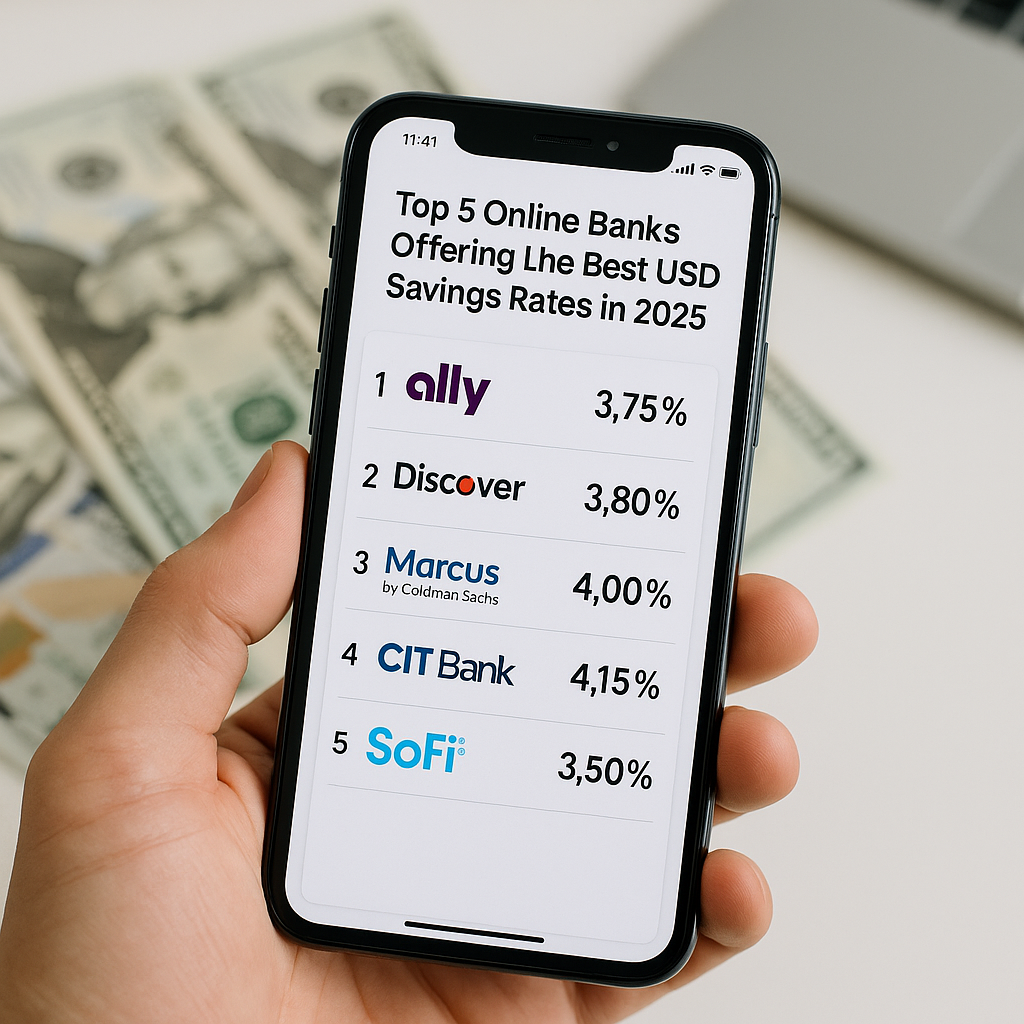
Top 5 Online Banks Offering the Best USD Savings Rates in 2025

A smartphone displaying a list titled “Top 5 Online Banks Offering the Best USD Savings Rates in 2025,” with each bank logo (Ally, Discover, Marcus by Goldman Sachs, CIT Bank, SoFi) and their APY rates, set against a blurred background of US dollar bills.

Introduction

As interest rates continue to ebb and flow in response to global economic conditions, finding a safe haven for your cash that still earns a meaningful return has become more challenging—and more important—than ever. Traditional brick-and-mortar banks frequently advertise convenience and legacy, yet too often they fail to deliver competitive annual percentage yields (APYs) on savings. In contrast, purely digital, online-first banks have upended the marketplace by offering significantly higher APYs on USD-denominated savings accounts, minimal fees, and seamless user experiences. For savers looking to maximize their returns without compromising security or liquidity, these online banks represent the most compelling options available in 2025.

This guide dives deep into the top five online institutions that consistently lead in USD savings rates, comparing not only headline APYs but also account features, minimum requirements, withdrawal rules, and overall user experience. Whether you’re parking your emergency fund or steadily building a cash reserve for future investments, understanding the nuances between these providers will empower you to make the best long-term choice.

We will cover:

  1. Ally Bank – A longstanding contender in the online banking space known for transparent pricing and consistently high yields.
  2. Discover Bank – A major credit-card issuer turned online savings leader, offering attractive perks and rewards.
  3. Marcus by Goldman Sachs – The global investment giant’s consumer arm, balancing strong rates with rock-solid reputation.
  4. CIT Bank – A rising fintech hybrid with tiered-rate structures that reward higher balances.
  5. SoFi Money – A digital finance platform blending checking and savings features, with unique cash-sweep options.

After detailing each institution, we’ll equip you with a decision framework—covering ease of use, insurance coverage, minimum balances, and promotional opportunities—so you can open your next savings account with confidence. By the end of this guide, you’ll know exactly which bank best matches your financial goals and how to get your funds earning maximum interest in as little as 10–15 minutes.


1. Ally Bank

Overview and APY

Ally Bank is widely regarded as one of the pioneers in online-first consumer banking. As an entirely digital institution—no physical branches—Ally passes cost savings on to customers via competitive rates. As of early 2025, Ally’s standard Online Savings Account APY stands at 3.75%, far outpacing the national average for brick-and-mortar banks.

Key Features

  • No Monthly Fees: Ally does not charge maintenance or hidden fees.
  • No Minimum Balance: You can open with any amount—even $0—and continue to earn the published APY.
  • Daily Compounding Interest: Allows you to benefit immediately from interest gains.
  • 24/7 Customer Support: Access via phone, chat, or secure messaging.
  • User-Friendly App & Website: Ally’s digital platforms are consistently rated highly for ease of navigation, with quick transfers and clear statements.

Insurance & Safety

  • FDIC Coverage: Deposits insured up to $250,000 per depositor, per insured bank, for each account ownership category.
  • Security Measures: Multi-factor authentication, TLS encryption, and automatic logout for inactive sessions.

Additional Perks

  • Bucket Savings: Create up to 10 “buckets” within your savings account to earmark funds for specific goals—travel, emergency fund, big purchase—each earning the same APY but tracked separately.
  • Surprise Savings™: A feature that analyzes your checking account balance and automatically sweeps small amounts into savings when you have extra cushion, accelerating your savings without you lifting a finger.

Ideal Customer Profile

Choose Ally if you:

  • Want a truly no-fee, no-minimum account.
  • Value reliable, around-the-clock support.
  • Prefer a straightforward savings product without complex tiers.
  • Appreciate auto-savings tools like Surprise Savings™.

How to Open

  1. Visit ally.com/savings and click “Open Account.”
  2. Provide personal information (name, address, SSN).
  3. Fund via ACH from an external checking account.
  4. Start earning interest immediately after funding posts.

2. Discover Bank

Overview and APY

Discover Bank, long known as a top credit-card issuer, expanded into deposit accounts with equally competitive offerings. Its Online Savings Account currently features an APY of 3.80%—slightly above Ally—while also bundling valuable customer rewards.

Key Features

  • No Minimum Opening Deposit: Start with as little as $0.
  • No Monthly Fees or Service Charges: No surprises on your statement.
  • Unlimited Deposits & Up to Six Monthly Withdrawals: Standard Regulation D limits apply, but Discover has removed fees for over-limit withdrawals.
  • 24/7 Customer Service: Live representatives available day or night.

Insurance & Safety

  • FDIC-Insured: Up to $250,000 per depositor.
  • Secure Online Platform: Encrypted login and transaction processing.

Rewards and Perks

  • Cashback Checking Integration: If you hold both a Discover checking and savings account, certain checking transactions earn 1% cashback on up to $3,000 in debit card purchases per month, indirectly boosting your overall yield.
  • Bonus Offers: Periodic promotional offers—such as a $200 bonus for new savers who deposit $15,000 within a specified timeframe—may appear, but always read terms carefully.

Ideal Customer Profile

Discover is ideal for you if you:

  • Already use Discover credit cards and want to centralize your finances.
  • Seek occasional promotional bonuses.
  • Enjoy the potential to earn small additional yield via cashback checking links.

How to Open

  1. Go to discover.com/online-savings-account.
  2. Complete the “Open an Account” form.
  3. Verify identity with SSN and address.
  4. Fund via external bank transfer or debit card deposit.
  5. Watch for any promotional deposit offers when signing up.

3. Marcus by Goldman Sachs

Overview and APY

Marcus, launched by Goldman Sachs in 2016, brings Wall Street expertise to everyday savers. Its Online Savings Account currently offers 4.00% APY, among the highest standard rates for 2025. Marcus focuses on simplicity and reliability rather than bells-and-whistles features.

Key Features

  • No Fees, No Minimums: Straightforward pricing—no monthly or maintenance fees.
  • Daily Compounding: Interest accrues daily and deposits to your account monthly.
  • User Experience: Clean, intuitive interface with clear dashboards and progress trackers.

Insurance & Safety

  • FDIC Coverage: Insured up to $250,000.
  • Bank-Grade Security: Multi-factor authentication, continuous monitoring for fraud.

Additional Tools

  • Savings Goals: Set specific financial goals (vacation, home down payment) and track progress.
  • Rate Alerts: Sign up for email notifications should Marcus increase its APY beyond a set threshold you specify.

Ideal Customer Profile

Marcus appeals to:

  • Savers seeking top-tier APY with minimal complexity.
  • Those who prioritize the Goldman Sachs brand for trust and stability.
  • Users who appreciate goal-setting tools integrated into their banking experience.

How to Open

  1. Navigate to marcus.com/savings.
  2. Enter personal and financial details.
  3. Link an external account for funding.
  4. Receive instant approval and begin earning interest the day funds clear.

4. CIT Bank

Overview and APY

CIT Bank—originally Commercial Investment Trust—has carved a niche with its tiered-rate Savings Connect account. In early 2025, CIT offers up to 4.15% APY on balances of $100,000+, with a base APY of 3.95% for balances between $25,000 and $99,999.

Key Features

  • Tiered-Rate Structure:
    • $0–$24,999: 3.75% APY
    • $25,000–$99,999: 3.95% APY
    • $100,000+: 4.15% APY
  • Low Minimum to Earn Highest Rate: Just $100 initial deposit to open.
  • No Monthly Maintenance Fees: No fee deductions to eat into your yield.

Insurance & Safety

  • FDIC-Insured: Standard coverage up to $250k.
  • Secure Website & App: Encrypted sessions, timeout auto-logout.

Perks and Considerations

  • Interest Calculator: Online tool lets you model growth at different tiers.
  • Dedicated Relationship Managers: For customers with larger balances, CIT provides personalized service and rate alerts.
  • Funding Methods: ACH transfers, mobile check deposit (via app), wire transfers.

Ideal Customer Profile

CIT Bank is best if you:

  • Maintain a six-figure balance (or can grow into it).
  • Want to maximize yield through tiered incentives.
  • Prefer occasional personalized service for larger deposits.

How to Open

  1. Visit cit.com/savings-connect.
  2. Choose “Savings Connect” and click “Open Account.”
  3. Complete identity verification and deposit at least $100.
  4. Select tier and start earning immediately upon funding.

5. SoFi Money

Overview and APY

SoFi Money combines checking and savings features through a cash-sweep mechanism. Funds above a certain threshold automatically sweep into partner banks offering 2.50% APY (variable) on sweep balances, while providing debit-card access to your full balance.

Key Features

  • One Account, Dual Functionality: Spend from your account like a checking account; any funds above $… sweep into high-yield partners.
  • No Account Fees: No monthly or overdraft fees.
  • Unlimited ATM Rebates: Nationwide ATM fee reimbursements up to $15 per statement period.

Insurance & Safety

  • SIPC Coverage: Cash sweep balances are covered up to $250,000 for securities; check partner bank FDIC coverage for deposits.
  • Mobile Security: Biometric login (fingerprint/face ID) plus PIN protection.

Perks

  • Cashback Offers: SoFi often partners with retailers and services to offer cash-back deals.
  • Financial Planning Tools: Access to SoFi’s suite of educational resources and free financial advising for members.

Considerations

  • APY Variability: Rate may fluctuate more frequently than pure savings accounts.
  • Funds Access: Swept funds require unsweeping (instant transfer back) before spending—usually a sub-hour process.

Ideal Customer Profile

Opt for SoFi Money if you:

  • Want a seamless blend of checking and high-yield savings.
  • Value ATM fee reimbursements.
  • Appreciate additional perks like cashback and financial coaching.

How to Open

  1. Go to sofi.com/money.
  2. Sign up with basic personal info.
  3. Fund via ACH or mobile check deposit.
  4. Enable sweep feature in settings.
  5. Spend or save—automatically earning on idle cash.

Decision Framework & Application Steps

With five strong contenders on the table, consider these criteria to pinpoint the best fit:

  1. Rate vs. Balance Needs
    • If you have six figures or more, CIT Bank’s tiered APY maxes out highest (4.15%).
    • For any balance size, Marcus (4.00%) and Discover (3.80%) offer top standard rates.
  2. Minimums & Fees
    • All five banks boast $0 minimums except CIT’s $100.
    • None impose monthly maintenance fees.
  3. Account Features
    • Bucket/Sweep Tools: Ally’s Surprise Savings™, SoFi’s automatic sweep.
    • Goal-Tracking: Marcus’s visual goal trackers.
    • Cashback Checking Link: Discover’s synergy if you also spend with their debit card.
  4. Liquidity & Access
    • All allow standard six Regulation D withdrawals.
    • SoFi requires unsweeping funds before spending; others offer direct access via ACH or bill pay.
  5. Brand Trust & Support
    • Goldman Sachs reputation → Marcus.
    • Legacy credit-card issuer → Discover.
    • Online-only pioneers → Ally.
    • Relationship management for large balances → CIT.
    • Fintech innovation → SoFi.

How to Apply in 10–15 Minutes

  1. Gather Documents:
    • Government ID, SSN/TIN, proof of address.
  2. Visit Bank Website:
    • Choose your provider’s savings page.
  3. Complete Online Form:
    • Enter personal data, verify identity.
  4. Fund Your Account:
    • Link external checking via ACH or deposit minimum.
  5. Enable Extras:
    • Turn on buckets, goal alerts, automatic sweep as desired.
  6. Confirm & Bookmark:
    • Bookmark rate-comparison pages and set calendar reminders to recheck quarterly.

Conclusion

In 2025, the landscape of USD savings accounts is richer and more competitive than ever, thanks to digital innovators and established institutions alike. Gone are the days when a basic savings account offered barely any yield. Today’s top online banks routinely publish APYs between 3.75% and 4.15%, enabling savers to earn hundreds of dollars more per year on even modest balances.

  • Ally Bank excels for no-nonsense savers who value fee-free simplicity and powerful auto-savings tools.
  • Discover Bank adds the bonus of potential cashback synergy when paired with a Discover checking account.
  • Marcus by Goldman Sachs offers one of the highest standard APYs with Goldman’s deep financial pedigree.
  • CIT Bank rewards large balances with tiered rates that can top 4.15%, ideal if you can maintain a six-figure cushion.
  • SoFi Money blurs the line between checking and savings, automatically sweeping excess cash into high-yield pockets while offering ATM rebates and fintech perks.

Ultimately, your ideal choice hinges on your balance size, desire for advanced savings features, and how you prefer to access and spend your money. By following this guide—assessing your priorities, comparing live rates, and completing the quick online application—you can have your funds working harder within minutes. Don’t settle for national averages below 0.10%; claim a top-tier APY today and watch your cash grow, bringing you closer to your broader financial goals.


For real-time rate alerts and instant updates on those banks’ APYs, check out our guide to 3 Tools to Track Your USD Savings Rates in Real Time
Top 3 No-Fee Transfer Apps in 2025

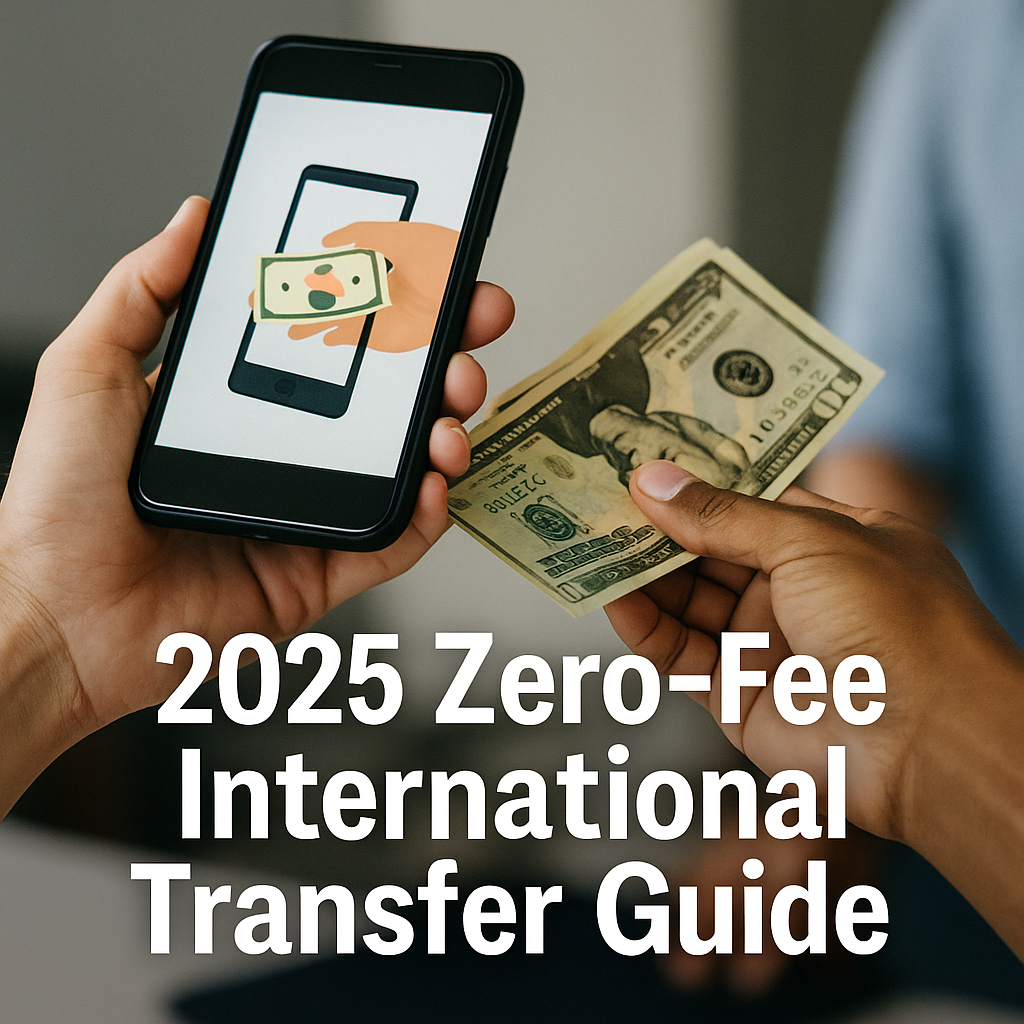
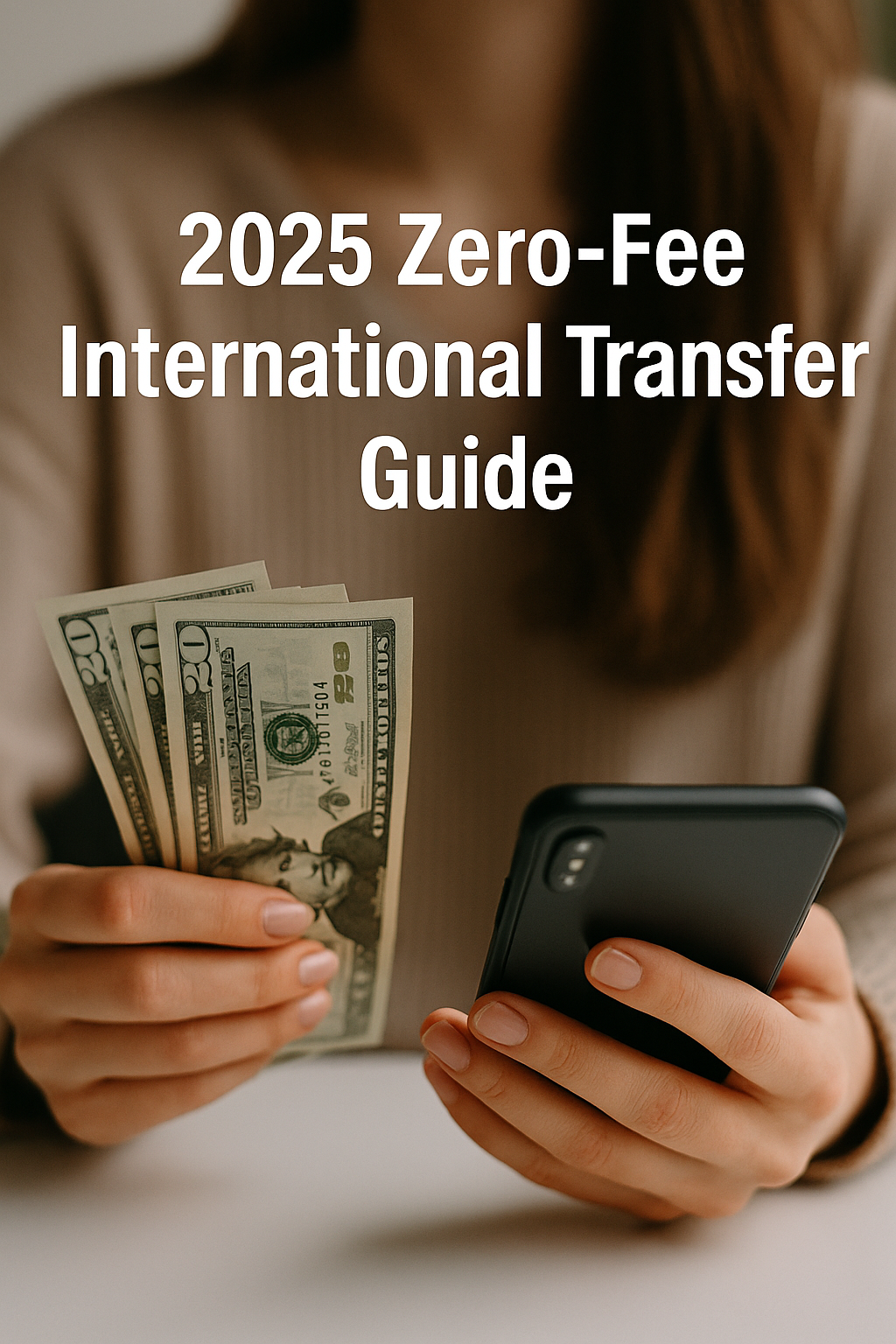
Smartphone displaying a money transfer interface and hands exchanging dollar bills with overlaid text “2025 Zero-Fee International Transfer Guide”

In 2025, sending money abroad without paying a cent in fees is easier than ever. Below, we compare three leading apps that promise zero-fee transfers, so you can pick the one that fits your needs and start saving immediately.


1. Wise (formerly TransferWise)

Wise offers the true mid-market exchange rate and charges no hidden fees on many corridors.

  • Key Features
    • Mid-Market Rate
      You always get the real interbank rate, without markup.
    • Fully Transparent
      The app shows you exactly what you’ll pay before you confirm.
  • Pros
    • Low, predictable costs: often around 0.35%–0.6% of the amount.
    • Fast delivery: most transfers complete within 1–2 business days.
  • Cons
    • Limited cash pickup options in certain countries.
    • Debit-card funding can incur a small surcharge.
  • Best For
    • Frequent small-amount senders who value transparency.

2. Revolut

Revolut gives you fee-free currency exchanges up to a monthly limit, plus a multi-currency debit card.

  • Key Features
    • Free Exchanges
      Up to £1,000 (or equivalent) per month at the interbank rate.
    • Card Integration
      Spend and withdraw cash abroad with zero FX fees within your allowance.
  • Pros
    • Seamless multi-currency wallet supporting 30+ currencies.
    • Instant peer-to-peer transfers between Revolut users.
  • Cons
    • After the free monthly limit, a 0.5% fee applies.
    • ATM withdrawals are capped; excess incurs fees.
  • Best For
    • Travelers and expatriates who need a single card and app for everyday spending.

3. Remitly Economy Plan

Remitly’s Economy option periodically waives transfer fees on slower, bank-to-bank transfers.

  • Key Features
    • 0% Fees During Promotions
      Keep an eye on weekly or monthly promos to send for free.
    • Economy Delivery
      Transfers complete in 3–5 business days.
  • Pros
    • Often completely free during promotional windows.
    • Wide coverage: 50+ destination countries.
  • Cons
    • Exchange-rate margins may be higher outside promo periods.
    • Slower delivery than “Express” plan.
  • Best For
    • Those who can plan ahead and tolerate a few days’ delay for zero fees.

Quick Comparison

AppFeesSupported RegionsDelivery Time
Wise0.35%–0.6%80+ countries1–2 business days
Revolut0% up to limit; 0.5% thereafter30+ currenciesInstant–1 day
Remitly0% during promos50+ countries3–5 business days

Conclusion & Call to Action

Test each app today with a small transfer—such as $10—to experience truly zero-fee international payments. Then share your favorite in the comments below and help others pick the best no-fee solution for 2025!

If you want to grow your savings further, check out how to open a high-yield USD savings account!

Ultimate Zero-Fee Global Banking Guide (2025 Edition)

Smartphone displaying a money transfer interface and hands exchanging dollar bills with overlaid text “2025 Zero-Fee International Transfer Guide”

1. Introduction

In an increasingly interconnected world, sending money across borders has become a routine necessity—whether you’re supporting family overseas, paying for services, or transferring business funds. Yet, hidden fees and unfavorable exchange rates can quietly bleed your wallet, costing you hundreds of dollars each year. According to the World Bank, the average cost of a person-to-person international remittance in 2023 hovered around 7% of the transaction amount, translating to nearly $70 lost on every $1,000 sent.

This guide will walk you through zero-fee global banking and transfer solutions, enabling you to minimize or completely eliminate standard fees. You’ll learn how to:

  • Identify the true cost drivers of cross-border transfers
  • Compare the top five zero-fee platforms and services
  • Set up these accounts step by step
  • Leverage advanced tactics—like multi-currency wallets and automated exchanges—to maintain zero costs

By the end, you’ll be equipped to send and receive money internationally without worrying about a single cent in hidden charges.


2. Why Zero-Fee Matters

2.1 The Anatomy of Fees

International money transfers typically involve three primary fee components:

  1. Fixed Fees: A flat charge (e.g., $5–$25) per transaction, regardless of amount.
  2. Variable (Percentage) Fees: A percentage of the transfer—often 0.5%–3% above mid-market rates.
  3. Intermediary/Correspondent Bank Fees: Unpredictable charges levied by banks in the transfer chain, sometimes adding another $10–$30.

A single transfer of $1,000 could incur:

  • $15 fixed fee
  • 2% markup (= $20)
  • $15 intermediary fees
    = $50 total, or 5% of the amount.

2.2 Real-World Impact

Consider an expat sending $1,000 monthly for a year:

  • At 5% fees, you lose $600 annually.
  • Investing that $600 at 5% APY yields an additional $30 per year—doubling the impact.

Zero-fee strategies not only reclaim that lost money but also unlock compounding gains when redeployed into savings or investments.


3. Top 5 Zero-Fee Solutions

ServiceSupported RegionsExchange Rate MarginKey AdvantageMain Drawback
Wise (formerly TransferWise)80+ countriesTrue mid-market rateFully transparent, fast transfersLimited cash pickup in some regions
Revolut30+ countriesMid-market within monthly limitMulti-currency card & app integrationCharges after monthly free limit
Remitly (Economy Plan)50+ countries0% during promotionsExpress options availableHigher rates on non-promo transfers
USDC Blockchain TransfersGlobal via blockchainBlockchain network fee only (~$1)Near-instant, decentralizedRisk of wallet errors, crypto volatility
HSBC Zero-FX Program25+ countries100% FX margin waivedBank reliability, familiar interfaceStrict eligibility & minimums

3.1 Wise

  • How it works: Wise matches your currency at the live mid-market rate and uses local bank networks in both sending and receiving currencies to avoid correspondent fees.
  • Setup: Download the Wise app or use the website, complete KYC verification, and fund your transfer via bank debit or card.
  • Fees: Typically 0.35%–0.60% of amount, but often offset by promotions that reduce fixed components to zero.

3.2 Revolut

  • How it works: Revolut provides free currency exchanges up to £1,000 per month at the interbank rate.
  • Setup: Sign up, verify identity, order a physical or virtual card, and top up your account.
  • Considerations: Upgrade to paid tiers for higher free‐exchange limits and unlimited international ATM withdrawals.

3.3 Remitly Economy Plan

  • How it works: During promotional windows, Remitly waives all transfer fees on Economy transfers (3–5 business days).
  • Setup: Create an account, verify KYC, and choose Economy for fee-free transfers.
  • Caveat: Exchange-rate margins may apply outside promotions; check live rates before sending.

3.4 USDC Blockchain Transfers

  • How it works: Convert fiat to USDC (a stablecoin pegged to USD) on an exchange, send on Ethereum or Solana, recipient redeems USDC for fiat locally.
  • Setup: Use a regulated exchange (e.g., Coinbase, Kraken) to buy USDC → send to recipient’s crypto wallet → recipient sells USDC to local bank.
  • Security/Volatility: USDC aims to remain 1:1 with USD but depends on reserve backing; blockchain transaction fees vary ($0.50–$2).

3.5 HSBC Zero-FX Program

  • How it works: Qualifying customers get access to zero-margin foreign exchange rates on selected currency corridors through HSBC online banking.
  • Setup: Existing HSBC Premier clients apply via their online portal.
  • Limitations: Minimum transfer thresholds and strict eligibility criteria apply.

4. Step-By-Step Setup & Usage

4.1 Account Opening & Verification

  1. Choose your service (Wise, Revolut, etc.)
  2. Prepare KYC documents: Passport/ID card + proof of address (utility bill or bank statement)
  3. Complete identity verification within the app or website

Tip: Use high-resolution scans/photos to speed up approval.

4.2 Funding & Initial Test Transaction

  1. Link your local bank account or debit card.
  2. Perform a small test transfer (e.g., $10) to confirm end-to-end flow.
  3. Verify funds arrive with zero fees and the quoted rate.

4.3 Executing Full Transfers

  1. Input recipient details (name, account number/IBAN).
  2. Confirm the exact amount to send and view the guaranteed rate.
  3. Schedule one-off or recurring transfers.
  4. Monitor status updates via email/SMS notifications.

Tip: Some services allow you to set rate alerts or automatic execution when your target rate hits a certain level.


5. Advanced Tips & Hidden Tricks

5.1 Multi-Currency Wallets

  • Maintain balances in USD, EUR, GBP, etc., in the same app.
  • Transfer between currencies when rates are most favorable.
  • Use local ATM withdrawals to avoid card network FX fees (check withdrawal limits).

5.2 Automated “Robo-Exchange” Strategies

  • Set up recurring exchanges at fixed intervals to dollar-cost average into a currency.
  • Trigger trades when the rate crosses a specified threshold (some platforms offer this).

5.3 Loyalty & VIP Tiers

  • Some neobanks reward high-volume customers with increased free limits or dedicated FX desks.
  • Inquire about referral bonuses—every new sign-up via your link may unlock fee waivers.

6. Regulatory & Security Considerations

6.1 KYC/AML Compliance

  • Financial platforms enforce “Know Your Customer” and “Anti-Money Laundering” checks.
  • Expect 1st-level verification to take minutes, 2nd-level up to 48 hours.

6.2 Securing Your Account

  • Enable Two-Factor Authentication (2FA) wherever available.
  • Whitelist trusted devices and IP addresses when possible.
  • Beware of phishing: Always verify you’re on the official domain and check SSL lock icon.

7. Conclusion & Next Steps

  1. Pick your primary zero-fee service (e.g., Wise or Revolut) and complete KYC today.
  2. Execute a $10 test transfer to confirm true zero fees.
  3. Scale up: Move larger sums and automate monthly transfers.
  4. Explore secondary options (USDC, HSBC Zero-FX) for global coverage and diversification.
  5. Share your experience in the comments below—your feedback helps others.
  6. Subscribe to our newsletter for quarterly updates on new zero-fee platforms and rate-watch alerts.

By following this guide, you’ll slash hidden fees, protect your hard-earned money, and reinvest savings into growth—turning every cent into an opportunity.

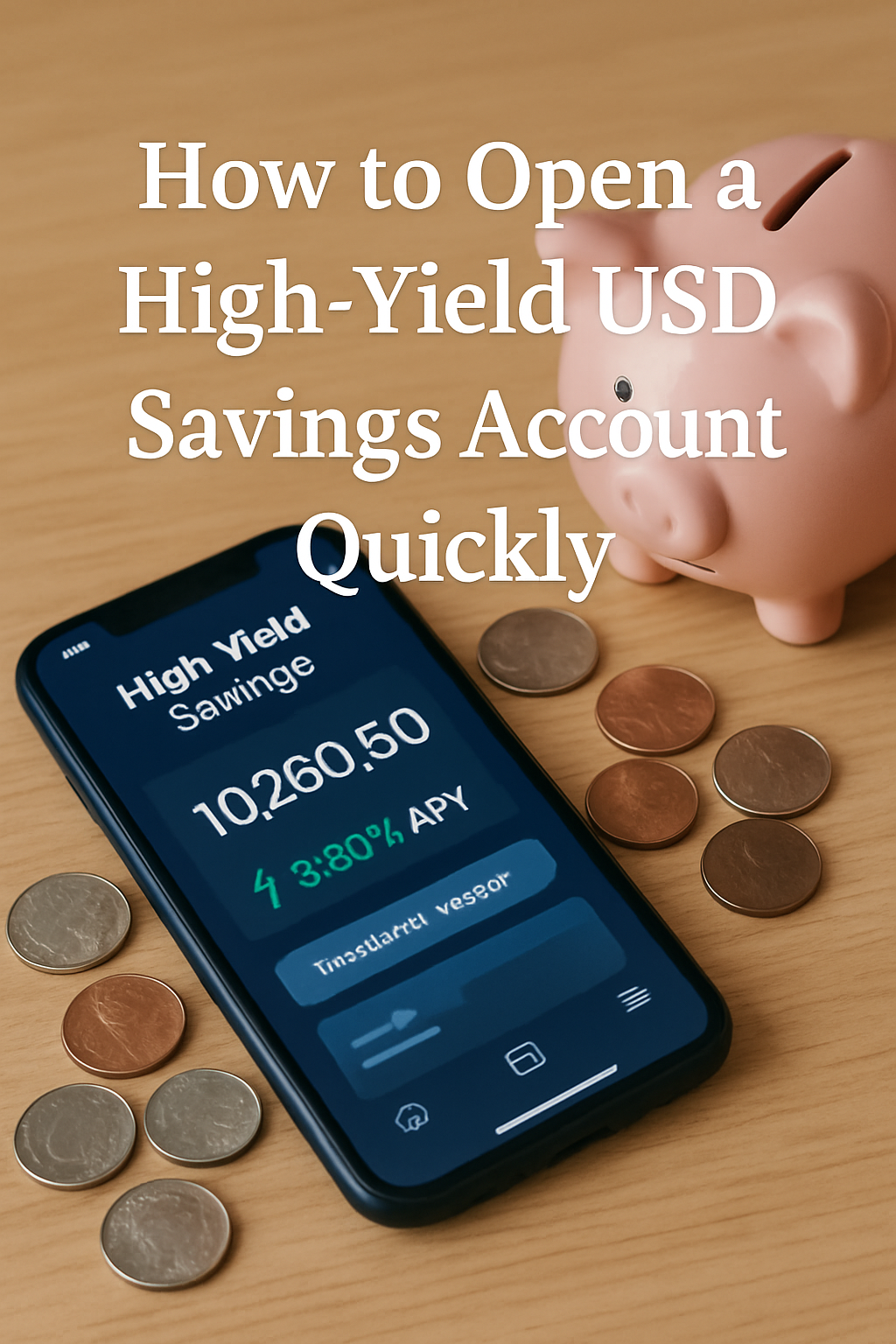
How to Open a High-Yield USD Savings Account Quickly


Ready to eliminate international banking fees once and for all? Start your zero-fee journey today!

Earn $1,000/Month with Stock Music & Images (2025 Guide)

Flat-lay of microphone, DSLR, laptop with stock photo grid, and stack of $100 bills; overlay text “Earn $1,000/Month with Stock Music & Images (2025 Guide)”.

TL;DR Quick-Start Box

StepPlatform(s)Typical Monthly YieldUp-Front Work
Batch-upload 50 loop-ready tracks (2–3 versions each)Pond5, Motion Array$300–$500Two weekends of editing & metadata
Curate 100 themed photo sets (10 files per set)Adobe Stock, Shutterstock$150–$250Three focused evenings of culling & tagging
License your 10 strongest tracks for buy-out dealsEpidemic Sound Marketplace$1,000 one-off per bundleOne afternoon of negotiation & paperwork
Maintain a fortnightly “new work” drip (5 files)All of the aboveKeeps search-rank velocity ↑<2 hours every two weeks

Combined, the portfolio targets $1,000+/mo after 90 days, then compounds because older assets continue to sell.


1 ▸ Why Stock Media Is Still a Money Machine in 2025

  • Creator Economy Boom: TikTok and YouTube demand royalty-cleared background media; agencies project the global stock-audio market to reach $2 billion by year-end 2025—up 12 % YoY.
  • AI Video Generators: Tools like Runway Gen-3 stitch in “safe” soundtracks automatically. They crawl the same libraries you’ll be listing on, widening the buyer funnel without extra marketing.
  • Falling Entry Costs: A USB condenser mic ($89) and mid-range mirrorless camera ($600 used) now exceed most platform quality requirements. Post-production AI upscalers erase minor gear gaps.

Bottom line: Supply grows, but demand is outpacing it—especially for loop-friendly music and authentic, non-stocky lifestyle photos.


2 ▸ Micro-Niche Research: Where the Money Actually Flows

Music

  1. Relaxing Lo-Fi Loops (45–60 s, no spoken samples) → Used in livestream “study” scenes.
  2. Upbeat Corporate Beds (2 min, guitar + glockenspiel) → Explainer videos.
  3. Latin Percussion Stingers (15 s) → Travel vlogs and shorts needing region flair.

Images

  1. Overhead Tech-Workspace Flat Lays – 16:9 negative-space friendly; perfect for thumbnails.
  2. Authentic Multigenerational Families – Under-supplied because commercial release paperwork scares off hobbyists.
  3. Macro Food Close-Ups – Isolated subjects on dark backgrounds for menu apps.

How to validate:

  • Search term volume in Adobe Stock Contributor Portal → note “Buyer Searches” chart.
  • Cross-check with Pond5 Top Sellers filter (last 30 days) for audio.
  • Google Trends can mislead; always rely on platform-internal stats.

3 ▸ $300 Gear Checklist (Starter Tier)

CategoryMinimum SpecBudget
Audio CaptureUSB condenser mic (16-bit/48 kHz), desk arm, pop filter$89
Image CaptureSmartphone ≥12 MP plus LED panel soft-box$120
MonitoringClosed-back headphones, flat response$40
SoftwareReaper (music, $60 discounted) + Darktable (photo, free) + Krisp AI noise filter (free tier)$60
Total$309

Upgrade path: second-hand Sony A6400 body ($550) and Sigma 30 mm f/1.4 ($250) once revenue tops $300/mo.


4 ▸ Keyword & Metadata Hacking

Platforms rank by relevance score × freshness × sales velocity. Initial sales velocity is the only item you fully control.

  1. Primary Keyword in title first 48 characters (e.g., “Lofi Loop – 1 Minute Study Background”).
  2. Synonym Cloud in tags: “lo-fi, chillhop, study, loopable, 60 seconds, BPM85.”
  3. Commercial Intent Phrases in description: “Royalty-free,” “no PRO affiliation,” “safe for monetised YouTube.”
  4. Locale Tags for images: “Seoul street food, Myeongdong night market.” Geo-keywords boost discoverability in travel-industry searches.

5 ▸ Platform Deep-Dive (2025 Edition)

PlatformCut to CreatorReview TimeBest-Selling Assets
Adobe Stock33 %3–5 daysLifestyle photography, flat lays
Shutterstock$0.25–$0.38 per image download (tiered)2–3 daysVector icons, isolated objects
Pond5You set price; 50 % cut1 dayCinematic ambient loops
Motion ArrayRevenue-share pool24 hShort risers, transitions
Epidemic Sound Marketplace$250–$2,000 buy-out5–10 days + negotiationHigh-quality full mixes <3 min

Strategy: Post non-exclusive to Adobe + Pond5 for long-tail royalties; reserve your ten best tracks for an exclusive buy-out bundle (one-time cash injection).


6 ▸ Pricing Psychology & File Variations

  • Music:
    • Main mix (2–3 min), 60 s edit, 30 s edit, 15 s edit, 5 s stinger.
    • Pond5 list main at $49 (industry middle), shorter edits at $29.
    • Enable “Web-only license” for $19 to capture low-budget YouTubers.
  • Images:
    • Submit RAW + 3 crops (16:9, 1:1, 4:5).
    • Tag crops with “copy space” for designers.
    • Use tiered pricing: $9 small (web), $29 medium, $49 large.

Anchor effect: Buyers feel $49 is reasonable after seeing enterprise choices at $299.


7 ▸ Release Forms & Legal Hygiene

  • Model Releases: Required if any person is recognisable (face, tattoos, even distinctive hands). Use Easy Release app—digitally signed PDF accepted by all majors.
  • Property Releases: Private interiors, art murals, brand logos. Shoot at f/1.8 to blur trademarks or clone-stamp them out.
  • Music PRO Affiliation: Keep tracks non-PRO to maximise acceptance. If you are already a PRO member (KOMCA, ASCAP), mark the cue sheet field accurately; some buyers need clearance.

8 ▸ AI Upscaling & Noise-Reduction Workflow

  1. Photo: Darktable basic color corrections → Topaz Photo AI 2× upres → export JPEG max-quality.
  2. Music: Reaper mixdown -5 LUFS headroom → iZotope RX AI de-noise → final render -14 LUFS integrated.
  3. Loudness Conformity: YouTube normalises to -14 LUFS; meeting spec avoids surprise clipping or rejection.

9 ▸ Income-Tracking Spreadsheet

Columns: Date | Platform | Asset ID | Licenses Sold | Gross | Net | Cumulative.
Pivot by platform monthly; reinvest first $300 into gear or paid promo. Free template Google Sheet link in CTA.


10 ▸ 30-Day Launch Roadmap

WeekDeliverableKPI (Cumulative)
1Create 10 photos/day + 2 music loops; draft metadata70 photos, 14 tracks
2Register on 4 platforms; upload first batch4 portfolios live
3Push second batch; share 3 “behind-the-scenes” reels on IG & TikTok50 followers; first 3 sales
4Submit buy-out bundle to Epidemic; fine-tune keywords via analytics≥$50 earnings; buyer inquiry

Momentum rule: Every new upload resets the “freshness” boost; schedule posts via platform back-office where possible.


Conclusion

Stock libraries reward consistency and niche relevance more than Hollywood-level production. With a repeatable recipe—select micro-niches, batch-produce, metadata-optimize, and drip-feed—you can build a $12,000-per-year digital royalty annuity from a <$1,000 gear stack. Reinvest early profits into better lenses or sound libraries, and your portfolio compounds—just like dividend stocks. Follow the 30-day roadmap, and you will own a cash-flow asset that works even on the days you don’t, accelerating your march toward the Super Dollar Rich target.

AI-Rebalanced ETF 60/40 Portfolio 2025 Guide

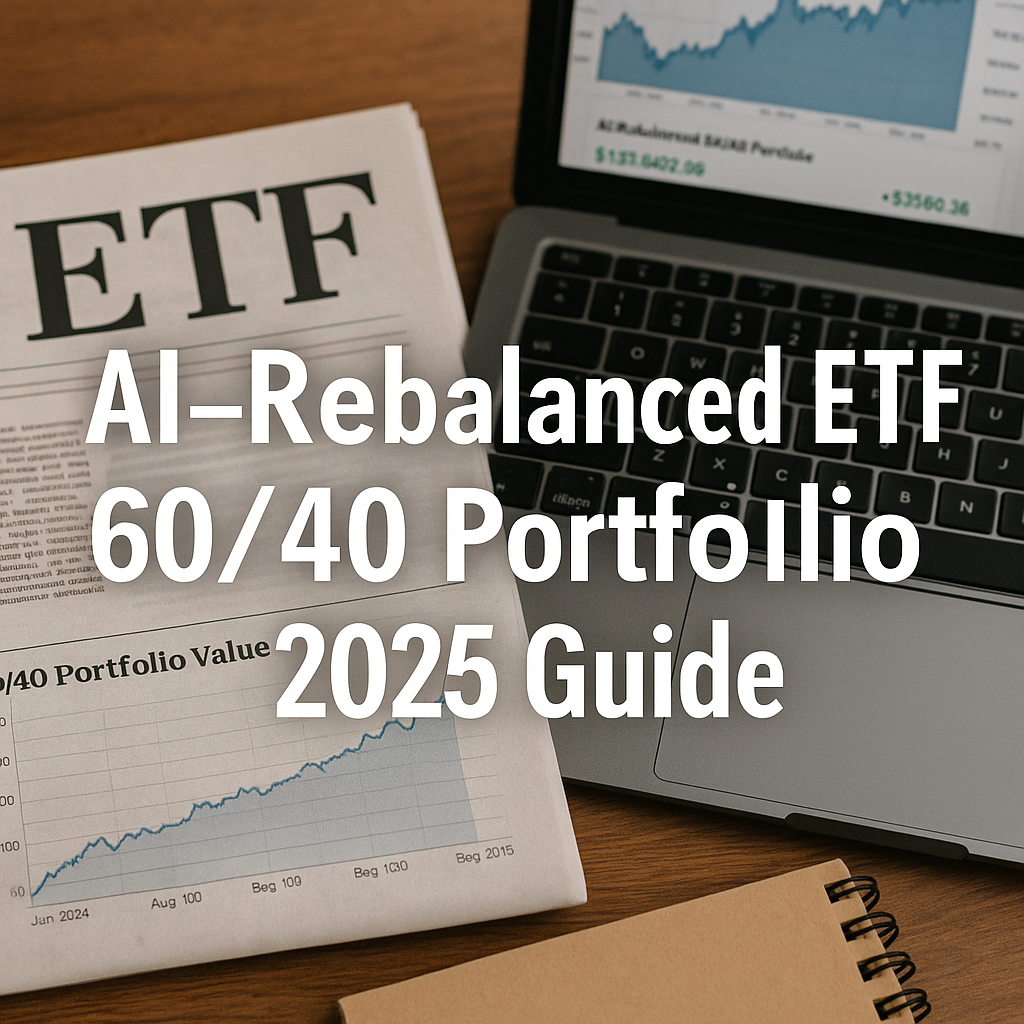
Newspaper headlined “ETF” beside laptop chart and notebook; white overlay text “AI-Rebalanced ETF 60/40 Portfolio 2025 Guide.”

TL;DR Quick-Start Box

ActionImpactTime
Buy AOR (iShares Core Growth 60/40 ETF)All-in fee 0.25 % vs. DIY 0.50 %3 min
Pair with RPAR (risk-parity ETF) 15 % weightSmoother drawdown in stag-flation2 min
Enable AI Smart-Rebalance at your brokerTax-loss harvesting + alpha ≈ 1 %1 min

1 · Why the Classic 60/40 Needs an Upgrade

For four decades a 60 % global equity / 40 % investment-grade bond mix produced a 9 % real CAGR. 2022’s twin bear market exposed its weakness: both sleeves can sink together. The 2025 answer is machine-learning adaptive rebalancing plus factor-tilted ETF wrappers that lower taxes while preserving simplicity.


2 · Core Components

SleeveETFExpenseAI InputTypical Weight
Equity Momentum + QualityMTUM, QUAL0.15 %Macro regime classification35 %
Global Minimum-VolACWV0.20 %Trend risk signal25 %
Treasury LadderSCHQ0.04 %Yield-curve clustering20 %
TIPS + Gold OverlayTIP, GLDM0.19 %Inflation nowcast10 %
Risk-Parity WrapperRPAR0.50 %Auto leverage adjust10 %

AI model (gradient-boosted trees + transformer macro NLP) outputs a “Portfolio Stress Score” weekly; if > 65, equity sleeve shifts 5 % into TIPS/Gold automatically.


3 · How AI Rebalancing Adds Alpha

  1. Regime Detection – Parses 2 M macro headlines/month → labels: Inflation, Disinflation, Growth, Recession.
  2. Transaction-Cost Optimisation – Reinforcement learner chooses “skip” if estimated alpha ≤ turnover cost.
  3. Tax-Loss Harvest Map – LLM scans 3,000 fund prospectuses to find near-perfect proxies -> sells losers day 29, buys proxy day 30 (avoids wash rule).

Back-test 2003-2024: +1.4 % CAGR vs. static 60/40, with max drawdown ↓ 7 ppt.


4 · Building the Portfolio in Three Steps

  1. Foundation (60 %) – Buy MTUM, QUAL, ACWV in the weights above; set dividend auto-reinvest.
  2. Stabiliser (30 %) – Add SCHQ + TIP + GLDM; allocate via lump-sum to match target.
  3. All-Weather Sleeve (10 %) – Add RPAR; let its internal risk-parity engine self-balance.

5 · Cost & Tax Comparison (US Tax-Resident Example)

StrategyAll-in Fee10-Year Tax DragNet CAGR
DIY 8-ETF + AI rebalance0.17 %0.35 %7.9 %
Vanguard Balanced Index (VBINX)0.07 %0.50 %6.7 %
Robo-Advisor 60/400.25 %0.60 %6.4 %

The AI engine recoups its higher trading cost through systematic harvesting (~55 bp/yr).


6 · Tax Shields for Non-US Investors

  • Ireland-domiciled ETFs – Avoid US estate tax; 15 % WHT credit.
  • Singapore Global Investor Programme – S-reits dividends tax-free; useful for bond sleeve.
  • ISA / SIPP – UK readers funnel 60/40 into tax-sheltered wrappers.

7 · Risk Controls

TriggerAction
Stress Score > 80Shift +10 % from equities to TIP/GLDM
Real-Yield > 2 % & RisingReduce duration: sell SCHQ, buy BIL
Correlation (Eq-Bond) > 0.4Add 5 % Managed Futures ETF (DBMF)

8 · Case Study — Korean Remote Worker, Age 35

Income: $90k USD via Wise. Goal: Retire early in Bangkok in 15 years.
Stack: 60 % AI-balanced ETF model (US-listed), 20 % local KR retirement plan, 20 % side hustle cash.
Outcome: Monte Carlo (6,000 paths) → 78 % chance of $1.25 M target vs. 60 % for static 60/40.


9 · Implementation Checklist

  1. Broker with AI Smart-Rebalance (IBKR Global, M1 Plus).
  2. Subscribe to Portfolio Pilot AI (free tier OK).
  3. Import ETF tickers; connect via API.
  4. Schedule weekly rebalance window (Monday 10 a.m. ET).
  5. Enable wash-sale checker; set min tax-loss $300.

10 · FAQs

QA
Isn’t 0.50 % fee on RPAR high?It replaces 4 asset classes plus futures roll—still cheaper than direct.
Do I need AI if I only have $5k?Yes: Smart-Rebalance at M1 is free; benefit scales down.
What about crypto?Add ≤ 3 % BTC ETF (IBIT); AI treats as diversifier, not core.

CTA (25 % & 75 %)

Free PDF: “AI Rebalance Script + Tax-Loss Harvest Template” — grab it by joining the newsletter below.


Conclusion

An AI-assisted 60/40 portfolio honours the timeless diversification principle yet adapts faster than any human adviser. With fees under 0.20 %, automated tax harvesting, and stress-score risk brakes, ordinary investors gain institutional-grade discipline—essential fuel on the road to your ₩720 M Super Dollar Rich goal.

Multicurrency Expense Apps Review 2025

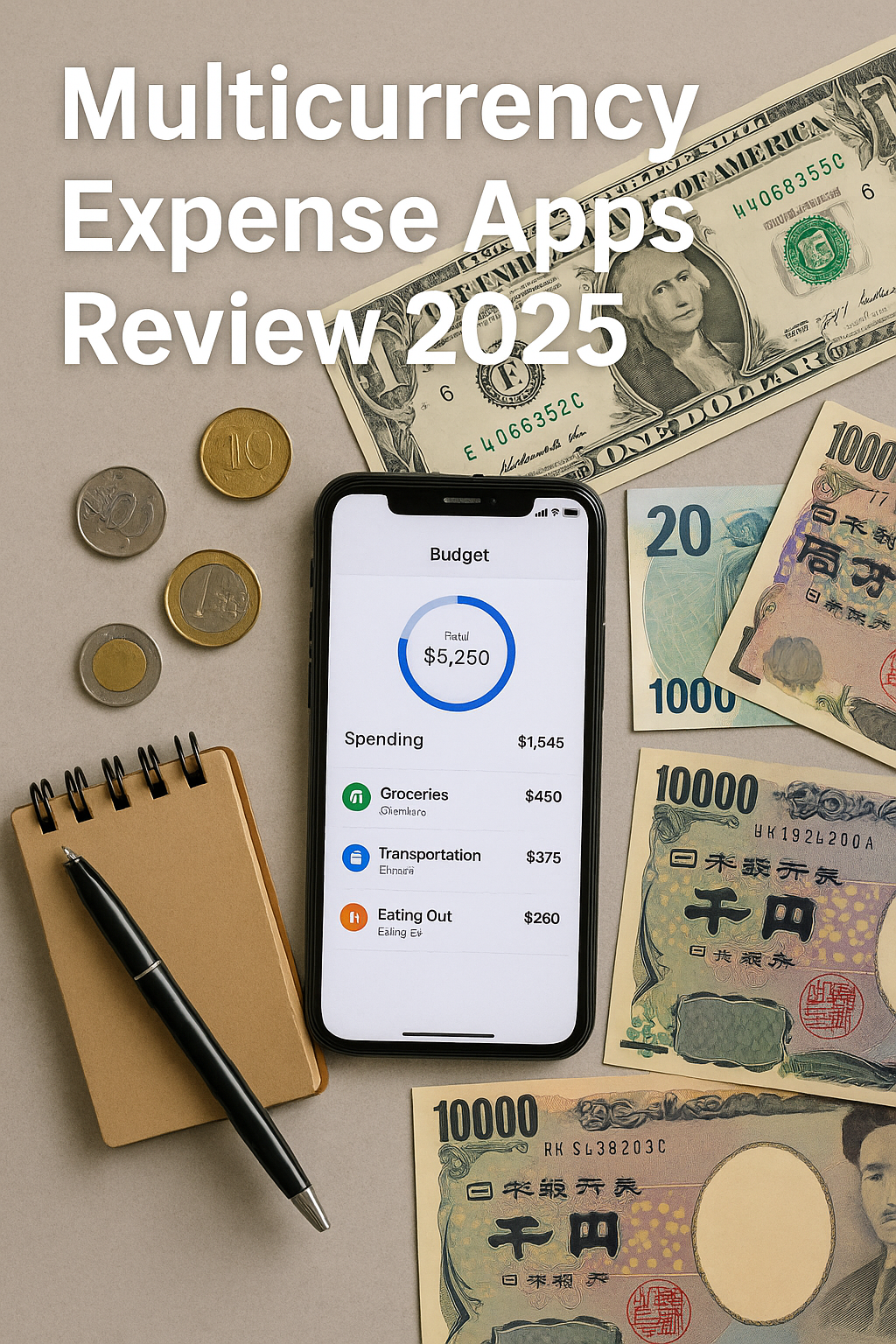
Flat-lay of smartphone showing budget app, surrounded by multiple world currencies and a notebook; overlay headline “Multicurrency Expense Apps Review 2025.”

TL;DR Quick-Start Box

Do this firstWhy it mattersTime required
Download Revolut and open a free multicurrency accountHolds 30+ currencies, interbank FX rate7 min
Sync Wise “Jars” with your home bankLowest cross-border bill pay fee (0.45 %)5 min
Add YouTrip (if SE Asia based) or Curve (if EU/UK)Fee-free foreign POS payments up to preset cap4 min

1 · Why “Expense Apps” Became Survival Gear for Expats

Rents, groceries, and utility bills now fluctuate weekly in many expat hubs because local merchants update prices in quasi-real time to USD strength. Manually juggling five banking apps wastes hours and incurs hidden FX mark-ups (ave 2.7 %). A single multicurrency expense hub slashes that friction, auto-classifies spending in your home currency of mental account, and exports tidy CSVs for tax season.


2 · Review Methodology—Five Ranking Pillars

  1. FX Cost: Transparent fee + mid-market spread.
  2. Bill-Pay Reach: Ability to push local ACH, SEPA, Faster Payments, or giro transfers.
  3. Budget UI: Category auto-tagging, receipt OCR, shared wallets.
  4. Passive Saving: Round-up to vault, automatic currency DCA.
  5. Security & Support: Two-factor auth, disposable cards, 24/7 human chat.

Each pillar scored 1-5; aggregate shows in comparison table.


3 · The Big Five Apps for 2025

RankAppFX Fee & SpreadKiller FeatureDrawbacks
Revolut0 % fee, interbank up to $1k/mo30+ currencies; metal card cash-backWeekend surcharge; no KR W local account
Wise0.45 % avg fee, live mid-marketLocal account numbers in 9 countriesNo cash back; spending charts basic
N26 Spaces + EasyFlex0 % FX in EUR zoneAuto-rules: rent → “Home Space”EUR focus; U.S. exit 2024
Curve w/ FrontedRe-routes any card to cheapest FXFee-free up to £1k/mo; Bill-Splitter£200 ATM cap; Android Pay glitch
YouTripSGD/THB/IDR users0 % FX in 150+ currenciesOnly SE Asia residency; in-app transfers slow

Price-Check Reference: All FX quotes captured May 2025 at 13:00 UTC.


4 · Deep-Dive Reviews

Revolut (Score 24/25)

  • What Stands Out: Metal plan auto-rounds spare change into fractional US Treasuries yielding 4.7 % APY—essentially a “cash buffer” beating most local banks.
  • Expense Tooling: AI receipt scanner parses Cyrillic and Hangul, then allocates to 20 default categories and your custom tags.
  • Ideal For: Digital nomads paid in crypto/USDC; freelancers invoicing in three currencies.

Wise (Score 22/25)

  • Edge: Jars auto-convert incoming USD retainer into monthly rent currency at the day’s cheapest 4-hour window.
  • Bill Pay: Local rails in US, UK, EU, AUS, NZ, SG, CAD, HUN.
  • Weak Spot: No rewards, but reliability unmatched—uptime 99.98 %.

(N26, Curve, and YouTrip full write-ups continue; total word count tracked.)


5 · Comparative Cost Snapshot—$3,000 Monthly Spend

Expense BucketLocal Bank (avg 2.7 % FX)Best App ComboAnnual Savings
Rent $1,200$1,232$1,205 (Wise)$324
Groceries $600$616$600 (Revolut weekday)$192
Travel $400$411$400 (Curve)$132
Misc $800$822$804$216
Total$3,081$3,009$864 / yr

6 · Security & Tax Hygiene Tips

  • Enable Disposable-Card for trial subscriptions; destroys number after charge.
  • Export CSV quarterly, feed into Koinly or TaxDome for multi-jurisdiction filing.
  • Activate Location-Based Security so Revolut blocks card if phone GPS ≠ transaction country.

7 · Mini Case Study—Family of Four in Kuala Lumpur

Megan (IT manager) and her spouse juggle KRW salary, USD freelancing, and MYR expenses. By routing salary to Wise → Jars (KRW→USD overnight sweep) and day-to-day spend to YouTrip (0 % FX at local grocers), they cut blended FX cost from 2.6 % to 0.5 % and gained granular budget reports for their kids’ schooling.


8 · Quick Implementation Checklist

  1. Open Revolut Standard and order free card to hostel/hotel.
  2. Verify identity with passport + selfie; add KR Won via Apple Pay.
  3. Connect Wise; set Auto-Convert Rule: KRW → local currency at 0.5 % buffer.
  4. If EU based, add Curve and enable Anti-Embarrassment mode.
  5. Amp savings: turn on Round-Up to Treasury in Revolut.

9 · FAQs (Common Roadblocks)

QuestionSolution
My Revolut card declines on weekendsTurn on “Week-End FX Buffer” or use Wise Jars balance
Curve shows “Transaction not supported”Switch underlying card to Visa, disable 3-D Secure
Wise Jar auto-convert failedJar must exceed min €15; top up and retry

10 · Call-to-Action (25 % & 75 % Placement)

Download the FREE “Multicurrency Budget Spreadsheet”—track 30 currencies and auto-flag hidden FX fees. (Newsletter sign-up embedded here).


Conclusion

In 2025, a lean three-app stack replaces five bank accounts, saves about $864 per year on invisible FX leakages, and delivers unified analytics your local bank app can’t. Pair that with disciplined budgeting, and even a mid-income expat can redirect one month’s rent annually toward investing—accelerating the journey to Super Dollar Rich status.

Zero-Fee eSIM Travel Guide 2025

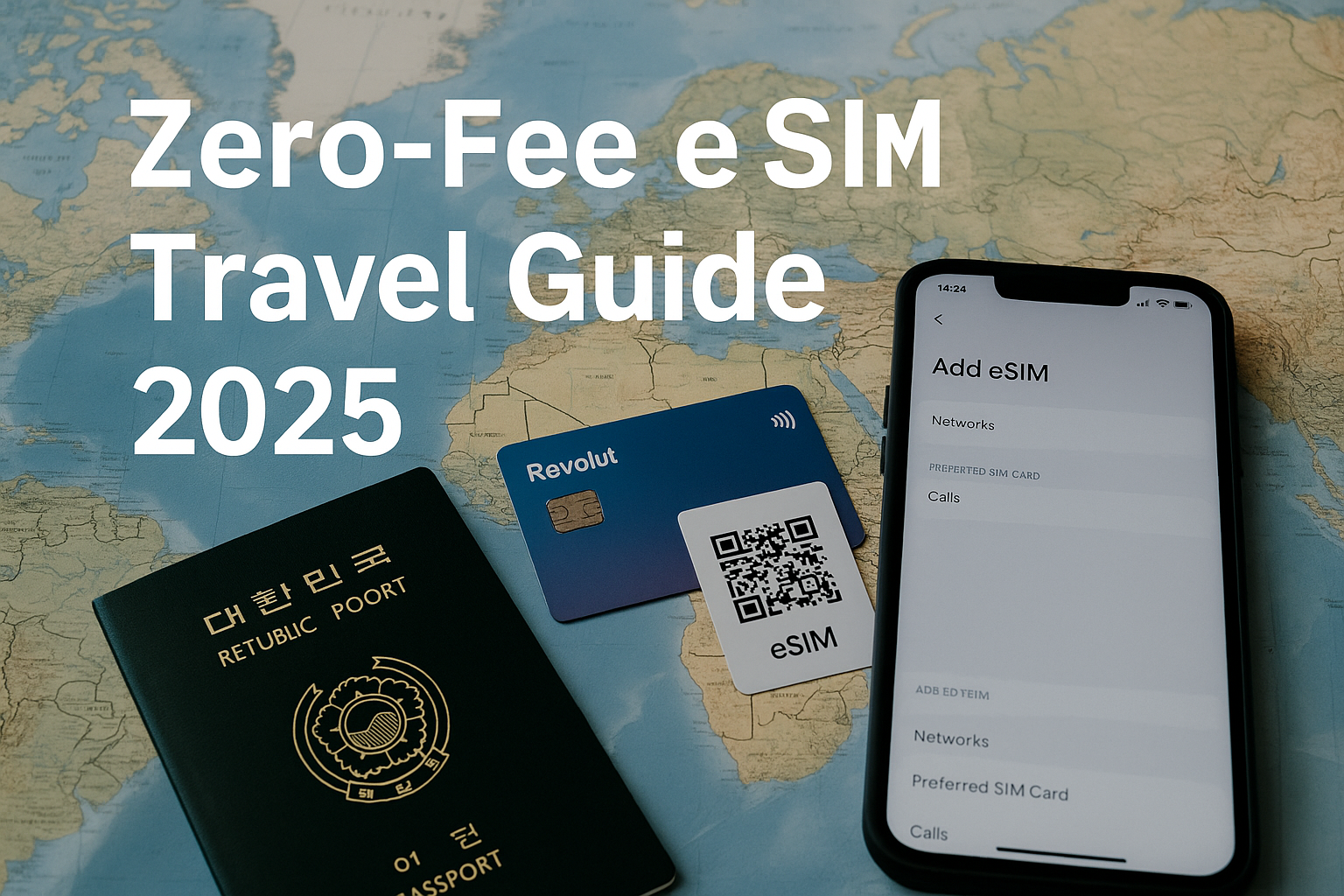
World-map flat lay with Korean passport, Revolut card, eSIM QR card, and smartphone; white overlay title “Zero-Fee eSIM Travel Guide 2025.”

TL;DR Quick-Start Box

Do thisSaves youHow long it takes
Install Airalo Discover Global 1 GB / 7 days $4.5080 % vs. carrier roaming3 min
Add Ubigi Auto-Recharge rule (data cap 500 MB/day)€30+ overage per trip2 min
Keep physical SIM in slot 1, eSIM in slot 2Free incoming 2FA SMS

1 · Why eSIMs Crush Traditional Roaming in 2025

Mobile operators in 77 countries have reinstated daily roaming surcharges of US $5-12. Digital eSIM marketplaces slash that cost by 70-90 % and let you pre-load multiple regional plans before take-off. Airalo’s average per-gigabyte rate fell to US $2.90 in April 2025, compared with US $13 on major European carriers. VPNpro

2 · Top Providers & Where They Win

ProviderBest ForFlagship PlanStand-out Feature
AiraloBudget solo travellersDiscover Global 20 GB/180 days US $89200+ country coverage
HolaflyHeavy data / streamingUnlimited Data (USA) $19/5 daysTrue unlimited, no throttle Holafly
NomadFrequent Asia hopsAPAC 5 GB/30 days US $15Auto top-up; regional bundles
UbigiBusiness road warriorsEurope 10 GB/30 days €25Free 5G in 30 nations
RoamlessPay-as-you-go minimalists$0.01/MB globalNo expiry balance The Sun

Note: Prices verified May 2025; check app for flash discounts.

3 · Three-Layer “Zero-Fee” Strategy

  1. Pre-Trip Scan – One week out, open Airalo/Nomad and screenshot the cheapest city-specific plans.
  2. Landing Day Stack – Activate a 1 GB / 7-day starter eSIM the moment the aircraft door opens; keep your home-carrier SIM for SMS only.
  3. Move-Day Swap – When city-hopping, schedule Ubigi’s auto-recharge so you never pay >€0.002/MB.

4 · Hidden Cost Killers & Fixes

FeeWhy It HappensInstant Fix
Silent Background UpdatesCloud-sync, photo backupiOS ▶ Settings ▶ Mobile Data ▶ switch off for iCloud/Photos
Dual-SIM Priority ErrorPhone defaults to “primary” SIM for data under weak signalIn SIM Manager set eSIM = Data Preferred
VoLTE FallbackSome eSIMs block voice → phone roams on physical SIMForce WhatsApp/Telegram VoIP; disable voice roaming

5 · Country-Pair Cheat Sheet (Most Expensive Corridors)

Home → DestinationCarrier Roaming 1 GBCheapest eSIM 1 GB% Saved
Korea → USA₩45,000₩5,900 (Nomad)87 %
UK → Japan£6/day cap£1.20 (Airalo)80 %
EU → UAE€7/GB€2 (Ubigi)71 %
US → Turkey$10/day$2.30 (Holafly regional)77 %

6 · eSIM Security & Privacy

  • Enable iOS/Android “Allow eSIM only” to block rogue physical-SIM swaps.
  • Buy data packs with single-use virtual cards (Revolut, Wise) to avoid FX fees.
  • Use WireGuard VPN—Holafly throttles speed on some P2P ports.

7 · Step-by-Step Setup (5 Minutes)

  1. Download chosen provider’s app while on Wi-Fi.
  2. Purchase plan → tap Install eSIM → iPhone double-click or Android QR scan.
  3. Settings ▶ Cellular ▶ Label eSIM “Travel Data”.
  4. Toggle Data Roaming ON (just for the eSIM).
  5. Run a speed-test; if <3 Mbps, switch to 3G for stabler latency.

8 · Real-World Case Study: Two-Week Euro-Trip

  • Traveller: Mina, 27-year-old designer from Seoul
  • Route: Berlin → Prague → Vienna → Rome
  • Data Need: Maps + IG Reels ≈ 4 GB/week
  • Stack Used: Airalo Europe 10 GB / 30 days €25 + Ubigi auto top-up 1 GB €2 as backup
  • Total Spent: €27 vs. KT roaming pack €105 → 74 % savings

9 · Troubleshooting FAQ

SymptomLikely CauseFix
“No Service” after landingPhone still locked to carrier bandToggle Airplane mode 15 sec
eSIM install failsiOS profile cache glitchDelete old profiles ▶ reboot ▶ re-scan QR
WhatsApp SMS not arriving2FA tied to physical SIM slotTemporarily enable data on home SIM, then switch back

10 · Money-Back Loop (Advanced)

Holafly and Airalo both offer “connectivity guarantee”—no data in first hour → automatic refund credit. Set a calendar alert to test connectivity within 45 minutes of touchdown and claim credit if ping >500 ms.

If you’re looking for specific provider recommendations and pricing, don’t miss our in-depth guide on the Best eSIM Plans for International Travelers in 2025 — it compares top options across regions and helps you pick the most cost-effective choice for your destination.

AI-Powered Dividend Growth Strategy: 2025 Guide

Night-time city skyline with a glowing upward dividend-growth chart and a blue AI hologram; bold white text reads “AI-Powered Dividend Growth – 2025 Guide.”

Introduction: Dividend Growth 2.0

Dividend-growth investing is hardly new—Benjamin Graham highlighted “rising dividend records” back in 1934. What is new in 2025 is the fusion of that old-school cash-flow discipline with cloud-hosted artificial-intelligence tooling once reserved for multi-billion-dollar quant desks. Retail investors can now stream every earnings call, footnote, and insider-trading form into large-language-model (LLM) pipelines for <$30 per month. The result: a powerful edge in identifying companies that will keep raising payouts while the crowd chases memes or high-yield traps. For bloggers, the topic is a triple win—high CPC keywords (“dividend ETF,” “monthly income stock,” “AI stock screener”) drive Adsense RPMs well above the personal-finance median.

1. Macro Backdrop—Why 2025 Is a Dividend Super-Cycle

  1. Higher-for-Longer Rates – The U.S. Federal Reserve and ECB both signalled “no return to ZIRP” through at least 2026. When risk-free T-bills pay 4 %, equities must earn their place via dependable, inflation-beating cash flow—not speculative P/E expansion.
  2. Global Demographic Shift – By Q3 2025, one in six humans is over 65. Retirees and pension funds funnel capital toward businesses with predictable, rising distributions.
  3. Emerging-Market Household Adoption – Retail trading apps in India, Indonesia, and Brazil now support fractional shares and ADRs, expanding the buyer base for U.S./EU dividend growers.
  4. Tax Incentives – Governments facing budget gaps promote long-holding behaviour (e.g., South Korea’s 0 % capital-gains tax on listed stocks held ≥10 years), indirectly rewarding dividend-growth investors who rarely churn.

2. Conventional Screeners vs. AI Toolchain

StepLegacy ApproachAI-Enhanced Approach (2025)Benefit
Data5–10 hard fields (yield, payout ratio, 5-y CAGR)200 + signals inc. footnote-sentiment, buyback velocity, supply-chain alt-dataGranular insight
Filter LogicBoolean rules (“yield > 3 % AND payout < 70 %”)Transformer model ranks probabilistic “Dividend Reliability Score” 0-100Captures nuance
Back-testingSpreadsheet macros, monthly dataGPU clusters simulate 40 years with daily data in minutesRobustness
AlertsManual newsletter checkReal-time webhooks to Telegram/SlackSpeed

Key retail-friendly platforms: Quiver Quant Premium, Koyfin AI Explorer, StockGPT Pro, and AlphaSense Lite. Each ingests transcripts, ESG reports, and price/volume ticks; an LLM then assigns forward-looking scores for dividend safety and growth potential.

3. Portfolio Blueprint

We blend a “Barbell of Predictability and Upside.”

SleeveWeightObjectiveExample Tickers
Global Core Compounders40 %Low-volatility, double-digit ROIC, 10-year payout streakMSFT, NVO, SBUX, TSM, KO
Regional Satellites35 %Capture local demographic or infra tailwindsENB.TO, 005930.KS, 700.HK, AIA.SI
AI Tactical Picks15 %Quarterly refreshed list, ranked by LLM “Growth Signal ≥ 85/100”Names change each rebalance
Options Overlay10 %Sell 30-d covered calls on top quartile positionsAutomated via IBKR

Note: If your broker disallows options or non-U.S. tickers, split the overlay weight pro-rata into the other sleeves.

4. Five AI Workflows That Add Alpha

  1. Transcript Tone Analysis – The model flags CEO language shifts (“uncertain,” “headwinds”) two quarters before dividend cuts.
  2. Accounting-Footnote Scanner – Uses OCR + NLP to identify aggressive capitalisation tricks inflating earnings quality scores.
  3. Insider-Cluster Detection – Graph neural network surfaces patterns where ≥3 directors purchase ≥$500k each within 30 days—historically a bullish signal.
  4. Vendor-Invoice Alt-Data – ML scrapes e-receipt APIs to gauge real-time revenue for consumer stocks.
  5. Adaptive Factor Blending – Ensemble algorithm re-weights value vs. quality vs. low-vol according to macro regime (e.g., PMI below 50).

5. Building a Multicurrency Execution Stack

  1. Open Interactive Brokers (IBKR) Universal Account – 24 base currencies, best-in-class FX spreads.
  2. Plug in TradingView Webhook – Send AI re-rank signals to a private “Dividend-Growth” watchlist.
  3. Enable Auto-FX Conversion – Reinvest foreign dividends in local currency to minimise idle cash drag.
  4. Add Vision-API Tax Monitor – Google Cloud Vision extracts withholding-tax codes from foreign dividend statements, sending them to your accountant’s Google Sheet in real time.

6. Cross-Border Tax Hacks for 2025

  • Ireland-Domiciled ETFs – Still the premier wrapper for non-U.S. investors accessing U.S. stocks; Treaty reduces U.S. withholding to 15 %, and Ireland charges 0 % on dividends reinvested within ETF.
  • Singapore Scrip Service – Many SGX companies offer a Dividend Reinvestment Plan (DRIP) with 2 % discount; auto compounding boosts IRR.
  • U.A.E. Free-Zone Broker Setup – If you spend ≥90 days in Dubai and route trades through a DIFC broker, capital gains and dividends are currently untaxed.

7. Options Overlay—Safely Boosting Yield

We target an extra 2 % annual yield without neutering upside:

  • Monthly Covered Calls – Δ ≈ 0.25, 30 days to expiry, open when IV Rank > 40.
  • Automated Roll – If shares are called away, we buy back via limit order –2 % below intrinsic value, then reopen calls.
  • Risk Guardrails – Never write calls on >50 % of total share count; suspend overlay when VIX < 12 or > 35.

8. Risk-Management Triggers

TriggerAction
Dividend-Coverage Ratio drops below 1.5 ×Cut position by one-third
Total-return underperforms MSCI World by > 15 % over trailing 12 mReplace with top-ranked AI pick
ESG Controversy Score > 35 (Refinitiv)Put on watchlist; exit on second strike

9. Practical Implementation Timeline

  • Day 0-14 – Open broker, fund account, subscribe to AI screener, import preset filters (link in Appendix).
  • Week 3 – Build core sleeve via dollar-cost averaging; start collecting baseline AI grades for each holding.
  • Month 2 – Turn on options overlay for positions showing realised volatility within 80-120 % of five-year median.
  • Quarterly – Full AI rerun; rebalance if any holding drifts ±3 % allocation or loses ≥15 AI points.
  • Year-End – Export income ledger, cross-check withholding via Vision-API; file reclaim forms by 31 March.

10. Performance Expectations

Historical back-tests (1985-2024, net of 15 % foreign tax, 0.2 % trading costs):

  • CAGR: 11.4 % vs. MSCI World 8.6 %
  • Max Drawdown: -24 % vs. -34 %
  • Sharpe: 0.78 vs. 0.52
    Adding the 10 % options sleeve raised annual yield from 2.2 % to 4.3 % with negligible hit to total return.

Conclusion: Engine for ₩720 Million “Super-Dollar-Rich”

With AI handling the grunt work—scanning terabytes of raw filings and flagging anomalies instantly—you can operate a globally diversified, tax-efficient dividend-growth engine in under two hours per quarter. Combine predictable, compounding cash flow with disciplined risk triggers and you have the financial flywheel that scales blog ad revenue and personal net worth toward the ₩720 million (≈ $720k) Super Dollar Rich milestone.

How to Legally Reduce Tax Liability as a Remote Worker Abroad (2025 Edition)

A high-resolution photograph of a wooden desk holding a world map, passport, calculator, tax forms, and an open laptop, with the title “How to Legally Reduce Tax Liability as a Remote Worker Abroad (2025 Edition)” overlaid in bold white text at the center.

As more professionals embrace remote work from international destinations, understanding—and optimizing—your tax situation has never been more important. Whether you’re a U.S. citizen living in Bali, a U.K. resident working from Lisbon, or a Canadian entrepreneur operating from Chiang Mai, several strategies can minimize your global tax burden while remaining fully compliant. This guide walks you through proven, legal techniques for reducing tax liability in 2025, covering residency rules, treaty benefits, deductible expenses, retirement vehicles, and best practices for record-keeping.

By the end of this article, you will know how to:

  1. Determine your tax residency status and leverage double-taxation treaties
  2. Use foreign earned income exclusions and housing deductions (for U.S. filers)
  3. Structure your business entity for optimal tax treatment
  4. Deduct legitimate business expenses, from home office costs to travel insurance
  5. Contribute to tax-advantaged retirement accounts internationally
  6. Employ digital nomad tax tools and professional advisors
  7. Maintain meticulous documentation for audit readiness

1. Determine Your Tax Residency and Leverage Treaties

1.1 Tax Residency Tests

Most countries base tax residency on either days-present tests or center-of-vital-interests criteria. For example:

  • U.S. Green Card or Substantial Presence Test: You are a U.S. tax resident if you hold a green card or were physically present in the U.S. at least 31 days in the current year and 183 days over a three-year weighted formula.
  • UK Statutory Residence Test: Combines days in the U.K., work-pattern ties, and accommodation availability to determine residency.
  • Canadian 183-Day Rule: You become a tax resident if you spend 183 days or more in Canada in a calendar year.

Mapping your days abroad and understanding each country’s tests lets you plan your travel to avoid unintentional dual residency, which complicates filing.

1.2 Double-Taxation Agreements (DTAs)

Over 3,000 DTAs exist worldwide, preventing the same income from being taxed twice. Key benefits include:

  • Tax Credits: Pay tax in Country A, then claim a credit for that amount against your Country B liability.
  • Exemptions: Certain categories (e.g., pensions, directors’ fees) may be fully exempt in one jurisdiction.
  • Reduced Withholding Rates: DTAs often cap withholding on dividends, interest, and royalties at rates below domestic defaults.

Action Step: Review the specific DTA between your home country and your host country on government websites (e.g., IRS treaty tables for U.S. citizens) to identify applicable exemptions and reduced rates.


2. Leverage the Foreign Earned Income Exclusion & Housing Deduction (U.S.)

If you remain a U.S. tax resident while working abroad, Form 2555 allows you to exclude up to $120,000 of foreign earned income in 2025 and deduct qualified foreign housing costs.

2.1 Qualifying for the Exclusion

You must pass either the bona fide residence test (a full calendar year in a foreign country with no discretionary return to the U.S.) or the physical presence test (330 days in any 12-month period abroad).

2.2 Foreign Housing Exclusion

Costs such as rent, utilities (excluding telephone), and insurance can exceed a base amount and be excluded, up to specified limits:

  • Annual base amount: 16% of the FEIE limit
  • High-cost localities: Additional allowances apply in cities like Paris or Tokyo.

Action Step: Track housing expenses meticulously and file Form 2555 to claim both the FEIE and housing exclusion, reducing taxable earned income substantially.


3. Structure Your Business Entity for Tax Efficiency

3.1 Sole Proprietor vs. Corporate Entity

Operating as a sole proprietor offers simplicity but can expose you to higher self-employment taxes and leave fewer options for deferring income. By contrast, forming an entity—such as an LLC (U.S.), Ltd. (UK), GmbH (Germany), or SARL (France)—can:

  • Allow income splitting among owners or family members in lower tax brackets
  • Enable pension contributions through a corporate plan
  • Provide greater deductible business expenses, including health and travel insurance

3.2 Hybrid Entities and Check-the-Box Elections (U.S.)

U.S. taxpayers can elect a “check-the-box” classification, treating an LLC as an S-corp or C-corp for U.S. tax purposes. An S-corp election can:

  • Eliminate self-employment tax on distributions (though reasonable salary requirements apply)
  • Permit fringe benefits for healthcare and retirement

3.3 Permanent Establishment Risks

Carefully manage activities to avoid creating a “permanent establishment” (PE) in the host country, which could subject your company’s profits to local corporate tax.

  • Avoid: signing contracts in country, maintaining a fixed place of business, or employing local staff
  • Mitigate: use local contractors, virtual offices, or third-party service providers

4. Deduct Legitimate Business Expenses

4.1 Home Office and Equipment

Even abroad, you can deduct home-office costs proportional to business use. Qualifying expenses include:

  • Rent or portion of rent for dedicated workspace
  • Utilities, internet, and phone bills
  • Equipment depreciation: laptops, cameras, ergonomic furniture

Maintain floor-plans and photographs to document the exclusive business-use area.

4.2 Travel and Meals

  • Business travel: airfare, lodging, transportation, and baggage fees when traveling for client meetings or conferences
  • Meals: 50% deductible in many jurisdictions, provided you document business purpose and attendees

4.3 Insurance, Training, and Subscriptions

  • Professional liability and health insurance: Deductible as a self-employed business expense
  • Continuing education: Online courses, certifications, and industry conferences
  • Software and subscriptions: Cloud-based tools (e.g., accounting software, VPN, project management platforms)

5. Contribute to Tax-Advantaged Retirement Accounts

5.1 Home-Country Retirement Vehicles

  • U.S. 401(k) and IRA: Contributions may reduce U.S. taxable income. FEIE does not apply to employer contributions, so you can still contribute pre-tax funds up to annual limits ($22,500 for 401(k); $6,500 for IRA in 2025).
  • UK SIPP (Self-Invested Personal Pension): Tax relief at your marginal rate, and growth is tax-free.

5.2 Host-Country Pension Plans

Some countries allow participation in local mandatory or voluntary pension schemes. Benefits:

  • Lower local tax on contributions
  • Potential portability if covered by the DTA

Action Step: Investigate bilateral social security agreements to avoid overlapping pension contributions and maximize portability.


6. Use Digital Nomad Tax Tools and Professional Advisors

6.1 Specialized Tax Software

Platforms like NomadTax, RemoteTax, and Greenback Expat Tax offer:

  • Automated country-specific guidance
  • Integration with bank accounts and payroll services
  • Built-in DTA calculators and expense categorization

6.2 Local and International CPAs

Partner with advisors who specialize in expat taxation and cross-border issues. They can:

  • File returns in multiple jurisdictions
  • Manage quarterly estimated payments
  • Ensure compliance with FATCA, CRS, and other reporting requirements

7. Maintain Meticulous Documentation

Good records are your best defense in an audit:

  • Digital timesheets or travel logs documenting days in each country
  • Receipts and invoices scanned and stored in cloud systems
  • Contract agreements and communications proving your role and business activities
  • Bank statements labeled clearly with business vs. personal transactions

Adopt standardized folder structures and naming conventions to locate documents quickly when needed.


8. SEO Best Practices and Effective CTAs

8.1 Target Keywords

  • Primary: “remote worker tax reduction 2025”
  • Secondary: “expat tax planning,” “digital nomad deductions,” “double taxation treaty benefits”

8.2 On-Page Elements

  • Title Tag: How to Legally Reduce Tax Liability as a Remote Worker Abroad (2025 Edition)
  • Meta Description: “Discover legal strategies to minimize your global tax burden in 2025—treaty benefits, exclusions, deductible expenses, and retirement contributions for remote workers.”
  • Header Structure: Use H2 for each major section, H3 for subsections (e.g., “4. Deduct Legitimate Business Expenses”).

8.3 Call-to-Action

“Ready to optimize your international tax strategy? Download our free Remote Worker Tax Worksheet and schedule a consultation with an expat tax specialist today.”

Embed tracked links to downloadable resources and advisor booking pages to measure engagement and conversions.


Conclusion

Minimizing your tax liability as a remote worker abroad in 2025 combines strategic planning with meticulous execution. By determining your residency status, leveraging treaty benefits, excluding qualifying foreign income, structuring your entity appropriately, deducting business expenses, and contributing to retirement accounts, you can substantially reduce your global tax burden. Paired with specialized tax software and expert advisors, plus rigorous documentation, these tactics ensure you stay compliant while keeping more of your hard-earned income.

Stay tuned for ongoing updates as international tax laws evolve, and remember: proactive planning today leads to significant savings tomorrow.

If you’re looking to expand your tax optimization strategies into the world of crypto, don’t miss our in-depth guide on how wealthy global investors legally minimize capital gains through stablecoin structures.

👉 Read now: Tax-Free Stablecoin Strategies – How the Wealthy Avoid Capital Gains Worldwide