The One-Month Rule That Changed Korea’s Saving Culture – And How You Can Apply It

Korean saving culture and the one-month rule for better money habits

What if a single habit could turn your entire financial life around?

South Korea, once a nation known for high consumer debt and impulsive spending, is now considered one of the most financially disciplined societies in the world. And one of the key drivers behind this transformation is what locals call the “One-Month Rule.”

In this post, we’ll explore what this rule is, how it works, and how you can apply it — no matter where you live or how much you earn.


1. What Is the One-Month Rule?

The One-Month Rule is simple:
Before making any non-essential purchase, wait 30 days.

That’s it.

No impulsive buys. No “treat yourself” moments on payday. Just a waiting period that gives your brain time to process:

  • Do I really need this?
  • Will I still want it in a month?
  • Is there a cheaper or smarter alternative?

It’s not about restriction — it’s about clarity and intentionality.


2. How This Rule Transformed Korea’s Saving Culture

This rule became popular during South Korea’s post-IMF recovery period in the late 1990s and early 2000s. With high unemployment and economic instability, families had to find ways to stretch every won.

The media began promoting the “30-Day Purchase Delay Method” through TV programs, finance books, and even school curriculums. Over time, it became a widely accepted money habit — especially among middle-class workers and housewives.

As a result:

  • Credit card debt dropped
  • Emergency funds increased
  • Retail sales became more need-based
  • Koreans became known for their frugality and high savings rates

3. How the Rule Works (In Real Life)

Let’s say you want to buy a new tablet that costs $300.
Instead of clicking “Buy Now,” you write it down on your 30-Day List with the date.

During those 30 days, you:

  • Track your actual needs
  • Revisit the list weekly
  • Cross off items that lose appeal
  • Prioritize what matters most

By day 30, you either:

  • No longer want it (common)
  • Found a better/cheaper option
  • Or still want it → now it’s a conscious, guilt-free buy

This method avoids regret, builds discipline, and improves money mindfulness.


4. How to Apply the One-Month Rule in Your Life

Even if you’re not in Korea, this habit can work wonders — especially if:

  • You struggle with Amazon addiction
  • You overspend on apps, gadgets, or online courses
  • You want to start saving but don’t know how

Here’s a simple 3-step setup:

Step 1: Create a 30-Day Wishlist
Use Notion, Google Sheets, or pen and paper.
Write down any non-essential item you want, and add the date.

Step 2: Check Your List Weekly
Set a reminder. Review what’s still relevant and what’s not. Delete the junk.

Step 3: Reward Only After 30 Days
If you still want the item, buy it — without guilt.
You’ll be shocked how often you no longer care by then.


5. Advanced Tips: Combine with Automation for Bigger Results

  • Auto-transfer your impulse money:
    Set up an automatic transfer to your savings account every time you add something to your list.
  • Use the “Delay & Earn” system:
    For every item skipped after 30 days, transfer 10–30% of the would-be cost to a “victory savings” pot.
  • Gamify it:
    Use habit tracker apps or challenges (e.g., 30-Day Buy Nothing Challenge)
  • Family Edition:
    Do it as a household. Each person maintains a list, and you vote monthly on what’s worth buying.

6. Real Stories: Why This Rule Works

“I stopped buying things I forgot I even wanted.”
— A college student who saved $1,000 in 3 months by delaying fashion & beauty buys.

“We cleared $5,000 of credit card debt in a year.”
— A couple who made the rule a family challenge with reward dinners instead of impulse purchases.

“It made me feel in control.”
— A solopreneur who used the list to reduce app subscriptions and scale her savings.


7. Why This Rule Works (Psychology Behind It)

The One-Month Rule takes advantage of:

  • The Urge Curve: Most purchase urges fade within 10–15 minutes.
  • Loss Aversion: Writing down a want feels more “lossy” than clicking Buy Now.
  • Delayed Gratification: It rewires dopamine triggers from consumption to patience.
  • Cognitive Clarity: Time helps remove emotional fog from financial decisions.

In short: it trains your brain to crave security more than stuff.


8. Conclusion: Start Small, Build Forever

You don’t need to overhaul your life.
Just start with this one simple habit — and let it ripple across your finances.

Today’s action:
Create your first 30-Day List. Add one item. That’s it.

In a year, you might have:

  • Saved thousands
  • Built a guilt-free spending system
  • Rewired your brain for long-term wealth

One rule. One month. One new financial future.

📌 Coming Up Next:
In our next post, “How to Turn One Blog Post into 20+ Pieces of Content,” we’ll show you exactly how to repurpose a single piece of content into multiple formats across platforms—so your blog or business works smarter, not harder.

How I Survived a Month with $100 – Real Money Tips that Worked

A frugal person managing money with only $100 to survive a month

I didn’t choose the $100 challenge — life forced it on me.

One year ago, I lost my freelance gig overnight. Rent was due in two weeks, and I had exactly $102 in my bank account. No side job, no savings, and no credit card cushion. Just cold reality and 30 days ahead of me.

This is not a motivational story. It’s a survival log. If you’re broke right now — really broke — I want to show you what actually works when the money is gone and panic sets in. No fluff. Just lessons learned the hard way.


Week 1: Reality Hits — Cut Everything Fast

The first 3 days were denial. I still bought a $5 latte thinking I needed comfort. Big mistake. By Day 4, I panicked and did the one thing that saved me: I opened my bank app and listed every single recurring payment.

What I cut immediately:

  • Spotify, Netflix, Canva Pro → paused all subscriptions
  • Phone plan → downgraded to Wi-Fi only SIM ($7/month)
  • Groceries → switched to bulk rice, frozen veggies, and eggs

Key Mindset: You’re not “downgrading your life.” You’re surviving. You will upgrade again.


Week 2: Bartering & Local Hacks

By the second week, I knew cash wouldn’t last. I had $38 left. Here’s what worked:

  1. Barter for essentials: I offered a local mom 3 hours of website help in exchange for 5 days of dinner leftovers. Sounds crazy, but it worked.
  2. Facebook Buy Nothing groups: Scored toothpaste, a winter coat, and even some fruit.
  3. Libraries = free everything: I practically lived at the library — warmth, internet, power, and even free workshops.

Unexpected Win: I joined a free “job skill swap” circle. I taught basic design and got free resume reviews.


Week 3: Side Hustle Mode – $1 at a Time

At this point, I was desperate. So I hustled.

  • UserTesting.com: $10 for 20-min reviews — made $50 in a week
  • Pet sitting app: Got a 3-day gig watching a neighbor’s dog = $60
  • Old stuff = cash: Sold 2 unused items on Facebook Marketplace for $40

But the game-changer?
A $25 blog post on Medium that actually got tips from strangers. That was the moment I realized content can work.

Strategy Tip: Go where people already pay — apps, marketplaces, platforms. Don’t try to build from scratch when you’re broke.


Week 4: Shift the Mindset, Not Just the Budget

By now, I had made $180 total. Not much, but enough to survive without borrowing. What changed most was not money, but my relationship with money.

I stopped thinking like a spender and started thinking like a system builder.

  • I automated $2/day savings.
  • I used Google Sheets to track daily emotional spending triggers.
  • I made peace with being “boring” — rice, water, repeat meals.

What I didn’t do:

  • I didn’t touch payday loans.
  • I didn’t borrow from friends or family.
  • I didn’t buy anything I couldn’t justify 3 times.

Hard Truth: Most of us are broke not because of lack of money, but because we react emotionally. This month trained that out of me.


Final Thoughts – What Actually Worked

This is not a challenge you should choose. But if life puts you here, here’s what really helped:

  1. Cut fast and deep. The slower you cut, the more it hurts.
  2. Barter like your grandma did. Pride doesn’t pay bills.
  3. Use existing systems. Freelance platforms, apps, local groups.
  4. Track emotions, not just expenses. Your feelings leak money.
  5. Make $1 first, then $10. Confidence is built by tiny wins.

What Changed After That Month?

  • I now have a blog making $500/month — no viral post, just steady.
  • I freelance with intention, not panic.
  • I still live on less than $800/month.

But more than anything, I know I can survive anything now.
That’s worth more than money.

📌 Coming Up Next:
Our next post, “Visiting a Doctor in Korea – What Every Foreigner Must Know,” is a practical guide to understanding Korea’s healthcare system. Whether you’re an expat, traveler, or digital nomad, you’ll learn what to expect during medical visits and discover smart ways to save money while getting the care you need.

Smart destination choices matter. If you’re looking for travel spots that offer more value than hype, don’t miss our guide on The Most Overrated vs Underrated Summer Destinations – Timeless Travel Wisdom for Smarter Trips. It could change the way you plan your next adventure.

5 Real-World Saving Systems That Always Work

Budget envelopes, saving chart, and financial system structure on table

<Timeless Budgeting Strategies for Building Wealth>

Introduction
Forget 2025. These saving systems have helped ordinary people around the world build wealth for decades—and they still work today. Whether you’re broke, busy, or just tired of confusing financial advice, these five systems are practical, proven, and simple enough to stick with. You don’t need an MBA to follow them. You just need a willingness to start.


1. The 70/20/10 Split – Keep It Simple, Always

How It Works:
This is one of the simplest and most time-tested systems. Every time you receive income, divide it into three parts:

  • 70% → Living expenses (rent, food, bills)
  • 20% → Savings and debt repayment
  • 10% → Fun spending (guilt-free)

Why It Works:
You don’t need to track every penny. It creates structure without stress. Even if you never touch a spreadsheet, this rule keeps you in control.


2. The Envelope Method – Limit Without Thinking

How It Works:
Physically divide your money into envelopes—or use digital versions through apps like Revolut or N26. Set one “envelope” for each category: groceries, transport, coffee, bills.

Why It Works:
When one envelope runs out, that’s it. No second guessing, no overspending.
Modern Twist: Digital banks now allow sub-accounts. You can name them and allocate funds automatically.

Pro Tip: Even if you don’t like cash, the “envelope mindset” helps limit spending and build discipline.


3. The 30-Day Rule – Stop Impulse Buying

How It Works:
Want something that’s not essential? Write it down. Wait 30 days.
If you still want it, go ahead. If not, you’ve saved money without any effort.

Why It Works:
Impulse buying often disappears with time. This system adds a layer of reflection between desire and decision.

Bonus: Use a note app on your phone to keep a “30-Day Wishlist.” You’ll be shocked how little you end up buying.


4. The 1-Month Buffer – Get Ahead, Not Behind

How It Works:
The goal is to use this month’s income next month. In other words, build a buffer.
Example: In July, you’re spending the income from June—not from your latest paycheck.

Why It Works:
This system protects you from emergencies, late salaries, or unexpected bills.
It gives breathing room. That’s the first step to true financial security.

Real Benefit: It turns every month into a planned month—no more paycheck-to-paycheck panic.


5. The Savings Challenge Method – Make It Fun

How It Works:
Pick a challenge to save money with purpose and a little fun. Ideas include:

  • No-Spend November
  • Save $1 a day for 100 days
  • Sell 10 unused items this month
  • Meal prep for 30 days and track the savings

Why It Works:
Games trigger motivation. Challenges make saving feel like progress instead of punishment.
It builds momentum, and small wins lead to bigger gains.

Tip: Involve friends or post progress online for extra accountability.


Bonus Tip – Stack Systems, Don’t Choose Just One

You don’t need to pick just one system. In fact, the best results come when you combine them:

  • Use 70/20/10 to divide your income
  • Use the Envelope Method to manage weekly spending
  • Apply the 30-Day Rule for large or luxury purchases
  • Work toward building a 1-Month Buffer
  • Join one savings challenge every 3 months

That’s how real people build real wealth—step by step, system by system.


Final Thought from Goldnuri

Systems beat willpower. You don’t need perfect discipline. You just need a reliable structure.
Try one of these methods for 30 days. Track your stress levels. Track your savings.
Then keep going. That’s how smart money builds over time.


Coming Up Next

Smart Living in Korea: Essential Apps and Hacks for Digital Nomads & Expats
→ Discover mobile tools and cultural shortcuts that save money, time, and stress while living abroad.


Internal Links

How to Build Credit from Scratch – A Global Guide for Beginners

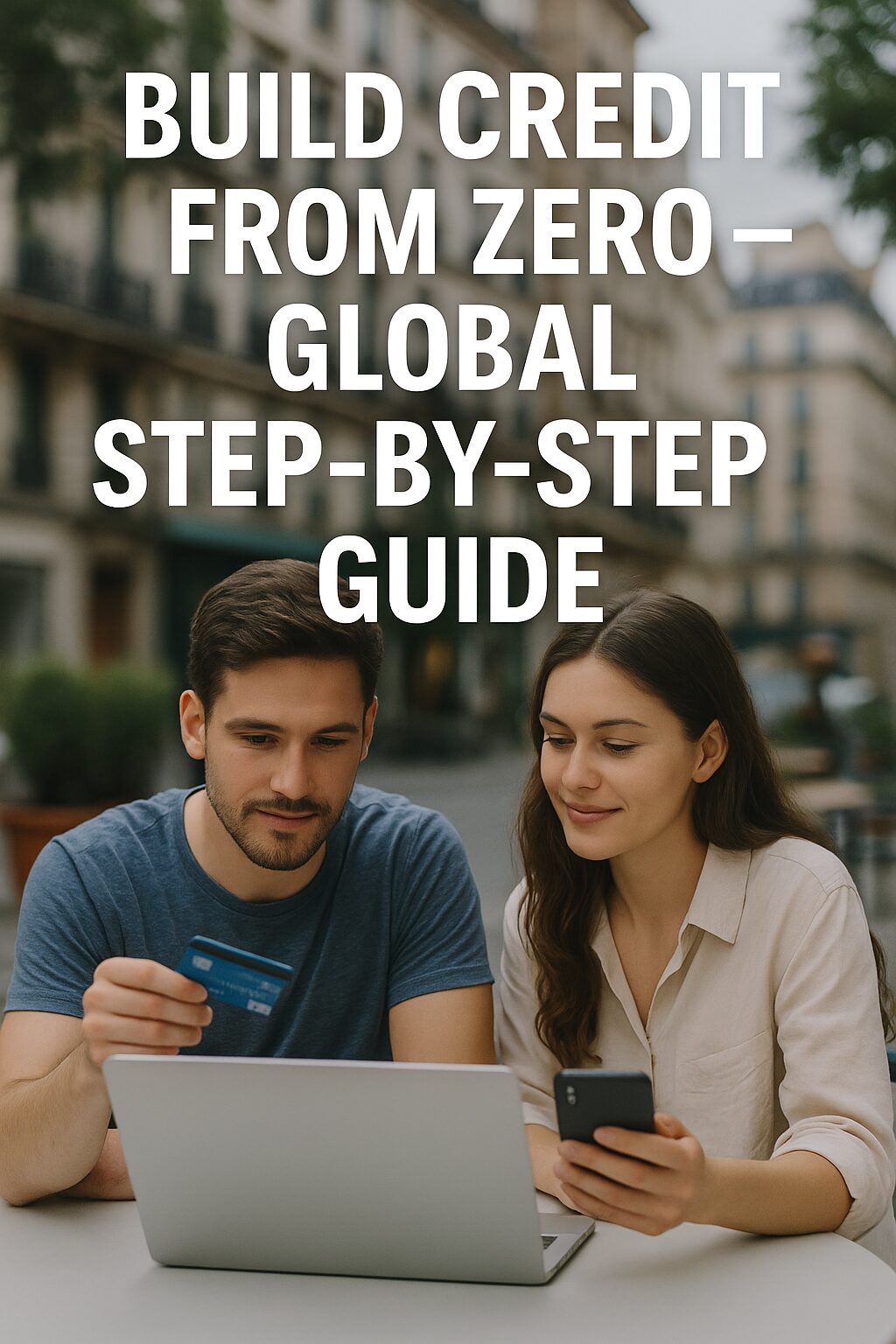
A young couple sitting at an outdoor café using a laptop and holding a credit card, symbolizing the process of building credit from scratch.

Building credit from scratch is not just a financial task—it’s a life skill that determines your future opportunities.
Whether you’re starting in the U.S., the U.K., Korea, or Southeast Asia, your journey begins with understanding how credit works, what affects your score, and what actions you can take immediately.
In this guide, we explore practical steps backed by real-world examples to help you move from no credit to good credit, all within 12 months.


1. Global Credit: Same Logic, Different Systems

In the U.S., the FICO score dominates. In the U.K., it’s Experian and Equifax.
In Korea, it’s KCB and NICE. In Southeast Asia, many countries still rely on bank account history or mobile phone data.
But no matter where you are, the logic is the same: Credit = Trust + Time + Responsibility.
No one gets a great credit score overnight. It’s built by proving that you are reliable.


2. Real Case: Building Credit in the U.S. as an Immigrant

Jae, a 23-year-old who moved to the U.S. from Korea, started with no credit.
After getting a Social Security Number, he applied for a Discover It Secured Card.
He deposited $300, used only $50 per month, and paid it off fully.
After six months, he was upgraded to an unsecured Capital One Quicksilver card with no annual fee.
His credit score grew from no file to 715 in less than a year.


3. Real Case: Building Credit in Korea Without a Job

Soojin, a 28-year-old freelancer in Seoul, had no traditional credit history.
She downloaded Kakao Bank’s credit management tool, which connected with KCB.
By paying her rent and phone bills on time and avoiding any late payments, her score rose from 0 to 784 in 10 months.
She later qualified for a small business loan with favorable interest.


4. 5 Global Strategies to Build Credit from Zero

  • Get a Secured Credit Card: Deposit $200~$500 and use under 30% of the limit.
  • Become an Authorized User: Join a family member’s or spouse’s card to inherit their good credit history.
  • Use Rent Reporting Services: In the U.S., U.K., and parts of Asia, tools like CreditLadder or Experian Boost allow rent or utilities to count.
  • Try Alternative Tools: Apps like Self in the U.S. or Toss in Korea help users build “thin file” credit histories.
  • Don’t Overapply: Avoid applying for too many cards. Each hard inquiry drops your score slightly.

5. Mistakes That Kill Your Score Early

  • Carrying balance and paying minimums (use auto-pay for full payments)
  • Maxing out your cards
  • Closing your oldest credit account
  • Missing payments (even small subscriptions)
  • Applying for 4+ cards in a year

6. No Score to Good Score – A 12-Month Simulation

MonthActionResult
1Apply for secured cardStart file
2-3Use 10–20% creditScore begins building
4Add rent reportingHistory strengthens
6Authorized user addedJump in score
9Auto loan or utility bill addedMixed credit types
12Upgrade card & credit limitScore likely 700+

This is a proven path—done by thousands.


7. Best Global Tools to Monitor & Build Credit

  • U.S.: Credit Karma, Self, Experian Boost
  • U.K.: ClearScore, CreditLadder
  • Korea: Toss 신용점수관리, 카카오뱅크 신용조회
  • SE Asia: Kredit Pintar (Indonesia), TrustingSocial (Vietnam)

Check them monthly. You don’t need to pay to see your progress.


Final Thought

Your credit is not a number—it’s a story.
A story about your habits, your timing, and your trustworthiness.
Start small, stay consistent, avoid traps, and let time do its job.
In a year, you’ll thank yourself.

Best Monthly Dividend Stocks for Beginners – Consistent Income with Low Risk

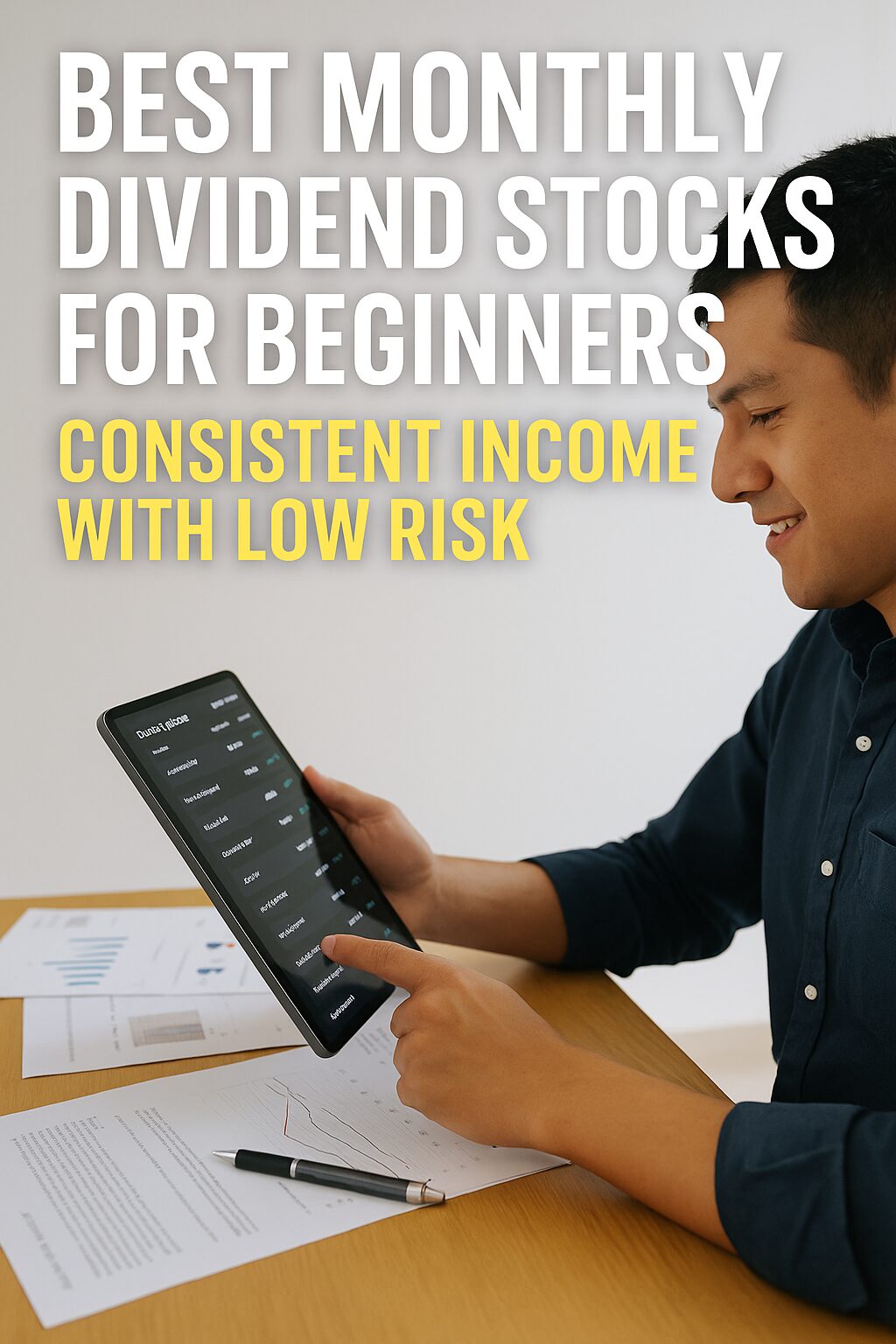
A young investor looking at a list of dividend stocks on a tablet while seated at a desk with financial documents

If you’re new to dividend investing and looking for stocks that pay you every month, you’re in the right place. Many first-time investors think that only complex portfolios or large investments can generate reliable passive income. But in reality, there are a few solid, beginner-friendly U.S. stocks that offer monthly dividends with relatively low entry barriers.

In this guide, we’ll highlight 3 of the best monthly dividend stocks for beginners in 2025 — and explain exactly why they’re worth your attention.


Why Choose Monthly Dividend Stocks?

Most dividend-paying stocks distribute income quarterly, meaning you get paid every three months. However, monthly dividend stocks help smooth out your income and simulate a more paycheck-like experience.

They are particularly helpful if:

  • You want a consistent cash flow every month
  • You’re building a dividend ladder
  • You plan to reinvest dividends monthly for faster compounding

1. Realty Income (O) – “The Monthly Dividend Company”

  • Dividend Yield: ~5.6%
  • Market Cap: $45+ Billion
  • Payout History: Monthly dividends since 1994

Why it’s beginner-friendly:
Realty Income is the most well-known monthly dividend payer in the U.S. It’s a REIT (Real Estate Investment Trust) that owns over 13,000 properties across retail, commercial, and industrial sectors — many of which are leased to recession-resistant tenants like Walgreens, 7-Eleven, and FedEx.

Realty Income’s track record is impeccable. It has paid 636 consecutive monthly dividends as of 2025 and is a true cornerstone of income-focused portfolios.


2. Main Street Capital (MAIN)

  • Dividend Yield: ~6.8%
  • Market Cap: ~$3 Billion
  • Dividend Type: Monthly + occasional special dividends

Why it’s beginner-friendly:
MAIN is a Business Development Company (BDC) that invests in small and mid-sized private companies across the U.S. While that might sound complex, the company itself is stable, diversified, and very shareholder-friendly.

MAIN not only pays reliable monthly dividends but often adds bonus/special dividends throughout the year. For beginners looking to maximize passive income on a smaller budget, MAIN offers a high yield with lower volatility than most high-dividend stocks.


3. STAG Industrial (STAG)

  • Dividend Yield: ~4.1%
  • Market Cap: ~$7 Billion
  • Dividend Schedule: Monthly

Why it’s beginner-friendly:
STAG is a lesser-known but solid monthly dividend payer focused on industrial real estate — warehouses, logistics centers, and fulfillment properties.

With the rise of e-commerce and AI-driven logistics, STAG’s tenants are generally large, creditworthy companies. For new investors seeking stable income from a growing sector, STAG provides a great entry point.


How to Get Started (Even With $100)

You don’t need thousands of dollars to begin collecting dividends. Here’s how you can get started today:

  • Open a brokerage account (Fidelity, M1 Finance, Interactive Brokers)
  • Use fractional share investing to buy portions of expensive stocks like O or MAIN
  • Enable DRIP (Dividend Reinvestment Plan) to automatically reinvest your income
  • Track payouts using free tools like TrackYourDividends or a simple Google Sheet
  • Set monthly contributions and build your dividend snowball consistently

Final Thoughts

Monthly dividend stocks offer a smooth and consistent path to passive income — especially for beginners. By starting with dependable payers like Realty Income, Main Street Capital, and STAG Industrial, you lay the foundation for future financial independence.

Remember: it’s not about timing the market, it’s about time in the market — and monthly payers make that journey feel rewarding every step of the way.

5-Minute Guide: How to Start Micro-Investing Today

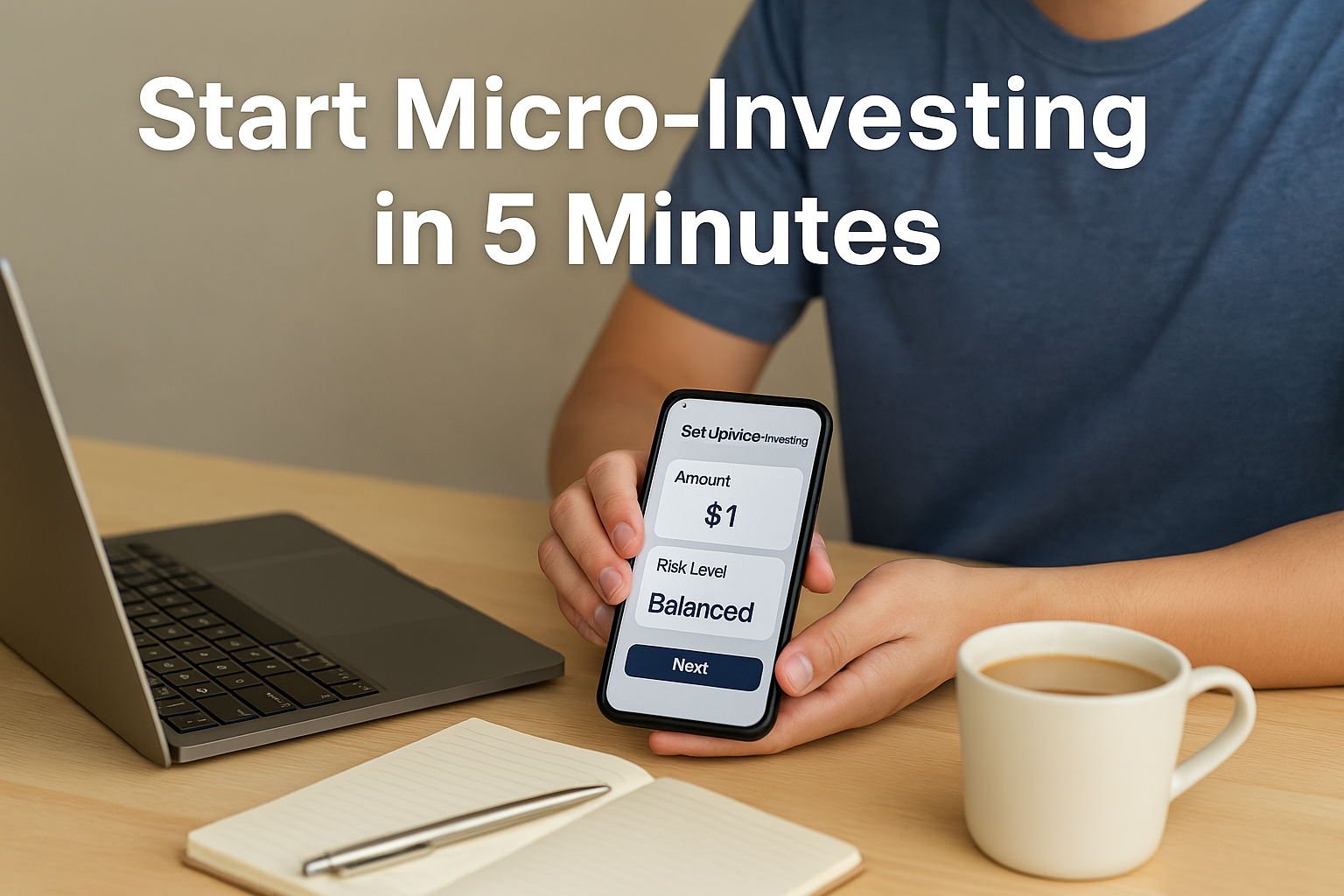
A person using a smartphone to set up a micro-investing app with a coffee and laptop on the desk.

Think investing is complicated? Think again. You can begin your micro-investing journey in just five minutes. No financial background required—just follow these steps:

Step 1: Choose an App
Pick a micro-investing app available in your country. Popular options include Acorns, Revolut, Toss, or Raiz. Read brief reviews and choose one that fits your goals.

Step 2: Link Your Payment Method
Most apps require a debit card or bank account. This allows them to automatically withdraw small amounts based on your rules.

Step 3: Set Up Investment Rules
Decide how the app should invest for you. Common options:

  • Round up spare change from daily purchases
  • Invest $1 daily
  • Weekly or monthly contributions

Step 4: Choose Your Risk Level
Apps usually offer choices like conservative, balanced, or aggressive. Beginners often start with balanced.

Step 5: Let It Run
Once everything is set, the app does the rest. You can check your progress monthly or let it grow quietly in the background.

Bonus Tip: Set a daily reminder for your “$1 habit.” After 30 days, you’ll have not only money invested but a new mindset.

Top 3 Micro-Investing Apps in 2025 (Global Edition)

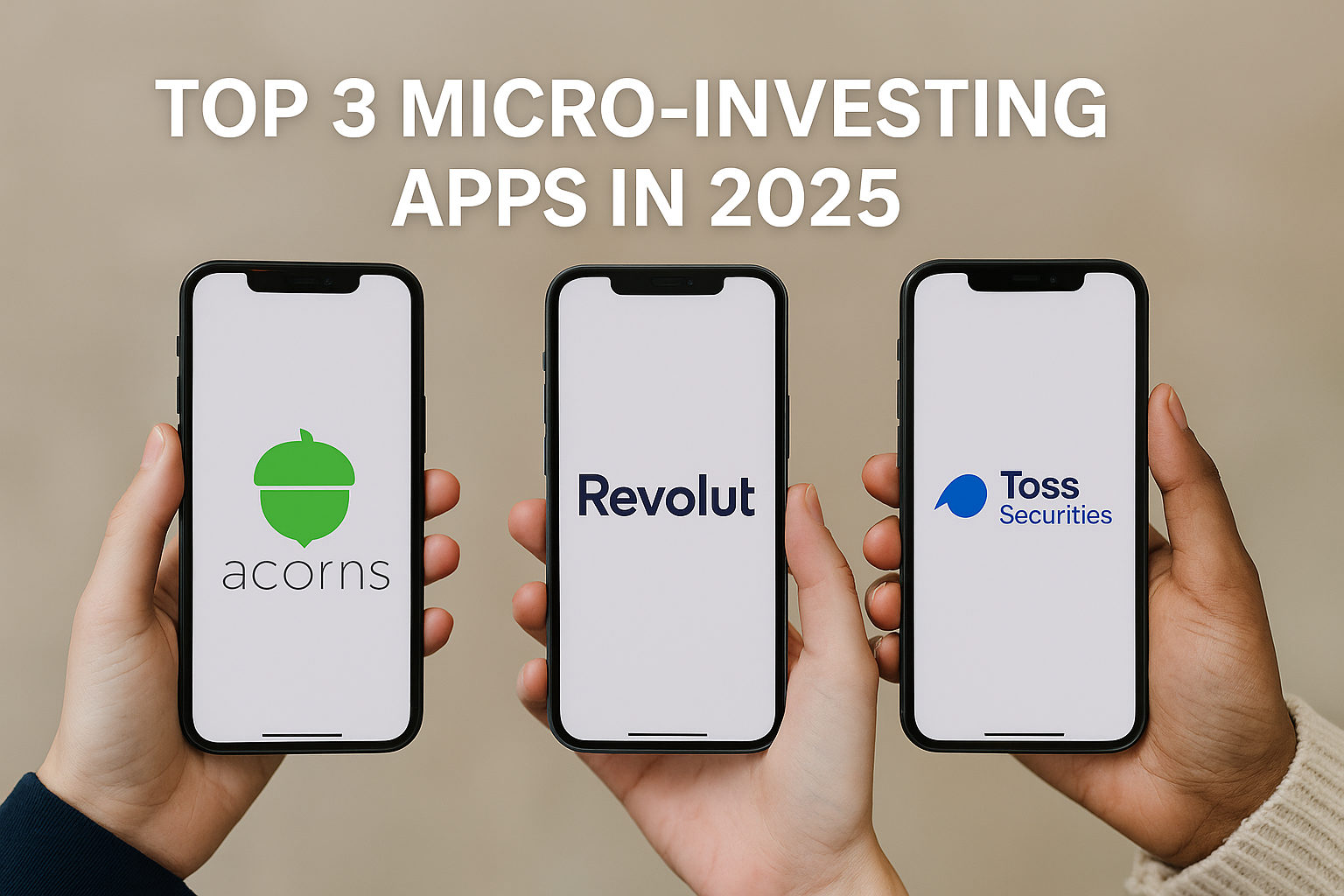
Smartphones displaying Acorns, Revolut, and Toss Securities apps side by side for comparison.

If you’re new to investing, choosing the right app is the first step. Micro-investing apps make it possible to start small and grow consistently. Here’s a quick comparison of the top 3 platforms globally in 2025:

1. Acorns (United States)

  • Start with: Spare change
  • Key Feature: Automatically rounds up purchases and invests the difference
  • Best for: Beginners who want everything handled for them

2. Revolut (Europe/UK)

  • Start with: $1
  • Key Feature: Easy-to-use interface with access to global stocks and crypto
  • Best for: Tech-savvy users who want flexibility

3. Toss Securities (South Korea)

  • Start with: 1,000 KRW (~$1)
  • Key Feature: Seamless access to US stocks with no complicated paperwork
  • Best for: Korean users who want to invest internationally with ease

Each of these apps offers automation, education, and low entry barriers. The best choice depends on your country, goals, and how hands-on you want to be. Whichever you choose, start small—but start today.

The Ultimate Blueprint for Building Multiple Passive Income Streams in 2025

A laptop displaying financial charts, an open notebook with glasses on a wooden desk, overlaid with the title “The Ultimate Blueprint for Building Multiple Passive Income Streams in 2025.”

Earning money without trading hours for dollars is no longer a dream. In 2025, anyone can set up simple systems that bring in cash on their own. This guide shows you step by step how to build several income sources that run in the background. Every term is explained in plain English so you can start right away.


1. What Passive Income Means

Passive income is money you get with little daily work. You do work once—then the money keeps coming in. Examples:

  • Savings Interest: You put money in a high-interest savings account (an online bank that pays you extra each year).
  • Digital Products: You create an eBook or a simple worksheet one time. People buy it again and again.
  • Rent: You own a room or home that you rent out, and you collect rent each month.

2. Pick Your Starting Point

Before you begin, answer these three questions in a notebook:

  1. How much time? Can you spend 2–5 hours a week?
  2. How much money? Even $50 now helps.
  3. What skills? Writing, design, or teaching work well.

Use what you already have. If you enjoy writing, start with an eBook. If you have extra cash, start with a high-interest savings account.


3. Stream #1: High-Interest Savings Account

This is the easiest step.

  1. Choose a top account like Ally or Marcus.
  2. Link it to your checking account.
  3. Set up an automatic transfer of $50–$100 each payday.
  4. Let interest build up. Check your balance monthly.

Why it works: You earn 3–4% per year (compared to under 0.5% at big banks). Your money stays safe under government insurance rules.


4. Stream #2: Simple Digital Product

Next, create something once and sell it many times. Options include:

  • eBook or Guide: Write clear how-to steps on a topic you know.
  • Printable Planners: Design a weekly planner or checklist people can download and print.

How to sell:

  • Use a site like Etsy or Gumroad.
  • Upload your file and set a price (e.g., $5–$15).
  • Share your link on social media or in an email.

Digital products take a few hours to make. After that, sales happen on their own.


5. Stream #3: Affiliate Niche Blog

A niche blog focuses on one small topic, such as “budget travel” or “home coffee brewing.” Steps:

  1. Pick a domain name (like MyMoneyTools.com).
  2. Choose web hosting (a service that puts your site online).
  3. Write helpful posts of 800–1,000 words each. Use clear headings and simple words.
  4. Join affiliate programs (Amazon Associates or other services).
  5. Insert links to products in your posts. When readers buy through your link, you earn a fee.
  6. Promote on social sites or in relevant groups.

Why it works: You help readers solve problems, and you earn commissions on items they buy.


6. Stream #4: Short-Term or Long-Term Rental

If you can save around $5,000 or more, consider real estate:

  • Short-Term (Airbnb): Rent a spare room by the night.
  • Long-Term: Rent a full home or apartment by the month.

Real estate takes more effort at first—cleaning, listing, and maintenance. But once set up, it delivers steady monthly income.


7. Automate and Track Your Streams

  • Calendar Alerts: Set one reminder per month to check each stream.
  • Simple Spreadsheet: List each income source and track earnings.
  • Reinvest: Put part of your earnings back into your high-interest account or next product idea.

8. Scale Gradually

Start with one stream and add a new one every 2–3 months. A sample timeline:

  • Month 1–2: High-interest savings + digital product.
  • Month 3–5: Affiliate niche blog.
  • Month 6–8: Short-term rental setup.

By the end of the year, you could have four income sources bringing in money automatically.

Top 5 High-Yield Online Savings Accounts You Can Open Today

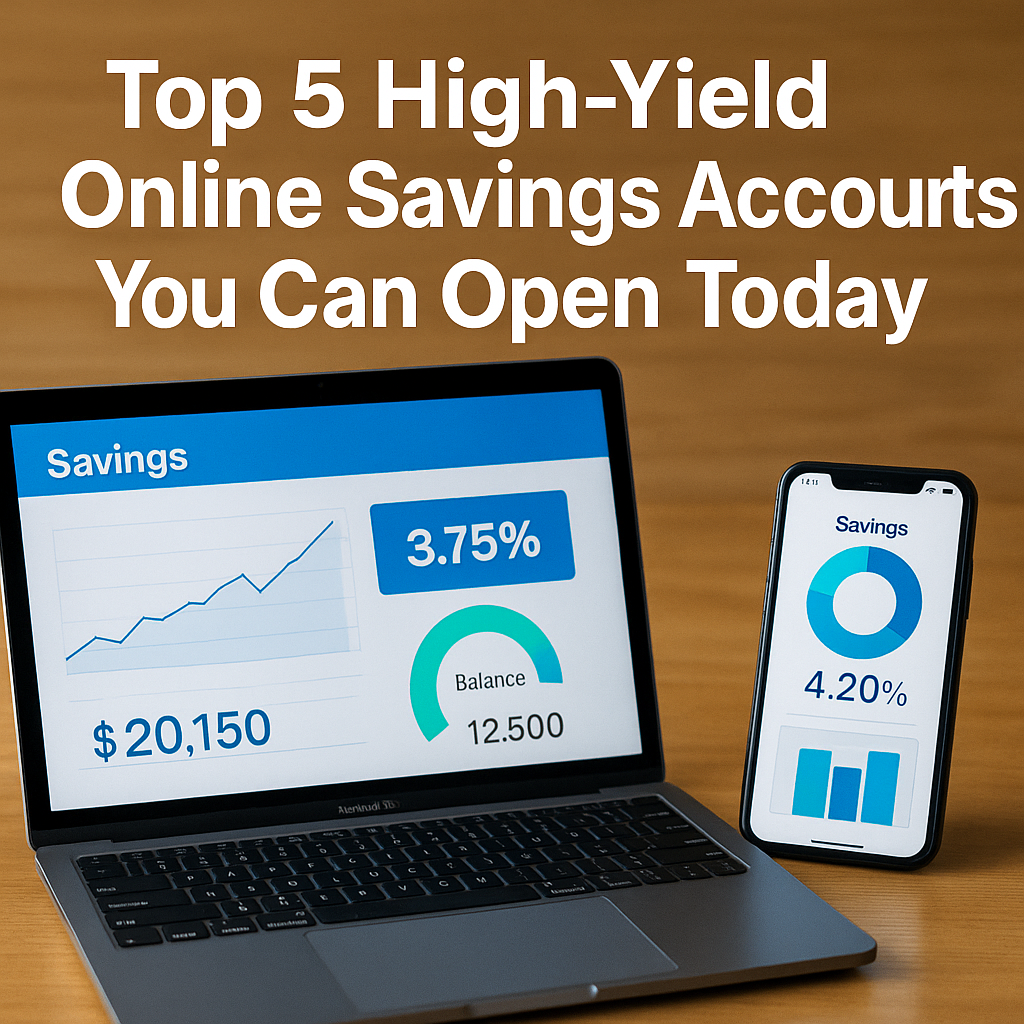
Laptop and smartphone screens showing colorful graphs of savings growth and interest rates, highlighting top online savings accounts.

Looking for a safe, no-hassle way to earn more from your cash? Online savings accounts consistently offer rates well above what traditional banks pay. Below are five top picks you can open in minutes—each backed by FDIC insurance, zero hidden fees, and user-friendly tools to help you grow your balance.


1. Ally Online Savings

APY: 3.75%
Ally’s online savings account is a crowd favorite for its blend of simplicity and flexibility. You pay no monthly fees, and there’s no minimum balance requirement. Deposits and withdrawals are unlimited, and you can schedule recurring transfers in just a few clicks. Ally also offers 24/7 customer support via phone or chat, in case you ever need help. Their mobile app features savings buckets—virtual sub-accounts you name yourself—to help you set and reach multiple goals at once.


2. Marcus by Goldman Sachs

APY: 3.80%
Marcus stands out with one of the highest rates available and a super-simple signup process. You can link an external checking account for instant transfers, and set up automatic monthly deposits so you never have to think about moving money. There are no transaction fees, and no minimum deposit to open an account. Marcus’ online dashboard shows your balance and interest earned in clear charts, making it easy to track progress toward your goals.


3. Discover Online Savings

APY: 3.70%
Discover packs robust features into its online savings account. You get no minimum balance, and all balances are FDIC-insured up to $250,000. Their mobile app includes built-in budgeting tools, helping you see spending and saving trends in one place. Discover also offers round-up transfers: link a debit card, and the app will round up each purchase to the next dollar, moving the difference into savings. For users who like automation, this feature delivers steady growth without lifting a finger.


4. Synchrony High Yield Savings

APY: 3.65%
If you value easy access to your money, Synchrony’s free ATM debit card is a plus—it lets you withdraw from any ATM with no fees. Interest compounds daily, so even small balances earn faster growth. Synchrony has no monthly fees and a low minimum opening deposit (typically $0–$100). Their web portal and mobile app deliver a straightforward interface: check your balance, view transaction history, and set up external transfers in seconds.


5. CIT Bank Savings Connect

APY: 3.60%
CIT Bank’s Savings Connect account requires a modest $100 opening deposit but rewards you with a competitive rate and tiered APY—balances above certain levels earn slightly higher rates. You can schedule weekly or monthly auto-transfers from any linked account, and there are no hidden service fees. CIT’s online platform includes email alerts for when your balance hits certain thresholds, helping you stay on top of your savings plan.


How to Choose the Right Account

  1. Interest Rate vs. Convenience: If you rarely need to move money, prioritize the highest APY. If you plan frequent withdrawals, look for free ATM access or unlimited transfers.
  2. Minimum Deposit Requirements: Some accounts start at $0, others at $100. Pick one you can fund immediately.
  3. Automation Features: Recurring transfers, round-up options, and goal buckets keep you saving without extra effort.
  4. Mobile App Quality: Read user reviews for ease of use—simple dashboards encourage regular check-ins.
  5. Customer Support: 24/7 chat or phone access can be a lifesaver if you ever have an urgent question.

Simple Action Plan

  1. Choose one account that matches your habits and balance needs.
  2. Open it online—most applications take under 5 minutes.
  3. Link your checking account and set up an automatic transfer (e.g., $50–$200 per payday).
  4. Track your progress monthly—watch your balance and interest climb.

By moving just a small portion of each paycheck into a high-yield account, you’ll earn hundreds of dollars more in interest over a year compared to a regular savings account. Start today, and let your money work harder for you!