How to Write a National Interest Letter That Wins ApprovalsThe Proven Blueprint for Winning Your EB-2 NIW Petition

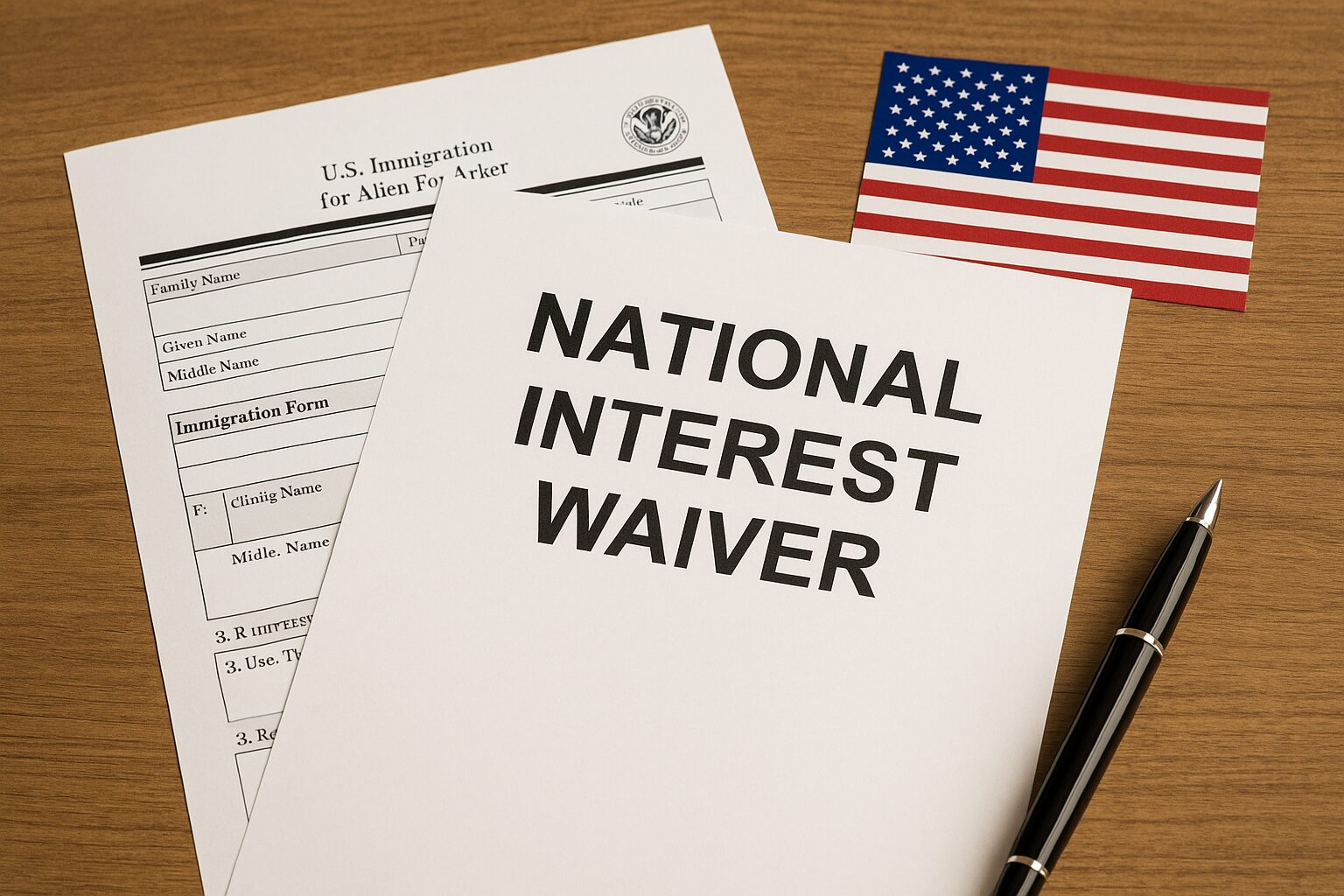
A formal letter labeled “National Interest Waiver” sits on a wooden desk, beside a U.S. immigration form, symbolizing a structured petition for EB-2 NIW approval.

1. Why the National Interest Letter Can Make or Break Your Case

The EB-2 National Interest Waiver (NIW) is a unique U.S. visa category that allows highly skilled professionals to self-petition for permanent residency without a job offer.
However, it comes with a big responsibility: convincing the U.S. government that your work directly benefits the national interest.

At the heart of this petition lies one powerful document: the National Interest Letter. Unlike a resume or a cover letter, this document must build a legal and persuasive argument. It’s your chance to tell USCIS why the United States should waive the job offer requirement just for you.

A well-crafted National Interest Letter shows that you’re not just qualified—but that your continued presence and work in the U.S. serve a greater public good. This document can often tip the scale between denial and approval.


2. What USCIS Really Wants to See

U.S. Citizenship and Immigration Services (USCIS) evaluates NIW petitions using three specific criteria (from the Dhanasar framework):

  1. Substantial merit and national importance
  2. Well-positioned to advance the endeavor
  3. On balance, waiving the job offer requirement benefits the U.S.

The National Interest Letter is where you address each of these directly, using real-world results, not vague statements.


3. The Winning Structure: 5 Core Sections That Work

To write a National Interest Letter that gets noticed, follow this proven five-part structure:

1. Introduction

Briefly introduce yourself, your field, and your petition. State clearly that you’re applying for the EB-2 NIW and that your work supports U.S. national interests.

Example:

“I am writing to respectfully request approval of my EB-2 National Interest Waiver petition based on my ongoing work in AI-driven health systems, which supports public health access and healthcare efficiency in the United States.”

2. Professional Background

Summarize your academic credentials, work experience, and professional achievements. Don’t list everything—focus on what aligns with your petition.

Highlight awards, media features, patents, or measurable outcomes (e.g., “improved system uptime by 45%,” “published in IEEE,” etc.).

3. National Interest Contribution

This is the heart of your letter. Explain how your work supports U.S. economic, scientific, or societal priorities. Connect your experience to real challenges the U.S. faces, like healthcare access, sustainability, cybersecurity, or economic development.

Tips:

  • Use examples of your work’s past impact
  • Forecast how your work could benefit U.S. systems or communities
  • Reference government goals (e.g., “aligns with NIH’s 2023 public health priorities”)

4. Why the Waiver Is Justified

Explain why going through the labor certification (PERM) process doesn’t make sense in your case. This could be due to:

  • Urgency of your work
  • Niche expertise not easily found
  • Need for independence or project mobility

You must make the case that you are better able to contribute if the waiver is granted.

5. Conclusion

Reinforce your long-term commitment to working in the U.S.
Thank the officer for reviewing your petition, and offer to provide any additional evidence.


4. Phrases That Strengthen Your Case

Here are powerful sentence templates used in successful petitions:

✅ For national interest impact:

  • “My work directly addresses public health concerns identified in CDC’s recent findings.”
  • “The AI models I developed contribute to infrastructure security—a core area of DHS focus.”

✅ For waiver justification:

  • “Due to the interdisciplinary nature of my work, the traditional labor certification process is not practical.”
  • “My continued research requires rapid deployment and cannot be delayed by traditional recruitment procedures.”

✅ For closing the argument:

  • “I respectfully request favorable consideration of this petition based on my capacity to contribute to the national interest of the United States.”
  • “I am fully committed to carrying out this work in the United States for the long-term benefit of American society.”

5. Real-World Case Studies

🇮🇳 Data Scientist – EB-2 NIW Approved

  • Field: AI & healthcare
  • Project: Developed a scheduling algorithm for hospitals in India
  • Result: Reduced patient wait times by 30%
  • U.S. Connection: Modeled potential deployment in underserved U.S. counties
  • Outcome: Approved, with letter citing “potential measurable impact on U.S. public health infrastructure”

🇧🇷 Agricultural Economist – EB-2 NIW Approved

  • Field: Climate-sensitive crop modeling
  • Project: Built tools for Brazilian farmers
  • U.S. Link: Proposed pilot with Midwest agriculture firms aligned with USDA objectives
  • Outcome: USCIS recognized contribution to U.S. food security strategy

🇰🇷 UX Designer – EB-2 NIW Approved

  • Field: Digital accessibility
  • Project: Created elderly-friendly health app designs
  • Argument: Focused on the U.S. aging population and Medicare digital access gaps
  • Outcome: Approved, emphasized public interest in digital health accessibility

6. Top Mistakes That Lead to Rejection

Avoid these common pitfalls:

Using emotional language instead of facts

“I’ve always dreamed of living in America.” → Not relevant

No U.S. connection

USCIS needs to see your impact on the United States, not just your country of origin.

Repetition from recommendation letters

Don’t copy letters verbatim. Your voice must be clear and independent.

Vague metrics or generic language

“I improved things a lot” → Replace with: “Reduced project failure rate by 42%”

Skipping waiver justification

Without this section, your letter will be incomplete—even if everything else is strong.


7. Bonus: What to Attach With Your Letter

To strengthen your petition, consider attaching the following:

  • Articles or blog posts about your work
  • Data charts or graphs showing your impact
  • Letters of collaboration from U.S. institutions
  • Research summaries
  • Patent documentation
  • Product screenshots with user stats
  • Translations of foreign documents (certified)

8. Your 3-Step Action Plan

Step 1: Build a Clear Impact Narrative
Write down your biggest achievements. Attach real numbers to each.

Step 2: Align With U.S. Priorities
Use government reports, research, and funding programs to tie your work to American needs.

Step 3: Draft, Edit, and Test
Have peers or advisors read your letter. Polish it for clarity, tone, and logic.

This letter is your moment to take control of your immigration story—make every word count.


📌 Coming Up Next
“The Ultimate Guide to Avoiding Immigration Resume Pitfalls”
→ Learn what NOT to include in your resume, how to frame your digital work, and how to avoid red flags that could delay or derail your petition.
The Digital Skillset That Opens U.S. Immigration DoorsReal Skills That Help Immigrants Secure EB-2 NIW, O-1, and E-2 Approvals

A symbolic image of immigration success showing an abstract digital city skyline connected by glowing data streams, representing high-value digital skillsets.

1. Why Digital Skills Matter More Than Ever for Immigration

The U.S. immigration system increasingly favors applicants who can demonstrate concrete value through their skills. Degrees and experience still matter, but in visa categories like EB-2 NIW, O-1, and E-2, your digital capabilities often determine whether your case is strong enough for approval.

The good news? Many digital skillsets not only boost your income but also prove your capacity to contribute to the U.S. economy, which is exactly what immigration officers are looking for.


2. Top Digital Skills That Open Immigration Pathways

Here are the most in-demand skills that have helped actual immigrants win visa approvals:

SkillsetImmigration Advantage
Data AnalyticsHelps support national interest in public health, energy, policy, etc.
AI / Machine LearningHigh-value tech for automation, diagnostics, logistics
CybersecurityNational security & enterprise-level protection relevance
UI/UX DesignEnhances digital accessibility and public service delivery
Web & App DevelopmentPowers startups, government tools, and public platforms
Digital Marketing (SEO, PPC, Email)Enables export growth, small business scaling
No-code/Low-code ToolsAccelerates digital transformation for non-tech sectors

These aren’t just “nice to have” skills—they directly align with what the U.S. immigration system defines as “substantial merit and national importance.”


3. How to Showcase These Skills in Your Immigration Portfolio

Here’s how to present your tech experience effectively:

📌 Use measurable outcomes:
Don’t just say, “I worked on a website.” Say, “I led a UX redesign that reduced bounce rate by 40%.”

📌 Tie your work to U.S. national interests:
If your skills improved public access to healthcare, education, or digital infrastructure, highlight that.

📌 Publish your results publicly:
Use GitHub, Behance, Medium, ResearchGate, or your own portfolio site to document your contributions.
Open-source projects and international reach = global impact.


4. Mapping Skills to Visa Types

Visa TypeDigital Skill Strategy
EB-2 NIWUse data-driven achievements and national-level impact
O-1Document awards, media coverage, leadership in tech fields
E-2Build a business around your tech—especially if it can hire U.S. workers
STEM OPTShow that your digital work directly relates to your major and career goals

Digital proof goes further than statements—platforms, outcomes, and reach matter more.


5. Real Cases: How These Skills Secured Approvals

  • 🇮🇳 Data Scientist used AI to improve hospital efficiency, published results → NIW approved
  • 🇧🇷 UX Designer improved access to digital services for low-income users → O-1 approved
  • 🇰🇷 SEO Specialist helped Korean exporters enter U.S. markets via digital campaigns → E-2 approved

Each case focused on outcomes + U.S. relevance, not just technical ability.


6. Step-by-Step: Start Small, Build Strategic

  1. Identify your strongest digital skill with U.S. demand
    → Use LinkedIn job posts, USCIS case examples, and market trends
  2. Document how that skill created real-world impact
    → Focus on numbers: traffic growth, time saved, revenue boost, etc.
  3. Translate your impact to U.S. benefit
    → Build your case around the idea: “Here’s how I can help America thrive.”

Even a single GitHub repo or public Medium article can be the foundation of an NIW case.


📌 Coming Up Next

“How to Write a National Interest Letter That Wins Approvals”
→ We’ll break down how to craft a compelling statement of national interest that matches USCIS expectations, including sample wording, structure, and real success excerpts.

Freelancing in the U.S. as a Visa Holder – Rules, Platforms, and Success Tips

A young immigrant freelancer working on a laptop in a bright cafe in the U.S.

Subtitle: How to Legally Earn and Grow as a Freelancer While Staying Fully Compliant with U.S. Immigration Law

Why Freelancing Makes Sense for Visa Holders

Freelancing is more than just a side hustle — it’s a flexible, scalable way to build your income.
But if you’re in the U.S. on a visa, things aren’t as simple as logging onto Upwork and getting paid.

The challenge? Not all visas allow freelance work, and even if they do, the conditions are complex.
The good news? Thousands of immigrants and visa holders do it successfully — legally and profitably.

This guide is your step-by-step roadmap to freelancing without violating your visa, while building income and freedom.


1. Can Visa Holders Freelance in the U.S.?

The answer depends on your visa type.

✅ Visas That Generally DO NOT Allow Freelancing:

Visa TypeFreelance Allowed?Notes
F-1 (Student) Not allowed (unless CPT/OPT permits it)Only on-campus or authorized internships
B-1/B-2 (Visitor) Strictly prohibitedEven online work is considered unauthorized employment
H-1B (Work Visa) Tied to employerCan’t freelance outside sponsoring company

✅ Visas That MAY Allow Freelancing:

Visa TypeFreelance Allowed?Notes
F-1 with OPT Limited freelance allowedMust relate to your major
J-1 Depends on sponsorRequires explicit written permission
E-2 (Investor) If part of your businessYou can work for your own company
O-1 (Talent) Usually allowedMust be documented and relevant to your skill
Green Card YesFull freedom to freelance legally

Pro tip: If you’re unsure, speak with an immigration lawyer before accepting any freelance work.


2. Legal Ways to Freelance While on a Visa

Even if your visa doesn’t allow traditional freelance gigs, here are legal workarounds:

1) Freelance for an overseas client and get paid abroad

If you’re doing remote work for a non-U.S. company and not earning from U.S. sources, it’s sometimes acceptable — but check visa terms carefully.

2) Set up a business entity (like an LLC)

Some visas (like E-2, O-1) allow you to form a business and pay yourself. You must separate ownership from labor.

3) Work under CPT or OPT (for F-1 holders)

You can freelance only if it’s approved under CPT or OPT and directly related to your field of study.

4) Partner with a U.S.-based business

You may be able to contract legally if you’re added to payroll or engaged via proper documentation.


3. Best Platforms to Start Freelancing (Visa-Friendly Options)

Here are the top freelancing platforms that are commonly used by immigrants and visa holders:

PlatformBest ForVisa Notes
UpworkGeneral freelancingRequires tax ID or foreign payment setup
FiverrCreative gigsEasy to set up, fast-growing platform
ToptalDevelopers & designersHighly competitive, must pass test
ContraPortfolio-based freelanceAccepts international talent
Freelancer.comEntry-level workMany global clients, varied pay
GuruProfessional servicesLess crowded, steady gigs
WorkanaSpanish-language jobsIdeal for bilinguals

Tip: Use Payoneer or Wise for receiving international payments if you can’t get a U.S. bank account.


4. How to Get Clients Without Violating Your Visa

If you’re allowed to freelance, here’s how to get started safely and professionally:

1) Build a portfolio site

Create a simple site (like carrd.co or Webflow) showcasing your skills.

2) Use LinkedIn the smart way

Don’t say “open to freelance” if not allowed — instead show your work and let clients reach out.

3) Join freelance communities

Use platforms like Indie Hackers, r/freelance, or local Slack groups.

4) Stay transparent with your clients

Let them know your working limitations upfront — most respect honesty.


5. Real Success Stories

Case 1 – Luisa (J-1 Visa, Graphic Designer)

Got permission from her sponsor to work part-time remotely for a company in her home country.
Built her design portfolio, now running a full-time remote design business from Chicago.

Case 2 – Aditya (F-1 with OPT, Developer)

Used OPT to freelance for a startup related to his major.
Eventually transitioned into full-time employment and got an H-1B.

Case 3 – Amina (O-1, Photographer)

Started as an Instagram content creator, used her portfolio to get featured gigs and eventually built an agency.


6. Important Do’s and Don’ts

Do:

  • Check visa limitations first
  • Keep clear records of your work
  • Use contracts with all clients
  • File taxes properly (self-employment tax may apply)

Don’t:

  • Accept work from U.S. clients if your visa prohibits it
  • Assume online work is exempt
  • Work “under the table”
  • Use someone else’s name or tax ID

7. Freelancing and Taxes in the U.S.

If you earn money from freelancing while in the U.S., you may owe taxes, even as a non-resident.

  • File IRS Form 1040-NR (nonresident return)
  • Report all income — even from overseas clients
  • Use Schedule C for self-employed income
  • Consider hiring a tax preparer familiar with non-resident taxes

Final Thoughts: Can Freelancing Work for You?

Freelancing in the U.S. as a visa holder isn’t impossible — but it requires smart planning, legal awareness, and flexibility.

If you’re willing to start small, stay compliant, and build your reputation, you can earn real money and even use freelancing to:

  • Qualify for an O-1 or E-2 visa
  • Build a business for future Green Card support
  • Gain experience and referrals for better jobs

In a world where remote work is growing, freelancing is one of the few scalable, borderless opportunities — even on a visa.

📌 Coming Up Next:
In our next post, “How to Use Freelancing to Transition to an O-1 or E-2 Visa – Step-by-Step Blueprint,” you’ll learn how successful freelancers strategically use their portfolio and business setup to qualify for a visa upgrade—and build lasting opportunities in the U.S.

Beyond the Green Card – The Ultimate Guide to Financial Independence as an Immigrant

A confident middle-aged immigrant man smiling in front of the U.S. flag, with overlaid text “Beyond the Green Card – Financial Independence Guide”

Getting a Green Card is a major milestone—but it’s not the finish line.
For many immigrants, the real journey begins after permanent residency.
The next big question becomes:
“How do I stop trading time for money and finally live on my own terms?”

This guide is your roadmap to achieving financial independence (FI) in the U.S.
It’s not about survival—it’s about designing a system that works while you sleep.


1. What Is Financial Independence?

Financial independence means you are no longer dependent on your job to survive.

It looks like:

  • Your basic living expenses are covered—even without working
  • You have full control over your time and choices
  • You’re free from financial anxiety

In short, money no longer controls your life decisions.


2. The Immigrant Reality in the U.S.

Most immigrants start from zero:
No credit, limited savings, and unfamiliar systems.
But immigrants often make rapid progress due to high motivation and discipline.

Many reach higher net worths in 10 years than they had in their home countries.


3. The 3 Stages of Financial Independence

StageGoalActions
Stage 1StabilityPay off debt, build emergency fund, track budget
Stage 2Diversify incomeSide hustles, basic investing
Stage 3Systemic incomeBuild passive and automated systems (blogs, dividends, etc.)

Example:

  • Stage 1: Save $6,000 for emergencies
  • Stage 2: Build blog that earns $500/month
  • Stage 3: Earn $3,000/month passively

4. Best FI Strategies for Immigrants in the U.S.

1) FIRE Movement (Financial Independence, Retire Early)

  • Save aggressively + invest in ETFs
  • Retire in 10–15 years
  • Join FIRE communities: Reddit, ChooseFI, blogs

2) Digital Asset Building

  • Blog, YouTube, eBooks, templates
  • Platforms: WordPress, Gumroad, YouTube
  • Income: Autopilot + global reach

6 months of focused effort = years of income


3) Real Estate via REITs

  • Fundrise, Public.com, or traditional REITs
  • Start with as little as $100
  • Monthly dividends without property ownership

4) Tax Optimization

  • Max out 401(k), Roth IRA, HSA
  • Choose a low-tax state (e.g. Florida, Texas)
  • Meet with a CPA yearly

5) Family-Based Financial Systems

  • Joint blog or online store with spouse
  • UTMA accounts or 529 plans for kids
  • Community-based investing circles

5. Case Studies from Real Immigrants

🇻🇳 Thanh (Vietnam)
Started a WordPress blog after getting a Green Card.
Reached $2,000/month in 4 years. Now lives in Europe full-time.

🇮🇳 Priya (India)
Runs an Etsy store with her husband.
Earns $3,500/month—both work from home.

🇨🇳 Mei (China)
Combines dividend investing with WordPress tutorials.
Quit her job in 5 years. Travels the U.S. in an RV.


6. Tools to Fast-Track FI

PurposeTools
BudgetingYNAB, Mint, Tiller
InvestingVanguard, Fidelity, Robinhood
MonetizationWordPress, Gumroad, Etsy
CommunitiesReddit (r/financialindependence), ChooseFI, Immigrant Finance

7. 3 Principles to Follow

1) Use the U.S. system—legally and wisely.
Don’t skip taxes. Understand investment rules. Consult professionals.

2) Build systems—not just income.
Focus on money that works without you.

3) Learn, document, and share.
Your blog is a tool, a business, and a legacy.


Final Thoughts

You already made the bold move to start a new life in America.
Now it’s time to build true freedom—financial, time, and emotional.

It won’t happen overnight.
But it will happen if you build systems that outlast your energy.

Financial independence is not a dream—it’s a design.

📌 Coming Up Next:
Our next post, “Digital Nomad Life in the U.S. – Remote Income Strategies for Immigrants,” will show you how to earn money remotely from anywhere in the U.S. using digital tools, trusted online platforms, and flexible, location-independent careers.