The One-Month Rule That Changed Korea’s Saving Culture – And How You Can Apply It

Korean saving culture and the one-month rule for better money habits

What if a single habit could turn your entire financial life around?

South Korea, once a nation known for high consumer debt and impulsive spending, is now considered one of the most financially disciplined societies in the world. And one of the key drivers behind this transformation is what locals call the “One-Month Rule.”

In this post, we’ll explore what this rule is, how it works, and how you can apply it — no matter where you live or how much you earn.


1. What Is the One-Month Rule?

The One-Month Rule is simple:
Before making any non-essential purchase, wait 30 days.

That’s it.

No impulsive buys. No “treat yourself” moments on payday. Just a waiting period that gives your brain time to process:

  • Do I really need this?
  • Will I still want it in a month?
  • Is there a cheaper or smarter alternative?

It’s not about restriction — it’s about clarity and intentionality.


2. How This Rule Transformed Korea’s Saving Culture

This rule became popular during South Korea’s post-IMF recovery period in the late 1990s and early 2000s. With high unemployment and economic instability, families had to find ways to stretch every won.

The media began promoting the “30-Day Purchase Delay Method” through TV programs, finance books, and even school curriculums. Over time, it became a widely accepted money habit — especially among middle-class workers and housewives.

As a result:

  • Credit card debt dropped
  • Emergency funds increased
  • Retail sales became more need-based
  • Koreans became known for their frugality and high savings rates

3. How the Rule Works (In Real Life)

Let’s say you want to buy a new tablet that costs $300.
Instead of clicking “Buy Now,” you write it down on your 30-Day List with the date.

During those 30 days, you:

  • Track your actual needs
  • Revisit the list weekly
  • Cross off items that lose appeal
  • Prioritize what matters most

By day 30, you either:

  • No longer want it (common)
  • Found a better/cheaper option
  • Or still want it → now it’s a conscious, guilt-free buy

This method avoids regret, builds discipline, and improves money mindfulness.


4. How to Apply the One-Month Rule in Your Life

Even if you’re not in Korea, this habit can work wonders — especially if:

  • You struggle with Amazon addiction
  • You overspend on apps, gadgets, or online courses
  • You want to start saving but don’t know how

Here’s a simple 3-step setup:

Step 1: Create a 30-Day Wishlist
Use Notion, Google Sheets, or pen and paper.
Write down any non-essential item you want, and add the date.

Step 2: Check Your List Weekly
Set a reminder. Review what’s still relevant and what’s not. Delete the junk.

Step 3: Reward Only After 30 Days
If you still want the item, buy it — without guilt.
You’ll be shocked how often you no longer care by then.


5. Advanced Tips: Combine with Automation for Bigger Results

  • Auto-transfer your impulse money:
    Set up an automatic transfer to your savings account every time you add something to your list.
  • Use the “Delay & Earn” system:
    For every item skipped after 30 days, transfer 10–30% of the would-be cost to a “victory savings” pot.
  • Gamify it:
    Use habit tracker apps or challenges (e.g., 30-Day Buy Nothing Challenge)
  • Family Edition:
    Do it as a household. Each person maintains a list, and you vote monthly on what’s worth buying.

6. Real Stories: Why This Rule Works

“I stopped buying things I forgot I even wanted.”
— A college student who saved $1,000 in 3 months by delaying fashion & beauty buys.

“We cleared $5,000 of credit card debt in a year.”
— A couple who made the rule a family challenge with reward dinners instead of impulse purchases.

“It made me feel in control.”
— A solopreneur who used the list to reduce app subscriptions and scale her savings.


7. Why This Rule Works (Psychology Behind It)

The One-Month Rule takes advantage of:

  • The Urge Curve: Most purchase urges fade within 10–15 minutes.
  • Loss Aversion: Writing down a want feels more “lossy” than clicking Buy Now.
  • Delayed Gratification: It rewires dopamine triggers from consumption to patience.
  • Cognitive Clarity: Time helps remove emotional fog from financial decisions.

In short: it trains your brain to crave security more than stuff.


8. Conclusion: Start Small, Build Forever

You don’t need to overhaul your life.
Just start with this one simple habit — and let it ripple across your finances.

Today’s action:
Create your first 30-Day List. Add one item. That’s it.

In a year, you might have:

  • Saved thousands
  • Built a guilt-free spending system
  • Rewired your brain for long-term wealth

One rule. One month. One new financial future.

📌 Coming Up Next:
In our next post, “How to Turn One Blog Post into 20+ Pieces of Content,” we’ll show you exactly how to repurpose a single piece of content into multiple formats across platforms—so your blog or business works smarter, not harder.
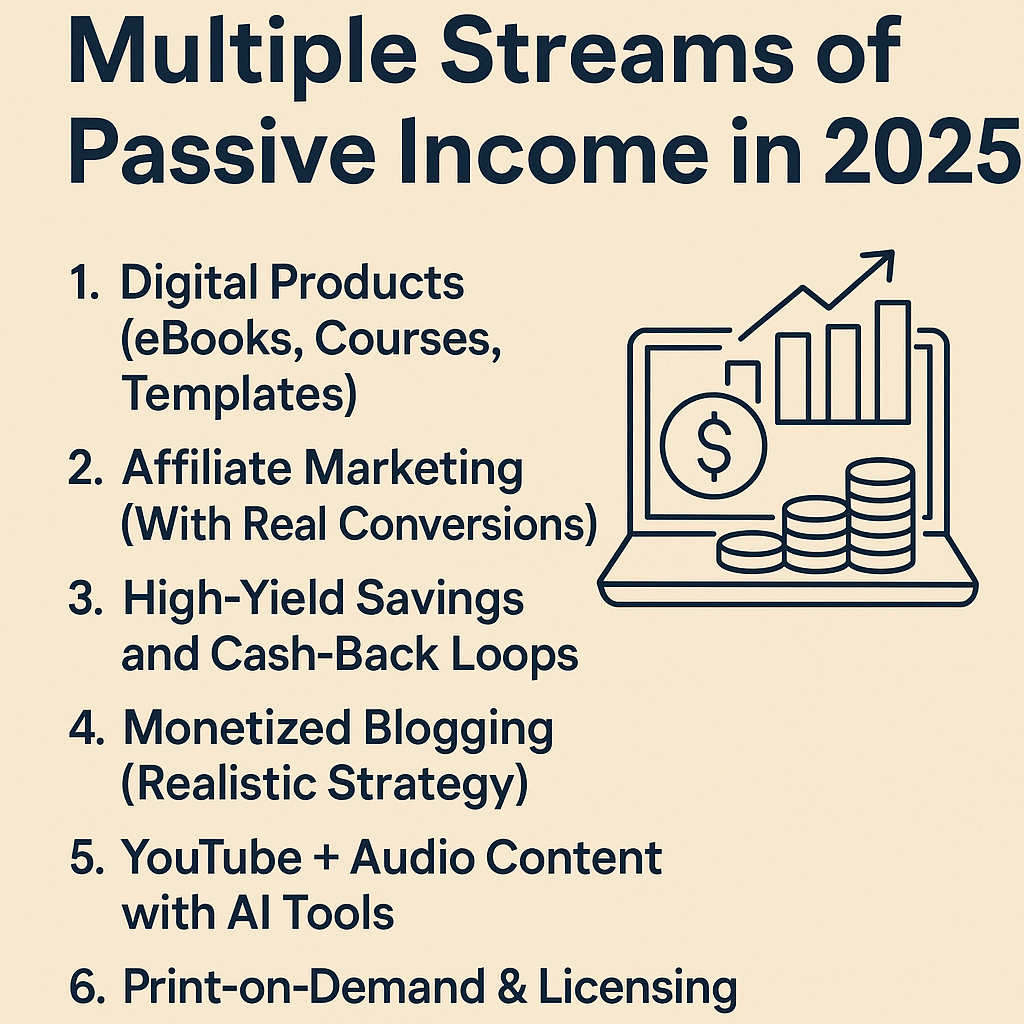
The Ultimate Guide to Building Multiple Streams of Passive Income in 2025

A minimalist infographic displaying six passive income methods for 2025, including digital products, affiliate marketing, and blogging, with an icon of a rising bar chart and dollar sign on a laptop screen.

1. Introduction: Why One Income Stream Is Never Enough in 2025

Relying on a single paycheck in 2025 is financial suicide. With inflation, unstable job markets, and global crises becoming the norm, people who thrive financially are those who build systems—not just careers. This guide isn’t about “get rich quick” hacks. It’s about real, sustainable passive income streams that you can start today, regardless of your background.


2. What Is Real Passive Income? (Not What You Think)

Forget the myths. Passive income isn’t 100% hands-free. Real passive income means you build once, earn repeatedly. Whether it’s an eBook, a blog, or a monetized video, there’s always initial effort. But the goal is to reduce time-for-money dependence and let your content or capital do the work.


3. Stream 1: Digital Products (eBooks, Courses, Templates)

Creating digital products is one of the most scalable passive income models. Examples include:

  • A $15 eBook that sells 50 copies a month = $750/month
  • A Notion template that helps freelancers organize their tasks
  • A mini-course on teaching Excel basics on Gumroad or Teachable

Tools to start:

  • Canva (design)
  • Gumroad (sell)
  • Loom (recording)
  • ChatGPT (drafting ideas)

Build once, automate sales, and you’ve built a 24/7 online store.


4. Stream 2: Affiliate Marketing (With Real Conversions)

Forget spammy links. The real game is trust-based recommendations.

Start by:

  • Picking a niche you know well (travel, personal finance, etc.)
  • Creating helpful content (blogs, YouTube, Instagram)
  • Recommending tools you actually use (e.g., Wise, Hostinger, Notion)

Best platforms to join:

  • Amazon Associates (easy start)
  • Impact.com (wide selection)
  • ShareASale (digital tools)
  • Wise Affiliate (global finance)

Passive income comes from the long tail: posts you wrote months ago still generating clicks.


5. Stream 3: High-Yield Savings and Cash-Back Loops

This is where your money works for you—literally.

  • Open a high-yield USD savings account (e.g., 4.5–5.5% APY)
  • Use cashback apps for daily spending (Rakuten, Dosh, Curve)
  • Stack rewards with cashback cards + crypto cashback cards

The key? Automation. Set it up once and let the interest or cashback build silently.


6. Stream 4: Monetized Blogging (Realistic Strategy)

Blogging is not dead, it’s just evolved.
A 2025 strategy involves:

  • Picking one topic: “How expats can save money abroad”
  • Writing long, SEO-rich posts (1,500–3,000+ words)
  • Monetizing with AdSense + affiliate links
  • Promoting via Pinterest, Reddit, and SEO tools (RankMath, Ahrefs)

One well-optimized post can make $50–$500/month on its own.


7. Stream 5: YouTube + Audio Content with AI Tools

If you’re camera-shy, AI is your friend.
Use tools like:

  • Pictory or Canva for video generation
  • Suno or ElevenLabs for voice and music
  • CapCut or Descript for editing

You can now create YouTube videos, Spotify podcasts, and shorts without filming yourself—and monetize through ads, sponsors, and affiliate links.


8. Stream 6: Print-on-Demand & Licensing

You don’t need inventory to sell products. With services like:

  • Printful (T-shirts, mugs, bags)
  • Redbubble or Teepublic (design platforms)
  • Creative Market (sell fonts, logos, UI kits)

Upload once, earn forever. Some artists make thousands per month from one viral sticker or T-shirt.


9. Stream 7: Long-Term Investment Income

For those with capital, these are the most hands-off streams:

  • Dividend-paying ETFs (e.g., VYM, SCHD)
  • Real estate funds or REITs
  • Crowdfunding platforms (Fundrise, RealtyMogul)
  • Crypto staking (only with reputable platforms)

This strategy requires initial capital, but the returns can be fully passive and scalable.


10. How to Combine These into a Profitable Ecosystem

You don’t need to master all 7. Pick 2 or 3 and make them interconnected.

Example:

  • Your blog drives traffic to your eBook
  • Your eBook recommends affiliate tools
  • Your affiliate links appear in your YouTube video description

Each piece supports the others. This is how top creators automate their income.


11. Final Checklist to Get Started Today

Pick 2 streams from the list
Create your first digital product or blog post
Sign up for 2 affiliate programs
Open a high-yield savings account
Schedule 1 hour per day for 30 days to build your system


12. Conclusion: Focus, Consistency, and 12-Month Goals

This isn’t a one-week sprint.
Building true passive income takes focus, content, and consistency. But if you treat it like a real business, even one year from now your system could be earning while you sleep.

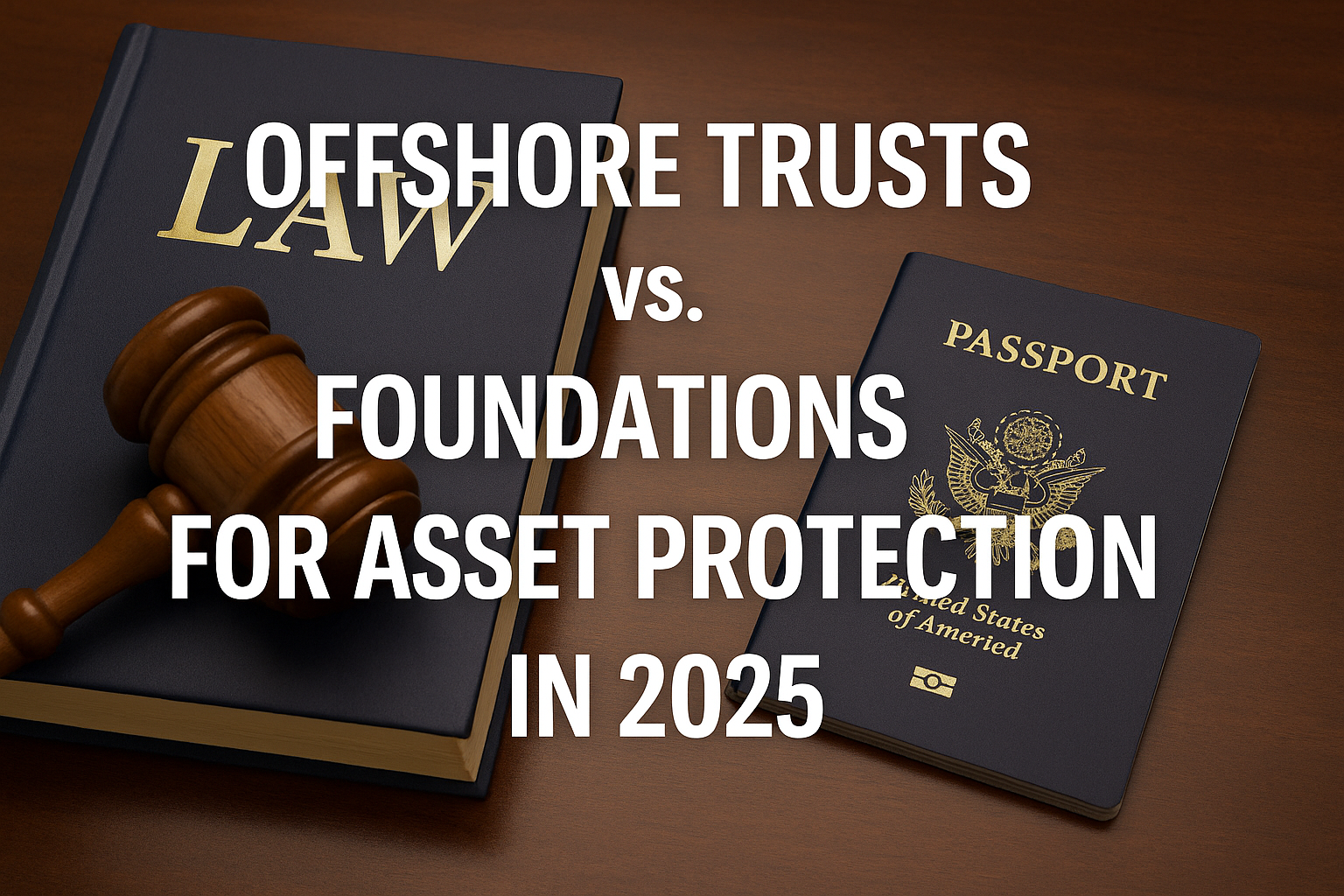
Offshore Trusts vs. Foundations for Asset Protection in 2025

An open law book, wooden gavel, and U.S. passport arranged on a polished desk, conveying offshore asset-protection planning.

Myth-busting offshore structures

The term “offshore” conjures images of secrecy and tax dodging, yet properly structured trusts and foundations are first and foremost asset-protection vehicles. They create a legal firewall that creditors, ex-spouses, and political risk find nearly impossible to breach—while maintaining regulatory compliance when set up under the right jurisdictions.

What an offshore trust really is

An offshore trust transfers legal ownership of assets from an individual (settlor) to a trustee who must follow a deed of wishes for the benefit of named beneficiaries. The key advantages are irrevocability, spendthrift clauses that block creditor claims, and dynastic succession without probate. Top 2025 jurisdictions—Cayman Islands, Bermuda, and the newly overhauled Cook Islands—now offer virtual-trust deeds signed via digital notary, accelerating setup to under a week.

How a private foundation differs

Civil-law jurisdictions prefer foundations: separate legal persons that hold assets outright, governed by a charter and by-laws rather than a trust deed. Liechtenstein, Panama, and Curaçao foundations grant founder control via “Protector Councils,” making them attractive when the settlor wants operational influence after transfer. Foundations often avoid forced-heirship rules in continental Europe, adding an estate-planning edge.

Control versus anonymity

Trusts excel at cloaking beneficiary identities through tiered nominee arrangements; foundations shine when a founder needs signing authority—e.g., running an operating company under the foundation umbrella. Hybrid strategies layer a Cook Islands trust as shareholder of a Liechtenstein foundation, balancing anonymity with directive power.

Tax residency traps to avoid in 2025

OECD’s Pillar Two and revised Common Reporting Standard force trusts with central management in high-tax countries to disclose full financials. Mitigation is straightforward: appoint a non-resident professional trustee, avoid domestic “mind and management,” and ensure board meetings occur in the offshore jurisdiction, evidenced by airline boarding passes and meeting minutes stamped locally.

Jurisdiction scorecard for 2025

DestinationCore StrengthRenewal FeeFraudulent Conveyance Look-backNotable 2025 Update
Cook IslandsCreditor shield, 0 % taxUS $650Two yearsAdded e-signature statute
Cayman IslandsInstitutional banking hubUS $700Six yearsRemoved public registry requirement
BermudaPolitical stabilityUS $1 250Six yearsDigital-asset trust legislation
LiechtensteinFoundation flexibilityCHF 1 200Five yearsFaster blockchain registration
PanamaLow-cost foundationUS $400Three yearsEconomic Substance rules clarified

Red-flag clauses lawyers love to delete

  • Retained powers that allow the settlor to revoke the trust—courts interpret this as sham control.
  • Automatic resettlement if tax law changes: creates uncertainty; opt for a protector with migration authority instead.
  • Choice of law override inside the deed but not in the letter of wishes, leading to conflict. Align both documents.

Cost and timeline

A simple asset-holding trust with bank investment account runs US $18 000 all-in for year one, including drafting, local trustee, and KYC. Foundations average US $8 000. Adding an LLC as underlying company raises annual running fees by US $2 000 but streamlines brokerage account opening, which refuses trusts/foundations directly.

Crypto and tokenised assets

Cook Islands and Bermuda enacted statutes recognizing tokenised trust units, letting trustees hold NFTs and stable-coin baskets without triggering “custody of client crypto” regulations. This sidesteps exchange-collapse risk, locking digital value behind statutory asset-protection barriers.

Checklist for choosing between a trust and a foundation

  • Evaluate whether anonymity or operational control ranks higher.
  • Confirm your citizenship’s “controlled foreign entity” rules; some penalise foundations more heavily than trusts.
  • Model exit-tax exposure—moving appreciated stock into a structure can crystallize capital gains.
  • Stress-test fraudulent conveyance timelines; don’t fund the structure within two years of a potential lawsuit.
  • Pre-arrange multi-currency banking; stricter 2025 AML checks delay onboarding by sixty days if done last-minute.

Maintaining compliance without eroding protection

Annual filings are minimal: a solvency certificate, a trustee affidavit of independence, and economic-substance declaration where applicable. Public registers remain either closed (Cayman) or redacted (Liechtenstein). The golden rule: communicate only through your trustee; never sign invoices or resolutions that pierce the veil.

A future-proof estate engine

By combining an offshore trust or foundation with an irrevocable life-insurance contract, you create a self-funding estate that grows tax-deferred and distributes free of probate. Layered correctly, heirs receive policy proceeds inside the structure, remaining judgment-proof across generations—a dynastic strategy impossible with domestic wills alone.

Bringing it home: implementation timeline

  • Week 1: Collect KYC—passport, utility bill, professional reference.
  • Week 2: Draft deed or charter; review by a cross-border tax attorney.
  • Week 3: Execute documents via digital notary; wire initial corpus and settle setup invoice.
  • Week 4: Open brokerage or bank account; deposit diversified assets.
  • Quarterly: Email trustee with transaction summary; store minutes in a secure cloud vault.

Conclusion

Offshore trusts and foundations remain unparalleled shields against litigation, political risk, and forced-heirship, provided they are built well before trouble brews. For high-net-worth expatriates and digital nomads with mobile wealth streams, these tools convert legal complexity into a fortress of long-term security. Knowing when to choose each, and maintaining squeaky-clean compliance, is the cornerstone of mastering global smart money in 2025 and beyond.

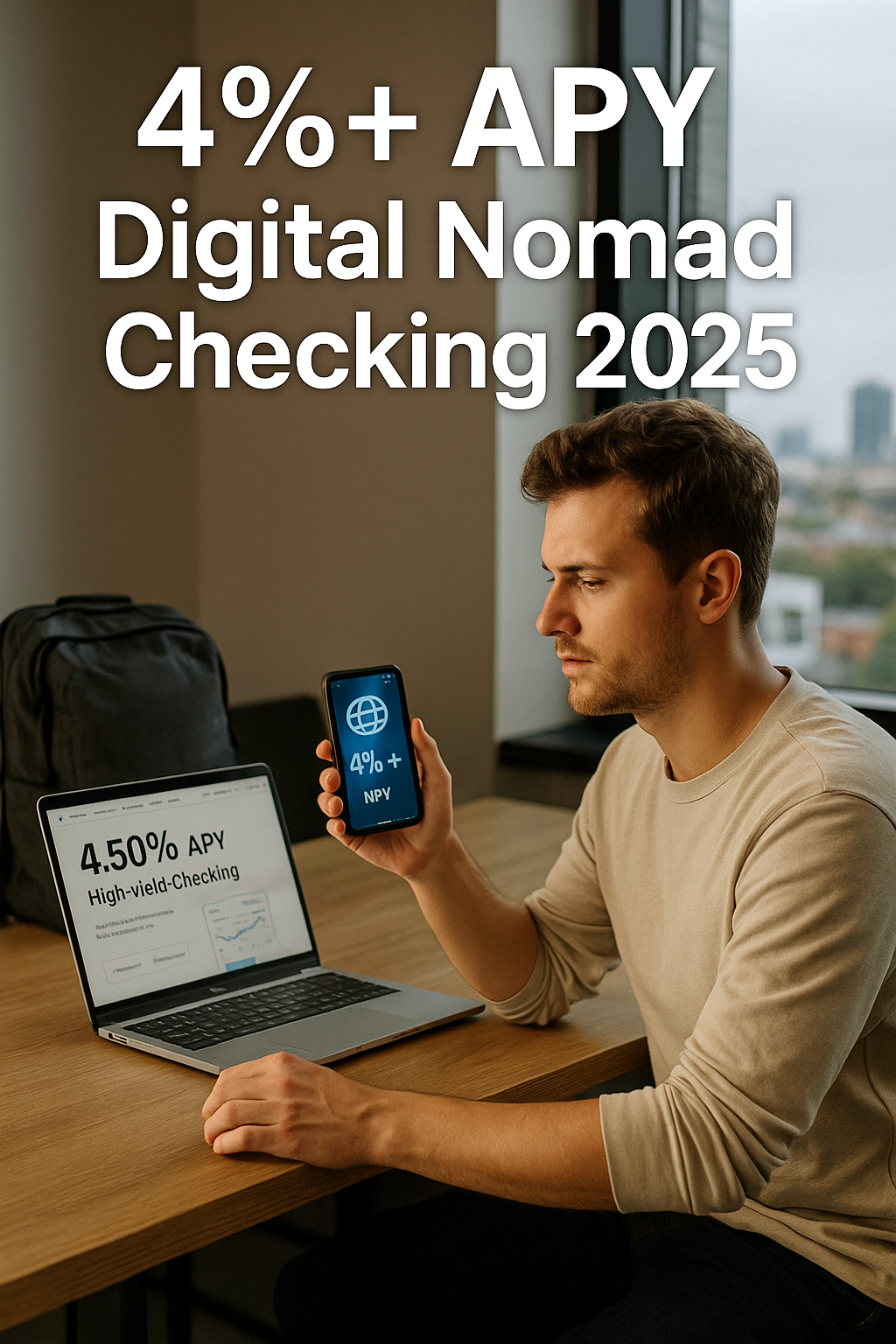
High-Interest Digital Nomad Checking Accounts: Earn 4 %+ APY Worldwide (2025 Edition)

Digital nomad in a coworking space viewing a smartphone that shows 4 %+ APY, with a laptop screen displaying 4.5 % high-yield checking details.

Table of Contents

  1. Why a High-Yield Checking Beats Ordinary Savings for Nomads
  2. Core Criteria: APY, Global Access, and Fee Structure
  3. Top 2025 Accounts — Side-by-Side Comparison
  4. Fast-Track Application Guide (Digital-Only On-Boarding)
  5. Tax & Residency Hacks for Interest Income
  6. Daily Workflow Automations (Bill Pay, FX, Budgeting)
  7. Forecast: How Tokenized Deposits Could Push APY to 6 %
  8. 48-Hour Action Plan to Secure Your 4 %+ Rate

1 | Why Nomads Prefer High-Yield Checking

Digital nomads juggle five realities in 2025: borderless income, unpredictable cash-flow, volatile FX, instant invoices, and touch-less payments. Parking idle cash in a traditional savings account forces two transfers every time rent or coworking fees hit your card—each with hidden spreads. High-yield checking blends 4 %-plus APY with debit-card liquidity, so you earn interest every hour yet swipe directly in local currency via multi-currency rails or Mastercard Dynamic FX. Result: fewer conversions, lower fees, and full FDIC-grade protection even while you island-hop across five tax jurisdictions.

2 | Core Criteria

FactorMinimum SpecDeal-Breaker
Net APY≥ 4.00 % paid daily or monthlyIntro rate < 90 days or APY < inflation
Currency CoverageUSD + local wallet or multi-currency cardUSD-only plastic
ATM / FX FeesFree or < 1 % over mid-market3 % foreign ATM + currency markup
KYC ReachPassport + selfie, 100 % remoteRequires proof of local utility
Deposit InsuranceFDIC/FSCS-equiv. $250kOff-shore with no guarantee
Outbound Wires≤ $5 domestic, ≤ $15 SWIFTflat $45 wire fee

3 | Top Accounts for 2025 Nomads

ProviderAPY*Free CurrenciesKey PerksNotable Limits
SoFi Checking & Savings (US)4.60 %USD (multi-currency debit via Wise plug-in)No-fee ACH, free overdraft, 55k Allpoint ATMsUS SSN or ITIN required
Juno Everyday Checking (US/Global)5.00 % up to $50k; 4.00 % thereafterUSD + USDC5 free international wires/mo, on-chain USDC earnAPY requires direct deposit
Revolut Ultra (EEA/UK)4.25 % on EUR, 4.10 % on GBP, paid daily36Metal card, 0.3 % weekday FX€55/mo subscription
Airwallex Borderless (50+ countries)4.15 % on pooled USD balance16Unlimited local account numbers, 0.15 % FX$20 fee if balance < $20k
Wise Assets Interest (Global)4.10 % variable (USD)53Earn interest + instant FX to 150 routesNot available to U.S. residents
Nubank Ultravioleta (LATAM)6.50 % (BRL)BRL + USD card wallet1 % crypto cashback, 24/7 chatBrazil tax ID only

*APY figures as of May 2025, net of mandatory subscription fees where applicable.

4 | Fast-Track Application Guide

  1. Choose Residency Path:
    • U.S. SSN/ITIN → SoFi or Juno (instant Plaid verification).
    • EEA Passport → Revolut Ultra (15-minute on-boarding).
    • Non-resident nomad → Wise Assets (passport + selfie).
  2. Prep Digital Docs: 300 dpi passport scan (JPEG < 2 MB), proof-of-address (bank e-statement or utility, PDF).
  3. Selfie & Liveness: shoot under neutral light; remove glasses to avoid OCR rejection.
  4. Link Funding Source: Revolut & Juno accept Apple Pay; Wise & Airwallex prefer local ACH or FPS.
  5. Set Direct Deposit/Salary: triggers bonus APY tiers (SoFi +0.40 %).

5 | Tax & Residency Hacks

  • U.S. Nomads: 4 %+ interest is taxable; however, elect Foreign Earned Income Exclusion (FEIE) for active income and keep passive interest under $10k per year to remain below FBAR thresholds when possible.
  • EEA/UK Base: Revolut auto-reports via CRS; use a Portuguese NHR or Estonian e-Residency to cap marginal tax at 20 %.
  • Crypto-Backed Accounts (Juno, Nubank): interest paid in stablecoins may qualify as capital gains in Estonia, lowering immediate tax.

6 | Daily Workflow Automations

  • Zapier + Revolut: route Stripe sales to EUR pocket, convert to USD when DXY trades < 103.
  • Juno Auto-Swap: sweep balances above $10k into USDC nightly, then back to USD every Monday.
  • SoFi Vaults: schedule 30 % of freelance invoices into a ‘Quarterly Tax’ vault earning the same APY, preventing accidental overspend.

7 | APY 6 % Horizon

As CBDCs mature, tokenized deposits will let banks fractionalize reserve yields in real-time. Pilot programs at Airwallex and DBS already quote projected 6 % variable APY on USD-T tokens by Q4 2026. Choosing a provider experimenting with token rails today positions you for a first-mover bump tomorrow.

8 | 48-Hour Action Plan

  1. Select one account based on domicile.
  2. Complete digital KYC tonight.
  3. Fund $1,000 via local rails; verify interest accrual next business day.
  4. Order multi-currency debit card; add to Apple Pay.
  5. Link bookkeeping tool (Xero/QuickBooks) for automated FX tagging.

Top 5 Passive Income Strategies to Start in 2025

A digital photograph shows a laptop displaying the title "Top 5 Passive Income Strategies to Start in 2025," placed on a clean desk with money, a notebook, and a cup of coffee symbolizing smart financial planning.

Introduction
Passive income is no longer a fantasy—it’s a necessity. In 2025, with inflation, global instability, and job market shifts, building automated income streams isn’t just smart—it’s survival. Whether you’re working full-time, freelancing, or traveling the world, these five realistic, scalable, and modern passive income strategies can help you earn money while you sleep. Let’s break them down by setup effort, risk, and income potential so you can choose the one that fits your life today—and scales tomorrow.

1. Digital Products (Low Risk, High Scalability)

Selling downloadable products—like templates, e-books, or guides—remains one of the purest forms of passive income.

Examples:

  • Budget planners for students or expats
  • Travel checklists or language phrasebooks
  • Resume templates, Notion dashboards, meal plans

Platforms to use:

  • Gumroad, Payhip, Etsy
  • Sell directly via your blog or YouTube description

Setup Effort: 3–5 days per product
Monthly Income Potential: $300–$5,000+
Best For: Creatives, bloggers, educators

Tip: Start with 3 products that solve a specific problem for a specific audience.


2. Affiliate Marketing (High ROI with No Product of Your Own)

Recommend tools, courses, or services—and earn a commission for every sale. You don’t need to create or support the product.

Best niches for 2025:

  • Finance & budgeting tools (Canva Pro, Notion, Wise)
  • AI software (ChatGPT Plus, Jasper, Pictory)
  • Travel services (VPNs, flight/hotel search, insurance)

Promotion channels:

  • YouTube videos (with link in description)
  • Niche blogs or review sites
  • Email newsletters

Setup Effort: Medium (requires audience or content base)
Monthly Income Potential: $500–$10,000+
Best For: Content creators, marketers, SEO writers

Avoid “link dumping”—offer genuine reviews or comparisons.


3. YouTube Automation Channel

A faceless, voiceover-based YouTube channel using stock visuals and AI tools can become a steady income machine.

What you need:

  • Scriptwriter (or ChatGPT)
  • Voiceover (AI or recorded)
  • Video editing (Pictory, CapCut)
  • SEO-optimized thumbnails and titles

Monetization Streams:

  • AdSense
  • Affiliate links
  • Digital products
  • Sponsorships

Setup Effort: High at first, then automatable
Monthly Income Potential: $1,000–$15,000+
Best For: Solo creators, video editors, digital nomads

Focus on long-form, evergreen content for steady replays.


4. High-Yield Savings + Global Fintech Accounts

Yes, it’s passive—and safer than ever. Modern fintech platforms now offer up to 4–5% APY on savings or stablecoins, with instant access and low risk.

Top platforms (2025):

  • SoFi (USD, U.S.-based)
  • Wise multi-currency balances
  • T-bill-backed savings via fintech (e.g., Public, Robinhood)

Bonus: Many accounts offer cashback on purchases, stacking passive rewards.

Setup Effort: 1 hour
Monthly Income Potential: $50–$300+ (based on deposit)
Best For: Anyone with unused cash sitting in low-interest accounts

Not glamorous, but effective—and fully automated.


5. Online Courses & Mini Workshops

If you’ve ever taught someone a skill—even informally—you can build a course. The best part? You record once, sell forever.

Popular formats:

  • Teachable, Thinkific, Gumroad
  • Email-based micro-courses (ConvertKit)
  • Notion-based learning hubs

Topics that work well in 2025:

  • “How to Move Abroad and Work Remotely”
  • “Freelancing for Non-Tech People”
  • “Building a Digital Product in a Weekend”

Setup Effort: 1–2 weeks
Monthly Income Potential: $500–$20,000+
Best For: Teachers, professionals, coaches, creators

Use YouTube or free PDFs as lead magnets to build trust.


Summary Table – Compare at a Glance

StrategySetup EffortRiskIncome PotentialScalable?
Digital ProductsMediumLow$$$–$$$$
Affiliate MarketingMediumLow–Medium$$–$$$$$
YouTube ChannelHighMedium$$$$+
Fintech/Yield AccountsLowLow$–$$
Online CoursesHighMedium$$$–$$$$$

Final Thoughts: Don’t Wait for “Passive,” Build Systems

Passive income isn’t truly passive at first. But when you build repeatable systems—products, platforms, videos, emails—you create momentum.
In 2025, the best passive income comes from real skills + automation tools + global platforms.

Start small.
Repeat what works.
Let time and tech do the compounding.

You don’t need to be rich to build passive income.
But you do need to start—today.

Global Bank Fee Comparison Guide for Americans (2025 Edition)

Global Bank Fee Comparison Guide for Americans (2025 Edition)

Introduction
Are you an American planning to live, travel, study, or do business abroad in 2025? If so, international banking will likely be a major part of your financial routine—and bank fees can quietly drain thousands of dollars if you’re not careful. From foreign ATM fees to hidden conversion charges and remittance costs, the global banking landscape is filled with traps. But don’t worry. In this guide, we compare top global banking solutions for Americans and reveal which services offer zero or low fees, maximum accessibility, and reliable customer service across borders.

1. Understanding the Types of International Banking Fees

Before comparing banks, you need to understand what kinds of fees most people face when managing money abroad:

Fee TypeDescription
Foreign Transaction FeesTypically 1–3% per transaction for purchases abroad
ATM Withdrawal FeesUp to $5 per withdrawal + currency markup
Currency Conversion FeesHidden in exchange rates, often 2–5%
Wire Transfer FeesOutbound international wires: $15–$45
Maintenance FeesMonthly charges for basic account usage

Many banks charge a mix of these fees. Some do it transparently, others bury them in conversion rates.


2. Top U.S.-Based Global Bank Options (2025)

These banks are U.S.-licensed and offer the best terms for Americans living internationally.

A. Charles Schwab Bank – Investor Checking

  • ATM Reimbursements: Unlimited worldwide
  • Foreign Transaction Fees: None
  • Monthly Fees: $0
  • Extras: Linked brokerage account required
  • Best for: Long-term travelers, expats, frequent ATM users

Known as the “expat favorite,” especially in Europe and Asia.


B. Capital One 360 Checking

  • ATM Access: Allpoint network, limited international coverage
  • Foreign Transaction Fees: 0%
  • Monthly Fees: $0
  • Mobile App: Highly rated for international users
  • Best for: Digital nomads, U.S. residents traveling abroad occasionally

C. Fidelity Cash Management Account

  • ATM Reimbursements: Yes, worldwide
  • Currency Conversion Fees: Mid-market rates
  • Minimum Balance: None
  • Linked Brokerage: Optional
  • Best for: Freelancers or retirees managing multiple currencies

3. Best Fintech & Online Bank Alternatives

New challenger banks offer modern, app-based solutions tailored for borderless finance.

A. Wise (formerly TransferWise)

  • Account Type: Multi-currency
  • Fees: ~0.4%–0.6% per currency conversion
  • Card: International debit with mid-market rates
  • ATM Fees: First $100/month free, then 2%
  • Best for: People sending or receiving money in multiple countries

B. Revolut (U.S. version)

  • Features: Crypto, stocks, budgeting tools
  • Free Plan: No monthly fee, with limitations
  • Currency Exchange: 30+ currencies at interbank rates
  • ATM Limits: Free up to $1,200/month
  • Best for: Tech-savvy users, short trips abroad

C. SoFi Checking & Savings

  • ATM Access: 55,000+ ATMs via Allpoint
  • Fees: No foreign transaction fee
  • Cashback & APY: Yes (high interest)
  • Best for: U.S.-based users who travel often and want cashback

4. International Wire Transfer Services Comparison

Sending money abroad? These platforms are often cheaper than banks.

ServiceFee (USD)Exchange RateSpeedNotes
Wise$1–$5Mid-market1–2 daysMost transparent
OFX$0Competitive1–4 daysHigher minimums
Remitly$0–$4VariesSame day – 3 daysBest for sending to family
Western UnionVariesHigh markupInstant – 5 daysUse only if urgent cash is needed

Pro Tip: Never use your home bank for international wire transfers unless it’s an emergency. You’ll overpay in both fees and exchange rates.


5. Things to Avoid with Traditional Banks

Still using a big-name bank like Bank of America, Wells Fargo, or Chase? Be careful:

  • 3% foreign transaction fee on every purchase
  • ATM withdrawal fees up to $5 + network fee
  • Currency conversion hidden in exchange rate
  • Slow customer support for international issues

You’re essentially paying for the “privilege” of banking with a familiar name—while newer services do more, for less.


6. Checklist: Choosing the Best Option for You

Ask these before you choose a bank for international use:

  1. Does it reimburse foreign ATM fees?
  2. Does it charge a foreign transaction fee?
  3. Are currency exchanges done at the mid-market rate?
  4. Can you open and manage the account from overseas?
  5. How responsive is customer support across time zones?

Final Thoughts: Build a Fee-Free Global Banking Stack

There’s no one-size-fits-all solution, but combining 2–3 tools creates a powerful global banking setup.

Sample Stack for Americans Abroad (2025):

  • Charles Schwab for ATM reimbursements
  • Wise for sending/receiving multi-currency payments
  • SoFi or Capital One 360 for backup banking and cashback

By 2025, you don’t need to be rich to bank globally.
You just need to be informed.