Cash Flow Machines: Dividends, Rentals, Royalties

Luxury apartments, global stock market ticker, and digital royalty icon symbolizing cash flow engines.

Why Wealth Must Flow, Not Just Sit

The wealthy do not measure success only by net worth or by the size of their portfolio. They measure it by cash flow—the predictable streams of money that enter their accounts month after month without active labor. Capital gains are volatile, but cash flow is continuous. It pays for lifestyles, reinvestments, and the compounding effect that builds empires.

This is why the ultra-rich design their portfolios around Cash Flow Machines. These are systems that combine dividends, rentals, and royalties into a self-sustaining engine. The goal is not simply to hold assets but to make assets pay you automatically, forever.


The Three Engines of Global Cash Flow

1. Dividends: The Global Payout Network

Dividend income is the backbone of many family offices. It transforms equity ownership into predictable income:

  • Dividend Aristocrats ETFs (U.S.): Funds like VIG or SCHD hold companies that have increased dividends for decades. They deliver stable yields of 2–3% with built-in growth.
  • High-Yield International Funds: Singapore REITs, Asian infrastructure ETFs, and emerging-market utilities provide 5–8% yields.
  • Global Diversification: Holding dividend ETFs across U.S., Europe, and Asia hedges against currency and economic cycles.

Dividend streams are highly scalable: whether you own $100,000 or $10 million, the principle is the same. Over time, reinvesting dividends compounds into exponential income.


2. Rentals: Turning Properties Into Monthly Income

Real estate is not only about appreciation. Properly structured, it is a machine that generates reliable monthly income:

  • Dubai and Lisbon Long-Term Rentals: Properties rented to professionals yield 6–8% net annually.
  • Bali Short-Term Rentals: Villas managed for digital nomads and tourists can produce double-digit cash returns.
  • Global REITs: Real Estate Investment Trusts such as VNQ provide exposure without management hassle.

Rental income is especially powerful because it can be leveraged. Mortgages allow investors to control high-value properties while tenants effectively pay down the debt.


3. Royalties: Intellectual Property as a Perpetual Stream

Royalties turn creativity into passive income. They are not just for artists—they are for entrepreneurs, investors, and innovators:

  • SaaS Subscriptions: Software-as-a-Service creates predictable monthly recurring revenue.
  • Patents & Licensing: Innovations licensed to manufacturers pay royalties for decades.
  • Media & Content Rights: Books, music, video, and online courses can produce ongoing royalties long after creation.

The ultra-rich see royalties as an “asset class of ideas.” Once built, they often last longer than physical assets and scale without geographic limits.


Combining the Three Engines: Synergy in Action

A powerful portfolio does not rely on only one stream. It layers multiple engines together:

  • A Dubai condo generating $3,000 per month in rent.
  • A portfolio of dividend aristocrat ETFs paying quarterly distributions.
  • A SaaS business producing $10,000 per month in subscriptions.

Individually, each is strong. Together, they form an unstoppable Cash Flow Stack—one that works in multiple currencies, multiple countries, and multiple industries.


The Five-Year Simulation to ₩100M Per Month

How can an investor reach the milestone of ₩100M (approx. $70,000) in monthly passive income? A conservative simulation shows the path:

  1. Initial Capital: ₩2 billion (~US$1.5M).
  2. Allocation:
    • 40% into global dividend ETFs (average 4% yield).
    • 40% into international rental property (average 8% yield).
    • 20% into royalties/SaaS ventures (target 15–20% yield).
  3. Annual Growth: 10–12% combined when reinvested.
  4. Five-Year Outcome: Monthly passive income grows to ₩100M through compounding plus reinvestment of dividends and rents.

The key insight: predictable inflows grow faster than capital appreciation alone because they can be reinvested continuously.


Case Studies

  • Case 1: The Dividend-Rental Hybrid
    A Singaporean investor allocates US$1M into U.S. dividend ETFs and another US$1M into Lisbon real estate. Total monthly income: $10,000+.
  • Case 2: Bali Villas + SaaS Platform
    A digital entrepreneur combines Bali rental villas generating $8K/month with a SaaS subscription tool producing $15K/month. The synergy allows lifestyle flexibility and scaling.
  • Case 3: Global REIT + Intellectual Property
    A family office invests in REIT ETFs yielding $200K annually and licenses out patents in renewable energy for $500K royalties per year. Cash flow is both diversified and global.
  • Case 4: Balanced Three-Way Stack
    An investor builds a 40/40/20 structure—dividends, rentals, royalties—reaching the ₩100M/month milestone in under 5 years.

Final Conclusion: Why Cash Flow Is King

Wealth that sits idle can shrink through inflation, taxation, or market collapse. Wealth that flows multiplies. Dividends, rentals, and royalties are the triple engines of financial independence. Together, they build resilience and predictability, freeing the investor from reliance on salary, speculation, or luck.

Cash Flow Machines are not just an income strategy. They are the heartbeat of the Global Asset Stack, the part that keeps compounding wealth alive across decades.


Case Study List

  • Global Dividend Aristocrats ETF Portfolio.
  • Lisbon Rental Property with Long-Term Tenants.
  • Bali Short-Term Rentals Managed via Property Firms.
  • SaaS Subscription Model at $29/month/user.
  • Patent Royalties in Renewable Energy.
  • Balanced Cash Flow Stack (40% dividends, 40% rentals, 20% royalties).

Next Article Preview — Part 6: Defensive Stacks

In the next article, we move from offense to defense.
We will explore how billionaires protect their fortunes with insurance, trusts, and foundations.
Private Placement Life Insurance (PPLI), global family trusts, and international foundations are the invisible fortress walls around modern wealth.

Do not miss it: wealth creation without protection is only half a strategy.


Subscribe & Stay Ahead

If you are building serious global wealth, do not stop at growth alone. Learn how to create automatic inflows that fund your lifestyle and reinvestment—forever.

Subscribe now to access:

  • Full 7-part Global Asset Stacks series.
  • Downloadable checklists and simulation models.
  • Exclusive Hub Page with masterplan PDF.

Your wealth should not just sit. It should flow. Build your cash flow machine today.
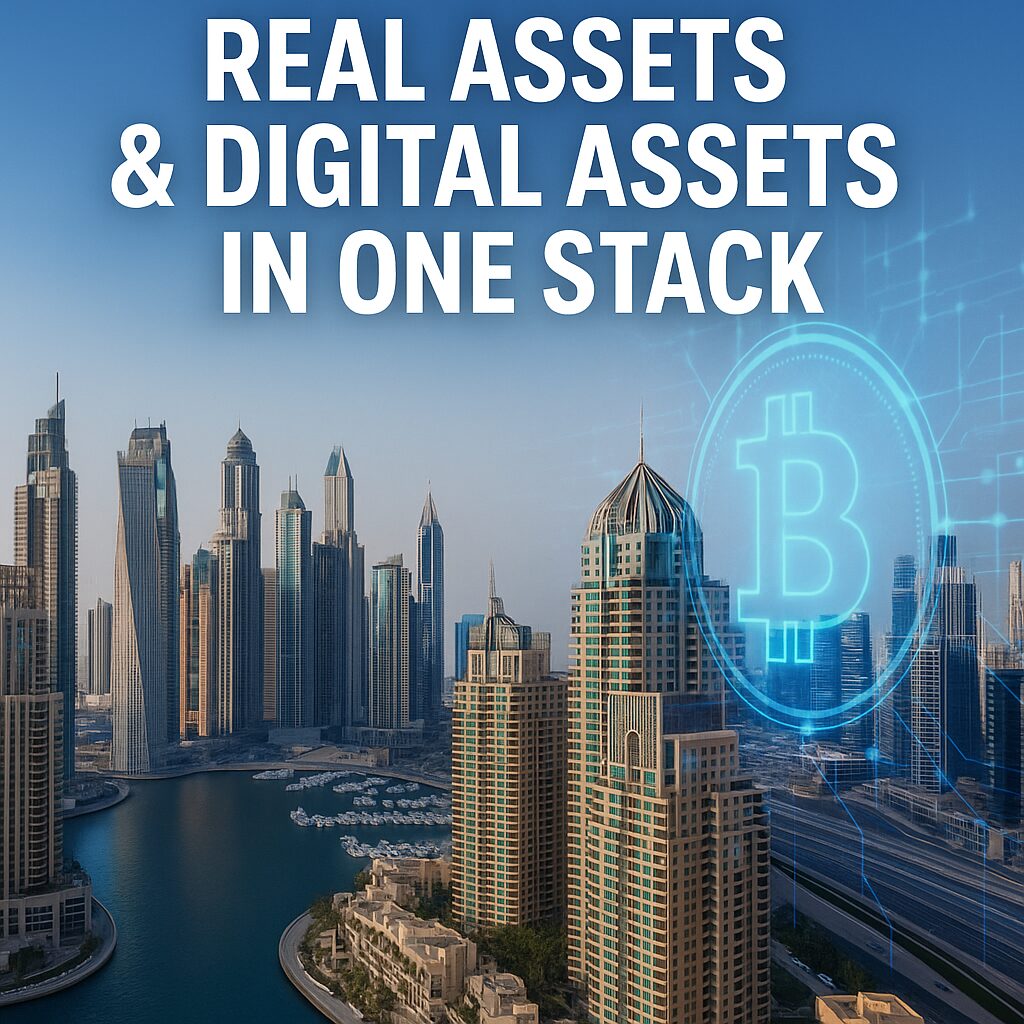
Real Assets & Digital Assets in One Stack

Dubai skyline blended with digital Bitcoin hologram representing the balance of real estate and digital assets.

Why Wealth Today Requires Two Worlds in One

Every generation of investors faces the same fundamental problem: how to preserve wealth across market cycles, political regimes, and currency collapses. In the past, the ultra-rich relied mainly on tangible property—land, buildings, physical commodities. Later, financial assets such as stocks, bonds, and bank deposits became dominant. Today, a new dimension has emerged: blockchain-based digital assets.

Modern global wealth holders no longer choose between tangible and digital. They integrate them. A villa in Dubai and a Bitcoin treasury wallet, an apartment in Lisbon and tokenized real estate funds, a Balinese resort combined with stablecoin liquidity pools—these combinations are now the standard playbook of high-net-worth individuals who want both resilience and exponential upside.

This article explores how to build a stack that unites real assets and digital assets into one cohesive global system.


Real Assets: The Tangible Base of Security

1. Overseas Property as a Strategic Anchor

Owning physical property in strategic jurisdictions provides stability that digital assets alone cannot match. Three current hotspots for globally mobile wealth:

  • Dubai, United Arab Emirates
    • No personal income tax and a reputation as a global hub for capital.
    • Average rental yields of 7–10% annually, supported by a constant inflow of high-income expatriates.
    • The government actively encourages foreign ownership and long-term residence through investor visas.
  • Portugal
    • A European Union gateway with access to Schengen mobility.
    • Once famous for its Golden Visa program, but even after revisions it remains attractive for lifestyle and EU anchoring.
    • Lisbon and Porto real estate still trade below comparable Western European capitals, offering appreciation potential.
  • Bali, Indonesia
    • A tourism powerhouse with explosive demand for short-term rentals.
    • The rise of digital nomads has transformed Bali into one of the most lucrative Airbnb markets in Asia.
    • Investors often combine a villa purchase with a property management company to automate rental operations.

Each of these markets provides more than appreciation: they provide cash flow, lifestyle utility, and residency leverage.

2. Real Assets as Inflation Shields

Physical property, unlike cash, cannot be printed by central banks. In inflationary environments, rents adjust upward while fixed-rate mortgages become cheaper in real terms. Even if prices stagnate, the tangible utility of land and housing gives them defensive value that paper assets lack.


Digital Assets: The New Dimension of Portability and Growth

1. Bitcoin as Digital Gold

Bitcoin is no longer viewed only as speculation. Increasingly, family offices and corporate treasuries treat it as a reserve asset. Its supply is capped at 21 million units, making it the most provably scarce financial instrument in history. For global investors, it functions like gold—but with greater portability and 24/7 liquidity.

2. Stablecoins as Liquidity Engines

Stablecoins such as USDT and USDC have become the backbone of the cross-border financial system. They provide:

  • Dollar exposure without reliance on domestic banks.
  • Instant settlement between countries.
  • A hedge against local currency crises (Turkey, Argentina, Nigeria).

Wealth managers now treat stablecoin wallets as the equivalent of offshore bank accounts—only faster, cheaper, and easier to move across jurisdictions.

3. Tokenized Securities and Real Estate

The tokenization of traditional assets is one of the most powerful innovations of the decade. By representing ownership of real estate, private equity funds, or debt instruments on blockchain, investors gain:

  • Fractional entry (instead of $500,000, investors can participate with $5,000).
  • Immediate transferability across global markets.
  • Transparent proof of ownership.

Entire funds are emerging that package luxury properties or infrastructure projects into blockchain-based securities, unlocking liquidity for previously illiquid markets.

4. Yield Opportunities via DeFi

Beyond holding assets, digital ecosystems allow active yield strategies:

  • Staking tokens for network rewards.
  • Decentralized lending that pays higher interest than banks.
  • Liquidity pools that generate fees from global trading volume.

Although riskier than traditional savings, the potential returns make DeFi an essential component of the new wealth stack.


The Integrated Approach: Hedge by Combining the Two

1. The 1:1 Matching Principle

The most resilient portfolios do not isolate tangible and digital—they pair them. A practical approach used by sophisticated investors:

  • For every property acquired, allocate an equivalent amount into digital assets.
  • Example: Buy a US$300,000 apartment in Dubai and simultaneously hold 5 BTC plus US$100,000 in stablecoins.

If the property market softens, digital assets may surge. If Bitcoin crashes, the rental income and capital value of real estate still provide support. The assets hedge each other, creating multi-dimensional balance.

2. Interchangeability and Fluid Rebalancing

Another advantage of combining tangible and digital is flexibility. Rental income can be converted into stablecoins within hours, while digital gains can be redeployed into property acquisitions within weeks. This fluid exchangeability allows the wealthy to adapt faster than traditional single-channel investors.


Case Studies

Case 1: Dubai Real Estate + Bitcoin Portfolio

An investor allocates US$1 million into two channels:

  • US$600,000 into two apartments in Dubai, generating $60,000 in annual rental income.
  • US$400,000 into Bitcoin.

Over five years, property values appreciate 20% while Bitcoin quadruples. Combined, the portfolio outperforms either asset alone.

Case 2: Tokenized Real Estate Fund + Stablecoin Lending

A family office invests US$500,000 into a tokenized global property fund. The tokens are liquid and can be sold peer-to-peer at any time. Simultaneously, they keep US$250,000 in USDC deployed on a regulated lending platform yielding 7% annually. The result: consistent income plus exposure to global property markets—without direct management burdens.


Final Conclusion: The Strategic Hedge for the 21st Century

Wealth in the modern era is not about choosing between the old and the new—it is about combining them into a unified system. Real estate in Dubai, Lisbon, or Bali provides tangible stability, cash flow, and lifestyle leverage. Bitcoin, stablecoins, and tokenized assets provide mobility, exponential upside, and borderless liquidity.

By stacking them together, investors build a shield against inflation, systemic shocks, and political risk, while also positioning themselves for long-term growth. Tangible + Digital is not optional—it is the new minimum standard for serious wealth builders.


Case Study List

  • Dubai Apartments + Bitcoin Treasury
    Dual allocation strategy that generates both consistent rental income and explosive upside through BTC price cycles.
  • Lisbon Property + Stablecoin Portfolio
    Real estate appreciation in the EU combined with dollar-based liquidity held offshore in stablecoins.
  • Bali Villas + Tokenized Rental Funds
    Hybrid exposure where local property is matched with blockchain-based fractional rental income streams.
  • Tokenized Global Infrastructure + USDC Lending
    A family office approach that combines regulated tokenized securities with stablecoin yield platforms to achieve both liquidity and defensive positioning.
  • Balanced Hedge Model
    For every US$1M of property, allocate 30–40% into digital assets—ensuring that no single crisis wipes out wealth capacity.

Next Article Preview — Part 5: Cash Flow Machines

In the next article, we will move from building the foundation to activating income engines.
We will explore how the wealthy create Cash Flow Machines using global dividend ETFs, rental property income, royalties, and subscription-based businesses.
The focus shifts from asset stacking to consistent monthly inflows, with a 5-year simulation model showing how to reach ₩100M/month in passive income.

Do not miss it: this is where wealth turns from silent growth into unstoppable automatic deposits.


Subscribe & Stay Ahead

If you are serious about building a Global Asset Stack that goes beyond borders and traditional playbooks, make sure you do not miss upcoming parts of this series.

Subscribe now to receive:

  • Full access to each article in this 7-part series.
  • Downloadable checklists and portfolio blueprints.
  • Early access to the Hub Page and Masterplan PDF.

Your next level of wealth is not built in isolation—it is built through smart stacking, one layer at a time.

Offshore & Onshore Hybrid Structures

Collage of London, Singapore, and Dubai skylines representing offshore and onshore hybrid structures.

Multi-currency and multi-account systems are the first real step toward global wealth. But as your wealth grows, you quickly face new challenges: tax burdens, asset protection, inheritance planning, and political risk. Having multiple currencies is useful, but it does not solve everything. A government can still impose taxes, creditors can still sue, and wealth can still be frozen or seized.

This is where global elites move to the next level: hybrid structures. Instead of choosing either offshore or onshore, they combine both. Offshore companies give tax efficiency and privacy. Onshore entities provide legitimacy and access to banking. Together, they form a powerful shield for wealth — flexible, legal, and global.

In this article, you will learn how offshore and onshore entities work, how billionaires combine them, and how you can strategically build your own hybrid wealth structure.


Main Body

Section 1 — Understanding Offshore Structures

What is Offshore?
Offshore simply means “outside your home jurisdiction.” It does not mean illegal. Offshore companies, trusts, and foundations are legal vehicles recognized under international law.

Popular Offshore Jurisdictions:

  • British Virgin Islands (BVI): Flexible, low reporting requirements, widely used for holding companies.
  • Cayman Islands: Hedge fund hub, no corporate tax.
  • Seychelles / Belize: Cheaper, fast incorporation.
  • Isle of Man / Jersey / Guernsey: Trusted for trusts and insurance wrappers.

Advantages:

  • No/low corporate tax.
  • Privacy for ownership.
  • Easy to move capital across borders.

Limitations:

  • Harder to open bank accounts without onshore presence.
  • Increased scrutiny from regulators and FATF (Financial Action Task Force).

Section 2 — Onshore Entities and Their Role

Onshore means operating within reputable, regulated jurisdictions. These entities are often not zero-tax, but they provide credibility and legitimacy.

Examples:

  • UAE Free Zone Companies (Dubai, Abu Dhabi, Ras Al Khaimah): 0% corporate tax in many zones, strategic global banking hub.
  • UK LLPs (Limited Liability Partnerships): Transparent structure, can be tax-neutral if operated outside UK.
  • Singapore Pte Ltd: Prestigious, easy access to Asian banks, competitive tax (17% headline, often much lower with exemptions).
  • Hong Kong Limited: Gateway to China, efficient for trade and finance.

Advantages:

  • Respectable jurisdictions, fewer “red flags.”
  • Easier to open bank accounts.
  • Access to double taxation treaties.

Limitations:

  • Requires more accounting/reporting.
  • Subject to substance requirements (real office, directors).

Section 3 — The Power of Hybrid Structures

The wealthy do not choose offshore or onshore. They combine them:

  1. Onshore + Offshore Holding:
    • Example: A Singapore Pte Ltd owned by a BVI company. The Singapore entity runs operations, while the BVI entity holds shares. This structure reduces taxes while adding privacy.
  2. Trust + Company Combination:
    • Example: A Jersey trust holds shares in a Cayman company. The trust provides inheritance planning, while the company runs investments.
  3. Foundation + Bank Accounts:
    • Example: A Liechtenstein foundation holding multiple accounts in Europe, UAE, and Asia. Provides asset protection + succession planning.

Why Hybrid Wins:

  • Offshore alone = suspicious.
  • Onshore alone = high tax, limited privacy.
  • Hybrid = the best of both worlds.

Section 4 — Practical Steps to Build Your Own Hybrid

  1. Assess Your Needs:
    • If income < $1M/year → Start with one onshore entity + offshore holding.
    • If income > $5M/year → Add trusts or foundations.
  2. Jurisdiction Selection:
    • Asia-focused? → Singapore + BVI.
    • Europe-focused? → UK LLP + Jersey trust.
    • Global mobility? → UAE Free Zone + Cayman.
  3. Banking Strategy:
    • Always link your structure to reputable banks. HSBC, DBS, Emirates NBD, Swiss banks are ideal.
    • Avoid small Caribbean banks with no reputation.
  4. Compliance:
    • Always stay legal. Declare entities if required.
    • Use international tax treaties to optimize legally.

Conclusion

Hybrid structures are not about hiding wealth. They are about protecting wealth, minimizing risk, and optimizing taxes legally.

By combining offshore flexibility with onshore legitimacy, you create a structure that is both respected and efficient. This is why billionaires use UAE Free Zones, UK LLPs, Singapore companies, and offshore trusts — because no single jurisdiction can provide everything.

If you want to scale from being a high-net-worth individual to an ultra-high-net-worth family, hybrid structures are the turning point.


Case Studies

  • Case A — Korean Entrepreneur: Owns an e-commerce brand. Sets up a Singapore Pte Ltd for operations, owned by a BVI holding. Taxes fall dramatically, banking becomes easier, and brand looks more credible.
  • Case B — European Investor: Uses a UK LLP for global investments, with profits flowing to a Jersey trust. Gains tax neutrality + inheritance protection.
  • Case C — Dubai Expat: Opens a UAE Free Zone company. Links it to accounts in Emirates NBD and HSBC. Pays 0% corporate tax, enjoys credibility, and can expand internationally.
  • Case D — American Tech Founder: Creates a Cayman holding company, owned by a Delaware LLC, wrapped in a family trust. Achieves global investment access + estate planning.

Next Article Preview

Part 4 — Real Assets & Digital Assets in One Stack
“Hybrid structures give your wealth legal armor. But protection is not enough — you also need growth. In Part 4, we’ll explore how combining overseas property with digital assets like Bitcoin and tokenized securities can create a balanced, powerful stack of real-world and digital wealth.”


Subscription Call-to-Action

“This series is your ultimate guide to building $80,000+ monthly recurring income through Global Asset Stacks. Subscribe now to receive every blueprint, case study, and checklist — and learn how to protect and multiply your wealth across borders.”

Multi-Currency & Multi-Account Systems

Global currencies and international banking accounts representing multi-currency systems.

A financial life tied to one currency is like sailing the open ocean in a boat with a single sail. When the wind shifts, you are helpless. Most people earn, save, and invest entirely in their local currency. At first glance, this looks safe — it’s what your employer pays, what your bills require, and what your government promotes. But history has proven time and time again: currencies are fragile.

The Korean won in 1997, the Argentine peso in 2001, the Russian ruble in 1998 and again in 2022, the Turkish lira in the 2010s — all lost dramatic value, destroying the savings of millions. Even the mighty British pound saw historic crashes. If your wealth lives in only one currency, then your entire financial life depends on the stability of a single government and central bank.

This is why global elites do not think in terms of “my savings account.” They think in multi-currency systems. They distribute wealth across USD, EUR, GBP, CHF, SGD, HKD, and sometimes AED or JPY. They hold multiple bank accounts across jurisdictions. They treat money not as a national asset but as a portfolio of currencies.

In this extended article, we will break down why multi-currency systems are essential, how to build them step by step, how to operate them, and how to avoid common pitfalls. You will also see practical case studies and numerical simulations showing exactly how much difference a multi-currency system can make to long-term wealth.


Main Body

Section 1 — Why Multi-Currency Matters

1. Currency Depreciation: The Silent Killer

Imagine you saved ₩100 million in Korea in 2021. The KRW traded around 1,100 per USD. By late 2022, it touched 1,450. In dollar terms, your savings fell from about $90,900 to $68,900 — a 24% drop in global purchasing power, without you spending a single won.

This is not an outlier. The same story has repeated across decades:

  • Asian Financial Crisis (1997): Thai baht, Indonesian rupiah, and Korean won lost 30–80% in months.
  • Argentina (2001): Peso pegged to USD collapsed, middle-class wiped out.
  • Turkey (2018–2023): Lira lost over 80% of its value in five years.

Currency collapse is not just an emerging-market problem. Even the British pound lost 20% in the Brexit vote shock of 2016.

2. The Dollar’s Unique Role

USD is the oxygen of the global economy. Over 60% of central bank reserves are held in USD. Nearly all commodities (oil, gold, wheat) are priced in USD. Without access to USD, you cannot freely participate in world trade or investment. Wealthy families always maintain significant USD exposure, no matter where they live.

3. Balancing with Other Anchors

  • EUR: Represents a $15 trillion economy, second largest reserve currency.
  • GBP: Despite Brexit, remains a powerful financial anchor with London as a hub.
  • CHF: The Swiss franc is a safe haven, backed by centuries of stability.
  • SGD & HKD: Anchors of Asian finance, giving access to hubs like Singapore and Hong Kong.
  • JPY: A counter-cyclical currency — when crises hit, yen often strengthens.

By layering currencies, you hedge against shocks in any one economy.


Section 2 — How to Build a Multi-Account System

Step 1: Start Simple with Fintech Platforms

  • Wise (TransferWise): Lets you hold 50+ currencies, provides local bank details in USD, EUR, GBP, AUD, etc. Perfect for freelancers and digital nomads.
  • Revolut: Popular in Europe, offering FX conversion at interbank rates and global spending.
  • Payoneer: Tailored for online sellers and freelancers.

Step 2: Graduate to International Banks

  • HSBC Premier: Open accounts in multiple countries under one relationship. Requires ~$100,000 balance.
  • DBS (Singapore): Strong Asian hub, stable government. Minimum deposits often $50,000–100,000.
  • Citibank Global / Standard Chartered: Allow global account linkages.
  • Dubai Banks (Emirates NBD, Mashreq): Attractive for tax-free expatriate management.

Step 3: Brokerage Accounts for Investment

  • Interactive Brokers (IBKR): The crown jewel. Lets you hold balances in multiple currencies, convert at near-market FX, and invest in 150+ markets.
  • Saxo Bank (Denmark), Charles Schwab International (U.S.), TD Ameritrade (International): Alternatives for different regions.

Step 4: Local Bank Foreign Currency Accounts

These exist everywhere, but fees are high and flexibility is limited. Use only as a transitional step.


Section 3 — Practical Operations

1. Strategic Allocation

A sample allocation for a professional earning in KRW:

  • 40% USD (global reserve & investment currency)
  • 25% EUR (European stability)
  • 15% SGD/HKD (Asian anchors)
  • 10% GBP (financial hub exposure)
  • 10% CHF/JPY/Crypto (safe haven + digital hedge)

This mix ensures no single crisis destroys your wealth.

2. Conversion Practices

  • Use IBKR for large conversions (FX fees near 0.002%).
  • Use Wise/Revolut for smaller, frequent transfers.
  • Avoid traditional banks charging 2–3% spreads.

3. Spending Optimization

  • Carry a Wise or Revolut card. Pay in local currency abroad without FX fees.
  • If traveling in Europe, preload EUR. If in the U.S., preload USD.

4. Monitoring and Reporting

  • Use Kubera or Excel dashboards to track multi-currency balances.
  • Always understand local tax laws: e.g., Korea’s 해외금융계좌 신고 (foreign account reporting) for balances over ₩500M, U.S. FBAR for >$10,000.

Section 4 — Risk Management & Pitfalls

  1. Overcomplication
    Don’t open 15 accounts and lose track. Start with 3–4 core accounts, then expand strategically.
  2. Regulatory Compliance
    Fines for undeclared foreign accounts can be devastating. Always report as required.
  3. Liquidity Balance
    Keep at least 20–30% of your funds liquid in your home market for emergencies.
  4. Overtrading FX
    This is not about speculation. The goal is resilience, not currency gambling.

Conclusion

Multi-currency systems transform your wealth from fragile to antifragile. By spreading across currencies, you:

  • Protect against local inflation and devaluation.
  • Gain flexibility to live and invest globally.
  • Access opportunities unavailable to single-currency savers.

Think of it as building a financial passport. Just as multiple visas allow you to travel the world, multiple currencies allow your money to travel, grow, and stay safe in any environment.


Case Studies

  • Case A — Korean Freelancer: Earns $3,000 monthly from U.S. clients. Keeps 30% in USD via Wise, invests $500/month into an S&P 500 ETF through IBKR. After 10 years at 8% CAGR, he holds ~$90,000 more than if he converted everything to KRW.
  • Case B — European Consultant: Uses Revolut + HSBC to manage EUR, GBP, and USD. Travels across continents without FX stress. During Brexit volatility, GBP dropped 20%, but EUR/USD holdings protected overall net worth.
  • Case C — Singaporean Investor: Splits wealth into SGD, USD, and HKD. When USD strengthens, portfolio grows. When SGD strengthens, overseas purchasing power rises. Net worth remains stable across cycles.
  • Case D — Turkish Engineer (Cautionary Tale): Kept all wealth in TRY. Between 2018–2023, the lira collapsed over 80%. Savings of $100,000 equivalent fell to less than $20,000 in USD terms. Multi-currency accounts would have saved his wealth.

Numerical Simulation

Suppose you invest $500/month for 15 years:

  • All in KRW assets: If KRW loses 30% value, your global wealth shrinks proportionally.
  • Split into USD, EUR, SGD: Even if one currency falls 20%, others balance it.
  • Result: At 8% average annual growth, a multi-currency portfolio ends at ~$170,000 vs ~$130,000 in local-only savings. That’s a $40,000+ advantage, without any extra effort.

Next Article Preview

Part 3 — Offshore & Onshore Hybrid Structures
“Multi-currency accounts are your first taste of global freedom. The next layer is combining offshore companies and onshore entities to minimize taxes, protect assets, and expand investments. In Part 3, we’ll explore how billionaires use UAE Free Zones, UK LLPs, Singapore Pte Ltds, and trusts to build hybrid systems of wealth.”


Subscription Call-to-Action

“This series is not ordinary financial content. It is a blueprint for building $80,000+ monthly recurring income through Global Asset Stacks. Subscribe now and gain access to every checklist, case study, and masterplan — turning your fragile savings into a global fortress of wealth.”

The Foundation: From Local Savings to Global Asset Layers

Skyline of global financial district representing the foundation of Global Asset Stacks.

For most people, building wealth starts in the same way: a savings account, a fixed deposit, a few stocks in the local market, or perhaps a real estate purchase. In Korea, Japan, and many parts of Asia, the cultural mindset has been: work hard, save diligently, and buy property. This formula worked in an era of high growth, rising property values, and limited alternatives.

But in today’s globalized and digital economy, this model is dangerously outdated. Currency volatility, rising inflation, geopolitical instability, and new digital asset classes have completely changed the rules of wealth. A person who only holds assets in one country, one currency, and one form is not wealthy — they are fragile.

Meanwhile, global elites — from billionaires in Singapore to family offices in Zurich — follow a completely different philosophy. They build Asset Stacks: layered structures of wealth that protect against downside, expand into multiple currencies and markets, and grow automatically over decades. Each “layer” of the stack has its own role: some defensive, some offensive, some purely for inheritance and tax optimization.

This article is the first step in the Global Asset Stacks series. Here, we lay the foundation: why moving from a fragile, single-country savings model to a multi-layered global asset stack is no longer optional — it is the only path to long-term passive wealth.


Main Body

Section 1 — The Concept of an Asset Stack: Why Layers Create Power

Imagine your wealth as a fortress. If there is only one wall and it is breached, everything inside collapses. But if you have multiple walls, gates, and moats, then even if one part fails, the fortress remains secure.

An Asset Stack is exactly that. Instead of relying on one income stream, one market, or one asset class, you layer multiple forms of wealth:

  • Layer 1: Liquidity — cash savings, emergency funds, short-term deposits. This ensures that when crises hit, you do not sell long-term investments at a loss.
  • Layer 2: Local Investments — domestic stocks, bonds, real estate. These help you grow within your own economic system, but they should never be the majority of your net worth.
  • Layer 3: Global Accounts — multi-currency bank accounts, offshore brokerages, fintech wallets (Wise, Interactive Brokers, HSBC, DBS). This is where your financial system goes international.
  • Layer 4: Global Securities — S&P 500 ETFs, MSCI World, global bonds, and thematic funds. Now you are participating in the growth of the entire world, not just your home market.
  • Layer 5: Alternative Assets — overseas property, precious metals, Bitcoin, tokenized securities. These hedge against systemic risks and open high-growth opportunities.
  • Layer 6: Protection & Continuity — trusts, foundations, offshore companies, family offices. These protect against taxes, lawsuits, divorces, and political confiscation.

Key insight: A person with $50,000 distributed across 5 layers is far more resilient than someone with $500,000 locked into one house or one bank account.


Section 2 — From Local Savings to Global Wealth: The Expansion Path

How do ordinary people move from a single savings account to a global wealth stack? The journey is not as complex as it seems. It happens in steps:

  1. Local Base (Savings + Insurance):
    Build your safety net. Every stack needs liquidity. Without this, you panic-sell during crises.
  2. Domestic Growth (Stocks + Property):
    Accumulate within your country. But limit this to a portion of your wealth, not all.
  3. International Accounts (Multi-Currency Banking):
    Open accounts in USD, EUR, SGD, HKD. Even $200–$500 per month abroad diversifies risk.
  4. Global Securities (ETFs + Bonds):
    Start buying international index funds. These are simple, transparent, and proven to compound wealth.
  5. Residency + Offshore Entities:
    Once your wealth grows, secure second residency or set up offshore companies. This unlocks tax optimization and international investment freedom.
  6. Family Office Structures:
    At $10M+, the game changes. Now it is about management, tax minimization, and legacy planning.

Important: You don’t need to wait until you’re rich. Even a freelancer earning $3,000/month can start layering by sending $200 abroad each month. The stack grows with you.


Section 3 — The Traps of Local-Only Investors

Why do hardworking savers often fail to reach financial independence? Because they fall into the same traps:

  • Currency Concentration: If all your assets are in KRW, and the KRW loses 30% against USD, then your global wealth shrinks instantly. This has happened repeatedly in emerging markets.
  • Real Estate Overexposure: Property is valuable but illiquid. You cannot sell half a house when you need cash. And when governments impose taxes or interest rates rise, property prices collapse.
  • Pseudo-Diversification: Many believe they are “global” because they own an international fund from a local bank. But if the account is denominated in local currency, you are still exposed to domestic risk.

The reality is harsh: without true global diversification, your wealth is fragile, no matter how many hours you work or how disciplined you save.


Section 4 — The First Steps to Building Your Global Stack

Here’s how to begin today — no matter your income level:

  1. Open a Multi-Currency Account: Use Wise, Revolut, HSBC, or DBS to hold USD, EUR, GBP, and SGD. This breaks free from local currency dependence.
  2. Set Up a Global Brokerage: Interactive Brokers allows you to invest globally with small amounts. You can access U.S., European, and Asian markets directly.
  3. Begin Dollar-Cost Averaging: Even $200/month into an S&P 500 ETF in a foreign account is life-changing over 15 years.
  4. Think in Layers, Not Amounts: Don’t ask, “How much money do I have?” Ask, “How many layers do I have?” This mindset is the seed of long-term security.
  5. Gradually Add Real Assets: When ready, add overseas property, gold, or Bitcoin. But treat these as hedges, not core assets.

Mindset shift: The goal is not to make a quick profit, but to construct a system where no single event can destroy your wealth.


Conclusion

The foundation of a Global Asset Stack is simple: stop thinking in single accounts or single markets. Start thinking in layers of wealth.

By gradually moving from local savings to global accounts, securities, and eventually protective structures, you transform your wealth from fragile to antifragile.

This is not about “getting rich quick.” It is about building a fortress of wealth that grows, protects, and compounds for decades. And it begins with the first simple step: opening your first global account and moving beyond your home currency.


Case Studies

  • Case A — The Fragile Saver: A Korean worker saved ₩100M in KRW deposits. When KRW lost 25% against USD, global purchasing power collapsed by ₩25M overnight.
  • Case B — The Global Expander: A freelancer in Singapore opened USD, EUR, and SGD accounts. Over 10 years, they invested $500/month in global ETFs, achieving 8% compounded annual returns, while protecting against currency volatility.
  • Case C — The Real Estate Trap: A U.S. expat invested 100% in property. In 2008, values halved. With no liquidity, they were forced to sell at the bottom, losing 15 years of savings.

Next Article Preview

Part 2 — Multi-Currency & Multi-Account Systems
“When you move from a single-currency account to a multi-currency banking system, your wealth shifts from fragile to antifragile. In the next article, we’ll provide a practical, step-by-step guide to opening global accounts, setting up brokerage access, and managing currencies like the wealthy do.”


Subscription Call-to-Action

“This series is not ordinary financial advice. It is a blueprint for building $80,000+ per month in recurring, long-term income through Global Asset Stacks. Subscribe now to ensure you receive every checklist, case study, and masterplan in this series — and start building your own global fortress of wealth today.”

Advanced Family Office Playbooks — Tools, Templates, and Compliance Calendar

Hub page summarizing global tax optimization, banking hubs, second citizenship, trusts, philanthropy, and compliance tools.

“From scattered insights to a unified wealth strategy”

Why a Hub Page Matters

Over the past seven articles, we’ve explored how billionaires and family offices minimize taxes, secure offshore banking, acquire second citizenships, and preserve wealth across generations.

But insights alone are useless unless they are organized, accessible, and actionable.

This hub page consolidates the series into a single command center, giving you:

  • Direct links to all seven parts.
  • Downloadable tools and checklists.
  • An annual compliance calendar to stay ahead of reporting, renewals, and audits.

📌 Explore the Full Series

  1. Global Tax Optimization — How Billionaires Minimize Taxes Legally
    Learn how billionaires legally minimize taxes through treaty networks and jurisdictional arbitrage.
  2. Offshore & Multi-Jurisdiction Banking — Secure, Diversify, Protect
    Why true capital safety comes from banking across Zurich, Singapore, and Dubai.
  3. Second Citizenship & Residency — Insurance Against Political Risk
    Passports and residencies as financial mobility assets, not just travel documents.
  4. Structuring Cross-Border Trusts & Holding Companies
    Trusts, holding companies, and family charters as the backbone of multi-generational governance.
  5. Philanthropy as a Tax & Legacy Tool
    Why giving is not only moral but also financial: tax offsets, reputation, and legacy building.
  6. Integrated Playbook — Building the Global Fortress of Wealth
    How to integrate tax, banking, residency, and governance into one cohesive system.
  7. Case Studies — Tax Havens, Banking Hubs, and Citizenship Programs
    Twelve real-world examples of how the global elite design wealth preservation systems.

Master Strategy Map

Layer 1: Tax Optimization — BVI, Luxembourg, Mauritius
Layer 2: Banking Hubs — Zurich, Singapore, Dubai, Hong Kong
Layer 3: Mobility Assets — Caribbean CBI, Portugal NHR, Malta Citizenship
Layer 4: Governance — Trusts, Holding Companies, Family Charters

[Download Master Map PDF] (to be linked)


Compliance Calendar (Annual)

  • January–March
    • File international tax returns.
    • Renew residency permits.
  • April–June
    • Audit offshore trusts and holding structures.
    • Rebalance investment portfolios.
  • July–September
    • Renew CBI or residency program obligations.
    • Update family office charters and governance rules.
  • October–December
    • File philanthropy impact and tax reports.
    • Ensure FATCA/CRS submissions are completed.

[Download Compliance Checklist PDF] (to be linked)


Tools & Templates

  • Residency & Citizenship Tracker — Manage renewals, filings, and visa-free access.
  • Banking Hub Matrix — Compare liquidity, fees, and accessibility across jurisdictions.
  • Philanthropy Framework — Align giving with family values and tax efficiency.

[Download Full Toolkit] (to be linked)


Conclusion: From Knowledge to Execution

This hub transforms fragmented insights into a complete operating system.

  • Minimize taxes.
  • Diversify banking relationships.
  • Stack passports and residencies.
  • Govern through trusts and holding companies.
  • Preserve legacy across generations.

The wealthy don’t improvise. They execute with precision — using playbooks.
Now, you have yours.


Next Step Preview

This completes the Advanced Family Office Playbooks series.

Next, we move into Global Asset Stacks — Building Multi-Jurisdiction Wealth Across Currencies, Real Estate, and Digital Assets.

If the Family Office Playbooks were about defense, Global Asset Stacks will be about offense and growth.


📌 Subscribe CTA

Don’t miss the next evolution in building global wealth.
Hit Subscribe now to access the same playbooks, checklists, and compliance calendars used by top family offices worldwide.

Case Studies — Tax Havens, Banking Hubs, and Citizenship Programs

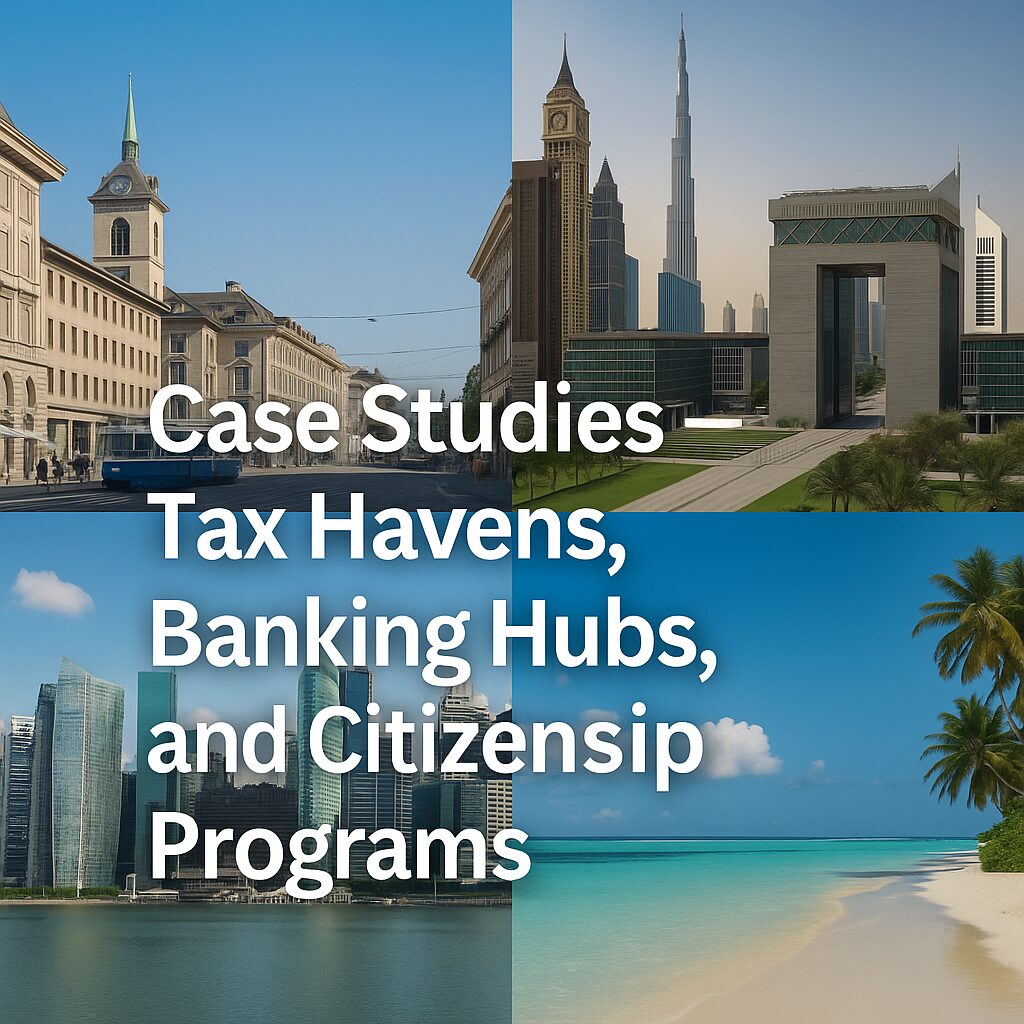
Real-world global wealth strategies through tax havens, banking hubs, and second citizenship programs.

“From the Caribbean to Europe, real-world strategies of the global elite”

Why Case Studies Matter

In earlier parts of this series, we broke down the building blocks of tax optimization, multi-jurisdiction banking, and alternative residencies.
But strategies without real-world execution are just theory.

The wealthy replicate what already works. That’s why case studies are invaluable: they reveal tested blueprints that can be adapted to different wealth levels.

This article covers 12 case studies across tax havens, banking hubs, and citizenship programs — from the Caribbean to Europe, Asia, and Africa.


Part 1: Tax Havens in Action

Case Study 1: The Caribbean CBI Portfolio

… (기존 내용 유지)

Case Study 2: European Holding Structures

… (기존 내용 유지)

Case Study 3: Trusts in the Channel Islands

… (기존 내용 유지)

Case Study 4: Mauritius as an Africa Gateway

  • Profile: East African fintech founder.
  • Strategy: Incorporated holding company in Mauritius GBC1 structure.
  • Benefit:
    • Tax treaties with 40+ African countries.
    • Effective corporate tax below 3%.
  • Outcome: Attracted $50M in foreign VC funding, routed through Mauritius.

Part 2: Banking Hubs in Practice

Case Study 5: Swiss Private Banking, Reinvented

… (기존 내용 유지)

Case Study 6: Singapore Family Office Setup

… (기존 내용 유지)

Case Study 7: Dubai as a Treasury Hub

… (기존 내용 유지)

Case Study 8: Hong Kong as a Trade Finance Hub 🇭🇰

  • Profile: Chinese-Vietnamese logistics entrepreneur.
  • Strategy: Established trade finance accounts with HSBC HK.
  • Benefit:
    • 24-hour USD liquidity.
    • Access to Asia-Pacific supply chain credit.
  • Outcome: Survived 2020–2022 shipping volatility, expanded fleet by 30%.

Part 3: Citizenship & Residency Programs

Case Study 9: Portugal Golden Visa

… (기존 내용 유지)

Case Study 10: Malta Citizenship

… (기존 내용 유지)

Case Study 11: U.S. E-2 Treaty Investor Visa

… (기존 내용 유지)

Case Study 12: Global Second Passport Stack

  • Profile: Southeast Asian family office.
  • Strategy: Acquired Grenada CBI, then leveraged it for U.S. E-2 Visa, later added Cyprus Residency.
  • Benefit:
    • Caribbean passport → U.S. treaty investor access.
    • EU residency → mobility + asset diversification.
  • Outcome: Built a 3-passport portfolio securing access to U.S., EU, and offshore havens within 5 years.

Synthesis: Patterns Across 12 Case Studies

  • Multi-layered jurisdictional stacking is the norm.
  • Global arbitrage is not tax evasion — it’s about selecting the most favorable compliant path.
  • Banking + mobility synergy creates capital safety nets.
  • Second passports are wealth insurance policies.

Conclusion: From Theory to Execution

These 12 case studies show that:

  • Tax havens provide the foundation.
  • Banking hubs are the bloodstream.
  • Residency and citizenships are the passports of capital.

For anyone from $1M to $1B net worth, the lesson is the same:

  • Build layers.
  • Diversify across regions.
  • Secure mobility.
  • Protect assets multi-generationally.

Case Study Summary List

  1. Caribbean CBI portfolio → Tax-free dividend flows.
  2. Luxembourg SOPARFI → Royalty taxation at <5%.
  3. Guernsey trusts → Multi-generational wealth shield.
  4. Mauritius GBC1 → Africa investment gateway.
  5. Swiss banking → Preserved wealth during crisis.
  6. Singapore VCC → Regional VC access.
  7. Dubai DIFC → Treasury tax savings.
  8. Hong Kong trade finance → Supply chain stability.
  9. Portugal Golden Visa → $20M tax savings.
  10. Malta Citizenship → EU passport & banking.
  11. U.S. E-2 Visa → North American market access.
  12. Global Passport Stack → U.S. + EU + offshore mobility.

Next Article Preview

The final piece of this series is the Hub Page — Advanced Family Office Playbooks.
It will deliver:

  • A master framework.
  • Checklists for each jurisdictional play.
  • Compliance calendar with annual filing reminders.
    This is the action toolkit to operationalize everything we’ve covered.

📌 Subscribe CTA

Stay ahead of the global elite.
Hit Subscribe now to get the hub page and all future playbooks straight to your inbox.

Integrated Playbook — Building the Global Fortress of Wealth

Skyscraper skyline symbolizing global wealth strategies integrating tax optimization, banking, trusts, and philanthropy

A Step-by-Step Master Blueprint for Billionaire Wealth Engineering

Why Wealth Needs a Fortress

Wealth is fragile. Taxes erode it. Lawsuits target it. Political winds shift against it. Family disputes tear it apart. The richest families in the world have one advantage: they treat wealth not as static money, but as a system that must be engineered and fortified.

This article integrates the five previous pillars—tax optimization, offshore banking, second citizenship, trusts & holding companies, and philanthropy—into a single actionable master playbook: the Global Fortress of Wealth.


Part 1: Foundation Pillar — Global Tax Optimization

1. Tax Residency Engineering

  • United States: Citizenship-based taxation (unique globally). Wealthy Americans seek Puerto Rico Act 60 or expatriation to reduce exposure.
  • United Kingdom: Non-domicile rules historically favored foreign wealth (though shrinking).
  • Singapore & UAE: Zero capital gains, no estate tax, territorial taxation = top choices for billionaires.
  • Portugal (NHR regime): 10 years of favorable taxation for foreign residents.

Lesson: Residency is the foundation of every fortress. Without aligning where you live with your tax goals, every other structure leaks.

2. Corporate & Treaty Arbitrage

  • Luxembourg: Gateway to EU with extensive treaty network.
  • Netherlands: Traditionally favored holding regime (though now stricter).
  • Ireland: 12.5% corporate tax with strong IP incentives.
  • Hong Kong: 16.5% corporate tax, no VAT, no withholding on dividends.

3. Real-World Example

A European tech founder sets up an Irish HoldCo for IP, routes profits to a Luxembourg entity for investment, and holds personal residency in Portugal. The blend reduces effective tax by 20–30%.


Part 2: Banking Pillar — Offshore & Multi-Jurisdiction Security

1. Comparative Banking Hubs

  • Switzerland: Traditional safe haven, strong rule of law, private banking expertise.
  • Singapore: Asia’s Switzerland, geopolitical stability, MAS-regulated banking excellence.
  • Luxembourg: Specialized in fund custody and institutional wealth.
  • Dubai (UAE): Emerging as a global hub with zero tax, strategic between East and West.

2. Multi-Currency Grid

A billionaire fortress rarely holds just USD. Instead:

  • USD & EUR for liquidity.
  • CHF & SGD for safe haven.
  • Gold-linked accounts as hedge against fiat risk.
  • Crypto custody (in Switzerland or Singapore) for diversification.

3. Private Banking Advantages

  • Access to exclusive hedge funds and PE deals.
  • Global credit lines secured against portfolios.
  • Concierge-level political risk advisory.

Part 3: Mobility Pillar — Second Citizenship & Residency

1. Why It Matters

  • Provides exit strategy in case of political collapse.
  • Enables tax re-domiciliation.
  • Expands global mobility and investment access.

2. Key Programs

  • Caribbean CBI: St. Kitts, Dominica—fast-track passports under $200K.
  • European Golden Visas: Portugal, Malta, Greece—residency plus Schengen access.
  • Asia: Singapore Global Investor Program, UAE Golden Visa.

3. Integration with Family Trusts

Second citizenship is often embedded into trust planning—ensuring heirs always inherit mobility, not restrictions.


Part 4: Structural Pillar — Trusts and Holding Companies

1. Trusts as Firewalls

  • Discretionary trusts protect against lawsuits, divorces, inheritance fights.
  • Dynasty trusts can endure 100–300 years.

2. Holding Companies as Command Centers

  • BVI: Fast, cheap, neutral.
  • Singapore: Regional hub for Asia.
  • Delaware LLCs: Trusted by investors worldwide.
  • Luxembourg SPVs: Perfect for EU real estate and PE funds.

3. Hybrid Example

Cayman Trust → BVI Holding → Singapore Sub-Holdings → Local Subsidiaries.
This creates multiple barriers against taxation and litigation.


Part 5: Legacy Pillar — Philanthropy as Wealth Multiplier

1. Tax & Estate Optimization

  • Donations reduce estate size and taxable exposure.
  • Charitable trusts combine tax relief with family control.

2. Reputation Power

  • Philanthropy reframes billionaires as builders of civilization.
  • Enhances legitimacy in the eyes of governments and society.

3. Multi-Generational Training

Foundations serve as training grounds for heirs—preparing them to manage wealth with governance discipline.


Part 6: Integration — The Fortress Blueprint

A billionaire’s integrated playbook works as follows:

  1. Choose tax-friendly residency (UAE, Singapore, Monaco).
  2. Set up offshore banking grid across 3–4 hubs.
  3. Acquire second citizenship for heirs and mobility insurance.
  4. Establish trusts & holding companies to shield and centralize.
  5. Create philanthropic foundations to optimize estate planning and legacy.
  6. Run a family office to govern the entire system with charters and succession rules.

Each part alone is powerful. Together, they form an unbreakable fortress.


Part 7: Case Studies of Fortress Wealth

  • Rockefeller Family (U.S.): 150-year dynasty using trusts, foundations, and corporate holdings.
  • Li Ka-shing (Hong Kong): Combined philanthropy with Asian holding dominance.
  • Norwegian Sovereign Wealth Fund: A state-scale fortress of diversified wealth.
  • Tech Billionaires: Delaware LLCs, Cayman trusts, second passports, and mega-foundations (Gates, Bezos, Musk).

Part 8: Actionable Toolkit & Scenarios

Checklist

  • Do you have residency aligned with tax strategy?
  • Do you hold bank accounts in three stable jurisdictions?
  • Do you own assets personally or via holding companies?
  • Is a trust shielding wealth from lawsuits and probate?
  • Is philanthropy integrated into your estate plan?

Scenarios

  • Entrepreneur at $5M net worth: Start with a Singapore HoldCo + Caribbean passport.
  • Investor at $50M: Add Cayman trust + Swiss banking grid + philanthropy DAF.
  • Family Office at $500M+: Multi-layer trust + Luxembourg fund vehicles + private foundation + UAE residency.

Conclusion: Building Financial Immortality

The Global Fortress of Wealth is not about hiding—it is about engineering. Billionaires who build these structures achieve something close to immortality: wealth that survives taxes, lawsuits, politics, and even death.

Entrepreneurs and investors who apply these strategies early transform fragile fortunes into dynasties. Remember: wealth alone does not last—structures do.


Case Study List

  • Rockefeller Family — 150-year dynasty.
  • Li Ka-shing — Fortress in Asia.
  • Norwegian Sovereign Fund — State-scale fortress.
  • Tech Billionaires — Hybrid fortress playbooks.

Next Article Preview

Next: “Case Studies — Tax Havens, Banking Hubs, and Citizenship Programs.”
We will break down the world’s most critical jurisdictions—Cayman, Switzerland, Luxembourg, Singapore, and the Caribbean—and reveal why billionaires choose them.


Subscription CTA

🔔 Don’t just accumulate wealth—fortify it. Subscribe now to receive strategies, blueprints, and billionaire case studies delivered to your inbox. Build your Fortress of Wealth today.

Philanthropy as a Tax & Legacy Tool

Image of a global philanthropic foundation representing tax optimization and legacy planning strategies

How the World’s Wealthiest Turn Giving into Strategy, Power, and Permanence

Why Billionaires Use Philanthropy as Strategy

When ordinary people hear about billionaire philanthropy, they imagine generosity. But in reality, philanthropy is a financial strategy disguised as charity. From Carnegie to Gates, from Rockefeller to Li Ka-shing, the richest families of every era have used philanthropy as a shield against taxation, as a tool for reputation management, and as a vehicle for building a dynasty that lasts centuries.

This article explores how philanthropy functions as a tax optimization engine, a powerful branding tool, and a multi-generational legacy system. It also breaks down case studies from the world’s wealthiest families and provides a step-by-step playbook for entrepreneurs who want to integrate philanthropy into their own wealth strategies.


Part 1: Philanthropy as Tax Optimization

1. Income Tax Benefits

Most developed countries offer tax deductions for charitable giving:

  • United States: Up to 60% of adjusted gross income deductible for cash, 30% for appreciated assets.
  • United Kingdom: Gift Aid boosts donations by 25% and donors deduct from income tax.
  • Singapore: 250% tax deduction on qualifying donations to approved charities.
  • South Korea: Deductions up to 30% of taxable income, plus special incentives for corporate donors.

For billionaires, this means moving tens or hundreds of millions of taxable income into tax-exempt charitable vehicles every year.

2. Estate & Inheritance Tax Reduction

Philanthropy is the most efficient way to remove assets from the taxable estate:

  • U.S. Estate Tax: 40% top rate → Foundations and charitable trusts bypass this.
  • Europe: Inheritance taxes range from 30–50% → Donations reduce estate valuation.
  • Asia: Countries like South Korea levy 50% estate tax → Families increasingly use charitable vehicles to cut exposure.

3. Capital Gains Relief

By donating appreciated stock or real estate, donors avoid capital gains tax entirely. The foundation sells assets tax-free, multiplying philanthropic and tax benefits simultaneously.


Part 2: Vehicles of Philanthropy

1. Private Foundations

  • Controlled by the founding family.
  • Required in the U.S. to distribute ~5% annually.
  • Offer maximum influence over mission, investment policy, and branding.
  • Example: Gates Foundation, Ford Foundation, Rockefeller Foundation.

2. Donor-Advised Funds (DAFs)

  • Provide immediate tax deduction.
  • Simplified compared to a private foundation.
  • Popular for wealthy entrepreneurs seeking flexibility.

3. Charitable Trusts

  • Charitable Remainder Trust (CRT): Founder receives income during life; remainder goes to charity → combines philanthropy with lifetime cash flow.
  • Charitable Lead Trust (CLT): Charity receives income for a set period; remainder reverts to heirs with reduced tax cost.

4. Purpose Trusts

  • Designed for specific missions such as education or environmental conservation.
  • Immune to family disputes because they do not depend on heirs.

Part 3: Philanthropy as Brand, Power, and Soft Influence

1. Reputation Armor

Philanthropy reframes billionaires as problem-solvers, not wealth hoarders.

  • Andrew Carnegie was vilified as a robber baron, but his libraries reframed him as a patron of civilization.
  • Bill Gates shifted from monopolist to global savior of public health.

2. Influence Channels

Donating to universities, hospitals, and NGOs grants direct access to governments and policy circles.

  • Tech billionaires funding AI ethics shape future regulation.
  • Energy billionaires funding climate foundations reposition their legacy.

3. Soft Power Diplomacy

Philanthropy serves as a diplomatic passport. A billionaire foundation often has more influence in developing countries than embassies.


Part 4: Multi-Generational Legacy

1. Governance Training for Heirs

Philanthropy boards train heirs in decision-making, investment management, and governance. This reduces family conflict and builds leadership capacity.

2. Eternal Branding

Carnegie, Rockefeller, Ford, and Gates foundations ensure names endure centuries after businesses decline. Philanthropy immortalizes family names.

3. Conflict Prevention

By dedicating large portions of wealth to philanthropic vehicles, founders prevent destructive inheritance disputes among heirs.


Part 5: Expanded Case Studies

  • Bill & Melinda Gates Foundation (U.S.): $60B+ in assets, global health, education, and climate projects. A prime model of philanthropy as global power.
  • Rockefeller Foundation (U.S.): Over 100 years of influence, shaping U.S. education, healthcare, and finance policies.
  • Carnegie Endowment for International Peace: Built after Carnegie’s steel empire, still drives global policy more than a century later.
  • Li Ka-shing Foundation (Hong Kong): $10B+ donated, strategically enhancing his global stature.
  • Azim Premji Foundation (India): 66% of Wipro shares transferred, saving billions in taxes while funding education.
  • Carlos Slim Foundation (Mexico): Funds healthcare and entrepreneurship, sustaining power and legitimacy across Latin America.
  • Samsung Foundations (Korea): Cultural, educational, and healthcare foundations strategically integrated into chaebol succession planning.

Part 6: Risk Management and Compliance

Philanthropy is not risk-free. Authorities increasingly scrutinize charitable structures:

  • U.S. IRS rules: Strict on self-dealing, private inurement, and payout requirements.
  • OECD: Watching for abuse of cross-border philanthropic transfers.
  • Public Perception Risk: “Reputation laundering” accusations if philanthropy is insincere.

Lesson: Legitimacy matters. Philanthropy must be strategic but also visibly impactful.


Part 7: Actionable Checklist for Entrepreneurs

  1. Clarify Your Mission — Align with family values and industries you know best.
  2. Select Vehicle — DAF for simplicity, Foundation for control, Trust for estate planning.
  3. Secure Tax Counsel — Maximize deductions, avoid compliance pitfalls.
  4. Integrate Governance — Put heirs on boards to train them.
  5. Balance Visibility & Impact — Publicize enough for brand value, deliver enough impact for credibility.
  6. Scale Gradually — Start small, expand into multi-billion-dollar legacy over decades.

Conclusion: The Strategic Value of Giving

Philanthropy is not charity—it is strategic wealth engineering. It is the art of turning money into influence, power, and immortality while shielding assets from taxes and disputes.

For billionaires, philanthropy is as essential as trusts, holding companies, and tax havens. For rising entrepreneurs, integrating philanthropy early creates not only goodwill but also long-term resilience and branding.

To build a dynasty, giving is not optional—it is mandatory.


Case Study List

  • Gates Foundation — Tax-efficient global health empire.
  • Rockefeller Foundation — Multi-century influence.
  • Carnegie Endowment — Eternal peace-building brand.
  • Li Ka-shing Foundation — Philanthropy as Asian soft power.
  • Azim Premji Foundation — Shares converted into legacy.
  • Carlos Slim Foundation — Healthcare and entrepreneurship.
  • Samsung Foundations — Cultural and succession planning tool.

Next Article Preview

Next: “Integrated Playbook — Building the Global Fortress of Wealth.”
This will combine trusts, holding companies, philanthropy, and tax optimization into a single master blueprint. You will see how billionaires design fortress-like structures that withstand lawsuits, taxes, politics, and time itself.


Subscription CTA

🔔 Don’t just grow wealth—design a dynasty. Subscribe today and get every strategy, toolkit, and billionaire case study delivered to your inbox. Learn how the world’s richest families structure their philanthropic empires—and start building yours.

Structuring Cross-Border Trusts & Holding Companies

Skyscrapers representing global financial hubs where trusts and holding companies are structured

How Global Billionaires Protect Assets, Optimize Taxes, and Ensure Generational Continuity

Why Billionaires Build Legal Fortresses

For billionaires, wealth is not only about making money. It is about keeping it across generations, shielding it from political risk, reducing tax drag, and ensuring it is never destroyed by a lawsuit, a divorce, or a family feud. In the 21st century, the invisible weapons of the ultra-wealthy are not armies or castles but legal fortresses—trusts and holding companies layered across multiple jurisdictions.

This article explores how global elites structure trusts and holding companies to maximize resilience, why certain jurisdictions dominate the game, and what lessons entrepreneurs and investors can apply even on a smaller scale.


Part 1: The Anatomy of a Trust

1. Core Mechanics

A trust separates legal ownership from economic benefit.

  • Settlor (Founder): Transfers assets into the trust.
  • Trustee: Holds legal title, manages assets according to the deed.
  • Beneficiaries: Receive distributions, but do not legally own the assets.

This separation ensures that assets are not considered part of the settlor’s estate, creating protection from inheritance tax, creditors, and hostile litigation.

2. Advanced Types of Trusts

  • Discretionary Trust: Trustees decide distribution timing/amount → strongest protection against creditors.
  • Dynasty Trust: Designed to last centuries, compounding wealth across multiple generations.
  • Spendthrift Trust: Shields assets from irresponsible heirs by limiting direct access.
  • Hybrid Trust: Combines fixed benefits with discretionary powers for flexibility.
  • Charitable or Purpose Trust: Used for philanthropy and reputation building.

3. Why the Rich Embrace Trusts

  • Avoidance of probate and forced heirship laws.
  • Potential reduction of estate and inheritance tax.
  • Asset protection in unstable political climates.
  • Confidentiality and privacy compared to personal ownership.

Part 2: The Strategic Role of Holding Companies

1. Why a Holding Company?

A holding company is not just a corporate shell—it is the command center of global wealth.

  • Owns subsidiaries across multiple countries.
  • Consolidates profits, dividends, and investments.
  • Separates liability among operating companies.

2. Key Jurisdictions for Holding Companies

  • British Virgin Islands (BVI): Zero tax, low setup cost, flexible corporate law.
  • Luxembourg: Gateway for European investments, sophisticated tax treaties.
  • Singapore: Asia-Pacific hub, strong legal system, favorable holding incentives.
  • Delaware (USA): Popular for LLCs, flexible structures, high credibility for investors.
  • Netherlands: Historically used for treaty shopping (though increasingly regulated).

3. Structures in Practice

  • A family might set up a Singapore HoldCo to own Asian subsidiaries while simultaneously using a Luxembourg SPV to hold EU real estate.
  • IP rights might be centralized in a Delaware LLC, with royalties flowing globally.

Part 3: The Hybrid Fortress — Trust + Holding

1. Step-by-Step Structure

  1. Establish a trust in a protective jurisdiction (e.g., Cayman, Jersey).
  2. The trust owns 100% of a holding company (e.g., BVI, Singapore).
  3. Holding company owns global subsidiaries, real estate, IP, or investment portfolios.
  4. Beneficiaries only receive distributions at trustee discretion.

2. Benefits of the Hybrid Model

  • Shields assets from personal lawsuits or divorce.
  • Streamlines international tax efficiency.
  • Creates seamless intergenerational wealth transfer.
  • Enables philanthropy integration through charitable sub-structures.

3. Common Variations

  • Trust + Foundation + Holding: Triple-layer defense combining civil and common law traditions.
  • Multi-Tiered HoldCo Chains: Example: Cayman → BVI → Singapore → Local Subsidiary.
  • Trust-Owned Family Office: Where the trust owns the entity that manages investments.

Part 4: Global Case Studies

1. Hong Kong Real Estate Tycoon

Assets moved into a Cayman discretionary trust. The trust owned a BVI HoldCo, which controlled dozens of Hong Kong property companies. Result: insulation from mainland seizure risk and smooth generational transfer.

2. European Private Equity Fund

Used Luxembourg SPVs under a Dutch HoldCo. This minimized dividend withholding tax and simplified cross-border mergers across the EU.

3. Korean Chaebol Second Generation

Faced with Korea’s 50% inheritance tax, families pre-structured Singapore holding entities and tied them to offshore trusts, reducing taxable estate exposure while keeping assets globally mobile.

4. U.S. Tech Founder

Transferred IP rights to a Delaware LLC owned by a Cayman Trust. Royalties flowed through Ireland and Singapore, creating legitimate tax efficiency and long-term control.

5. Philanthropic Legacy

The Templeton Foundation was created through a Purpose Trust. It outlived the founder, manages billions, and continues philanthropic work with major tax efficiency.


Part 5: Risks and Evolving Regulation

The old era of secrecy is gone. Wealth structures must now comply with:

  • OECD BEPS initiatives targeting profit shifting.
  • Common Reporting Standard (CRS): Automatic information exchange.
  • FATCA (U.S.): Aggressive reporting requirements for U.S. persons.

Key Risks Today

  • Aggressive tax authorities challenging structures.
  • Public perception risk if secrecy is mistaken for illegality.
  • Need for professional trustees and corporate directors to avoid sham arrangements.

The billionaire strategy today is not secrecy, but legitimacy with maximum efficiency.


Part 6: Actionable Toolkit — How to Begin

Even for entrepreneurs and investors below billionaire level, the same principles apply:

Step 1: Choose Jurisdiction Wisely

  • For asset protection → Cayman, Jersey, Cook Islands.
  • For Asian HQ → Singapore.
  • For European treaty benefits → Luxembourg, Netherlands.

Step 2: Design Structure for Purpose

  • Is your priority tax optimization, succession planning, or liability separation?
  • Start with one holding company, then expand into trust integration.

Step 3: Appoint Professionals

  • Use independent trustees and nominee directors.
  • Avoid retaining control that could make the trust a sham.

Step 4: Document Compliance

  • File tax reports properly under CRS/FATCA.
  • Ensure transfer pricing and substance rules are satisfied.

Step 5: Future-Proof the Structure

  • Build philanthropic arms early.
  • Train the next generation in governance through family charters.

Conclusion: The Invisible Fortress

Trusts and holding companies are the steel and concrete of global wealth management—invisible yet unbreakable. They shield assets, optimize tax flows, and secure family control long after founders are gone.

For the ultra-wealthy, this is not optional—it is survival. For rising entrepreneurs, adopting even a simplified version of these structures can mean the difference between short-lived fortune and generational dynasty.


Case Study List

  • Hong Kong Tycoon: Cayman Trust + BVI HoldCo
  • European Fund: Luxembourg SPVs + Dutch HoldCo
  • Korean Family: Singapore HoldCo + Offshore Trust
  • U.S. Founder: Delaware LLC + Cayman Trust
  • Philanthropic Legacy: Templeton Foundation

Next Article Preview

Next in the series: “Philanthropy as a Tax & Legacy Tool.”
This is where billionaires transform giving into a multi-dimensional wealth strategy. Beyond reputation, philanthropy is a tax-efficient shield, a brand amplifier, and a way to hard-code legacy into the global financial system. You will see why the wealthiest families cannot afford not to integrate philanthropy into their fortress.


Subscription CTA

🔔 Join the inner circle of global wealth builders. Subscribe today and get practical blueprints, case studies, and step-by-step playbooks delivered straight to your inbox. Don’t just manage wealth—engineer a dynasty.