ETF vs Real Estate in 2025: Which Builds Wealth Faster with Less Risk?

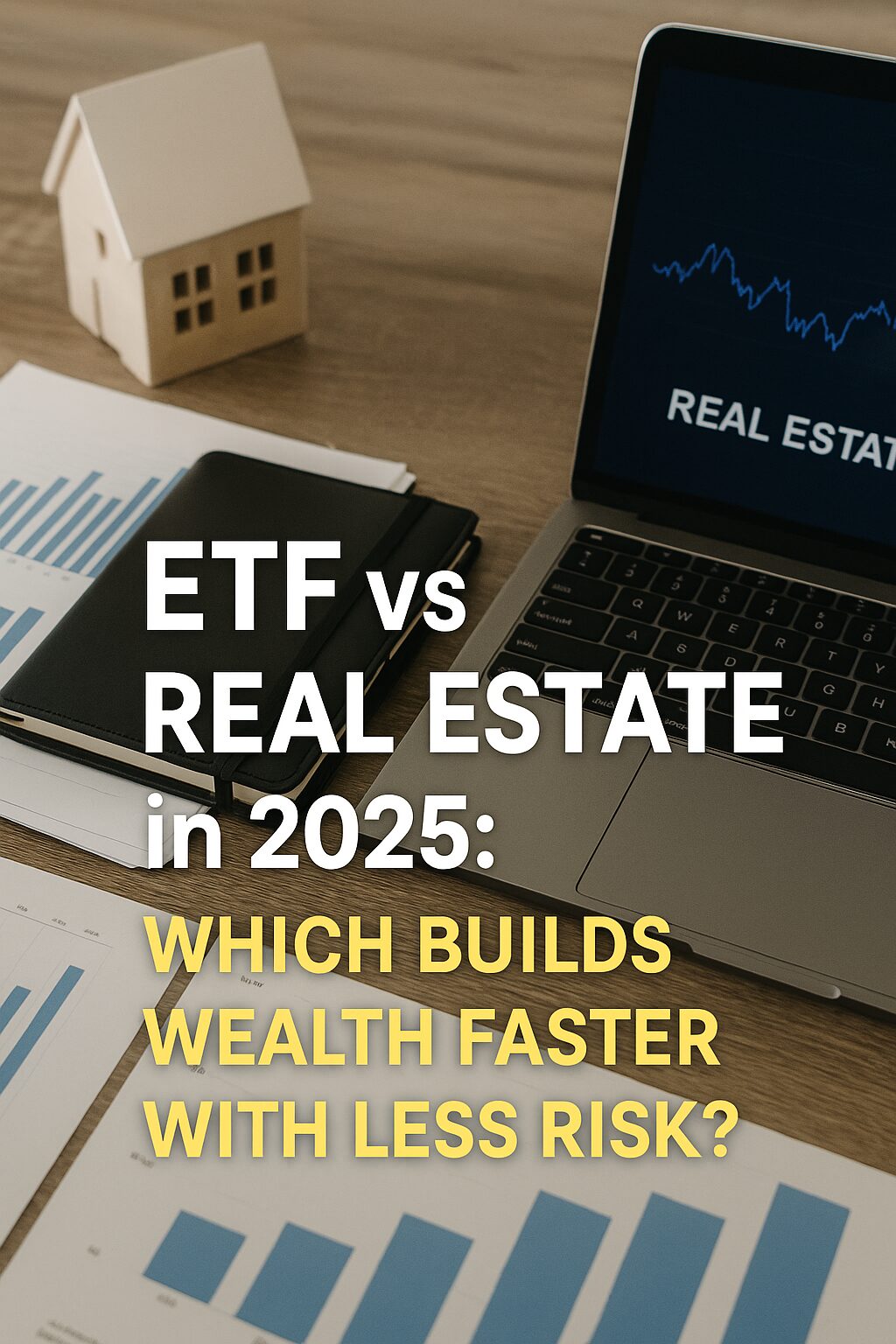
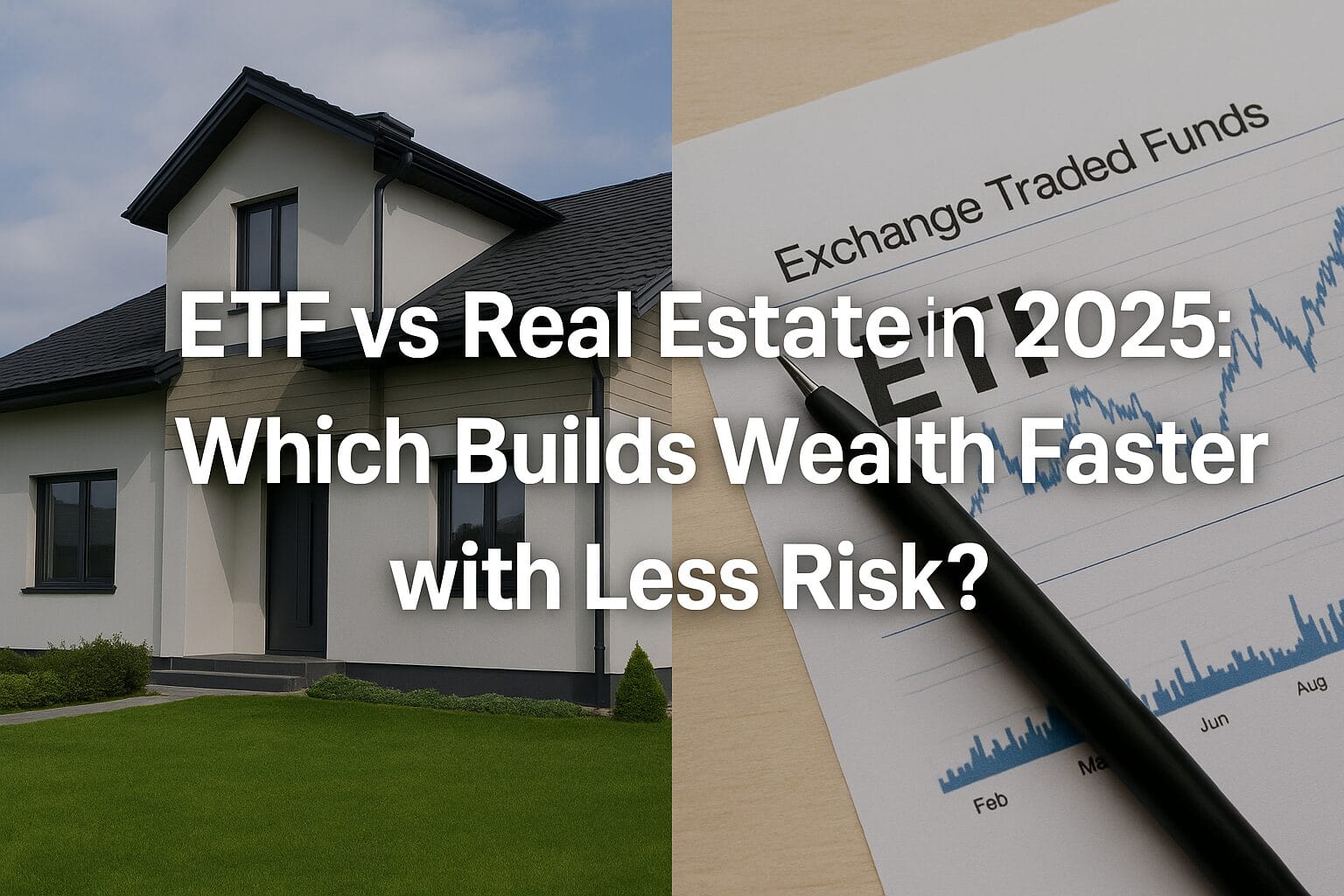
A modern suburban house beside a financial chart showing ETF trends, symbolizing investment choices in 2025.

1. Introduction: The Real-World Dilemma

You’ve saved $100,000 and are ready to invest. But a single question keeps you up at night:

“Should I buy an apartment… or just go with a few ETFs?”

You’re not alone. Every year, thousands of individuals—especially first-time investors—face this exact decision. Real estate has always felt safe and tangible. But ETFs? They seem too digital, too abstract.

Yet in 2025, the lines between these two options have blurred. With housing markets more volatile than ever and ETF innovation exploding, the traditional “safe bet” isn’t so clear anymore.

This guide is not about theory. It’s built for people like you who want clear answers, real-world comparisons, and actionable steps—not lectures.

By the end of this article, you’ll know exactly:

  • Which path grows your wealth faster (based on real numbers)
  • What the world’s most successful investors are choosing
  • How to start today with as little stress as possible

2. Why This Question Matters in 2025

A decade ago, most people would’ve said:

“Buy a property. Rent it out. Watch it grow.”

But 2025 is different.

Let’s break down what’s changed:

Housing Isn’t What It Used to Be

  • High interest rates mean higher mortgage costs—even if you have the cash, the returns shrink fast.
  • Property taxes and maintenance have surged.
  • Vacancy rates in urban areas are unpredictable due to work-from-anywhere trends.

ETFs Are Evolving—Fast

  • Monthly dividend ETFs are now designed to mimic rental income, without the landlord headaches.
  • New bond + equity hybrid ETFs offer high yield + stability.
  • Fees are shrinking. Access is expanding. You can invest in global real estate without owning a single building.

Investor Psychology Has Shifted

  • Millennials and Gen Z prefer flexibility and liquidity.
  • Many would rather move countries than commit to one house.

In this world, choosing between real estate and ETFs is no longer just a matter of preference—it’s a strategic decision with financial consequences.


3. Case Study: $100,000 Investment – ETF vs Real Estate

Let’s get practical. You have $100,000. What can you realistically do with it?

Option 1: Real Estate Investment

  • Type: Small condo in mid-tier city
  • Down payment: $100,000 (assuming full cash)
  • Monthly rent: $800
  • Annual rent: $9,600
  • Costs:
    • Property tax: $1,800
    • Maintenance/insurance: $1,200
    • Vacancy (5%): $480
  • Net income: $6,120/year
    6.1% annual return

Now assume the property appreciates at 3% per year:

  • After 5 years: $100,000 → $115,927
  • Total ROI (rental + appreciation): ~9.2% annualized

Option 2: Monthly Dividend ETF

Let’s say you invest:

  • $50,000 in JEPI (JPMorgan Equity Premium Income ETF, ~9.5% yield)
  • $50,000 in SCHD (Schwab Dividend Equity ETF, ~3.5% yield + growth)

Results:

  • Estimated average monthly dividends: $500–550/month
  • 5-Year Total Growth: ~9–10% annualized

ETF Advantages:

  • Fully liquid
  • No repairs, no tenants
  • Global diversification
  • Reinvest dividends for compounding

4. What the Billionaires Are Doing (Buffett, Dalio, Lynch)

You might be thinking,

“Of course billionaires invest differently. That has nothing to do with me.”

But here’s the truth:
Their strategy is surprisingly simple—and totally replicable for small investors.

Warren Buffett: “If You’re Not a Landlord, Don’t Act Like One.”

At Berkshire Hathaway’s annual meeting, Buffett said:

“Most people are better off buying a low-cost index fund and leaving it alone.”

He believes regular investors shouldn’t waste time managing tenants or plumbing problems.
Instead, buy ETFs like VOO or SPY and let time do the work.

Ray Dalio: “Diversification is the Only Free Lunch”

Dalio’s “All-Weather Portfolio” includes:

  • Stocks
  • Bonds
  • Commodities
  • Real estate via REIT ETFs like VNQ

He avoids physical properties and still earns income—passively.

Peter Lynch: “Buy What You Understand”

Lynch made his fortune by investing in simple businesses.
His advice:

“You don’t need to be a genius. Just buy what makes sense and hold on.”

And for many people, that’s an ETF.


What This Means for You — Even With $100

Here’s the secret:

They’re not rich because they invest in complex things.
They’re rich because they invest in simple things early—and consistently.

You don’t need $500,000 or a real estate license.
You need:

  • A free investing app
  • $100 to start
  • An ETF like JEPI, QYLD, or VTI
  • And the confidence to stay consistent

If billionaires trust ETFs for billions,
you can trust them for your first hundred.

5. Hidden Costs and Risks of Real Estate (That No One Talks About)

On the surface, real estate sounds safe. But here’s what often gets ignored:

1. Maintenance Costs Never Stop

  • Leaking pipes, broken AC, mold issues—they all add up.
  • Even if you’re not living there, you’re still paying.

2. Property Taxes Can Rise Suddenly

  • Many cities reassess values yearly, increasing your tax bill.
  • This cuts directly into your rental profit.

3. Vacancy = Zero Income

  • One bad month with no tenant? That’s 0% yield.
  • You’re still paying insurance, utilities, and taxes.

4. Legal and Tenant Issues

  • Evictions can take months—and cost thousands.
  • Laws are changing fast. Some favor tenants more than landlords now.

5. Low Liquidity

  • Need cash? Selling a home takes months.
  • ETFs? You can cash out in minutes.

Bottom line?
Real estate isn’t “bad”—but it’s not nearly as passive as most people assume.

If you want predictable cash flow with minimal headaches, ETFs offer a cleaner, simpler solution.


6. Passive Income with ETFs: Monthly Cash Flow Without Tenants

Let’s say you want the feel of owning a rental—
but without the stress.

Enter: Monthly Dividend ETFs.

These are designed to:

  • Pay you every month (like rent)
  • Require zero management
  • Adjust automatically to market changes

What Makes Monthly Dividend ETFs So Powerful?

  • They own dozens or hundreds of companies that generate cash
  • They bundle that cash and pay you a slice—monthly
  • You can reinvest or withdraw as needed

Real Example:

  • JEPI: ~9.5% dividend yield
  • $10,000 invested = ~$950/year = ~$79/month
  • No maintenance. No phone calls. Just auto-pay to your account

It’s like having 10 tenants who always pay on time—and never call for repairs.


7. Step-by-Step: How to Start with Just 2 ETFs in 2025

So how do you actually do this?

Step 1: Open a Free Investment Account

Use platforms like:

  • Fidelity
  • Charles Schwab
  • Webull
  • SoFi

They allow zero-commission ETF purchases.

Step 2: Buy These Two ETFs

ETFYieldPurpose
JEPI~9.5%Monthly cash flow
SCHD~3.5%Long-term dividend + capital growth

→ You can start with just $100 in each.
→ Add more every month if possible.

Step 3: Turn On Dividend Reinvestment (Optional)

Want to grow your income faster?
Turn on DRIP: Dividend Reinvestment Plan.

Every dividend earned is automatically reinvested into buying more ETF shares.
That’s how compounding works.

Step 4: Do Nothing

Seriously. Let time do the work.
Watch your balance grow, your income rise—and your stress fall.


8. Who Should Choose Which? A Personality-Based Recommendation

Still not sure whether real estate or ETFs are right for you?

Here’s a quick test:

QuestionIf you say YES…You should probably:
Do you enjoy managing things?YESExplore real estate
Want stress-free monthly income?YESChoose ETFs
Need cash flexibility?YESChoose ETFs
Like physical assets you can touch?YESReal estate may suit you
Hate dealing with repairs or taxes?YESStick with ETFs

Many investors start with ETFs, build a stable income base,
then branch into real estate later when they have more capital and experience.


9. Final Verdict: Wealth Growth vs Stability – Your Best Bet in 2025

There’s no one-size-fits-all answer.
But if we boil it down:

  • Real Estate offers leverage and physical control—but requires time, effort, and big capital.
  • ETFs offer simplicity, liquidity, and consistent income—with far less headache.

And remember—you don’t have to choose just one.

In fact, many wealthy investors do both:

  • Use ETFs for baseline passive income
  • Use real estate for growth when the timing is right

But for 2025, with rising rates, global volatility, and tech-enabled investing…
ETFs are winning more minds—and wallets—than ever before.


10. Next Steps: The ETF Strategy for Monthly Income (Link to next post)

Ready to go deeper?

If you want to build a stable $500/month income using only ETFs,
check out our full blueprint here:

👉 ETF Income Blueprint 2025: Start Here to Build Monthly Passive Income

We’ll show you:

  • Which 2 ETFs you need
  • How to invest step-by-step
  • And how to build income you can actually live on

This is how real freedom starts.
Not with luck. But with a system.
ETF Income Blueprint 2025: Start Here to Build Monthly Passive Income

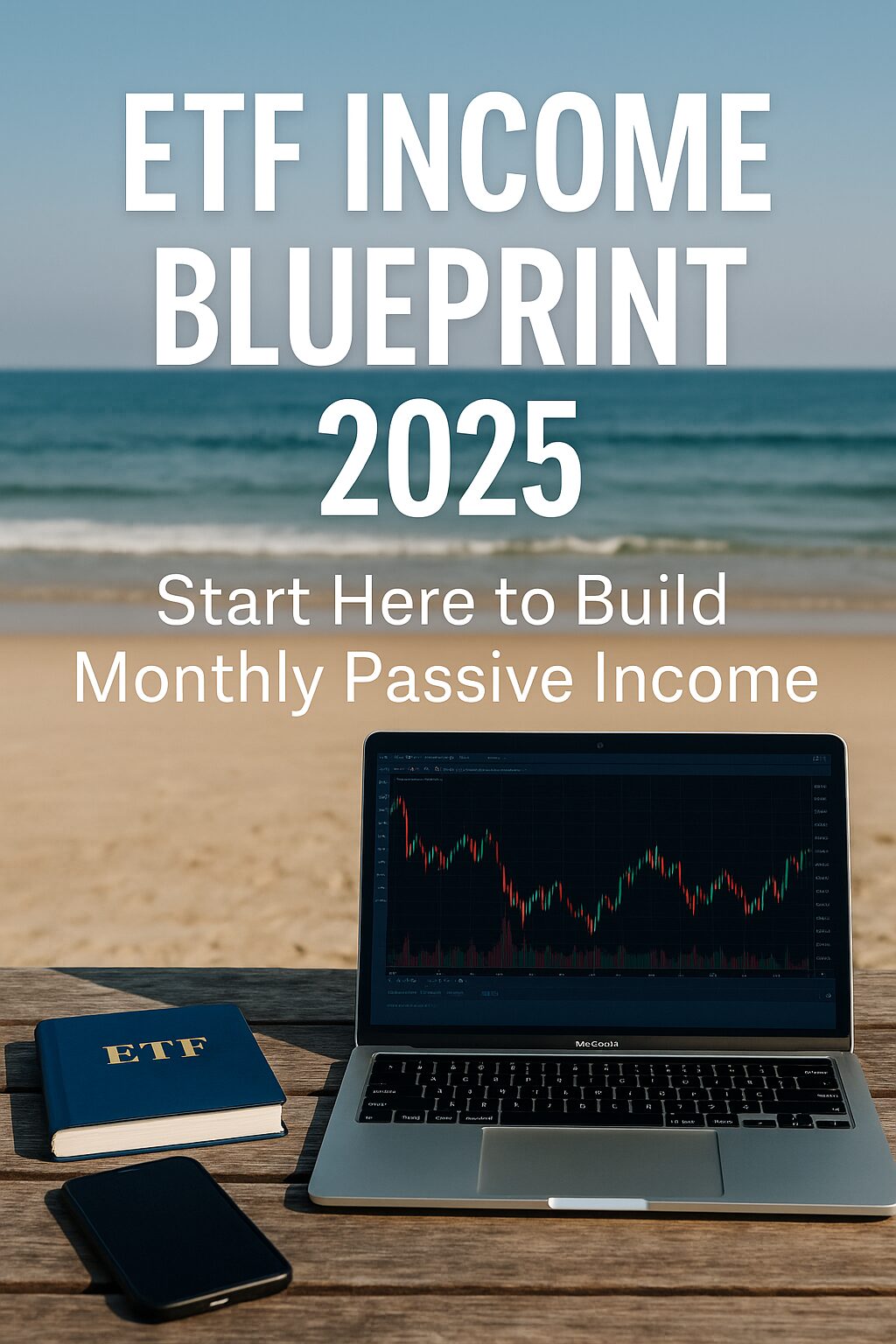
A financial planning workspace with a digital screen and notebook showing ETF tickers and a monthly income blueprint layout.

Introduction

Are you looking for a stable, step-by-step way to generate passive income in 2025? Whether you’re a beginner or a busy professional, this guide is your starting point. We’ve built a 5-part ETF series to help you understand how to earn monthly income through smart, global ETF investing—without the stress of day trading or managing properties.

In a world of economic uncertainty, more people are turning to ETFs as a safe, scalable, and hands-off way to build long-term wealth. This blueprint connects you to the exact posts you need—organized in a proven sequence to help you start earning now.


What You’ll Learn

  • How to earn $500+ per month using just 2 ETFs
  • The best ETFs that pay you every month (with tickers & strategies)
  • A ladder strategy to get monthly income without selling shares
  • FIRE (Financial Independence) ETF planning for long-term growth
  • ETF vs Real Estate: Which grows your wealth faster in 2025?

Each guide includes real numbers, step-by-step actions, and actual case studies—so you know exactly what to do next.


Start Here – Your 5-Part ETF Income Series

1. How to Build a $500 Monthly Income Using Only 2 ETFs (2025 Blueprint)

  • Learn how just two ETFs—like JEPI and SCHD—can automate your cash flow.

2. Dividend ETFs That Pay You Every Month: Top 3 Picks for Beginners in 2025

  • Discover beginner-friendly ETFs with monthly payouts and strong track records.

3. ETF Ladder Strategy: How to Earn Monthly Income Without Selling Any Shares

  • Build a step-by-step ETF ladder to get income every month, all year long.

4. Best ETFs for FIRE in 2025: Long-Term Passive Wealth Plan

  • Use the FIRE method to invest in long-term dividend growth portfolios.

5. ETF vs Real Estate in 2025: Which Builds Wealth Faster with Less Risk?

  • A real-world comparison: which gives you more return, peace, and mobility?

How to Use This Series

  1. Read each guide in order—they build on each other.
  2. Take notes on ETF tickers, income potential, and strategy tips.
  3. Choose 1–2 ETFs to start investing with small amounts.
  4. Bookmark or save this post so you can return anytime.

You don’t need to be rich. You just need the right plan.


Final Tip for 2025

Start simple. Automate your investments. Reinvest dividends. And track your passive income monthly.

“In 2025, freedom is measured by how many months your investments can pay for your life. ETFs are the engine—this series is your roadmap.”

If you’re serious about building monthly income, this is where your journey begins.

ETF vs Real Estate in 2025: Which Builds Wealth Faster with Less Risk?

A side-by-side visual of ETF investing tools and a rental property contract, symbolizing the comparison between ETFs and real estate for long-term wealth in 2025.

Introduction

When it comes to building long-term wealth, two titans dominate the conversation: Exchange-Traded Funds (ETFs) and Real Estate. Each has its loyal fans, compelling advantages, and hidden drawbacks. But in 2025, with inflation volatility, remote work, and FIRE (Financial Independence, Retire Early) gaining global traction, the question becomes more pressing:

“Where should I invest for faster, safer, and more predictable wealth?”

This guide breaks down the practical comparison between ETFs and real estate—not from a theoretical standpoint, but from the perspective of actual investors looking for monthly income, capital growth, and freedom. Whether you’re a digital nomad with $30,000 in savings or a working professional planning early retirement, this article will help you choose the better path—or a hybrid of both.


1. Initial Capital & Accessibility

ETFs:

  • Entry from $10 to $100. Easily accessible through any online broker.
  • No paperwork, no property taxes, no agents.
  • Dollar-cost averaging (DCA) possible weekly or monthly.

Real Estate:

  • Entry often requires $30,000 to $100,000+ upfront for down payments.
  • Requires legal contracts, agents, taxes, and often mortgage qualification.
  • Location-dependent barriers: legal restrictions for foreigners, language, and banking challenges.

Verdict: ETFs win on accessibility and scalability.


2. Monthly Income: Dividend vs Rental

ETFs (e.g., JEPI, QYLD, SCHD):

  • Monthly dividend yield ranging from 6% to 12% annualized.
  • 100% passive: no tenants, no maintenance.
  • No vacancy risk. Auto-deposited monthly.

Real Estate:

  • Rental yield varies by market (2% to 8% net).
  • Property management required (or hired).
  • Vacancy, maintenance, and tenant risk.

Real-World Case:

  • $100,000 invested in JEPI in 2025 = ~$800/month passive income.
  • $100,000 in a rental property (after mortgage) = ~$500–$700/month, but with risk and effort.

Verdict: ETFs provide more reliable, passive monthly income in most cases.


3. Risk: Market Volatility vs Operational Risk

ETFs:

  • Volatility: subject to stock market swings.
  • No ongoing expenses or emergencies.
  • Global diversification available (VTI, VXUS, BND).

Real Estate:

  • Illiquid asset: hard to sell quickly.
  • Market risk + local disaster risk (earthquakes, flooding).
  • High leverage = higher risk during downturns.

Verdict: ETFs carry less operational risk; real estate carries leverage and localized risk.


4. Liquidity, Management & Flexibility

ETFs:

  • 24/7 online access, full liquidity within minutes.
  • No tenants, repairs, or legal headaches.
  • Great for global citizens and nomads.

Real Estate:

  • Difficult to manage remotely without trusted partners.
  • Selling takes time and legal steps.
  • Immobile asset; can become a liability if relocation is needed.

Verdict: ETFs offer ultimate liquidity and flexibility.


5. Real 5-Year Case Study: $50,000 Investment

ScenarioETF Portfolio (e.g., SCHD/JEPI)Real Estate (Rental)
Monthly Income$325–$450$250–$400 (after costs)
Appreciation+40% total return+20–30% (avg property rise)
Time Involvement30 minutes/month5–10 hours/month
Risk ProfileModerate market volatilityHigh local + tenant risk
LiquidityHighLow

Result: ETF portfolio slightly outperforms in net income, total return, and peace of mind.


6. FIRE Optimization

If your goal is FIRE (Financial Independence, Retire Early):

  • ETFs allow better automation, global mobility, and low-maintenance growth.
  • Real estate may provide inflation-protected cash flow, but only if managed well and bought right.
  • Many FIRE followers use ETF ladders or dividend snowball strategies with SCHD, VTI, VIG, VXUS.

Hybrid Strategy Option:

  • Use ETFs for income + real estate for appreciation.
  • REIT ETFs (like O, VNQ) blend both.

Final Verdict: Which Builds Wealth Faster (with Less Risk)?

  • ETFs win for digital nomads, expats, beginners, and FIRE-focused investors.
  • Real estate fits investors with local expertise, leverage access, and time for management.
  • Hybrid investing (JEPI + REIT + small real estate) gives balanced exposure.

In 2025, time and mobility are more valuable than ever. If you want freedom + income, start with ETFs. Add real estate only when you’re ready for higher commitment.

“Assets should work for you while you sleep. The less you touch them, the better they should perform.”

Best ETFs for FIRE (Financial Independence) in 2025

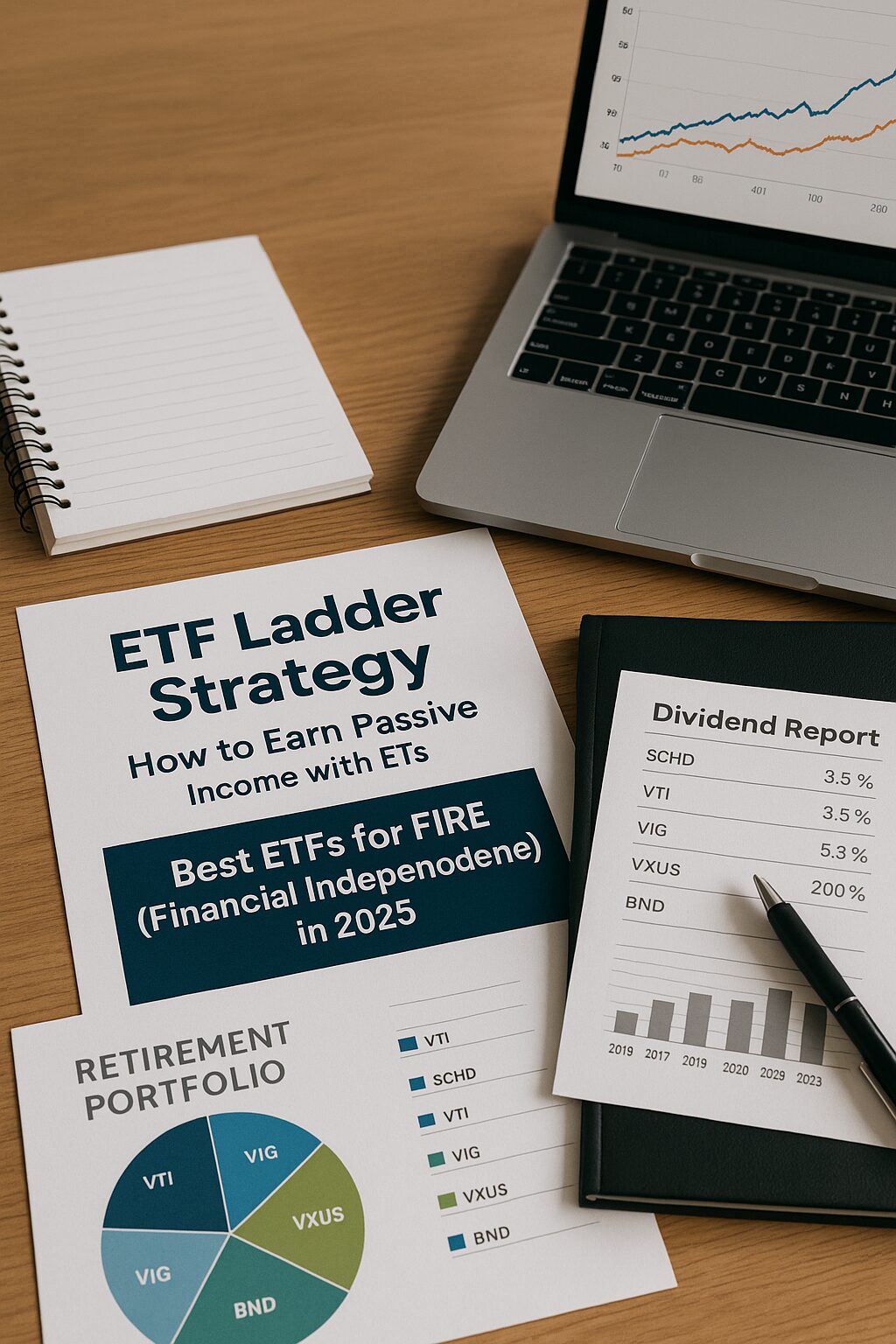
A financial planning desk with charts, notebooks, a laptop showing ETF graphs, and the words “FIRE Strategy 2025” overlaid.

Subtitle: Build Long-Term Wealth with These 5 Strategic ETFs—Even If You’re Starting Small


Introduction: Why FIRE Needs the Right ETFs

FIRE—Financial Independence, Retire Early—is no longer a niche movement. With inflation rising, traditional pensions disappearing, and job stability declining, more people than ever are seeking long-term passive wealth. But there’s a challenge: how do you build serious income without needing to actively trade or micromanage your portfolio?

The answer? A strategic set of ETFs designed for FIRE. These are low-cost, tax-efficient, and proven to outperform most actively managed funds over time.

This guide will show you how to structure a FIRE-focused ETF portfolio using only 5 smart ETFs.


Section 1: What Makes an ETF Ideal for FIRE?

Let’s clarify the core principles:

  • Low expense ratio: Even 0.5% annual fees can destroy long-term compounding.
  • Dividend growth potential: So you don’t just live off capital gains.
  • Global exposure: For inflation hedging and currency diversification.
  • Liquidity and DRIP support: To automate reinvestment and minimize idle cash.

We’ll rate each ETF in this guide based on these criteria.


Section 2: The FIRE 5 ETF Portfolio Breakdown

Here’s the core portfolio used by top FIRE influencers and long-term investors:

1. VTI – Vanguard Total Stock Market ETF

  • Expense Ratio: 0.03%
  • What It Covers: Entire U.S. equity market (large, mid, small caps)
  • Why It Works: Captures long-term U.S. economic growth.
  • Strategy: Set-it-and-forget-it. Just keep buying every month.
  • FIRE Fit Score: ★★★★★

Real-Life Example:
Mr. Money Mustache’s followers often cite VTI as the only ETF they need. A $100K investment in VTI since 2010 has grown to over $350K.


2. SCHD – Schwab U.S. Dividend Equity ETF

  • Expense Ratio: 0.06%
  • Dividend Yield: ~3.5%
  • Why It Works: Focuses on high-quality, dividend-paying U.S. stocks.
  • Bonus: Strong dividend growth.
  • FIRE Fit Score: ★★★★☆

Use Case:
A perfect “cash flow” piece in your FIRE portfolio to eventually replace salary income.


3. VIG – Vanguard Dividend Appreciation ETF

  • Expense Ratio: 0.06%
  • Strategy: Targets companies with 10+ years of increasing dividends
  • Why It Works: Less volatility, reliable growth
  • FIRE Fit Score: ★★★★☆

Pro Tip:
VIG is great for reinvestment. Pair it with SCHD for a balance of yield + growth.


4. VXUS – Vanguard Total International Stock ETF

  • Expense Ratio: 0.07%
  • Coverage: Non-U.S. developed + emerging markets
  • Why It Works: Global diversification
  • FIRE Fit Score: ★★★★☆

Scenario:
If you’re planning to retire abroad (Portugal, Thailand, etc.), having international exposure like VXUS helps hedge currency and regional risks.


5. BND – Vanguard Total Bond Market ETF

  • Expense Ratio: 0.03%
  • Purpose: Stabilize the portfolio + provide income during market downturns
  • FIRE Fit Score: ★★★☆☆

Caution:
Not as “sexy” as stocks, but in a $500K+ portfolio, bonds act as your “peace-of-mind” allocation.


Section 3: Portfolio Combinations by Stage

FIRE StageETF Allocation (%)Monthly Auto-Invest
BeginnerVTI 50, SCHD 25, VIG 25$500/mo
GrowthVTI 30, SCHD 30, VIG 20, VXUS 15, BND 5$1,000/mo
FreedomVTI 25, SCHD 25, VIG 15, VXUS 20, BND 15$2,000/mo

Section 4: $10K, $50K, $100K Simulations

$10K Investment (Annual Return ~8%)

YearPortfolio Value
1$10,800
5$14,693
10$21,589

$50K Investment (Reinvested)

  • Year 10 Value: ~$107,945
  • Monthly Passive Income (starting Year 10): $250–$300/month with SCHD + VIG

$100K Investment

  • 20-Year FIRE Model:
    Ends up near $460K assuming reinvestment and 8% average return.

Section 5: Real FIRE Investors’ Tips

  • Tip 1: Start with SCHD if you want income first
  • Tip 2: Use DRIP for first 5–7 years, then switch to cash payouts
  • Tip 3: Don’t ignore VXUS—it matters when USD weakens
  • Tip 4: Keep investing through crashes. Your future self will thank you.

Conclusion: FIRE with Confidence

FIRE is not about early retirement. It’s about freedom to choose—how you work, live, travel, and spend your time. And the ETFs we’ve discussed are the foundation for that freedom.

Whether you’re starting with $100 or $100,000, this strategy scales. Automate, reinvest, diversify—and stay the course.

ETF Ladder Strategy: How to Earn Monthly Income Without Selling Any Shares (2025 Blueprint)

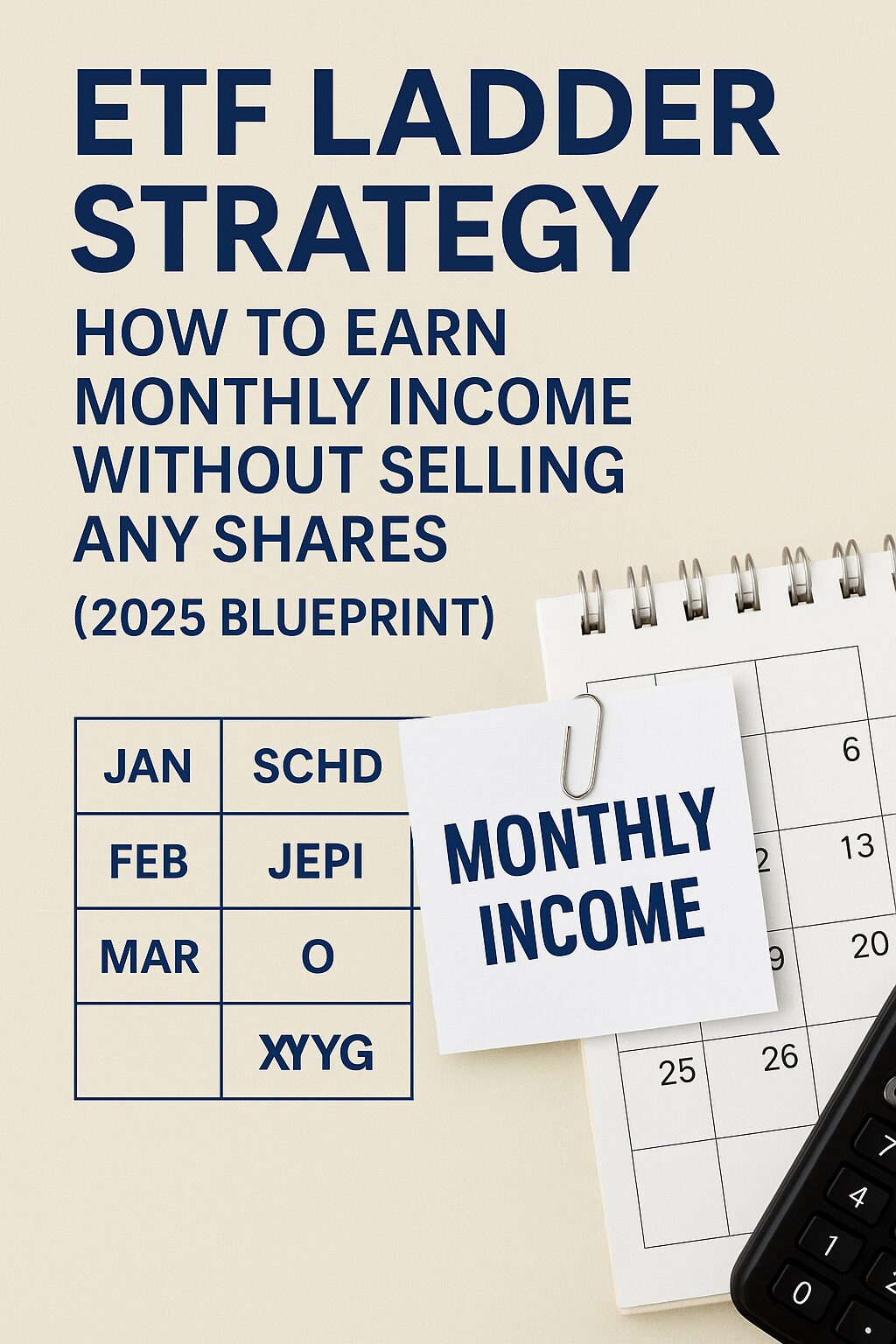
A financial planning desk showing a printed guide titled “ETF Ladder Strategy,” surrounded by a laptop, ETF tickers, and a monthly dividend calendar.

Introduction: Why the ETF Ladder Strategy Matters in 2025

In an uncertain economy, reliable income is king. For those who want to earn monthly passive income without selling shares, the ETF ladder strategy is one of the most powerful and overlooked methods available in 2025. Whether you’re a retiree, digital nomad, or just want a reliable second income stream, this guide breaks down exactly how to do it with ETFs.


Section 1: What Is the ETF Ladder Strategy?

An ETF ladder involves owning multiple dividend ETFs that pay on different months. Instead of relying on quarterly payouts or needing to sell shares for cash, you structure your portfolio so that at least one ETF pays you every month. This provides consistent, predictable cash flow—perfect for budgeting and reinvestment.

Analogy: Just like a bond ladder spreads maturity dates to create income, an ETF ladder spreads dividend payment dates.


Section 2: Why Most Investors Miss Monthly Income Potential

Many investors:

  • Stick with one or two ETFs without considering payout dates.
  • Focus on yield but ignore dividend timing.
  • Miss monthly consistency, creating gaps in their cash flow.

By organizing your holdings strategically, you turn a typical passive portfolio into a monthly income machine.


Section 3: How to Structure a Basic 3-ETF Ladder for 2025

Here’s a real-world example using three well-known ETFs:

January, April, July, October (Q1 Payout):

SCHD – Schwab U.S. Dividend Equity ETF

  • Dividend Yield: ~3.5%
  • Profile: Large-cap U.S. companies with a strong dividend track record
  • Benefit: Growth + stability, low expense ratio (0.06%)

February, May, August, November (Q2 Payout):

JEPI – JPMorgan Equity Premium Income ETF

  • Dividend Yield: ~7–10%
  • Profile: Covered call strategy on blue-chip stocks
  • Benefit: High income + monthly payouts

March, June, September, December (Q3 Payout):

O – Realty Income (REIT)

  • Dividend Yield: ~4.5%
  • Profile: Monthly-paying REIT, nicknamed the “Monthly Dividend Company”
  • Benefit: Real estate exposure + reliable monthly income

Together, these 3 ETFs cover all 12 months with payouts.


Section 4: $12,000 Example: Monthly Breakdown

Let’s say you invest $4,000 in each ETF:

ETFAmount InvestedAvg YieldExpected Annual IncomeMonthly Average
SCHD$4,0003.5%$140$35
JEPI$4,0009%$360$30/month
O$4,0004.5%$180$15/month
Total$12,000$680/year~$57/month

→ Results improve with reinvestment or higher allocation.


Section 5: Advanced Ladder Strategy (5+ ETFs)

For better diversification and smoother income, you can use 5+ ETFs:

MonthETF Ideas
JanSCHD
FebJEPI
MarO
AprDLR (Digital Realty Trust)
MayQYLD (Nasdaq Covered Call)
JunVYM (Vanguard High Dividend Yield)
JulSCHD
AugJEPI
SepO
OctDLR
NovQYLD
DecVYM

Result: At least 1-2 ETFs pay dividends every single month. You can customize based on risk appetite, tax treatment, and preferred sector exposure.


Section 6: Pros and Cons of ETF Laddering

Pros:

  • Monthly income without selling shares
  • Smooth cash flow for retirees, nomads, side hustlers
  • Flexible customization based on ETFs’ payout calendars

Cons:

  • Requires research on ex-dividend and payment dates
  • Diversification may reduce yield slightly
  • Tax tracking for frequent payouts

Section 7: DRIP vs. Cash: What Should You Do?

DRIP (Dividend Reinvestment Plan):

  • Great for growth-focused investors
  • Automatically reinvests dividends to buy more shares
  • Builds compound returns over time

Cash Payouts:

  • Ideal for those needing monthly cash flow
  • Can be transferred to Wise, brokerage accounts, or cards like Payoneer

Pro Tip: In 2025, many ETFs now let you toggle DRIP/cash easily via platforms like Fidelity, Charles Schwab, or Interactive Brokers.


Section 8: Real-World Investor Examples

Case Study 1: Sarah, 38 – Remote Copywriter

  • Invests $25K across 4 ETFs
  • Uses ladder for consistent income
  • Withdraws ~$160/month to cover rent + utilities in Thailand

Case Study 2: John, 61 – Semi-Retired Engineer

  • Built ladder over 7 ETFs
  • Reinvests half, withdraws half
  • Achieves ~$450/month income while maintaining long-term capital

Section 9: Tools to Track and Automate Your Ladder

  • Trackdividends.com: Monitor payout dates
  • SimplySafeDividends: Dividend safety ratings
  • Google Sheets + Google Finance: DIY tracker
  • Portfolio Visualizer: Simulate ladder vs. lump sum

Conclusion: Why This Strategy Wins in 2025

With interest rates uncertain, and inflation still eating into savings, monthly income that doesn’t require selling assets is more valuable than ever. The ETF ladder strategy helps you create a repeatable, scalable system—whether your goal is $100/month or $1,000/month.

Dividend ETFs That Pay You Every Month: Top 3 Picks for Beginners in 2025

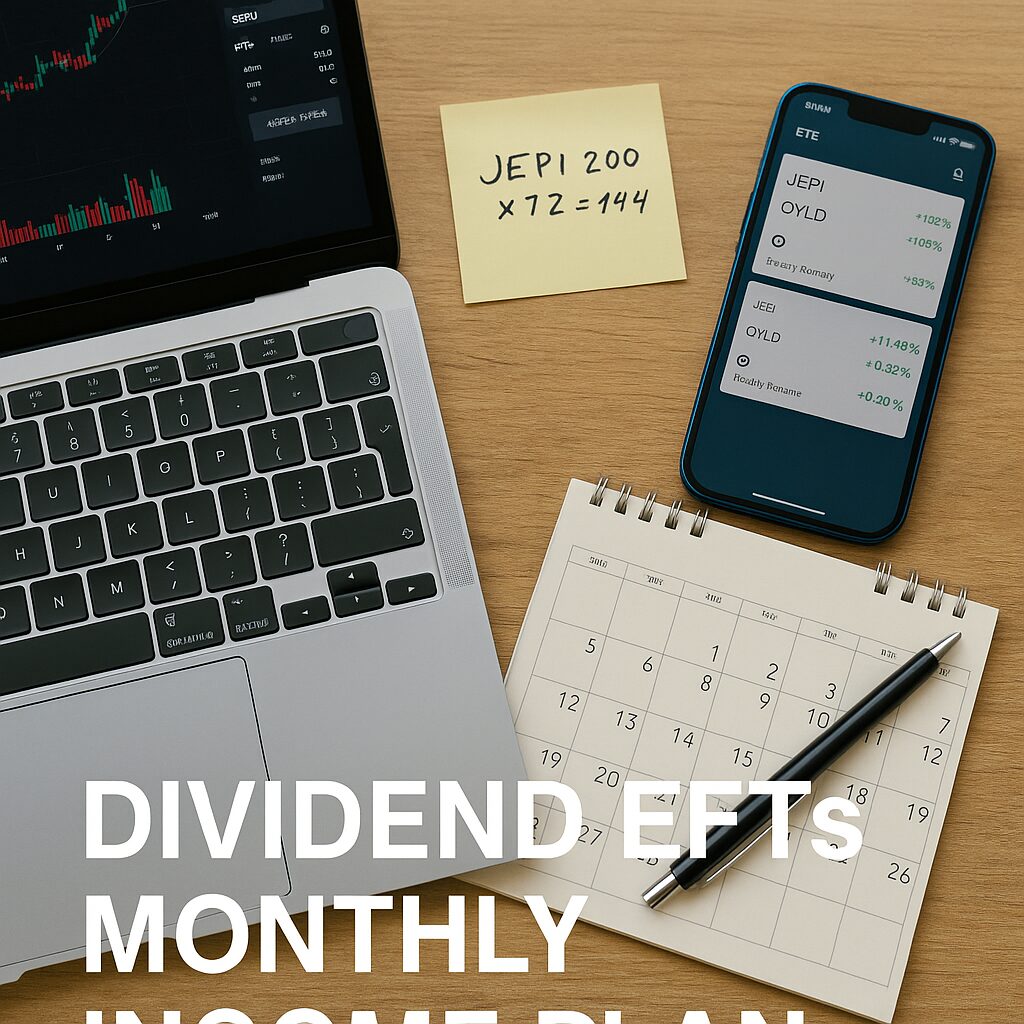
A financial workspace with a laptop, notebook, and sticky notes focused on ETF income planning, featuring the tickers JEPI, QYLD, and O.

Introduction: Why Monthly Income Matters in 2025

In a world increasingly shaped by remote work, inflation, and global uncertainty, more people are searching for stable, passive income streams. One of the most consistent and beginner-friendly options in 2025 is monthly dividend ETFs — investment funds that pay you income every month, no matter where you live.

Whether you’re a digital nomad, retiree, or side-hustler, these ETFs can be a powerful foundation for financial independence.


#1: JEPI – JPMorgan Equity Premium Income ETF

Key Stats (2025):

  • Dividend yield: ~9.5%
  • Dividend frequency: Monthly
  • Strategy: Covered call + Blue-chip stocks
  • Risk Level: Low to Moderate

What Makes JEPI Unique:
JEPI uses a mix of S&P 500 blue-chip stocks and sells options to generate monthly income. The ETF focuses on lower volatility companies while generating additional income from option premiums — creating a double-layer of income protection.

Real-World Case:
A 34-year-old freelancer invested $20,000 in JEPI in mid-2023. Since then, she has consistently earned ~$150/month, reinvesting it using DRIP (Dividend Reinvestment Plan). She plans to reach $300/month by 2025.

Why Beginners Love It:

  • Lower drawdowns during market dips
  • Ideal for retirement income or nomadic budgeting
  • Easy to understand and manage

#2: QYLD – Global X NASDAQ-100 Covered Call ETF

Key Stats (2025):

  • Dividend yield: ~11.8%
  • Dividend frequency: Monthly
  • Strategy: Covered calls on the NASDAQ 100
  • Risk Level: Moderate to High

What Makes QYLD Unique:
This ETF writes covered calls on the NASDAQ 100, trading future upside potential for high current income. Investors receive monthly income regardless of market direction, but capital appreciation is limited.

Real-World Cautionary Tale:
An investor placed $10,000 into QYLD in 2022. By mid-2023, they were receiving ~$90/month, but the ETF’s price had declined nearly 10%. The monthly income continued, but capital preservation became a concern.

When to Use QYLD:

  • You prioritize income over long-term growth
  • You’re aware of capital drawdown risk
  • You keep it under 25% of your ETF portfolio

#3: O – Realty Income Corporation

Key Stats (2025):

  • Dividend yield: ~5.0%
  • Dividend frequency: Monthly
  • Strategy: REIT focused on commercial properties
  • Risk Level: Low to Moderate

Why “O” is the Monthly Dividend King:
Known as “The Monthly Dividend Company,” O is a real estate investment trust (REIT) with a 25+ year track record of never missing a monthly payout. It invests in commercial properties like Walgreens, 7-Eleven, and FedEx stores.

Real-World Example:
A 58-year-old retiree in Portugal invested $50,000 in O over three years. Today, they receive approximately $210/month, enough to cover their utility bills and groceries — tax-free under Portugal’s NHR program.

Why It Works for Beginners:

  • Real estate-backed income
  • Dividend growth potential
  • Strong tenant base = stability

Simulation: How Much Can You Make?

Here’s what you could realistically earn monthly from a diversified mix of the above ETFs:

Investment AmountJEPI (9.5%)QYLD (11.8%)O (5.0%)Combined Avg
$5,000$39$49$21~$36/month
$10,000$79$98$42~$73/month
$25,000$198$245$104~$182/month

Tip: Reinvest your dividends using DRIP to grow this monthly income passively.


Brokers for Global Investors

Whether you live in the U.S., Europe, or Asia, these brokers support ETF investing:

  • Interactive Brokers (IBKR) – Global access, low fees
  • Charles Schwab – Great for U.S. residents abroad
  • Moomoo or Webull – Mobile-friendly and beginner-focused
  • Toss Securities / Mirae Asset (Korea) – Domestic access with U.S. ETF support

DRIP or Cash Out?

Use DRIP if you’re still growing your portfolio. Choose cash payouts if you’re living on the income.

💡 Example: A 28-year-old Korean developer uses DRIP on JEPI and QYLD while he travels in Thailand. He plans to stop reinvesting once he hits $500/month in passive income.


Avoid These Pitfalls

  • Don’t overconcentrate in QYLD or other high-yield funds
  • Watch for dividend cuts in REITs
  • Diversify: Add a total market ETF or bond ETF as a cushion

Action Plan for Beginners

  1. Open an account with a global broker (IBKR recommended)
  2. Allocate: JEPI (50%), QYLD (30%), O (20%)
  3. Start with $1,000/month auto-invest
  4. Track income growth monthly
  5. Rebalance annually

Final Thoughts

Dividend ETFs like JEPI, QYLD, and O offer a simple, scalable way to earn income every month — no matter your age, country, or job. With the right setup, even small investments can snowball into significant passive cash flow.

2025 is the perfect year to start building your dividend ladder.
And the best part? You can begin today.

“How to Build a $500 Monthly Income Using Only 2 ETFs (2025 Blueprint)

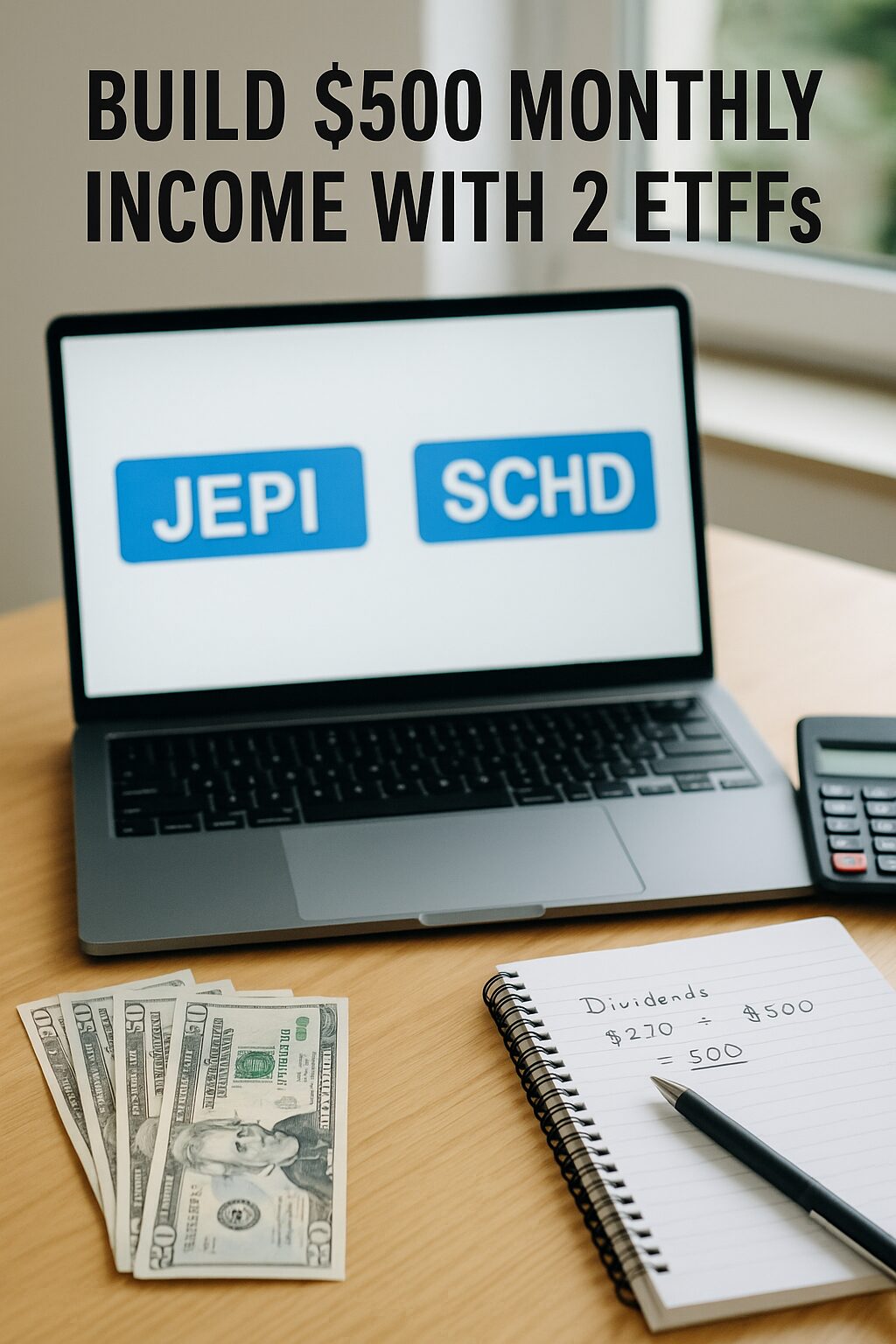
A financial workspace with a laptop displaying JEPI and SCHD ETF tickers, surrounded by a calculator, notebook, and U.S. dollar bills—visualizing a $500 monthly income strategy.

Introduction: Why $500 a Month Is a Game-Changer

For many people around the world, earning an extra $500 a month can be life-changing. It could cover rent, groceries, insurance, or be reinvested to accelerate financial freedom. The good news? You don’t need dozens of stocks or complicated strategies to do it. With just two carefully selected ETFs, it’s possible to build a portfolio that generates consistent, passive monthly income — starting in 2025.

In this guide, you’ll learn:

  • Which 2 ETFs offer the perfect balance of stability + yield
  • How much to invest to reach $500/month
  • Real examples of investors earning reliable monthly income
  • Tax tips and reinvestment strategies
  • How non-U.S. investors can access these ETFs easily

Let’s begin.


1. The 2-ETF Blueprint: What You Need to Know

We’re not talking about risky plays or high-maintenance portfolios. We’re talking about two ETFs that are:

  • Low-risk, even in volatile markets
  • Monthly or quarterly payers
  • Backed by strong dividend performance
  • Accessible to international investors

The two ETFs we’ll use are:

  • JEPI (JPMorgan Equity Premium Income ETF)
  • SCHD (Schwab U.S. Dividend Equity ETF)

2. ETF #1: JEPI – Low-Risk, Monthly Income Powerhouse

JEPI is famous for one thing: it pays investors monthly, and it does it using a unique method — combining blue-chip U.S. stocks with option premiums.

  • Dividend Yield (as of 2025): ~7–9%
  • Payment Frequency: Monthly
  • Strategy: Equity + Covered Calls

Why It Works:

  • Provides stability through blue-chip stock exposure
  • Generates extra income via selling options
  • Great for investors who want consistent cash flow

Real Case:
A retiree invested $65,000 in JEPI and now receives ~$400/month passively — even during market dips. This fund acts like a “monthly paycheck.”


3. ETF #2: SCHD – Stability, Growth, and Quarterly Dividends

SCHD is a dividend growth ETF. Unlike JEPI, it pays quarterly, but its strength is dividend reliability and capital appreciation.

  • Dividend Yield (as of 2025): ~3.5–4.5%
  • Growth Rate: ~7–10% annually
  • Payment Frequency: Quarterly

Why It Works:

  • Tracks high-quality U.S. companies with strong balance sheets
  • Long-term upward trend + reinvestment power
  • Perfect for building wealth + stability

Real Case:
An investor in Germany held $40,000 in SCHD and chose to reinvest dividends. In 5 years, he compounded over $11,000 in growth + income.


4. How Much Do You Need to Invest for $500/Month?

Let’s break it down with simulations:

InvestmentJEPI ($)SCHD ($)Monthly Income
$25,00015,00010,000~$140
$50,00030,00020,000~$270
$90,00060,00030,000~$500

This is a blended strategy. JEPI gives monthly income. SCHD adds growth and quarterly boosts.


5. Reinvest or Withdraw? The Power of DRIP

DRIP = Dividend Reinvestment Plan

  • If you withdraw: You get cash monthly
  • If you reinvest: Your income compounds

Example:
Reinvesting JEPI and SCHD income for 3 years with $50,000 can turn into $64,000+ total portfolio value — without adding more money.


6. Taxes: What International Investors Must Know

  • U.S. ETFs = 15–30% withholding tax (check tax treaty)
  • Use Ireland-domiciled equivalents (ex: SCHD → VUSD via UCITS)
  • Some brokers offer auto tax-optimized reinvestment

7. How to Buy These ETFs (Even If You’re Outside the U.S.)

You don’t need a U.S. address. Here’s how:

Best brokers for international access:

  • Interactive Brokers
  • TD Ameritrade (for residents with U.S. SSN or ITIN)
  • DEGIRO (Europe, Asia)
  • Moomoo / Tiger Brokers (Singapore, HK)

Set up, deposit, and buy JEPI / SCHD or their equivalents.


8. Step-by-Step Setup Guide

  1. Choose broker (ex: IBKR)
  2. Deposit local currency and convert to USD
  3. Allocate: 60% JEPI, 40% SCHD (or 50/50 for balance)
  4. Enable DRIP (optional)
  5. Track payouts monthly and quarterly
  6. After 12 months, review: reinvest vs. withdraw?

9. Bonus: Add 1 More ETF to Boost Long-Term Growth

Consider adding VTI or VOO for index exposure if you want extra growth.
But remember: 2 ETFs alone are enough for $500/month.


10. Final Thoughts: Who Is This Strategy For?

  • Busy professionals who don’t want to trade daily
  • International investors seeking USD cash flow
  • FIRE-minded individuals who want to build predictable income
  • Anyone who wants to simplify investing without sacrificing results

Summary Table

Portfolio SizeJEPI %SCHD %Monthly Income Est.
$25,00060%40%~$140
$50,00060%40%~$270
$90,00066%34%~$500

Next Step:
Build your own 2-ETF portfolio using this blueprint, and start receiving passive income — even before 2025 ends.

Top 5 High-Yield ETFs for Passive Income in 2025 (With Real Returns & Examples)

A desk scene with a tablet showing ETF tickers, dollar bills, and a notebook — symbolizing global passive income from monthly dividend ETFs

Introduction: Why Passive Income from ETFs Is Booming in 2025

In a world of economic uncertainty and rising costs, passive income is no longer a luxury — it’s a necessity. Traditional savings accounts yield close to zero, real estate is overpriced, and side hustles are exhausting.
This is where high-yield ETFs (Exchange-Traded Funds) come in — offering consistent monthly or quarterly income without active work.

Whether you’re a retiree, digital nomad, freelancer, or just want extra cash flow, this guide walks you through 5 top-performing ETFs that deliver real monthly income in 2025.


Section 1: Why ETFs Beat Savings Accounts and Rental Property

1.1 The ETF Advantage Over Savings

Investment TypeAvg. Yield (2025)LiquidityEffort
Bank Savings1–2%HighNone
Real Estate3–5% NetLowHigh
ETFs (JEPI/QYLD)7–12%HighNone

Savings accounts don’t keep up with inflation. Real estate is illiquid and maintenance-heavy. In contrast, ETFs offer:

  • Higher yields than banks
  • Fewer risks than rental properties
  • More flexibility than bonds
  • Auto-reinvest or cash-out anytime

Section 2: What Makes a Good Passive Income ETF in 2025?

Before diving into specific funds, here are the 4 key factors to evaluate:

  • Monthly or Quarterly Payouts
  • Strong Yield-to-Risk Ratio
  • Underlying asset stability (real estate, blue-chip stocks, options strategies)
  • Sustainability (no short-term gimmicks)

Let’s now look at the top 5 ETFs in 2025 that are not just popular but battle-tested for real income.


Section 3: Top 5 ETFs Ranked by Passive Income Potential

JEPI – JPMorgan Equity Premium Income ETF

  • Yield: 7–10% annually
  • Monthly Payout: Yes
  • Strategy: Covered call options + large-cap equities
  • Risk: Low-to-Moderate

Why it’s popular:
JEPI blends stability with income. It uses low-volatility stocks and collects options premiums to deliver monthly dividends. This keeps capital stable while generating passive cash flow.

Real Return Example:
If you invest $20,000 in JEPI, expect $130–$150/month in dividends (depending on market).

Ideal For: Retirees, nomads, risk-averse investors


QYLD – Global X Nasdaq 100 Covered Call ETF

  • Yield: 10–12%
  • Monthly Payout: Yes
  • Strategy: Covered calls on Nasdaq 100
  • Risk: High (capital appreciation limited)

Pros:
Sky-high income every month — especially during sideways markets.

Cons:
Because it trades away growth upside, total return is often flat or negative long-term.

Example: $10,000 in QYLD may deliver ~$85/month, but value may decline in bull markets.

Best Used As:

  • Short-term cash flow tool
  • Complement to growth ETFs like SCHD or VOO

SCHD – Schwab U.S. Dividend Equity ETF

  • Yield: ~3.5–4%
  • Payout: Quarterly
  • Focus: Dividend growth stocks
  • Risk: Low

Why SCHD matters:
Though not flashy, SCHD offers consistent dividend growth AND capital appreciation.

Real Strategy:

  • Start with $5,000
  • Reinvest dividends automatically (DRIP)
  • Watch dividend increase 5–10% annually

Over 10 years, this builds a compounding machine.

Best For: Younger investors, long-term retirement savers, FIRE community


O – Realty Income (The Monthly Dividend Company)

  • Type: REIT (Real Estate Investment Trust)
  • Yield: ~4.5%
  • Payout: Monthly
  • Risk: Moderate (real estate sector exposure)

What it owns:
Over 10,000 retail & industrial properties with long-term lease tenants (Walmart, Walgreens, etc.)

Why it’s different:

  • Real estate exposure without buying property
  • Income is literally “rental-style” but in stock format
  • Ideal for people who love “monthly rent” as income

Real Scenario:
$25,000 in O = ~$90–100/month in passive rent-style income.


VYM – Vanguard High Dividend Yield ETF

  • Yield: 3–3.5%
  • Payout: Quarterly
  • Strategy: Broad-based dividend stock exposure
  • Risk: Low

Key Strengths:

  • Strong diversification
  • Low fees
  • Great for conservative investors

How people use it:

  • Retirees use VYM as a “bond replacement”
  • Parents invest through VYM for education savings plans
  • Long-term holders build stable, balanced portfolios

Section 4: Real Investor Simulation — Monthly Income by Portfolio Size

Investment AmountJEPI MonthlyQYLD MonthlyO MonthlyCombo Total
$10,000$70–80$85–95$35–40$190–215
$50,000$375–400$420–450$180–200$1,000–1,050
$100,000$750–800$900+$350–400$2,000–2,200+

Note: SCHD and VYM payouts are quarterly, not monthly, so they aren’t in this simulation but work well in reinvest strategies.


Section 5: How to Start Investing in These ETFs (Step-by-Step)

  1. Choose a Broker: Webull, Interactive Brokers, Moomoo
  2. Fund Your Account: Transfer funds from Wise / USD accounts
  3. Buy ETFs: Use ticker symbols (e.g., “JEPI”, “SCHD”)
  4. Enable DRIP: Automatic dividend reinvestment
  5. Track Dividends: Use tools like TrackYourDividends or Yahoo Finance

Section 6: Taxes, DRIP, and Global Access (2025 Edition)

  • Taxes: U.S. ETFs pay qualified dividends. Many countries have favorable tax treaties.
  • Tip: Use multi-currency accounts (e.g., Wise + IBKR) to receive USD and convert efficiently.
  • DRIP: Compound your returns by reinvesting every payout
  • Automation: Set and forget systems help busy people build wealth

Section 7: Which ETF Should You Start With? (Profiles by Person Type)

PersonaSuggested ETFWhy
RetireeJEPI / OStable monthly income, low risk
FIRE EnthusiastSCHDCompounding & growth potential
Digital NomadQYLD / JEPIFlexible, monthly payouts
BeginnerVYMSimple, safe, low-cost start
Real Estate AvoiderORental-style income without property headaches

Conclusion: ETF Income Isn’t Theory — It’s Real

These aren’t “someday strategies.” They’re working right now, in real people’s lives.

  • A retiree in Florida lives on JEPI and O dividends.
  • A digital nomad in Thailand gets $900/month from QYLD and doesn’t touch savings.
  • A schoolteacher uses SCHD to grow her future pension.

You can build your own portfolio today — starting with as little as $100.
Just pick the ETF that matches your lifestyle, risk tolerance, and income goals.

Your passive income doesn’t need to be complicated. Just consistent.

Top 5 Credit Cards Without Foreign Transaction Fees in 2025

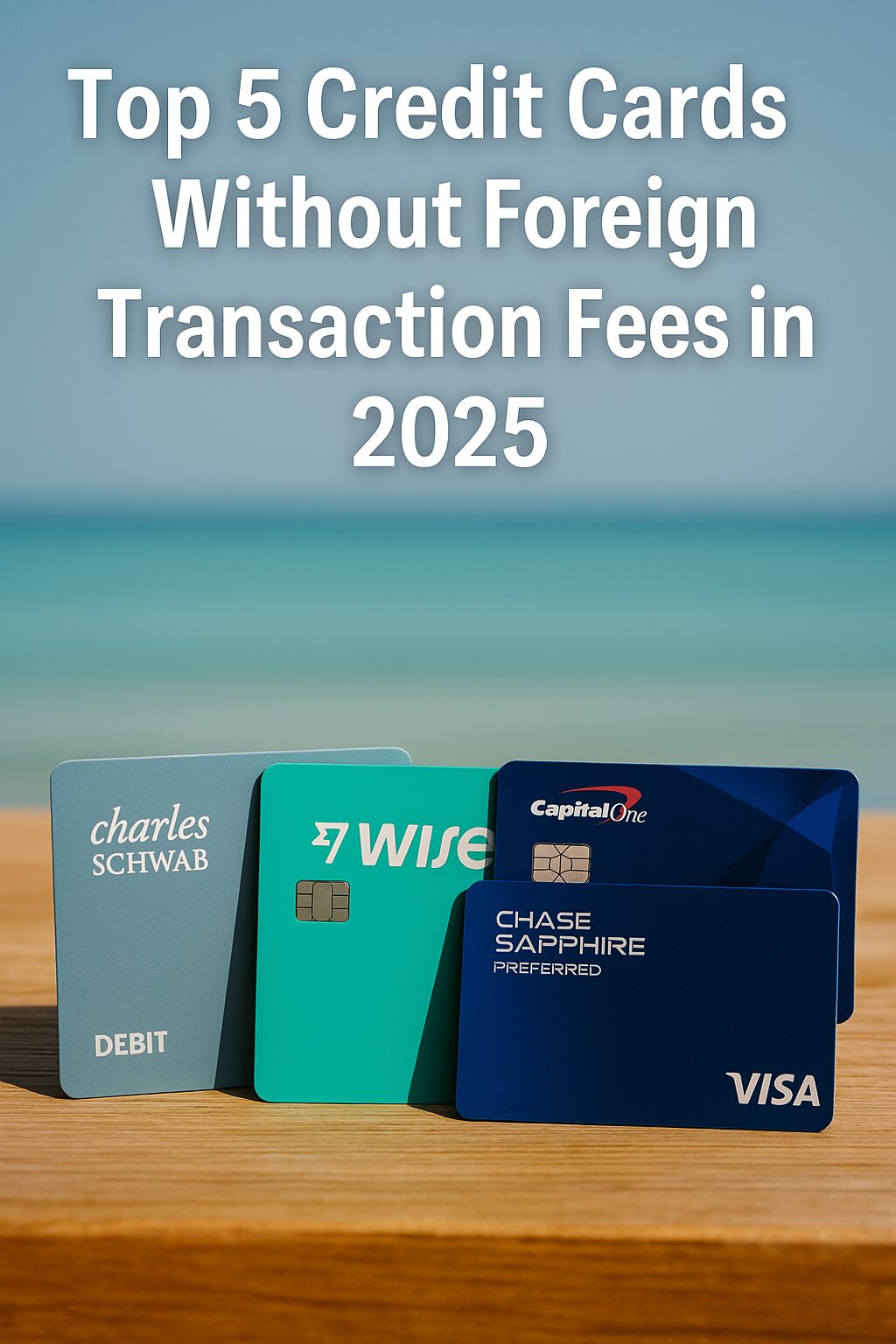
Four travel-friendly credit cards displayed on a wooden surface with a beach backdrop, promoting zero foreign transaction fees.

If you’re spending money abroad — whether as a digital nomad, traveler, or remote worker — foreign transaction fees can quietly drain your wallet. These charges (typically 1–3%) may seem small but can add up quickly over time.

Here are the top 5 credit cards in 2025 that do not charge foreign transaction fees, saving you real money while traveling the world.


1. Chase Sapphire Preferred® Card

Best for: Frequent travelers who want rewards and travel insurance

  • No foreign transaction fees
  • 2x points on travel & dining
  • Built-in trip delay/cancellation/interruption coverage
  • Primary rental car insurance

Annual Fee: $95

Why it’s great:
You earn points on everyday travel spending and get premium protection without the premium card fee.


2. Capital One Venture Rewards Credit Card

Best for: Simple rewards system with flexible redemptions

  • No foreign transaction fees
  • 2x miles on all purchases
  • Redeem miles for travel, statement credit, or gift cards
  • Global Entry/TSA PreCheck credit

Annual Fee: $95

Why it’s great:
Flat-rate miles means you don’t have to memorize categories — spend freely anywhere in the world.


3. Citi Premier® Card

Best for: Maximizing points on international expenses

  • No foreign transaction fees
  • 3x points on airfare, hotels, gas, and restaurants
  • Points can be transferred to travel partners (including international airlines)

Annual Fee: $95

Why it’s great:
Earn more in the categories you actually use abroad — like flights and food.


4. Charles Schwab Debit Card (Not a credit card, but a secret weapon)

Best for: ATM cash withdrawals without fees anywhere in the world

  • No foreign transaction fees
  • Unlimited worldwide ATM fee reimbursements
  • No monthly fees or minimum balance
  • Great for cash-heavy countries

Annual Fee: $0

Why it’s great:
You’ll get ATM fees reimbursed automatically, even in remote places. An excellent backup to any travel card.


5. Wise Travel Card

Best for: Currency conversion transparency and global accessibility

  • Not technically a credit card (prepaid debit), but excellent for foreign use
  • No markup on currency conversion (real exchange rate)
  • Supports 50+ currencies
  • Instant freeze/unfreeze via app

Annual Fee: $0 (no ongoing fee)

Why it’s great:
Ideal for digital nomads who want to manage multiple currencies while avoiding banks altogether.


Final Tip: Always Notify Your Bank Before Traveling

Even if your card has no foreign transaction fees, a flagged international transaction could result in a blocked card. Use your banking app or call ahead.


Conclusion: Avoid Fees, Keep More

You don’t have to pay extra just for using your card overseas.
By choosing the right credit card — or card combination — you can save hundreds of dollars a year, without changing how you spend.

Want to be smart about your money abroad? Start by eliminating unnecessary fees.

Best Free Global Budgeting Tools for Digital Nomads (2025 Edition)

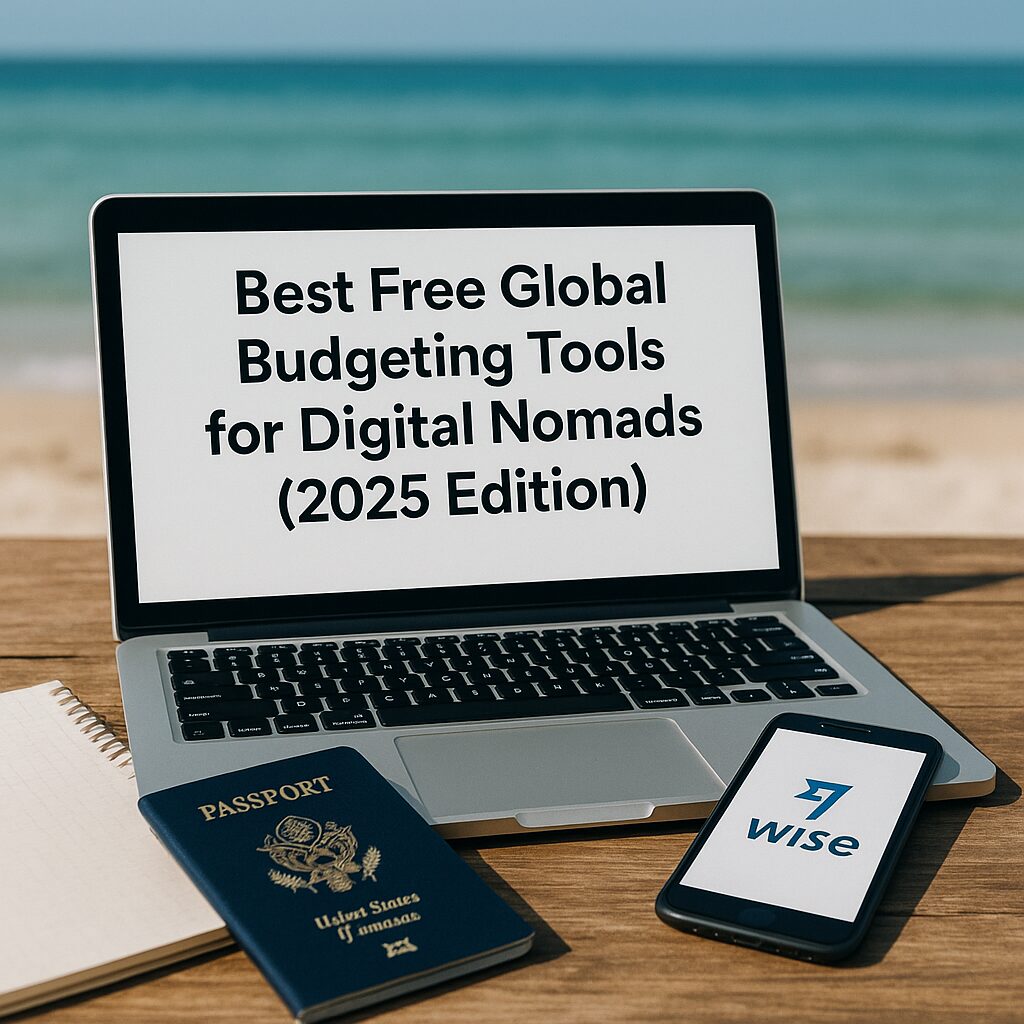
A beachside workspace with a laptop displaying the article title, next to a passport, notebook, and smartphone showing the Wise app.

Managing money across currencies, countries, and platforms can be overwhelming — especially when you’re living out of a backpack and earning income in multiple time zones. Thankfully, there are powerful (and free) budgeting tools designed specifically for digital nomads.

Here are the best options in 2025 to track expenses, plan budgets, and stay financially sane — no matter where you are.


1. Spendee (Free Plan)

Best for: Visual budget planning across currencies

  • Supports multi-currency wallets
  • Syncs with your bank accounts (if supported in your region)
  • Easy-to-read pie charts and category-based expense tracking
  • Works well offline, perfect for travelers without constant internet

Why it works for nomads:
You can create different “wallets” for different locations or projects — e.g., “Chiang Mai Budget,” “Freelance Income,” or “Remote Work Expenses.”


2. Splitwise

Best for: Managing shared expenses with travel partners or roommates

  • Automatically tracks who owes whom
  • Real-time syncing across devices
  • Ideal for couples, teams, or group trips
  • Optional PayPal/Venmo integration for fast settlement

Why it works for nomads:
Digital nomads often co-live, travel together, or split subscriptions. Splitwise prevents small debts from becoming big stress.


3. Revolut Budgeting (Free Tier)

Best for: Automatic expense categorization + alerts

  • Links to your Revolut card
  • Auto-categorizes spending: food, travel, business, etc.
  • Sets monthly spending limits
  • Sends real-time push alerts when you exceed limits

Why it works for nomads:
No need to input data manually — it’s all done for you, and in your travel currency.


4. GoodBudget (Envelope System – Free Version)

Best for: Manual budgeters who like full control

  • Based on traditional “envelope budgeting”
  • Plan how much to spend in each category
  • Available on mobile and web
  • Syncs across devices (2 devices in free plan)

Why it works for nomads:
Helps maintain discipline without needing bank integrations. Useful for cash-heavy regions.


5. Google Sheets + Tiller Templates

Best for: DIY finance pros

  • 100% customizable
  • Use free templates from Tiller or Nomad blogs
  • Cloud-accessible from anywhere
  • Integrates with Google Finance functions

Why it works for nomads:
Offline-capable, ultra-flexible, and easy to back up. Best if you’re already spreadsheet-savvy.


Final Tip: Don’t Use Just One Tool

Combine them. For example:

  • Use Spendee for daily spending
  • Use Splitwise with your travel buddy
  • Use Google Sheets for long-term planning

Conclusion: Track Smarter, Not Harder

You don’t need to be a finance geek to budget like a pro in 2025.
These free tools make it easy to stay organized, even if your money flows in from Upwork in USD, gets spent in Thailand in THB, and your rent is paid in crypto.

Pick one or two that fit your style, and stick to them. Financial freedom starts with clarity.