Healthcare Without Insurance: 5 Ways to Save in 2025

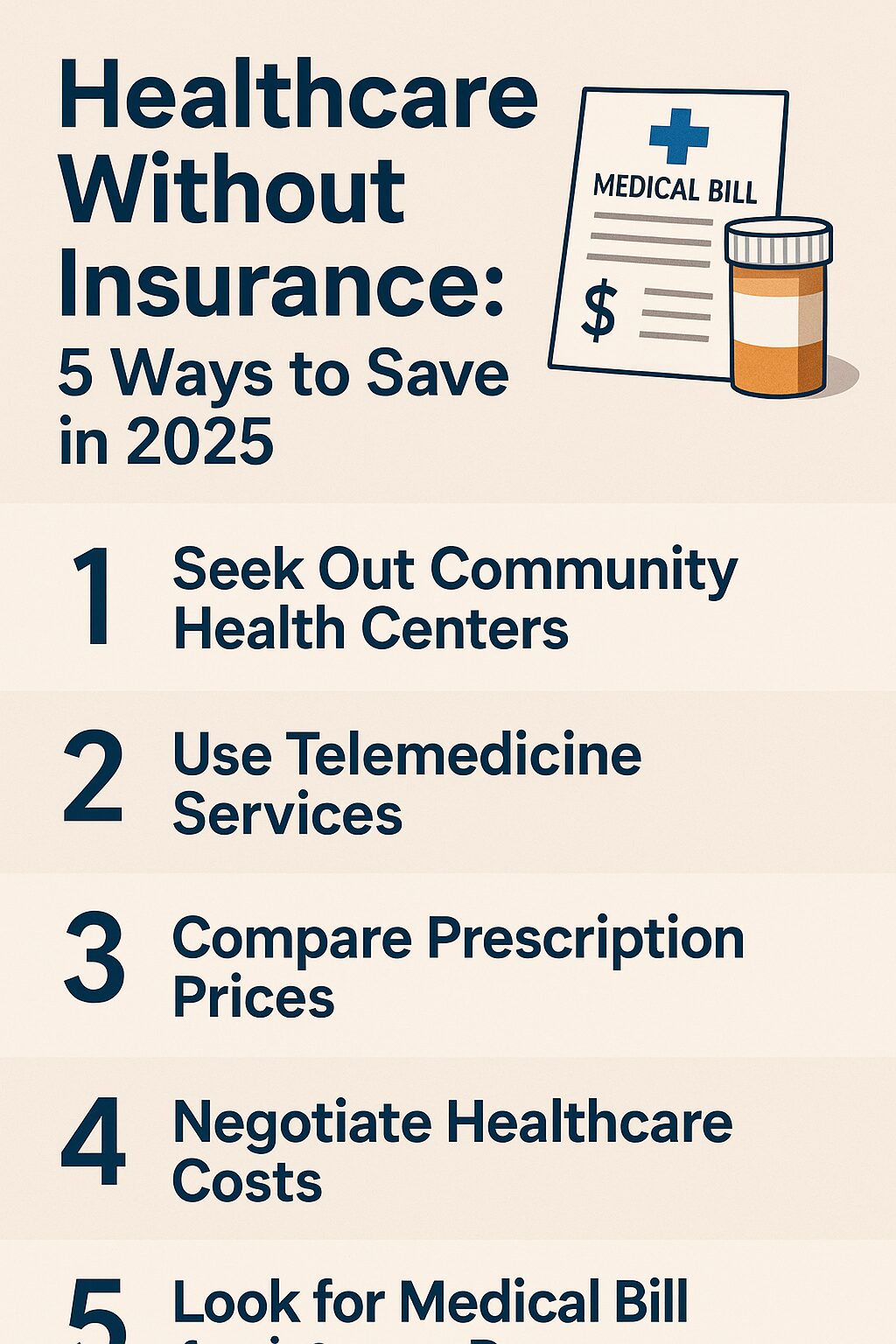
A clean infographic displaying five strategies to save on healthcare without insurance, including icons of a medical bill, pill bottle, and digital tools.

Navigating healthcare without insurance can be overwhelming, but it’s not impossible. In 2025, as medical costs continue to rise, millions of people worldwide are looking for smarter ways to manage their health expenses. Whether you’re self-employed, between jobs, or living in a country with minimal public coverage, knowing how to reduce your healthcare spending can be the difference between financial stability and debt.

This guide walks you through five proven strategies that work globally. These aren’t generic tips — they’re practical, real-world tactics used by uninsured individuals in the U.S., U.K., South Korea, and beyond. If you’ve ever skipped a check-up because of cost or hesitated to fill a prescription, this is for you.


1. Seek Out Community Health Centers

Community clinics exist in many countries and often provide primary care at a fraction of the cost. In the U.S., Federally Qualified Health Centers (FQHCs) offer sliding-scale fees based on income. In the U.K., walk-in clinics provide treatment regardless of registration status. In Korea, public health centers offer vaccinations and basic care for minimal fees. These centers are ideal for annual physicals, vaccinations, and basic chronic care.


2. Use Telemedicine Services

Telehealth exploded during the pandemic, and it’s here to stay. Online consultations can be up to 70% cheaper than in-person visits. Services like Teladoc (U.S.), Babylon Health (U.K.), or DoctorNow (Asia) offer access to licensed professionals without the travel or wait time. Many platforms include mental health and chronic illness management. In Korea, even apps like GoodDoc allow users to consult with pharmacists and doctors remotely.


3. Compare Prescription Prices

Drug costs vary wildly between pharmacies—even in the same city. In the U.S., tools like GoodRx and SingleCare help users find the cheapest prices. In the U.K., patients can request generic brands. Korean apps like DdocDoc show pharmacy availability and pricing in real-time. Never assume the first price you hear is final. Ask for generics, split dosages, or patient discount cards.


4. Negotiate Healthcare Costs

Many people don’t realize that most medical costs are negotiable—especially if you’re paying cash. Before treatment, ask for an upfront price. After treatment, request an itemized bill. Dispute any errors and ask for discounts or payment plans. In the U.S., uninsured patients often receive 30–50% off for upfront payment. In other countries, especially private hospitals, it’s common to request a written estimate before care.


5. Look for Medical Bill Assistance Programs

Charities, government funds, and even hospitals themselves often have financial assistance programs. In the U.S., try NeedyMeds or hospital-specific “charity care” programs. In Korea, the National Health Insurance sometimes covers emergency cases retroactively. In the U.K., citizens can access social service support for medical costs. You’ll need to apply—but the effort can lead to thousands in savings.


Bonus Tip: Keep Health Journals and Use Preventive Apps

Tracking your symptoms, blood pressure, or sugar levels daily can reduce unnecessary hospital visits. Apps like MySugr, Blood Pressure Companion, or Samsung Health provide insights and help you manage your health before emergencies happen. Prevention is still the most affordable healthcare strategy in the world.


Final Thought

Being uninsured doesn’t mean being unprotected. With planning, negotiation, and smart tools, you can take control of your health in 2025. These five steps are used by real people across the globe—and they work. Start small, ask questions, compare everything, and always look for assistance programs before paying full price.


How to Build Credit from Scratch – A Global Guide for Beginners

A young couple sitting at an outdoor café using a laptop and holding a credit card, symbolizing the process of building credit from scratch.

Building credit from scratch is not just a financial task—it’s a life skill that determines your future opportunities.
Whether you’re starting in the U.S., the U.K., Korea, or Southeast Asia, your journey begins with understanding how credit works, what affects your score, and what actions you can take immediately.
In this guide, we explore practical steps backed by real-world examples to help you move from no credit to good credit, all within 12 months.


1. Global Credit: Same Logic, Different Systems

In the U.S., the FICO score dominates. In the U.K., it’s Experian and Equifax.
In Korea, it’s KCB and NICE. In Southeast Asia, many countries still rely on bank account history or mobile phone data.
But no matter where you are, the logic is the same: Credit = Trust + Time + Responsibility.
No one gets a great credit score overnight. It’s built by proving that you are reliable.


2. Real Case: Building Credit in the U.S. as an Immigrant

Jae, a 23-year-old who moved to the U.S. from Korea, started with no credit.
After getting a Social Security Number, he applied for a Discover It Secured Card.
He deposited $300, used only $50 per month, and paid it off fully.
After six months, he was upgraded to an unsecured Capital One Quicksilver card with no annual fee.
His credit score grew from no file to 715 in less than a year.


3. Real Case: Building Credit in Korea Without a Job

Soojin, a 28-year-old freelancer in Seoul, had no traditional credit history.
She downloaded Kakao Bank’s credit management tool, which connected with KCB.
By paying her rent and phone bills on time and avoiding any late payments, her score rose from 0 to 784 in 10 months.
She later qualified for a small business loan with favorable interest.


4. 5 Global Strategies to Build Credit from Zero

  • Get a Secured Credit Card: Deposit $200~$500 and use under 30% of the limit.
  • Become an Authorized User: Join a family member’s or spouse’s card to inherit their good credit history.
  • Use Rent Reporting Services: In the U.S., U.K., and parts of Asia, tools like CreditLadder or Experian Boost allow rent or utilities to count.
  • Try Alternative Tools: Apps like Self in the U.S. or Toss in Korea help users build “thin file” credit histories.
  • Don’t Overapply: Avoid applying for too many cards. Each hard inquiry drops your score slightly.

5. Mistakes That Kill Your Score Early

  • Carrying balance and paying minimums (use auto-pay for full payments)
  • Maxing out your cards
  • Closing your oldest credit account
  • Missing payments (even small subscriptions)
  • Applying for 4+ cards in a year

6. No Score to Good Score – A 12-Month Simulation

MonthActionResult
1Apply for secured cardStart file
2-3Use 10–20% creditScore begins building
4Add rent reportingHistory strengthens
6Authorized user addedJump in score
9Auto loan or utility bill addedMixed credit types
12Upgrade card & credit limitScore likely 700+

This is a proven path—done by thousands.


7. Best Global Tools to Monitor & Build Credit

  • U.S.: Credit Karma, Self, Experian Boost
  • U.K.: ClearScore, CreditLadder
  • Korea: Toss 신용점수관리, 카카오뱅크 신용조회
  • SE Asia: Kredit Pintar (Indonesia), TrustingSocial (Vietnam)

Check them monthly. You don’t need to pay to see your progress.


Final Thought

Your credit is not a number—it’s a story.
A story about your habits, your timing, and your trustworthiness.
Start small, stay consistent, avoid traps, and let time do its job.
In a year, you’ll thank yourself.

10 Simple Habits That Quietly Make You Rich – The Psychology of Daily Wealth in 2025

A minimalist digital illustration showing a checklist of daily money habits, with symbols of savings, mindset, and slow-growing wealth.

Most people think wealth is built by sudden windfalls — winning big, launching a startup, or climbing a corporate ladder.

But the truth is, most quietly wealthy people didn’t get rich fast.
They got rich slowly, consistently, and intentionally — through small daily habits that stack up over time.

In 2025, real wealth is no longer about how much you make.
It’s about how well you manage your behavior.

Let’s dive into the simple, daily habits that quietly build long-term wealth.


1. Check Your Accounts Daily (But Don’t Obsess)

Wealthy people stay aware — not anxious.

A 30-second glance at your bank balance, recent transactions, and pending bills keeps you in control.
No spreadsheets. No guilt. Just awareness.

You can’t grow what you ignore.


2. Automate Every Transfer You Can

Savings, investments, bill payments — automation is a rich person’s best friend.

Why? Because it removes willpower from the equation.

Set recurring transfers for:

  • Emergency fund contributions
  • Retirement savings
  • Rent, insurance, utilities
  • Investment deposits (ETFs, crypto, etc.)

Make your money move without asking you first.


3. Read Something That Improves Your Financial Thinking (10 Min Daily)

Not financial news — financial thinking.

This includes:

  • Books on mindset
  • Stories of wealth journeys
  • How systems work (debt, taxes, markets)
  • Minimalist living
  • Investing frameworks

Build your financial brain, one page at a time.


4. Delay Every Non-Essential Purchase by 24 Hours

This single habit can save you thousands.

Why it works:

  • Reduces emotional purchases
  • Gives your brain space to reassess
  • 80% of the time, you won’t even want it the next day

Your wallet doesn’t need impulse — it needs clarity.


5. Track Your “Money Wins” – Not Just Expenses

Most budgeting apps show you what you spent.
Try this instead:

  • Log every time you didn’t buy something
  • Note when you negotiated, canceled, paused, or optimized

These wins are wealth decisions — and deserve to be celebrated.


6. Spend 5 Minutes a Day Reviewing One Subscription, Bill, or Habit

Wealth doesn’t leak from one big hole.
It leaks from dozens of tiny cracks.

Each day, take 5 minutes to:

  • Review your phone plan
  • Check a recurring payment
  • Audit a digital subscription
  • Look for bank fees or waste

One leak fixed per day = 30 wins a month.


7. Surround Yourself with Financially Intentional People

You don’t need rich friends — you need intentional ones.

That means people who:

  • Talk about goals, not gossip
  • Share money tips without shame
  • Ask “what’s the ROI?” instead of “who else has it?”

If wealth is your destination, community is the fuel.


8. Visualize Your Long-Term Wealth Every Morning

Wealth starts in the mind.

Take 2–3 minutes each morning to mentally see:

  • A debt-free version of yourself
  • Your $10,000 emergency fund
  • Passive income deposits
  • A calm, secure financial life

What you picture, you move toward.


9. Use the “What If This Cost 3x?” Filter

Every purchase decision gets this mental test:

“If this cost 3x more, would I still want it?”

This resets your values fast.

If you’d pay 3x for books, courses, therapy, or investing tools — great.
But if that $80 shirt wouldn’t pass at $240, maybe it’s not worth it at all.


10. Say “No” Once a Day to Something That Doesn’t Move You Forward

Wealth is often about what you don’t do.

Say no to:

  • FOMO invites
  • Unnecessary upgrades
  • Clutter purchases
  • Social pressure

Every “no” is a “yes” to your long-term goals.


Final Thoughts

You don’t need a million dollars to start acting like a millionaire.
You just need 10 small habits — repeated consistently.

These aren’t tactics for rich people.
They’re daily patterns that make people rich.

Not loudly. Not overnight.
But surely, quietly, and without regret.

Digital Minimalism for Financial Freedom – Spend Less, Live More in 2025

A smartphone screen displaying “Digital Minimalism for Financial Freedom,” surrounded by a pencil, US bills, and a yellow notepad on a wooden desk — representing financial clarity through simplicity.

In a world filled with endless notifications, targeted ads, and mindless scrolling, it’s easy to spend both your money and your time without realizing where it all went.

But what if your digital life is the very reason your financial life feels out of control?

In 2025, digital minimalism is not just a lifestyle trend — it’s a powerful tool for financial freedom.
This guide will show you how simplifying your digital world can help you spend less, stress less, and start living more intentionally.


1. What Is Digital Minimalism?

Digital minimalism is the intentional practice of reducing your digital clutter —
like unnecessary apps, subscriptions, and mindless online behavior —
so you can focus your attention (and money) on what truly matters.

It’s not about deleting everything or becoming a monk.
It’s about regaining control over what you allow into your time, attention, and wallet.


2. How Digital Minimalism Saves You Real Money

Your phone, inbox, and browser are designed to make you spend — without even thinking.

Here’s how digital clutter drains your finances:

  • Subscriptions you forgot to cancel
  • Impulse buys triggered by social media ads
  • “Limited time” email offers
  • App upgrades you never use
  • Energy bills from always-on devices

Even small habits like checking your phone while bored often lead to unnecessary spending.

Digital minimalism blocks that chain before it begins.


3. Why It Matters in 2025

Digital life isn’t slowing down. In 2025, algorithms know you better than you know yourself.

If you’re not intentional, you’re being monetized.

That means:

  • More temptations
  • More financial leaks
  • Less clarity about what you really want

Digital minimalism helps you zoom out, simplify, and make room for real choices.


4. Step-by-Step: How to Practice Digital Minimalism

You don’t need to disappear from the internet. You just need to curate your inputs.

Step 1: Audit your digital life

  • List all subscriptions (apps, streaming, email tools)
  • Check screen time stats on your phone
  • Write down what drains your time vs. what builds your life

Step 2: Unsubscribe, cancel, delete

  • Remove 3+ apps you haven’t used in a month
  • Cancel 1 subscription you won’t miss
  • Unsubscribe from email lists that always make you want to buy something

Step 3: Schedule screen-free zones

  • No screens in the morning before 9 AM
  • 1 tech-free evening per week
  • Social media-free Sundays

Step 4: Replace with real alternatives

  • Read 1 book per month
  • Journal your spending triggers
  • Walk without your phone

These small shifts reclaim both your money and your mind.


5. The Financial Benefits of Digital Minimalism

  • Save $10–$100/month just from canceled services
  • Reduce impulsive spending by limiting exposure to ads
  • Increase productivity = more time to earn
  • Feel less FOMO = less “buying to belong”

You don’t need 12 productivity apps — you need clarity.


6. Live More With Less

Digital minimalism is not about restriction — it’s about freedom.

When your phone is no longer your boss, you:

  • Spend more consciously
  • Sleep better
  • Engage in real relationships
  • Create more than you consume

The less distracted you are, the more powerful your decisions become — financially and personally.


7. Digital Minimalism → Financial Freedom (Long-Term)

Here’s the connection:

  • Fewer digital distractions → fewer unnecessary purchases
  • Fewer financial leaks → more savings
  • More focus → better income decisions
  • Less noise → more peace

This is how you turn digital simplicity into long-term wealth.


Final Thoughts

You don’t need to go offline forever.
You just need to stop letting screens and subscriptions silently run your life — and your budget.

Digital minimalism isn’t about tech avoidance.
It’s about intentional digital living.

And in 2025, it might just be the smartest financial decision you’ll ever make.

How to Build a Personal Emergency Fund – Even If You’re Living Paycheck to Paycheck (2025 Guide)

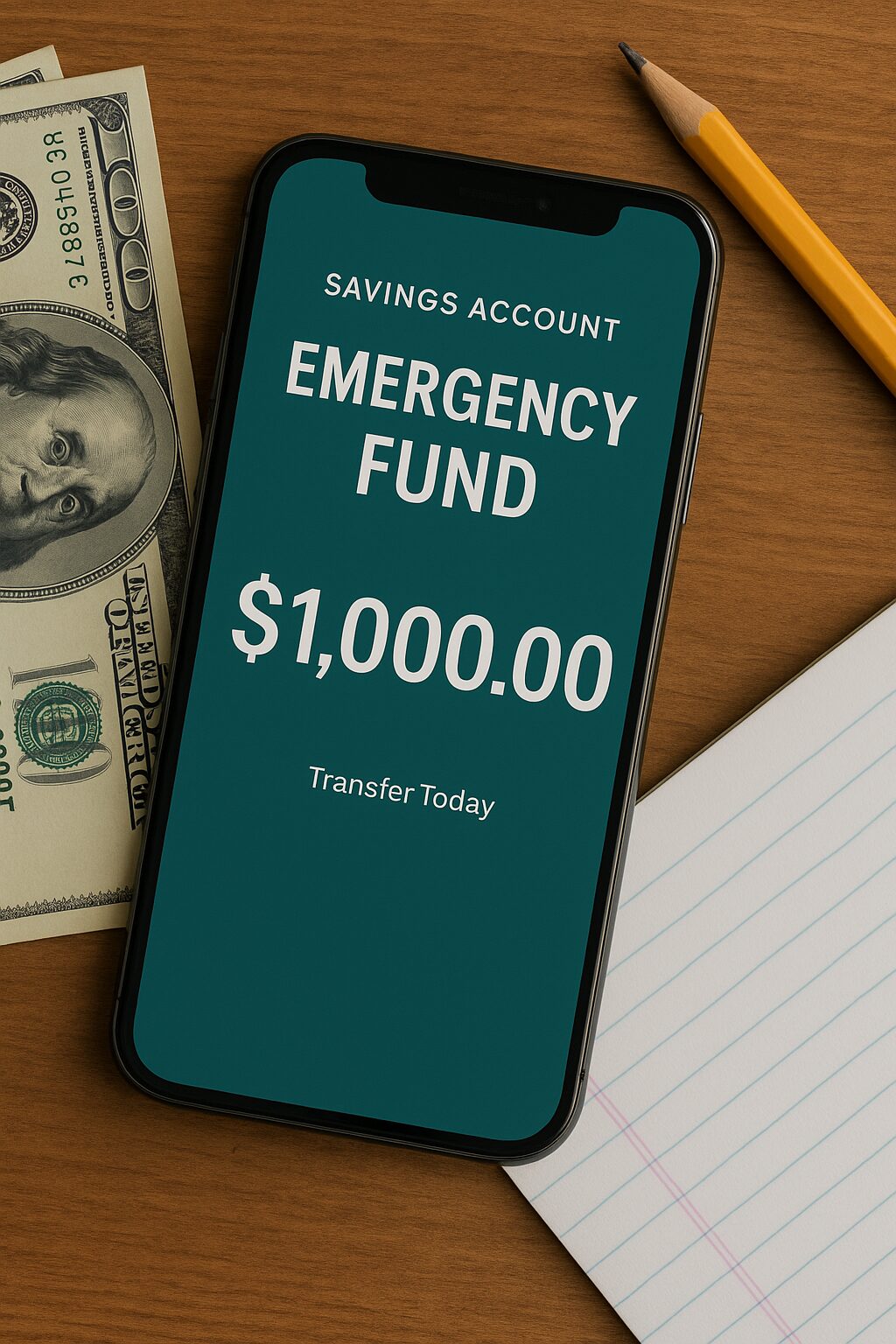
A smartphone screen displaying an emergency fund balance of $1,000, placed on a wooden desk beside a pencil, cash, and a notepad — symbolizing practical financial planning.

Most people know they need an emergency fund.
But for many living paycheck to paycheck, saving anything feels impossible — let alone saving $1,000 or more “just in case.”

The truth is: building an emergency fund is not about having extra money.
It’s about building a small system that protects your future, even when things are tight.
This guide will show you exactly how.


1. Why Emergency Funds Matter More Than Ever in 2025

Medical bills. Sudden layoffs. Broken phones. Emergency flights.
One unexpected event can destroy your budget.

An emergency fund gives you space to breathe. It turns panic into action.
Even having $300–$500 set aside makes a huge difference — and keeps you from going into credit card debt.


2. Why Most People Don’t Have One

Let’s be honest: life is expensive.
Rent, food, transportation, insurance, debt payments — it all adds up.

And when you’re already tight on money, saving sounds like a luxury.
But here’s the trick: you don’t build a fund with big moves. You build it with tiny steps that stick.


3. How Much You Actually Need

Forget the old rule of “3 to 6 months of expenses” for now. That’s a long-term goal.

Here’s the 3-stage approach that works:

  • Level 1: $100 buffer
    A starting line. Enough to cover a surprise bill or delivery issue.
  • Level 2: $500 mini-fund
    Can handle basic emergencies: phone repair, car issue, family need.
  • Level 3: $1,000+ emergency fund
    The real peace-of-mind level. Still reachable for most, even on tight incomes.

Once you reach $1,000, then you can think about larger savings.


4. How to Build Your Fund (Even With a Tight Budget)

This part is key. You don’t need a raise. You need a system.

Step 1: Open a separate savings account

Keep it separate from your checking account.
Psychology matters: if it’s harder to see, it’s harder to spend.

Step 2: Automate small transfers

Set $2–$5 per day (or per week) to transfer automatically.
Think of it like a silent subscription — but for your future.

Step 3: Use windfalls, not income

Tax refund? Gift money? Rebate? Put at least 30% of any “extra money” into your fund.

Step 4: Cut “invisible leaks”

Cancel unused subscriptions. Downgrade one meal. Avoid impulse online shopping for a week.
These add up to fund your future safety net.


5. Where Should You Keep It?

Simple savings accounts are best.
They’re separate, easy to access, and don’t tempt you with investment risks.

Avoid these:

  • Your checking account (you’ll spend it)
  • Crypto or stocks (you need stability)
  • Prepaid cards (low interest and no protection)

Look for:

  • No minimum balance
  • Instant access
  • Mobile banking

6. How to Protect It From Being Spent

You worked hard to build it — don’t let one bad month wipe it out.

Tips:

  • Rename the account “Emergency Only” or “Do Not Touch”
  • Remove the debit card linked to it
  • Set a personal rule: only use if unexpected AND urgent
  • Ask someone you trust to hold you accountable

7. Timeline: How Fast Can You Build It?

It depends on your lifestyle — but most people can build a $500 fund in 30–90 days.
And that small fund protects you more than you think.

You don’t need to be rich to be ready.
You just need to start.


Final Thoughts

Living paycheck to paycheck doesn’t mean you’re irresponsible — it means you need better tools.

An emergency fund is one of the strongest financial safety nets you can build.
It gives you options, reduces stress, and helps you make better decisions under pressure.

Start small. Automate what you can. Build it up slowly.
And most importantly: protect it like it’s part of your future. Because it is.

“The Global Guide to Sending Money Abroad Without High Fees (2025 Edition)”

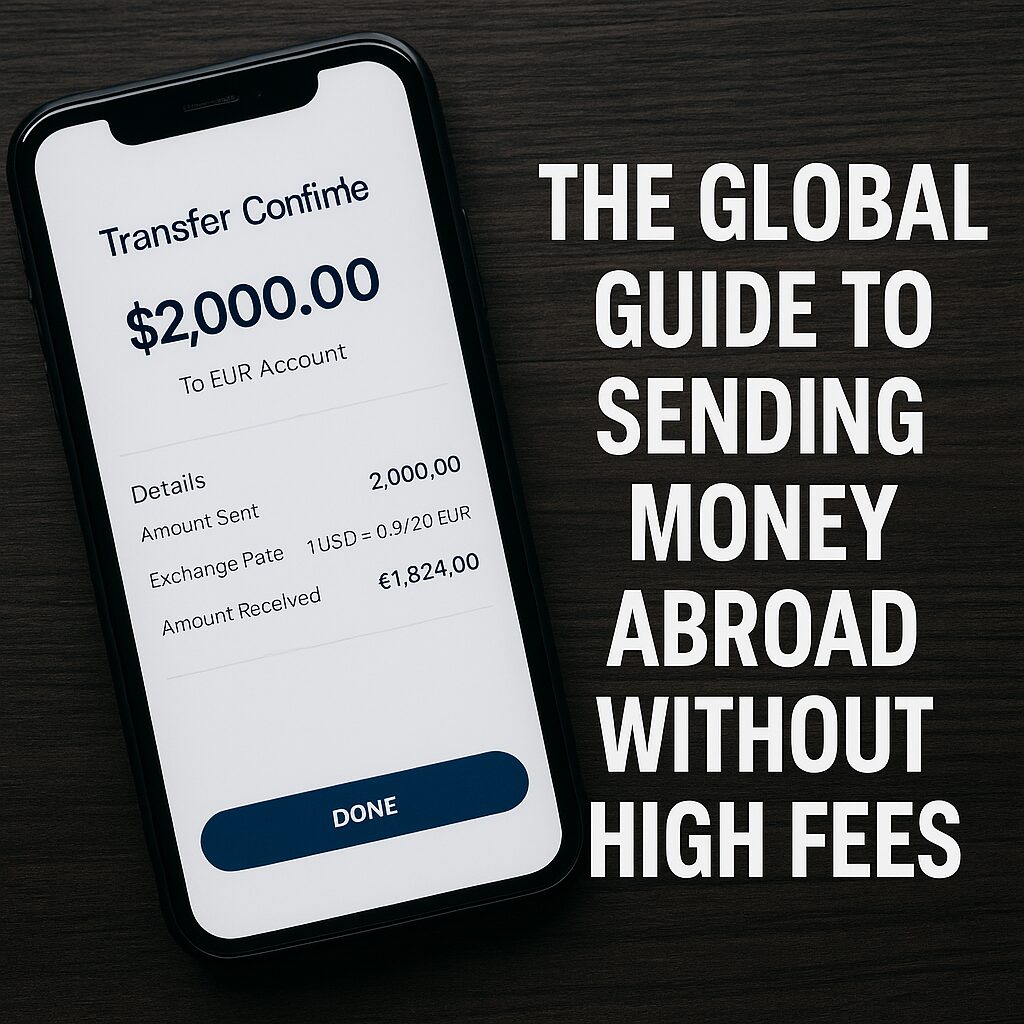
A realistic photo of a phone screen showing an international transfer confirmation with currency exchange details in focus.

Sending money internationally shouldn’t cost a fortune — but for millions of people, it still does. Whether you’re supporting family overseas, paying freelancers, or managing life abroad, unnecessary fees and bad exchange rates are quietly draining your wallet.

This 2025 guide will show you how to avoid hidden traps, use modern tools, and keep more of your money where it belongs: with you and your loved ones.


1. Why International Money Transfers Still Eat Your Wallet

Traditional international money transfers are expensive for three reasons:

  • High flat fees (often $10–50 per transaction)
  • Poor exchange rates (worse than mid-market)
  • Hidden intermediary bank fees (especially via SWIFT)

Many people assume it’s “just the cost of sending money.” It’s not.
In most cases, you’re losing 5–12% of the total amount.

That’s not a service fee — it’s a wealth leak.


2. Common But Expensive Methods (To Avoid in 2025)

Let’s call them what they are: outdated.

Traditional banks:
Slow, expensive, and full of hidden fees. Most charge $20–$45 to send and still take a cut in exchange rates. Worst for small transfers.

PayPal:
Easy, but very expensive for currency conversion. Up to 4.5% markup plus fees. Not worth it unless both sender and receiver keep the money in PayPal.

Western Union (cash pickup):
Fast and convenient, but shockingly pricey. Great for emergencies — terrible for regular remittance.


3. Smarter 2025 Tools: Low-Fee and Fast

Welcome to the modern age of cross-border money movement.

Here are the top tools that offer low fees, fair rates, and real-time tracking:

Wise (formerly TransferWise)

  • Mid-market exchange rate (no markup)
  • Transparent fees
  • Excellent for bank-to-bank transfers
  • Supported in over 60 countries

Revolut

  • Best for frequent travelers & expats
  • Offers free transfers in local currencies (limits apply)
  • In-app FX tools & savings vaults
  • Available in EU, UK, US, and Asia-Pacific

Remitly

  • Designed for global remittance (especially to Asia, Africa, Latin America)
  • Cash pickup + mobile wallet options
  • Fast delivery and promos for first-time users

Crypto (USDT, Bitcoin, etc.)

  • No borders, 24/7, instant
  • Extremely low fees — but risk of volatility
  • Use only if sender & receiver understand wallets/exchanges

4. Best Method by Use Case

Sending to family (monthly):
→ Wise, Remitly, or Revolut (depending on destination)

Paying freelancers abroad:
→ Wise, Payoneer, Deel

Travel-based personal transfers:
→ Revolut or crypto wallets (USDT/BTC)

Emergency cash to someone unbanked:
→ Remitly (cash pickup), WorldRemit, or Western Union (if no other choice)


5. Avoid These Hidden Traps in 2025

Even smart tools can come with fine print. Watch for:

  • Bad exchange rates: Some platforms add invisible margin on the FX rate
  • Tiered fees: First transfer is free, then jumps to $10+
  • Currency conversion chains: Some services auto-convert to USD then to local currency — charging twice
  • ATM withdrawal fees: Especially for prepaid cards abroad
  • Crypto gas fees: During high network congestion

Always preview final amount before sending.


6. Recommended Tools in 2025 (Best by Region)

RegionRecommended Tools
North AmericaWise, Revolut, Payoneer
EuropeRevolut, N26, Wise
South AsiaRemitly, Wise, WorldRemit
Southeast AsiaWise, GCash (PH), ShopeePay
AfricaChipper Cash, Remitly, M-Pesa
LATAMWise, Remitly, Airtm
Middle EastWise, local wallet apps (ZainCash, STC Pay)

7. Final Checklist: How to Save on Every Transfer

Always compare fees and FX rate together
Avoid bank-based wires unless unavoidable
Choose platforms with transparent pricing
Bundle transfers monthly if possible (save per-send cost)
Consider crypto only if both sides are comfortable
Track exchange rate trends for big transfers


Final Thoughts

You work hard for your money. Don’t let old systems or hidden fees steal it.
Whether you’re sending $100 or $10,000, every percent matters.

With today’s tools, international money transfer can be fast, fair, and nearly free.
All it takes is a few smart decisions — and now, you know exactly what they are.

In 2025, smart global citizens don’t waste money on fees.
They send money with confidence.

You’re one of them now.

7 Everyday Habits That Secretly Drain Your Money (And How to Stop Them)

A worn leather wallet leaking golden coins onto a dark surface, with the text ‘STOP WASTING MONEY (BAD HABITS)’ beside it.

Most people have no idea how much money they lose every month due to small, repetitive habits.
These habits don’t feel dangerous or expensive — in fact, most seem harmless.
But when they add up, they can quietly drain hundreds or even thousands of dollars a year.
The good news? Once you notice them, you can change them.
Let’s break down the most common habits that waste your money, and what to do instead.


1. Daily Coffee or Takeout

Buying coffee or takeout meals every day might seem like a reward for a busy life.
But spending $5 a day quickly turns into $150 a month — or over $1,800 a year.
And that’s only one small habit.

If you grab a quick breakfast, afternoon coffee, or lunch outside five days a week,
you’re spending the equivalent of a round-trip flight abroad every year — without even noticing.

Solution:
Set a goal to make your own coffee or meals at home at least 3 days a week.
Use that money for something meaningful instead — like investing, paying off debt, or saving for a trip.


2. Subscriptions You Don’t Use

Monthly subscriptions are easy to forget because they’re automated.
Streaming services, fitness apps, newsletters, software tools — they quietly charge your card, even if you’re not using them.

In many countries, the average person has 5–7 active subscriptions,
but uses fewer than 3 regularly.

Solution:
Do a subscription audit every 2–3 months.
Cancel anything you haven’t used in 30 days.
You’ll be surprised how quickly your budget breathes again.


3. Late Fees and Missed Payments

Missing bill payments comes with a painful price —
late fees, penalties, credit score damage, and stress.

Forgetting a due date can cost you $25–$50 per bill.
Over a year, that’s several hundred dollars wasted just because of poor timing.

Solution:
Use auto-pay or calendar alerts for every recurring bill.
Set reminders three days before the due date.
It’s a one-time setup that protects your finances long term.


4. Impulse Online Shopping

Online stores are designed to make you buy fast.
Flash sales, “Only 3 left!” alerts, free shipping countdowns —
these tricks push you to buy things you didn’t plan to.

Many of us buy something online out of boredom, stress, or just because it’s too easy.

Solution:
Use the 24-hour rule.
Add items to your cart, but don’t check out.
Come back the next day — in most cases, you won’t even want it anymore.


5. Brand Loyalty Without Comparison

Being loyal to a brand can feel comforting, but it’s not always the smartest financial move.
You might be overpaying just because you’re used to it.

Example: A $20 bottle of shampoo may be nearly identical in ingredients to a $7 version.
You’re not paying for quality — you’re paying for branding.

Solution:
Before you buy, do a quick price comparison.
Use Google Shopping, browser extensions, or comparison apps.
Stay loyal to your wallet, not just a logo.


6. Ignoring Cashback and Rewards

You could be losing free money.
If you’re not using cashback programs, loyalty points, or reward cards,
you’re missing out on 1–5% returns on everyday spending.

Over time, that adds up to hundreds of dollars per year — money that could go toward bills or savings.

Solution:
Use cashback apps (like Rakuten or Honey),
and make sure your debit/credit card offers rewards.
Even small percentages add up with regular use.


7. Not Tracking Your Spending

The biggest financial trap is not knowing where your money is going.
Without awareness, you can’t fix anything.

Many people think they’re “okay” with money —
but once they track their actual spending, they’re shocked by how much goes to random or forgotten expenses.

Solution:
Use a simple budget app like Mint, YNAB, or a Google Sheet.
Log your spending once a week — even just for 5 minutes.
Awareness is the first and most powerful step to change.


Final Thoughts

You don’t need to make more money to build wealth — you need to stop the leaks.

Small habits become big problems over time.
But that also means small changes bring big results.

Start with just two habits from this list.
Fix them this week.
Then add another next month.

This is how smart people get ahead — not by doing everything perfectly,
but by doing a few things better than before.

Your wallet will thank you.

How to Protect Your Money in a Failing Economy: 2025 Survival Blueprint

Person managing personal finances during economic crisis, with financial papers and a laptop showing market crash

Introduction

The global economy is shifting fast. Inflation spikes, collapsing currencies, volatile stock markets, and geopolitical conflicts have left millions of people asking the same question: “How do I protect my money?” This is not about doom-and-gloom theories or academic advice. This is about practical, real-life tactics you can implement today to ensure your money survives—and grows—even in a failing economy.

In this 2025 blueprint, you’ll learn specific, actionable steps to protect your income, savings, and future regardless of where you live or how much money you currently have. Whether you’re a salaried worker, a freelancer, or running a small business, this guide is designed for real people living in real economic conditions.


1. Move Your Cash Out of Weak Currencies

What to do:

  • If your national currency is rapidly losing value (e.g., due to inflation or political instability), move a portion of your savings into a more stable foreign currency like USD, EUR, or CHF.
  • Use multi-currency accounts (Wise, Revolut, or a Swiss bank) to hold cash in safer denominations.
  • Avoid holding large amounts of physical cash at home or in one country.

Why it matters:

  • Currency devaluation quietly destroys purchasing power. You might still have $10,000, but what it buys today could be half of what it bought a year ago.

Real-life tactic:

“In Argentina, I kept losing money just by saving in pesos. I opened a USD multi-currency account via Wise, and now I move funds instantly based on currency fluctuations.” — Lucia, freelancer


2. Diversify Income Streams — Now

What to do:

  • Don’t rely solely on your job. Build at least one digital income stream (affiliate marketing, print-on-demand, online consulting, or investing in digital assets).
  • Even $300–500 a month in side income can offset inflation or emergencies.

Why it matters:

  • Job markets become unstable during economic downturns. A second (or third) income stream gives you leverage and breathing room.

Real-life tactic:

“I work full-time, but I created a niche Substack newsletter in 2024. It brings in $700/month now, covering my groceries and utilities.”


3. Convert Liabilities Into Assets

What to do:

  • Review everything you’re paying for: car, subscriptions, gadgets.
  • Ask: Can this be turned into an income stream?
    • Rent your car when not in use (Turo)
    • Rent a room (Airbnb)
    • Sell unused tech or rent it out

Why it matters:

  • During economic decline, owning depreciating liabilities is dangerous. Assets protect you; liabilities drain you.

Real-life tactic:

“I converted my old DSLR camera into a rental income stream for beginner YouTubers in my city. Now it earns $120/month instead of collecting dust.”


4. Keep a Hard Assets Strategy

What to do:

  • Buy things that retain value: gold, silver, real estate, collectible items with real resale markets.
  • Consider a 10–20% allocation of your wealth into physical assets.

Why it matters:

  • Fiat currency loses value. Hard assets don’t disappear in a crisis.
  • Gold and silver can be sold or traded globally even when banks collapse.

Real-life tactic:

“I started buying small silver bars monthly instead of saving in my bank. It’s now a $4,000 stash I can liquidate anytime.”


5. Automate Emergency Savings

What to do:

  • Use automatic savings tools (like Digit, Qapital, or bank auto-transfer) to build a 3–6 month emergency fund.
  • Keep it in a stable, low-risk currency or split across multiple currencies.

Why it matters:

  • In a crisis, cash flow is survival. You need access to funds without relying on debt or delayed income.

Real-life tactic:

“Every Friday, $50 automatically goes to a hidden USD savings account. I don’t feel it—but it built me $2,000 in 9 months.”


6. Learn and Apply Geoarbitrage

What to do:

  • Geoarbitrage = living in a cheaper location while earning in a stronger currency.
  • If possible, shift your base (even temporarily) to a country with lower cost of living.

Why it matters:

  • It can multiply your purchasing power and reduce monthly expenses by 30–70%.

Real-life tactic:

“I moved from London to Lisbon and kept my UK freelance clients. Same income, but my rent dropped from $2,300 to $780.”


7. Stop Thinking Short-Term

What to do:

  • Reprogram your financial mindset. Stop reacting to daily headlines. Think in 5–10 year horizons.
  • Build systems: automated savings, long-term investments, minimalism.

Why it matters:

  • In chaotic economies, short-term thinking leads to fear-based decisions.
  • Those who build resilient systems will survive and thrive.

Real-life tactic:

“I stopped chasing crypto trends and built a boring ETF portfolio + emergency fund. In 2 years, my net worth grew more than the 5 years before that.”


Conclusion: Your 2025 Action Plan

Protecting your money in a failing economy isn’t about being rich or lucky. It’s about being strategic, diversified, and practical. Here’s your 7-step blueprint:

  1. Switch from weak to strong currencies
  2. Create at least one extra income stream
  3. Turn liabilities into money-making tools
  4. Hold physical assets that preserve value
  5. Build emergency savings with automation
  6. Use geoarbitrage to multiply cash flow
  7. Build long-term systems, not short-term reactions

Start with one tactic today. You don’t need to do everything at once—but you can’t afford to do nothing.

Let this be your survival playbook for 2025—and your launchpad for long-term financial freedom.

Top Passive Income Strategies for 2025: 3 Ways to Earn Monthly Without Working

A person using a laptop with a rising financial chart on the screen, illustrating passive income strategies for 2025

In 2025, passive income is no longer just a dream for the financially elite—it’s a global opportunity for anyone with a plan. Whether you’re aiming for early retirement, remote living, or simply want your money to work for you, these three proven strategies can help you build monthly cash flow without needing to sell your time.


1. Dividend Stocks for Monthly Income

Dividend-paying stocks provide consistent cash flow. By building a portfolio with high-yield dividend stocks like Verizon (VZ), Enbridge (ENB), and Realty Income (O), investors can generate over $3,000/month if their portfolio size reaches about $720,000. Even smaller portfolios can earn meaningful income over time through regular contributions and reinvestment.

Key Benefit: You receive regular cash payouts without selling your shares.


2. Monthly Dividend ETFs

Exchange-Traded Funds (ETFs) like JEPI, QYLD, and PGX offer diversified, USD-denominated monthly payouts. They are ideal for digital nomads or global investors who want predictable income. A $250,000 portfolio with blended ETF yields (around 7.5%) can generate ~$1,500 per month.

Key Benefit: Monthly, diversified income with high liquidity and global accessibility.


3. 3-Asset Passive Portfolio Model

Simplicity meets power. By combining just three assets—monthly dividend ETFs, high-yield savings or treasury ETFs, and global dividend growth stocks—you can create a stable, scalable, and tax-efficient income system.

A $300,000 portfolio following this model can generate ~$1,350/month in income with an estimated 5.4% annual yield.

Key Benefit: A balanced and easy-to-manage portfolio that works in any country.


Final Word

You don’t need complexity to earn consistent income. Just choose a reliable strategy, automate contributions, and stay the course. By 2025, smart passive income is about building financial systems—not chasing short-term wins.

Make your money earn for you—every month, automatically.

How to Build a Bulletproof Passive Income Portfolio with Just 3 Assets (2025 Guide)

A laptop displaying a rising stock chart with hands on the keyboard, representing a simple yet powerful 3-asset passive income portfolio strategy

Most people assume that building a reliable passive income stream requires dozens of stocks, endless hours of research, and a financial degree. The truth? You only need three key assets to create a diversified, income-generating portfolio that can survive market downturns and deliver consistent cash flow—without selling a single share.

In this 2025 guide, we break down the optimal 3-asset model for building bulletproof monthly income—no matter where you live.


Why a 3-Asset Passive Income Portfolio?

Too much complexity often leads to inaction. A simplified, well-structured portfolio is easier to manage, rebalance, and automate. The 3-asset model provides:

  • Diversification: Spread across income types (real estate, equities, bonds)
  • Simplicity: Easier to track and adjust
  • Global Adaptability: Can be replicated in nearly any country
  • Tax Flexibility: Works with various local tax-advantaged accounts

Asset #1: Monthly Dividend ETFs

Monthly dividend ETFs give you predictable income, broad diversification, and U.S. dollar exposure. These ETFs typically include REITs, preferred stocks, and covered call strategies.

Top Picks for 2025:

  • JEPI – High-quality equity + option income (~7.5% yield)
  • QYLD – Nasdaq covered calls (~12% yield)
  • O – Realty Income REIT (~5.1% yield)

Allocation Tip: Assign 40–50% of your portfolio here for monthly cash flow.


Asset #2: High-Yield Savings or Treasury ETFs

You need stability and capital preservation to offset stock market volatility. U.S. Treasury ETFs or high-yield savings options now offer 4–5% returns.

Recommended Tools:

  • BIL – Short-term Treasury ETF (~5%)
  • Online High-Yield USD Savings Accounts – Many offer >4.5% annually

Allocation Tip: 25–35% for safety and liquidity


Asset #3: Global Dividend Growth Stocks

For long-term compounding and inflation protection, allocate a portion to global dividend growers. These stocks may not pay monthly, but they increase dividends yearly and provide capital appreciation.

Examples:

  • Procter & Gamble (PG)
  • Johnson & Johnson (JNJ)
  • Nestlé (NSRGY)
  • Unilever (UL)

Allocation Tip: 20–30% for growth and rising income


Model Portfolio Example

Asset TypeExample TickersAllocationYield (Est.)
Monthly Dividend ETFsJEPI, QYLD, O45%~7.5%
Safe Income (Treasury/Bank)BIL, USD savings30%~4.5%
Dividend Growth StocksPG, JNJ, NSRGY25%~2.5%

Estimated Blended Yield: ~5.4% annually

Income on $300,000 Portfolio: ~$16,200/year or ~$1,350/month (without selling any shares)


Advantages of This 3-Asset Setup

Simple to Maintain – Rebalance 1–2 times/year
Scalable – Can grow from $5,000 to $500,000+
Recession Resistant – Combines stable cash, real estate, and global stocks
Globally Executable – Local ETF alternatives available in EU, Canada, Asia, etc.
Low Turnover – Focused on long-term hold assets


Tax Optimization Tips

  • Use Roth IRA, TFSA, ISA, or local equivalents
  • Reinvest dividends within tax-free accounts
  • Minimize unnecessary trades to reduce capital gains

Final Thoughts: Simplicity Wins Long-Term

You don’t need 20 ETFs or 50 stocks to build wealth.
With just three types of income assets, you can create a powerful, passive income machine that pays you every month.

Stay consistent. Reinvest wisely. Think long-term.

This isn’t a get-rich-quick scheme—it’s a get-rich-for-sure strategy.