Global Asset Relocation – How the Wealthy Secure Their Portfolios Beyond Borders

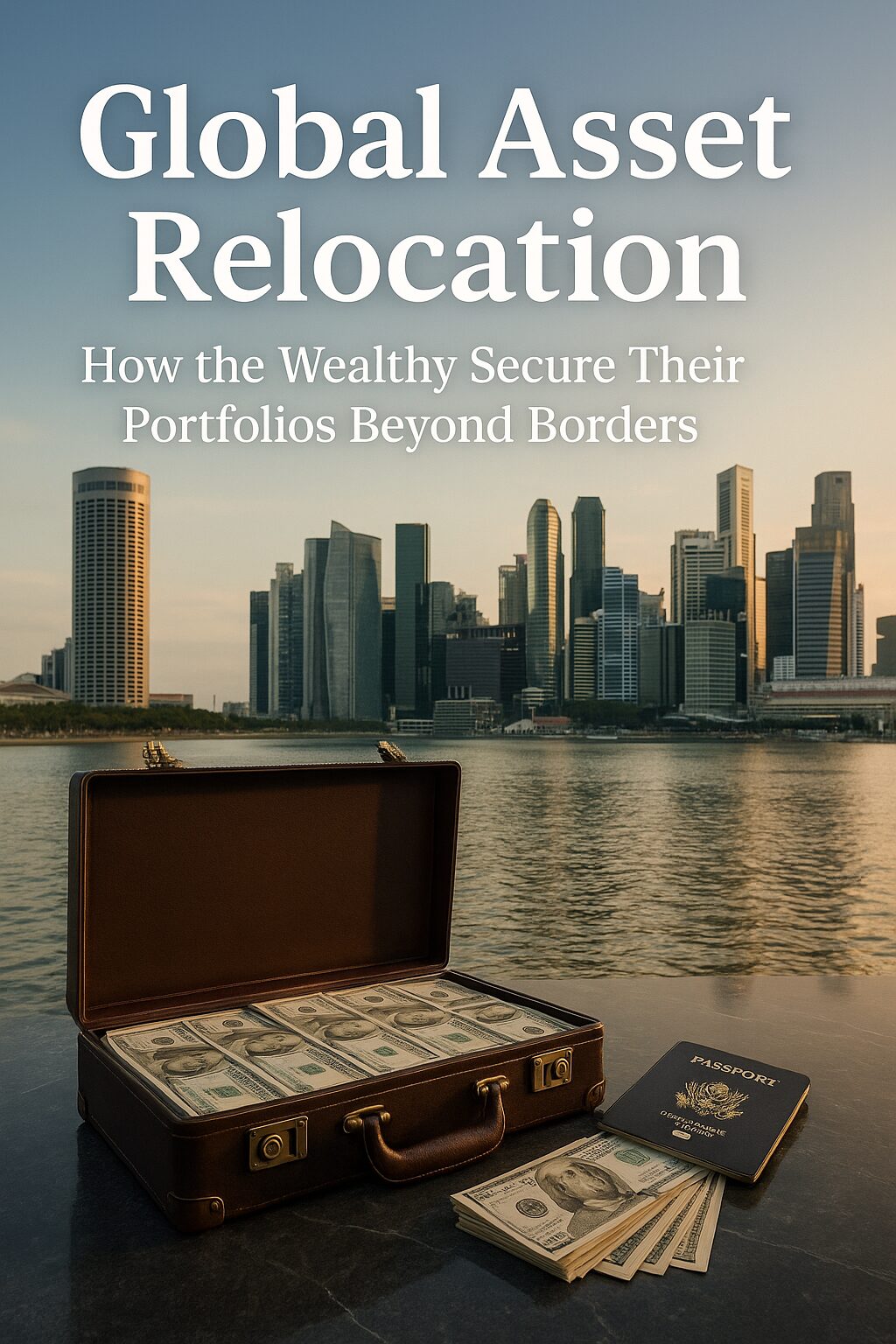
Luxury leather briefcase filled with US dollar bills and a black passport on a marble surface, with Singapore skyline at sunset in the background, representing global asset relocation.

The Global Shift in Wealth Management

In an increasingly interconnected world, high-net-worth individuals (HNWIs) no longer confine their wealth to a single country. From tax optimization to asset protection and geopolitical risk management, global asset relocation has become a strategic necessity. The wealthy understand that borders, while political in nature, should not be barriers to financial security and growth. This strategy is not about moving all assets abroad but about intelligently diversifying where those assets are held, ensuring resilience against local economic shocks, currency devaluations, and sudden policy changes.


Why the Wealthy Relocate Assets Internationally

The decision to move wealth beyond one’s home country is rarely impulsive—it’s based on a calculated evaluation of risks and opportunities. Here are the most common drivers:

  1. Currency Risk Mitigation
    Inflation, devaluation, and unstable monetary policies can erode wealth quickly. By holding assets in multiple strong currencies—such as the U.S. dollar, Swiss franc, or Singapore dollar—investors can protect their purchasing power.
  2. Tax Optimization
    Strategic relocation of assets can reduce tax burdens legally. This includes capital gains tax planning, inheritance tax minimization, and using jurisdictions with favorable double-taxation treaties.
  3. Political and Regulatory Stability
    Wealthy individuals often diversify into countries with predictable legal systems and strong property rights, ensuring that sudden regulatory changes in one jurisdiction won’t jeopardize their entire portfolio.
  4. Access to Global Opportunities
    Some investments—such as certain private equity funds, real estate developments, or early-stage tech ventures—are only available to investors who have a presence or account in specific markets.

Key Vehicles for Global Asset Relocation

Relocating assets internationally is not as simple as opening a foreign bank account. It requires structuring assets in ways that are legally compliant yet strategically advantageous.

  1. Offshore Banking
    • Typically in jurisdictions like Switzerland, Singapore, or Luxembourg.
    • Provides multi-currency accounts, enhanced privacy, and direct access to global markets.
  2. International Trusts & Foundations
    • Used for estate planning and intergenerational wealth transfer.
    • Can shield assets from litigation or politically motivated seizure.
  3. Global Real Estate
    • Properties in prime markets such as London, New York, Dubai, or Sydney serve both as investments and safe havens.
    • Real estate often retains value in crises, offering a tangible store of wealth.
  4. Second Citizenship or Residency Programs
    • Golden Visa or citizenship-by-investment programs in countries like Portugal, Malta, or St. Kitts & Nevis.
    • These provide greater freedom of movement and alternative tax residencies.
  5. Offshore Corporate Structures
    • Holding companies in stable jurisdictions can help manage global investments and optimize corporate taxation.

Strategic Considerations for Asset Relocation

Relocating wealth across borders requires meticulous planning to avoid pitfalls. The wealthy approach this in a methodical, data-driven way:

  • Legal Compliance: Cross-border transactions are heavily regulated. The use of tax treaties, reporting standards like CRS (Common Reporting Standard), and professional advisors ensures compliance.
  • Jurisdictional Diversification: Avoid concentrating assets in just two countries; instead, diversify across multiple regions and currencies.
  • Liquidity Management: Ensure that part of the portfolio remains liquid in case funds need to be accessed quickly during emergencies.
  • Risk Assessment: Monitor geopolitical risks, banking sector health, and currency stability before committing assets.

Case Study – A Diversified International Portfolio

Consider an investor with $50 million in assets:

  • 30% Offshore Bank Deposits in Switzerland and Singapore (multi-currency accounts in USD, CHF, and SGD).
  • 25% Global Real Estate in London, Dubai, and Sydney.
  • 20% International Equities & Private Funds accessed via a Luxembourg-based holding company.
  • 15% Trust Assets in Jersey for estate planning and tax optimization.
  • 10% Physical Gold & Precious Metals stored in vaults across Zurich and Singapore.

This approach ensures that no single jurisdiction controls the majority of the investor’s wealth, drastically reducing systemic risk.


The Emerging Role of Digital Assets in Global Relocation

The wealthy are increasingly integrating cryptocurrencies and tokenized assets into their relocation strategy. Bitcoin and stablecoins, for instance, can be moved across borders without physical transfer or reliance on banks. When held within regulated digital asset custodians, they combine mobility with legal compliance. Tokenized real estate and blockchain-based funds also allow fractional ownership of high-value properties in different countries, making diversification more accessible.


Long-Term Benefits of Global Asset Relocation

The immediate appeal is safety, but the long-term benefits are equally compelling:

  • Sustainable Wealth Preservation across generations.
  • Enhanced Investment Returns through access to global markets.
  • Reduced Political Exposure to any one government’s policies.
  • Greater Lifestyle Flexibility with multiple residences and citizenship options.

Conclusion – Building an Unshakable Financial Fortress

Global asset relocation is not about fleeing a country or avoiding obligations—it’s about building a financial structure that can withstand any economic, political, or market turbulence. The wealthy don’t just think about returns; they think about survival, continuity, and legacy. In an unpredictable world, placing your wealth beyond borders is no longer a luxury—it’s a necessity.
📌 Next Article Preview
In the next article, we’ll explore Inflation-Proof Real Estate Strategies – Earning Stable Yields in Any Economy.
Discover how global investors identify properties that not only protect capital but also generate consistent cash flow, regardless of market conditions.

The Retirement Triangle – How the Rich Balance Yield, Liquidity, and Risk in One Portfolio

Strategic retirement portfolio balancing yield, liquidity, and risk for long-term wealth.

The Retirement Dilemma
For most investors, retirement planning is a balancing act. On one hand, you need enough yield to cover living expenses. On the other, you must maintain liquidity so that you can access funds for emergencies or opportunities. And of course, all of this has to be achieved while keeping risk at acceptable levels.

The wealthy have solved this challenge by applying what I call The Retirement Triangle—a strategic allocation framework that keeps all three factors in equilibrium. In this article, you’ll learn exactly how this framework works, why it’s so effective, and how you can apply it to your own portfolio for sustainable, long-term retirement income.


1. Understanding the Retirement Triangle

The Retirement Triangle is built on three interconnected pillars:

  1. Yield – The income your assets generate (dividends, interest, rental income).
  2. Liquidity – The ease with which you can convert investments into cash without losing significant value.
  3. Risk Management – The strategies used to protect your capital from volatility, inflation, and unforeseen events.

The secret of the wealthy is not to maximize one pillar at the expense of the others, but to balance all three so the portfolio works as a unified system.


2. The First Pillar – Yield

Yield is the engine that powers retirement income. Wealthy investors focus on high-quality yield, not just high numbers.

  • Dividend Growth Stocks – Companies that increase dividends annually, such as Procter & Gamble, Johnson & Johnson, and Microsoft.
  • REITs – Real Estate Investment Trusts like Realty Income (O) that provide monthly distributions.
  • Corporate Bonds & Preferred Shares – Often paying fixed interest, offering stability and predictable cash flow.

Pro Tip: The ultra-rich avoid chasing unsustainably high yields. Instead, they target a yield range of 3–6% with proven payout histories.


3. The Second Pillar – Liquidity

Even the best-yielding investments can become a burden if they can’t be sold quickly during emergencies. The wealthy keep 20–40% of their portfolio in highly liquid assets:

  • Cash & Money Market Funds – For immediate needs.
  • Treasury Bills & Short-Term Bonds – Low risk, easily tradable.
  • Highly Liquid ETFs – Funds with large daily trading volumes that can be converted to cash within hours.

This liquidity reserve prevents forced selling of long-term holdings during market downturns.


4. The Third Pillar – Risk Management

Risk management in the Retirement Triangle is about preserving capital while still participating in growth:

  • Diversification – Across sectors, asset classes, and geographic regions.
  • Hedging – Using assets like gold or inflation-protected securities to guard against market swings.
  • Position Sizing – Limiting exposure to any single investment to reduce the impact of underperformance.

Wealthy investors often stress test their portfolios for different economic scenarios—recession, high inflation, rising rates—and make adjustments accordingly.


5. Integrating the Three Pillars

Here’s how a balanced Retirement Triangle might look for a $1 million portfolio:

  • Yield (40%) – $400,000 in dividend growth stocks, REITs, and corporate bonds.
  • Liquidity (30%) – $300,000 in cash, short-term Treasuries, and money market funds.
  • Risk Management (30%) – $300,000 in diversified ETFs, gold, and inflation-protected securities.

The allocation percentages may shift depending on personal needs, but the idea is to maintain constant equilibrium among the three pillars.


6. How the Rich Adjust Over Time

The wealthy understand that the Retirement Triangle is dynamic:

  • In low-interest environments, they may increase exposure to dividend growth equities.
  • During market volatility, they raise cash reserves to preserve liquidity.
  • In inflationary periods, they add more real assets and inflation-protected bonds.

The flexibility to adjust quickly is what keeps their portfolios resilient.


7. Building Your Own Retirement Triangle

Here’s a step-by-step guide:

  1. Assess Your Income Needs – How much monthly income do you need after taxes?
  2. Determine Your Risk Tolerance – Decide the maximum drawdown you can accept.
  3. Allocate According to the Three Pillars – Spread your capital across yield, liquidity, and risk management assets.
  4. Automate Income Streams – Set dividends and interest payments to deposit directly into your spending account.
  5. Review Quarterly – Adjust allocations based on economic changes and life circumstances.

8. Common Mistakes to Avoid

  • Overloading on Illiquid Assets – Real estate and private equity can trap capital.
  • Ignoring Inflation – Holding too much cash erodes purchasing power.
  • Chasing Yield – High yield often comes with high risk; sustainability matters more.

Conclusion – Stability, Freedom, and Confidence in Retirement
The Retirement Triangle offers a simple but powerful approach to retirement planning—ensuring that you can live off your investments comfortably, respond to emergencies without panic, and protect your wealth from economic uncertainty.

By balancing yield, liquidity, and risk, you’ll have the same advantage the wealthy enjoy: a retirement portfolio that pays you reliably, adapts to changing markets, and lets you focus on living life on your terms.

📌 Coming Up Next
Global Retirement Havens – How to Maximize Income and Quality of Life Abroad
Preview: In our next article, we’ll explore the top international destinations where retirees can stretch their income, enjoy world-class healthcare, and benefit from favorable tax laws. You’ll discover how to structure your finances for a comfortable, secure retirement overseas without sacrificing lifestyle.

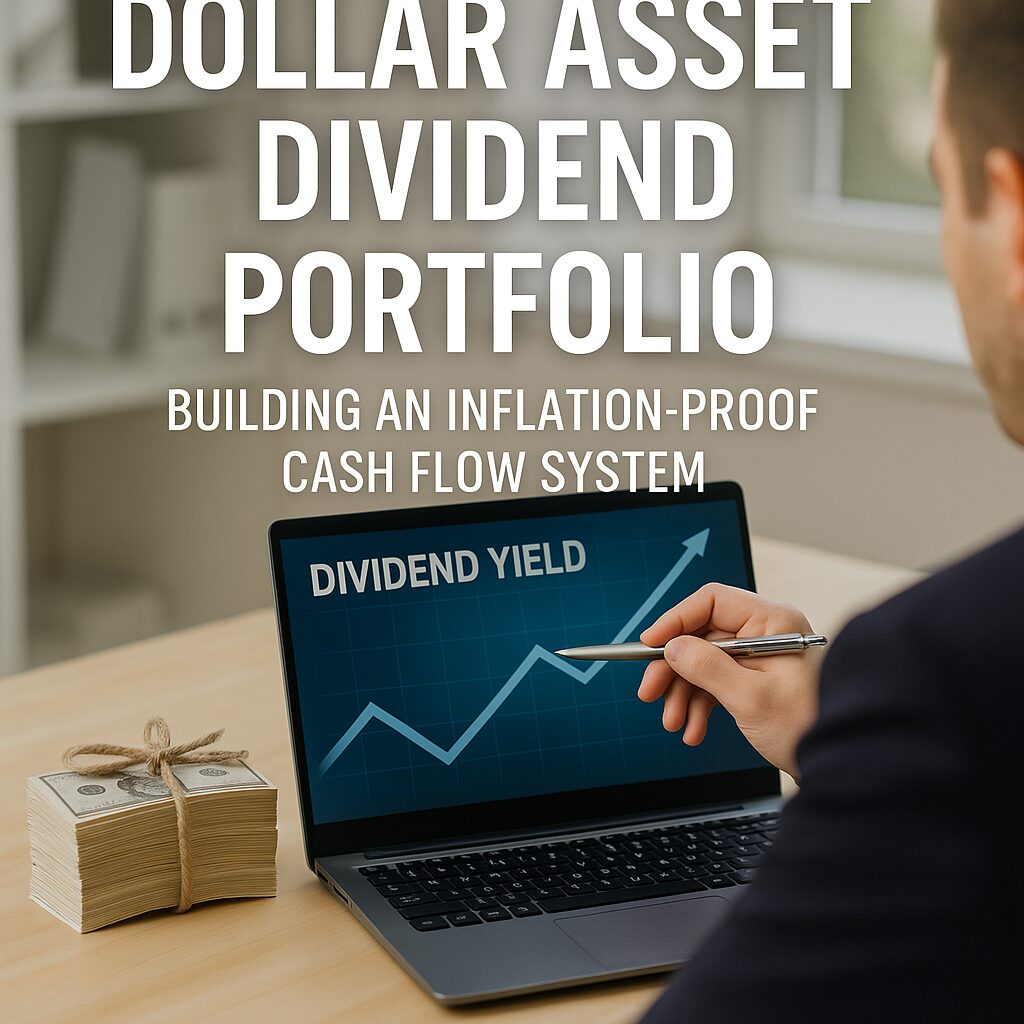
Dollar Asset Dividend Portfolio – Building an Inflation-Proof Cash Flow System

A realistic photo of an investor reviewing a diversified dollar asset dividend portfolio with graphs and charts.

Why Dollar Assets Are the Ultimate Inflation Shield
In an era where inflation can erode purchasing power faster than most people realize, investors are increasingly turning to dollar-denominated assets for stability and growth. The U.S. dollar remains the world’s primary reserve currency, which means assets priced in dollars not only hold global value but also attract the most robust financial infrastructure in the world. One of the most effective ways to monetize these assets over time is through a dividend-focused portfolio—an investment structure designed to produce steady, predictable cash flow while preserving and growing capital.

In this article, we’ll explore how to create a dollar asset dividend portfolio that withstands inflation, delivers consistent payouts, and compounds wealth over the long term.


1. Understanding the Power of Dollar-Denominated Dividends

Dividend-paying assets priced in U.S. dollars provide two critical benefits for global investors:

  1. Stable Currency Base – The USD historically appreciates or remains stable during global crises, protecting purchasing power.
  2. High-Quality Issuers – Many of the world’s strongest companies and governments issue dollar-denominated securities.

For non-U.S. investors, holding assets in dollars can also serve as a currency hedge against local inflation or depreciation. When combined with consistent dividend income, this becomes a formidable wealth-building engine.


2. Core Asset Classes for a Dollar Dividend Portfolio

A well-constructed portfolio balances yield, stability, and growth. Here’s the typical asset mix:

A. U.S. Dividend Stocks

  • Blue-Chip Leaders: Companies like Johnson & Johnson, Procter & Gamble, and Coca-Cola have decades of uninterrupted dividend growth.
  • Dividend Aristocrats & Kings: Firms that have increased dividends for 25–50+ consecutive years.
  • Sector Diversification: Mix defensive sectors (utilities, consumer staples) with growth sectors (technology, healthcare).

B. U.S.-Listed ETFs

  • High-Dividend ETFs: Vanguard High Dividend Yield ETF (VYM), Schwab U.S. Dividend Equity ETF (SCHD).
  • International Exposure in USD: ETFs that hold non-U.S. companies but pay distributions in dollars.

C. U.S. Treasury & Corporate Bonds

  • Treasuries: Virtually risk-free, often paying semi-annual interest.
  • Investment-Grade Corporate Bonds: Higher yields than Treasuries with manageable risk.

D. REITs (Real Estate Investment Trusts)

  • U.S.-listed REITs like Realty Income (O), known for monthly dividends.
  • Provides inflation protection through real estate-backed income streams.

3. Structuring for Monthly Income

The goal is to ensure that cash flow arrives every month, not just quarterly. This requires staggering payout schedules:

  • Combine stocks, ETFs, REITs, and bonds with different ex-dividend dates.
  • Include monthly payers like Realty Income (O), STAG Industrial (STAG), and certain bond ETFs.

Example:
If you own three assets—one paying in January, another in February, and a third in March—you can rotate income continuously throughout the year.


4. The Inflation-Proofing Mechanism

Inflation erodes purchasing power, but certain dividend strategies counter this effect:

  • Dividend Growth Investing (DGI): Focus on companies with a history of increasing dividends above inflation rates.
  • Real Asset Exposure: Include REITs, energy infrastructure, and commodities that benefit from rising prices.
  • Reinvestment: Reinvest dividends into more shares to boost future payouts.

Pro Tip: Target a portfolio yield of 3–5% with an annual dividend growth rate of at least 5%. This combination typically beats inflation over time.


5. Risk Management in a Dollar Dividend Portfolio

Even the safest dollar assets carry some risk:

  • Market Risk: Stock prices can fluctuate even if dividends remain stable.
  • Currency Risk (for Non-U.S. Investors): If your home currency strengthens significantly, USD payouts might be worth less locally.
  • Interest Rate Risk: Bond prices fall when rates rise, though holding to maturity mitigates losses.

Mitigation Tactics:

  • Diversify across sectors and asset types.
  • Use a multi-currency account to store dividends in USD until optimal conversion.
  • Maintain a mix of high-yield and growth-oriented assets.

6. Step-by-Step Portfolio Blueprint

Here’s a simple plan to get started:

  1. Define Your Target Income – Decide your monthly cash flow goal (e.g., $1,000/month).
  2. Allocate Across Assets – Example: 40% dividend stocks, 30% ETFs, 20% REITs, 10% bonds.
  3. Stagger Payouts – Select assets with different payment schedules to ensure monthly income.
  4. Automate Reinvestment – Set dividends to reinvest automatically for compounding growth.
  5. Review Annually – Check for dividend cuts, underperforming sectors, and adjust as needed.

7. Tax Considerations for International Investors

  • Withholding Taxes: U.S. dividends are typically subject to 30% withholding for non-residents unless a tax treaty applies.
  • Tax-Advantaged Accounts: Where possible, use retirement or investment accounts that offer tax benefits.
  • Local Tax Rules: Understand how foreign dividends are treated in your country.

Conclusion – Building Resilient Cash Flow in Any Economy
A dollar asset dividend portfolio is more than just an income strategy—it’s a shield against inflation, currency risk, and economic uncertainty. By combining high-quality dividend stocks, REITs, ETFs, and bonds, you can create a steady, inflation-resistant income stream that pays you every month and grows stronger over time.

Done correctly, this approach ensures your wealth keeps pace with rising costs while securing financial freedom—no matter where in the world you live.

📌 Coming Up Next
The Retirement Triangle – How the Rich Balance Yield, Liquidity, and Risk in One Portfolio
Preview: In our next article, we’ll uncover the “Retirement Triangle” strategy the wealthy use to secure financial freedom. You’ll learn how to balance high yields, instant liquidity, and minimal risk in a single, well-structured portfolio—ensuring steady income without sacrificing safety or flexibility.

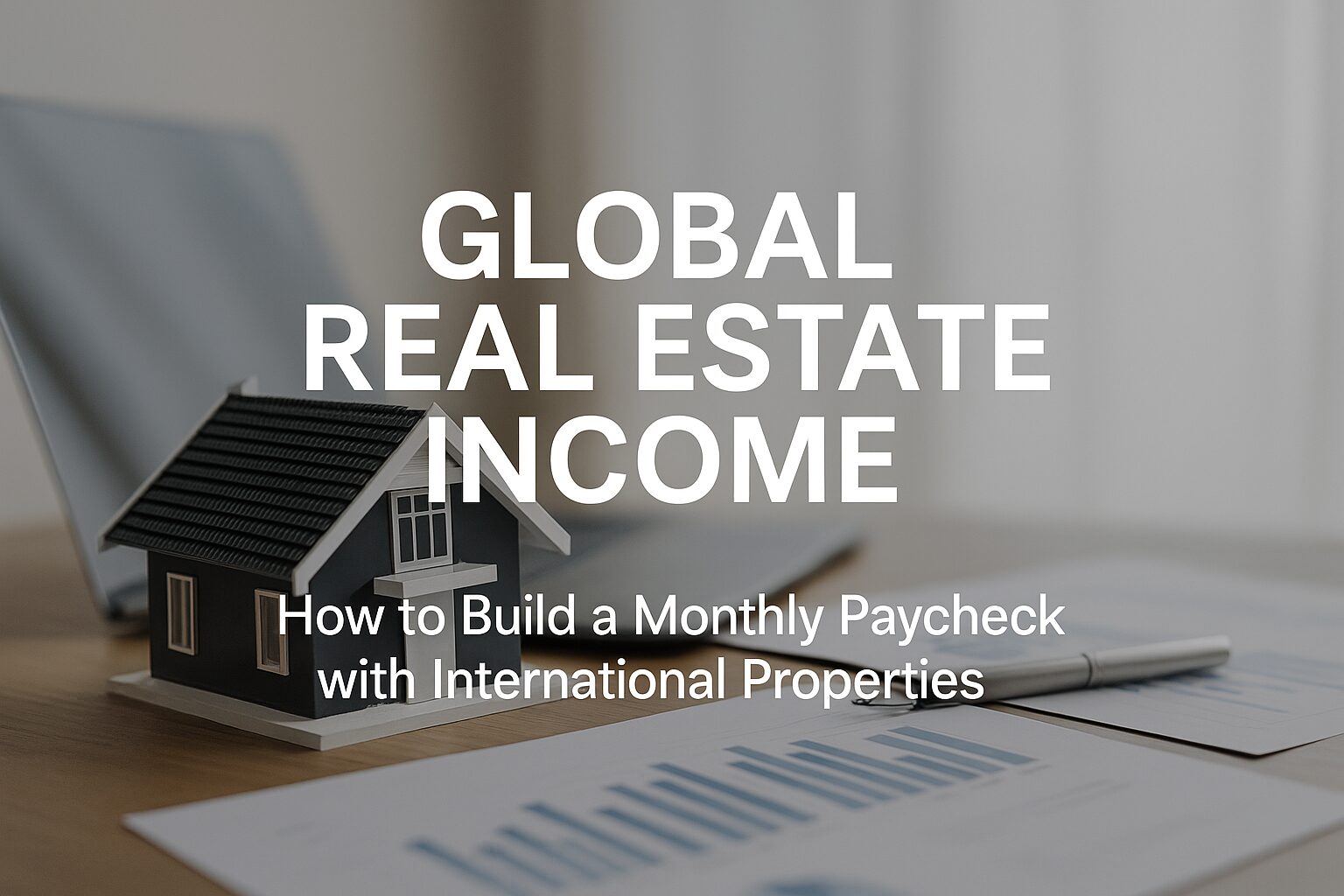
Global Real Estate Income – How to Build a Monthly Paycheck with International Properties

A mid-shot of a professional investor analyzing global property data on a laptop in a modern office setting, symbolizing international real estate income opportunities

Turning Bricks into Cash Flow Without Owning a Single Home

For decades, real estate has been one of the most trusted paths to financial independence. However, the traditional approach—buying a property, managing tenants, and dealing with maintenance—can be expensive, time-consuming, and stressful. Today, global investors have a new set of tools that allow them to earn monthly income from real estate without directly owning or managing a single property. These tools include Real Estate Investment Trusts (REITs), fractional property investing platforms, and global real estate crowdfunding opportunities.
In this article, we’ll explore how these strategies work, how they generate consistent monthly income, and how you can build a portfolio that pays you no matter where you live.


1. Understanding Global REITs – Real Estate Ownership Without the Hassle

A Real Estate Investment Trust (REIT) is a company that owns, operates, or finances income-producing real estate. REITs trade on major stock exchanges, allowing you to invest in large-scale properties like shopping malls, office buildings, hospitals, and apartment complexes with just a few hundred dollars.

Why Global REITs Are Powerful:

  • Accessibility: You can buy and sell shares through your regular brokerage account.
  • Liquidity: Unlike traditional property, REIT shares can be sold instantly on the market.
  • Diversification: One REIT can own hundreds of properties across multiple countries.
  • Regular Dividends: Many REITs pay monthly dividends, creating a consistent paycheck.

Example:
An investor in Singapore can purchase shares of a U.S.-listed REIT that owns office towers in New York, warehouses in Germany, and shopping centers in Japan—all without boarding a plane.


2. Fractional Real Estate Investing – Owning a Slice of the World

Fractional investing allows you to purchase a small share of a property and receive a proportional share of the income it generates. Platforms like Fundrise, RealtyMogul, and PropertyShare have made this possible for investors with as little as $100–$1,000.

Benefits of Fractional Investing:

  • Low Entry Cost: Start small while gaining exposure to high-value properties.
  • Global Access: Invest in rental apartments in Dubai, hotels in Spain, or villas in Bali from anywhere.
  • Passive Income: The platform handles all management, tenant relations, and maintenance.

Case Study:
Maria, an investor from Brazil, allocates $5,000 across 10 different properties in 5 countries. She earns rental income from each property monthly, deposited directly into her account, without ever visiting them.


3. Real Estate Crowdfunding – Pooling Capital for Bigger Projects

Crowdfunding platforms let multiple investors combine resources to fund large real estate projects—luxury resorts, commercial complexes, or mixed-use developments.
Why It Works:

  • Higher Returns: Larger projects can generate higher rental yields or resale profits.
  • Professional Management: Experienced developers handle every step of the process.
  • Geographic Diversification: Join projects in different markets to balance risk.

4. Building a Monthly Real Estate Paycheck – Step-by-Step

Here’s a practical blueprint to create a steady real estate income stream from anywhere:

  1. Set an Income Goal: Decide how much monthly cash flow you want (e.g., $500/month).
  2. Choose the Mix: Combine REITs (for liquidity), fractional investments (for steady rent), and crowdfunding (for higher potential gains).
  3. Diversify Geographically: Spread investments across stable and emerging markets.
  4. Automate Reinvestment: Reinvest dividends into new projects to compound growth.
  5. Monitor and Adjust: Review quarterly reports and adjust your portfolio as markets change.

5. Risk Management – Protecting Your Capital

While these methods are easier than traditional real estate, they still carry risks:

  • Market Fluctuations: REIT share prices can drop during economic downturns.
  • Currency Risk: If you earn income in foreign currencies, exchange rates can impact returns.
  • Platform Risk: Always research the company managing your investment.

Pro Tip: Use a multi-currency account to hold earnings in strong currencies like USD or EUR, reducing conversion losses.


6. Tax Considerations for Global Investors

Tax laws vary by country, and some REITs or platforms may withhold taxes at the source.

  • U.S. REITs: May withhold up to 30% of dividends for foreign investors unless a tax treaty applies.
  • Local Regulations: Some countries offer tax breaks for investing in domestic REITs.
    Always consult a tax professional familiar with international investments.

Conclusion: Building Wealth Without Borders

Global real estate income is no longer reserved for the ultra-rich. With REITs, fractional property investing, and crowdfunding, everyday investors can build a monthly paycheck from properties around the world—without owning a single building outright. The key is diversification, consistent reinvestment, and disciplined risk management.
If done right, your global real estate portfolio can become a reliable income engine that grows stronger year after year.

📌 Coming Up Next
Dollar Asset Dividend Portfolio – Building an Inflation-Proof Cash Flow System
Preview: In our next article, we’ll reveal how to create a diversified dividend portfolio with U.S. stocks, ETFs, and bonds that generates steady income regardless of inflation. You’ll learn how to select high-yield assets, reinvest dividends for compounding growth, and protect your purchasing power over the long term.

The Retirement Triangle – How the Rich Balance Yield, Liquidity, and Risk in One Portfolio

A confident elderly investor overlooking financial documents, symbolizing retirement planning with balanced yield, liquidity, and risk

The Retirement Dilemma

For most people, retirement is about saving enough money. But for the wealthy, retirement is about optimizing a portfolio that balances three critical variables: yield, liquidity, and risk. This is the essence of what we call the “Retirement Triangle.”

Why is this triangle so important? Because you can’t maximize all three at the same time. If you want high yield, you often sacrifice liquidity. If you want safety, you may lose return. If you want liquidity, you may need to accept lower yields. The wealthy know this—and they carefully balance all three to maintain freedom, resilience, and consistent income throughout retirement.

In this guide, we break down how the affluent structure their retirement portfolios and how you can apply the same principles no matter your current financial level.


Part 1: The Three Pillars of the Retirement Triangle

1. Yield – The Engine of Income

Yield refers to the income your investments generate—usually in the form of interest, dividends, or rental income. For retirees, this income must be:

  • Predictable (so you can budget)
  • Sustainable (not dependent on short-term gains)
  • Tax-efficient (especially in multi-jurisdictional setups)

Common high-yield components in a wealthy retiree’s portfolio include:

  • Global dividend stocks (e.g., US, Europe, Japan)
  • Preferred shares
  • Real Estate Investment Trusts (REITs)
  • Private debt and fixed income funds

These aren’t just income-generating—they are also selected for stability, sector diversification, and alignment with inflation trends.


2. Liquidity – The Freedom to Move

Liquidity is your ability to access funds quickly without significant loss of value. The rich never tie up 100% of their capital in long-term, locked investments.

They maintain multi-layered liquidity buffers, such as:

  • High-yield savings in multiple currencies (USD, EUR, JPY)
  • U.S. Treasury ETFs and short-term bonds
  • Cash equivalents in foreign jurisdictions
  • Digital banks and fintech platforms offering instant conversion and withdrawal

Liquidity provides mobility and psychological peace, allowing the portfolio to respond to market crises or personal emergencies.


3. Risk – The Silent Portfolio Killer

Risk is the probability of losing capital or future income. While some risk is inevitable, the rich use risk distribution techniques to stay protected:

  • Global diversification: across regions, currencies, and sectors
  • Asset-class balancing: mixing equities, real estate, fixed income, and alternatives
  • Stress testing: running simulations for inflation, interest rate shocks, or geopolitical events
  • Legal structures: such as trusts or foreign retirement wrappers to add tax and legal protection

The goal is not zero risk—but known, controlled, and compensated risk.


Part 2: How the Wealthy Build the Triangle in Practice

A balanced retirement portfolio might look like this:

Asset TypePurposeTriangle Component
Dividend stocks (US/EU/Asia)Core income generationYield
REITsPassive real estate incomeYield + Risk
Short-term US TreasuriesCapital preservation + accessLiquidity + Risk
Foreign currency savingsInflation hedge and withdrawal easeLiquidity
Gold or inflation-linked bondsCrisis insuranceRisk
Global ETF basketBroad market exposureYield + Risk
Private equity or debtHigh returns (illiquid)Yield (lower liquidity)

These are strategically rebalanced, often quarterly, depending on market cycles and the retiree’s age, residence, and tax status.


Part 3: Retirement Triangle for Non-Millionaires

You don’t need to be ultra-wealthy to apply the triangle. Here’s how you can start:

  • Start with liquidity: build 6–12 months of expenses in USD/EUR savings accounts with global ATM access.
  • Add yield: invest in 2–3 global dividend ETFs (e.g., VIG, SCHD, HDV, or European equivalents).
  • Control risk: avoid overexposure to a single country or asset class. Use low-cost global ETFs.
  • Stay mobile: use banks like Wise or Revolut to manage multi-currency access.

Over time, your portfolio will grow in both stability and income, supporting an early or flexible retirement abroad or at home.


Conclusion: The Retirement Triangle is Your Compass

Most people focus on just one corner—either chasing yield or hoarding cash. But the Retirement Triangle teaches us a more strategic mindset:

“Build income. Preserve freedom. Manage risk.”

By doing so, you align your portfolio not just for returns—but for resilience, peace of mind, and lifelong independence.

Whether you’re planning to retire in Portugal, South Korea, or the U.S., this triangle will guide your financial decisions and keep you in control.


📌 Coming Up Next

Global Real Estate Income – How to Build a Monthly Paycheck with International Properties
→ In our next post, we’ll explore how global investors are using REITs and fractional property platforms to generate consistent income without owning or managing a single home directly.

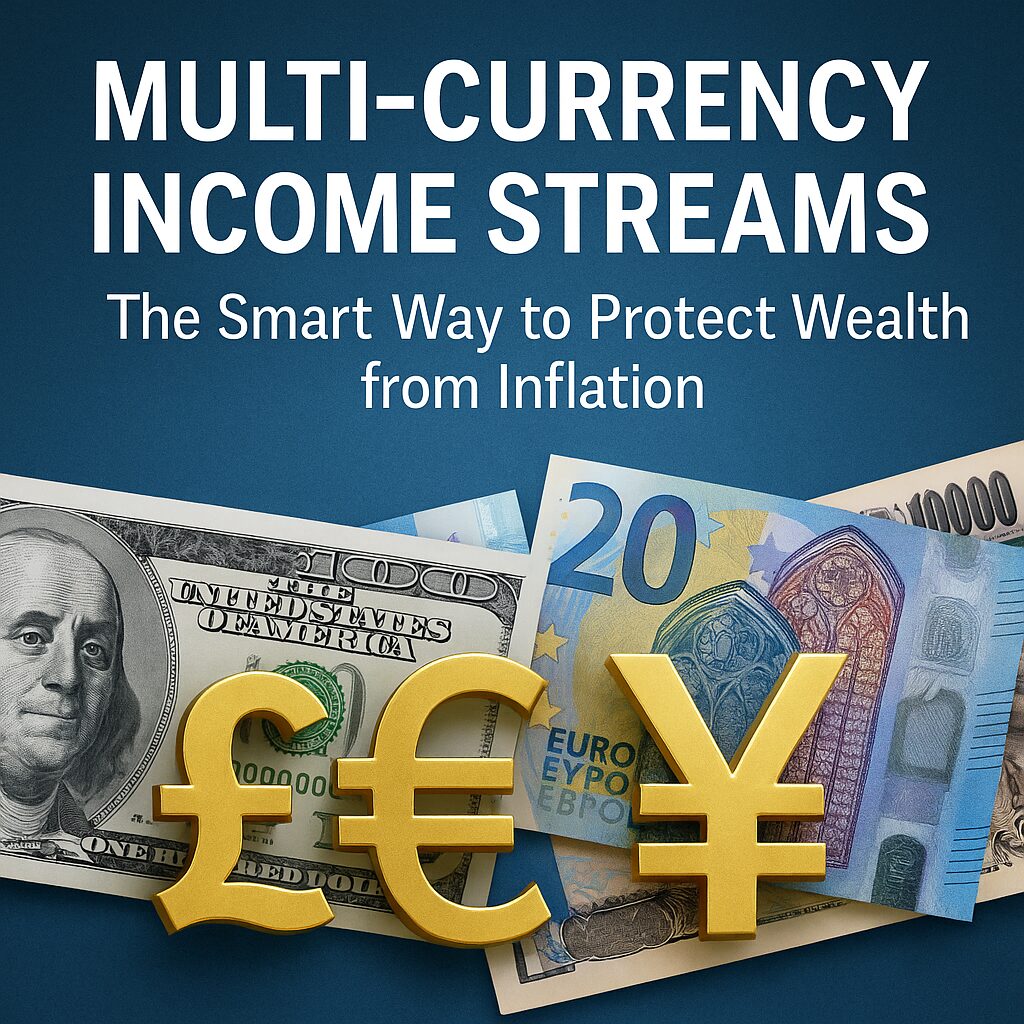
Multi-Currency Income Streams – The Smart Way to Protect Wealth from Inflation

Financial planning tools for earning income in multiple currencies like USD, EUR, and JPY

In an increasingly volatile global economy, holding income in just one currency is a recipe for vulnerability. Whether you live in the U.S., Europe, or Asia, inflation, monetary policy, and currency depreciation can erode your purchasing power overnight. That’s why the world’s most financially resilient individuals are now embracing multi-currency income strategies — generating passive cash flow in USD, EUR, JPY, and other major currencies.

In this post, we break down the logic, tools, and platforms behind multi-currency income streams, showing how they shield you from risk, expand your spending power, and open doors to true global wealth security.


Why Single-Currency Income is Dangerous

Most people are paid, save, invest, and retire in a single currency. While convenient, this setup poses massive risks:

  • Inflation risk: If your currency loses value, your savings lose real-world purchasing power.
  • Local crisis risk: Economic downturns or policy changes (like capital controls) can freeze access.
  • Limited opportunity: Some of the world’s best-yielding assets and stable income vehicles are in other currencies.

Wealthy individuals understand this and diversify not just where they invest—but in which currency they earn.


Core Principle: Currency = Exposure

In income strategy, the currency you receive income in defines your economic exposure. Holding assets in multiple currencies spreads risk:

CurrencyStrengthsCommon Use in Wealth Portfolios
USDReserve currency, high liquidityU.S. ETFs, dividend stocks, REITs
EURBroad zone coverage, negative rate shieldEuropean blue chips, bonds
JPYSafe-haven, deflation hedgeJapanese dividend stocks, bonds
CHFStability, strong central bankSwiss dividend stocks
SGDRegional hub, stable policyAsian REITs, digital banks

Income Stream Type #1: Global Dividend Stocks

One of the easiest ways to build multi-currency income is through global dividend-paying stocks:

  • U.S. markets: Procter & Gamble, Johnson & Johnson, Realty Income Corp (USD)
  • European markets: Nestlé (CHF), Siemens (EUR), TotalEnergies (EUR)
  • Japan: Mitsubishi UFJ Financial (JPY), NTT (JPY)

You can buy many of these via international brokerage platforms like Interactive Brokers or Saxo Bank and receive dividends in the local currency.


Income Stream Type #2: Foreign Currency Bank Interest

Holding your funds in interest-bearing multi-currency accounts can generate passive yield with flexibility. Top platforms include:

  • Wise: Holds and converts over 50 currencies; earns interest on some balances.
  • Revolut: Offers savings vaults in USD, EUR, GBP with yield options.
  • HSBC Global Account: Links multiple country accounts for easy transfer and interest access.

While rates may vary, the value comes from currency preservation + accessibility.


Income Stream Type #3: Global REITs and ETFs

Real Estate Investment Trusts and covered call ETFs provide yield in foreign currencies:

  • USD: QYLD, JEPI, SCHD – High monthly yield in dollars.
  • SGD: Mapletree Logistics Trust, CapitaLand Integrated Commercial Trust
  • JPY: Japan Retail Fund Investment Corp

Platforms like IBKR, TD Ameritrade (US), and Tiger Brokers (Asia) make these accessible.


Practical Tools to Receive and Use Multiple Currencies

Generating income in foreign currencies is useless if you can’t use it efficiently. Here’s how professionals manage multi-currency inflows:

Multi-Currency Accounts

  • Open accounts with Wise, Revolut, or multi-currency HSBC accounts.
  • Get local bank details in USD, EUR, GBP, etc.
  • Spend directly with debit cards in the same currency, avoiding conversion fees.

FX Auto-Conversions

Set auto-conversion rules: e.g., “Convert JPY to USD when rate hits X.”

Tax Reporting Tip

Keep precise transaction logs. Many tools export CSVs that help track income for global tax compliance.


Why This Strategy Beats Traditional Currency Hedging

Currency hedging via derivatives (futures, options) is complex and often not worth the cost for individual investors.

But earning income directly in other currencies is:

  • Passive
  • Organic
  • Legal
  • Inflation-protected
  • Scalable

It transforms income into a protective financial moat, not just an investment.


A Sample Multi-Currency Portfolio

AssetYieldCurrencyUse
JEPI (U.S. ETF)8%USDDollar-based spending/saving
Nestlé3%CHFEuro-zone purchasing
Singapore REIT5.5%SGDAsia income, reinvestment
Japanese dividend ETF2.5%JPYStability hedge
Revolut Savings Vault4%GBPShort-term liquidity

Common Mistakes to Avoid

  1. Assuming FX risk = loss
    → Holding income in stable currencies often reduces risk vs. holding all in one.
  2. Ignoring usage
    → Choose currencies you’ll actually spend or reinvest, not just speculate on.
  3. Relying on local brokers only
    → Use global brokers with local currency withdrawal options.

Final Thoughts: Build Income in the Currencies of Strength

In a world where inflation is no longer predictable and geopolitical uncertainty is the norm, multi-currency income streams are no longer a luxury — they’re a necessity. The wealthy know this. Now, you do too.

By earning across USD, EUR, JPY, and more, you unlock:

  • Purchasing power in multiple regions
  • Protection against local economic shocks
  • Freedom to live, spend, and invest globally

📌 Coming Up Next

The Retirement Triangle – How the Rich Balance Yield, Liquidity, and Risk in One Portfolio
→ In our next post, we’ll explore how high-net-worth individuals design retirement portfolios that optimize for income, flexibility, and capital safety — without compromising on global diversification.

Global Retirement Planning with Stable Assets – How the Wealthy Secure Their Future

A professional image symbolizing global retirement planning with stable financial assets such as bonds, dividend stocks, and REITs.

Retirement planning is no longer just about putting aside a portion of your income into a savings account. For high-net-worth individuals and globally minded professionals, retirement is a carefully orchestrated financial architecture built to withstand time, market volatility, currency depreciation, and geopolitical risk. This post explores how the wealthy approach global retirement planning using stable, income-producing assets—and how you can adapt the same strategy to create a secure financial future, no matter where you live.


Why “Global” Matters in Retirement Planning

Most people plan their retirement based on domestic pensions or national retirement schemes. However, the truly wealthy operate on a different level. Their goal is not just to retire comfortably in one country, but to maintain flexibility, access, and purchasing power globally. This requires a diversification of:

  • Currencies
  • Asset locations
  • Income sources
  • Tax jurisdictions

A purely local retirement plan may crumble under currency devaluation or policy changes. A global plan, on the other hand, is built to survive and thrive across borders.


Stable Assets: The Foundation of Long-Term Wealth

At the heart of global retirement planning lies the concept of stability. For the wealthy, preserving capital is just as important as growing it. This is why they rely heavily on stable income-producing assets, such as:

1. Government Bonds and Treasury Instruments

Government-issued debt, especially from stable nations (U.S., Germany, Japan), is seen as a safe haven. These bonds may not offer explosive returns, but they provide:

  • Predictable passive income
  • Currency diversification
  • Minimal risk of principal loss

They form the core of retirement portfolios designed to last decades.

2. Dividend-Paying Global Blue Chips

Companies like Nestlé, Procter & Gamble, and Johnson & Johnson have delivered consistent dividends for generations. The wealthy often hold:

  • Aristocrat stocks (25+ years of increasing dividends)
  • Global ETFs with quarterly yield payouts
  • ADR shares for international exposure in local accounts

These offer a hedge against inflation and currency volatility.

3. Real Estate Investment Trusts (REITs)

Global REITs offer regular rental income without the hassle of managing properties. From U.S. commercial real estate to Singapore data centers, REITs provide:

  • Geographic diversification
  • Access to booming markets
  • Monthly or quarterly income

Building a Multi-Layered Income Stream

The true key to global retirement isn’t just having assets—it’s having income layers across jurisdictions. Wealthy retirees often design retirement income in tiers:

Tier 1: Safety

  • U.S. Treasury Bonds
  • High-rated municipal bonds
  • Central bank interest-bearing accounts

Tier 2: Growth + Yield

  • Dividend-paying ETFs (U.S., EU, APAC)
  • Covered call ETFs for enhanced yield
  • Inflation-indexed bonds

Tier 3: Global Real Assets

  • REITs and property trusts
  • Infrastructure funds
  • Long-term leases in tax-friendly zones

Each layer is designed to balance income, growth, and currency hedge, making the whole system resilient.


Tax Efficiency: Where You Hold Matters

The wealthy understand that where you hold assets matters as much as what you hold. Using international structures like:

  • Roth IRA equivalents in other countries
  • Offshore life insurance wrappers
  • Residency-based tax havens (Portugal, Panama, UAE)

They minimize tax drag and maximize after-tax yield. This isn’t about evasion—it’s about optimization within legal boundaries.


Mobility and Access: Retirement Shouldn’t Trap You

Traditional retirement locks people into a fixed income and location. Global retirement planning offers:

  • Residency options in 2–3 countries
  • Access to multi-currency debit accounts
  • Global health insurance policies
  • Liquidity in multiple banking systems

This ensures that wherever global conditions shift—economic, political, health—you can respond without panic.


Case Study: A Digital Executive’s Global Retirement Blueprint

Consider Julia, a 48-year-old tech executive with U.S. citizenship, property in Portugal, and a consulting gig in Singapore. Her retirement system includes:

  • U.S. dividend-paying ETFs (Roth IRA)
  • German government bonds (held via EuroClear)
  • Singapore REITs for cash flow in Asia
  • A permanent residence visa in Panama (friendly tax laws)
  • U.S. and EUR bank accounts with instant liquidity

Her system generates over $9,000/month post-tax income—across three currencies and four legal structures.


Getting Started with Your Own Global Retirement Plan

Even without high net worth, the principles still apply:

  1. Start building stable income now—REITs, dividend ETFs, or even a bond ladder.
  2. Open a multi-currency account—like Wise, Revolut, or HSBC Global.
  3. Consider second residency programs—for freedom and tax optionality.
  4. Think beyond your local pension—look at global pension ETFs or cross-border tax treaties.

Final Thoughts: Retirement Is a Global Game

Wealthy individuals don’t retire to escape work—they retire to preserve freedom. Their secret isn’t flashy assets—it’s quiet stability, layered income, and legal resilience across systems. By learning from their structure and thinking long-term, you can build a system that protects your wealth, grants you choices, and ensures dignity in any corner of the world.

Now is the time to start planning like the wealthy—globally, strategically, and resiliently.


📌 Coming Up Next
Multi-Currency Income Streams – The Smart Way to Protect Wealth from Inflation
→ In our next post, we’ll explore how globally-minded individuals generate income in multiple currencies like USD, EUR, and JPY. Learn how currency diversification not only boosts financial resilience but also protects against inflation and local economic downturns.

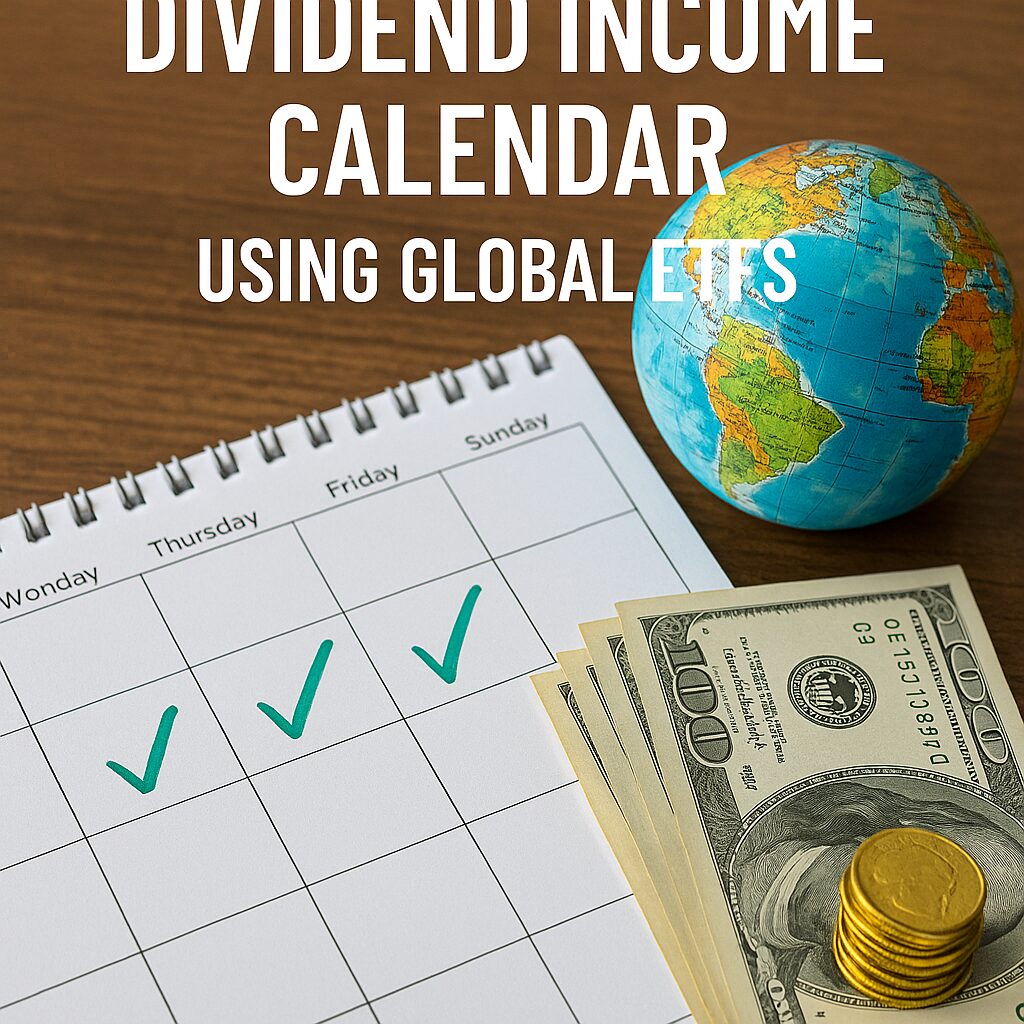
“How to Create a Monthly Dividend Income Calendar Using Global ETFs”

A real desk calendar with check marks, a globe showing the Americas, U.S. dollar bills, and gold coins on a wooden table—symbolizing global ETF-based monthly dividend income.

Imagine opening your investment app every month and seeing a fresh deposit—without selling a single asset. That’s the power of structuring your dividend portfolio for monthly income. It’s not magic. With the right mix of global ETFs and a payout calendar strategy, you can engineer a consistent cash flow that supports your lifestyle, bills, or reinvestment plan.

This guide will walk you through how to build a monthly dividend income calendar using a combination of U.S. and international ETFs—optimized for yield, payout timing, and diversification.


Why Monthly Dividend Income Matters

While dividends are powerful on their own, they become transformational when they’re timed with real life.

  • Bills are monthly. Your income should be too.
  • Consistent income means less stress, fewer withdrawals, and greater compounding.
  • If you’re living off dividends or planning early retirement, monthly flow creates financial stability.
  • Reinvested monthly dividends can also compound faster than quarterly or annual payouts.

Without proper planning, you may receive lumpy income—three ETFs might pay in March, June, and September, but nothing in between. The goal here is to smooth that curve.


Understanding ETF Payout Schedules

Most ETFs distribute dividends on a quarterly basis (every 3 months), but some pay monthly. The key is to:

  1. Check ETF dividend calendars (available on provider websites)
  2. Mix payout months to cover each calendar month
  3. Blend U.S. and international ETFs for added exposure and timing variation

Dividend distributions typically occur in:

  • Quarterly: March, June, September, December
  • Monthly: End of each month
  • Semi-Annually: Less predictable; used in some international ETFs

By selecting ETFs with staggered payout months, you can cover all 12 months of the year.


Best U.S. Monthly Dividend ETFs

These ETFs are designed to provide predictable monthly payouts:

  • JEPI (JPMorgan Equity Premium Income ETF)
    Yield: ~8–10%
    Strategy: Covered call + dividend stocks
    Great for high income and stability.
  • QYLD (Global X Nasdaq-100 Covered Call ETF)
    Yield: ~12%
    Strategy: Option premium + tech exposure
    Great for aggressive income seekers.
  • SDIV (Global X SuperDividend ETF)
    Yield: ~9%
    Strategy: Global high-yield equities
    Includes U.S. and international stocks.
  • DIV (Global X SuperDividend U.S. ETF)
    Yield: ~7%
    Strategy: High-dividend U.S. stocks with low volatility.
  • SCHD (Schwab U.S. Dividend Equity ETF)
    Yield: ~3.5%
    Not monthly, but consistent quarterly with DRIP support.

Tip: Focus on monthly payers for steady cash flow, and blend in quarterly ETFs like SCHD for quality.


Best International ETFs for Diversified Payout

International ETFs often pay quarterly, but their payout months can differ from U.S. norms—use that to your advantage.

  • VYMI (Vanguard International High Dividend Yield)
    Payout: March, June, September, December
    Region: Developed + Emerging Markets
    Yield: ~4.5%
  • IDV (iShares International Select Dividend ETF)
    Payout: January, April, July, October
    Region: UK, Australia, Japan
    Yield: ~6.5%
  • WDIV (SPDR S&P Global Dividend ETF)
    Payout: February, May, August, November
    Region: Global
    Yield: ~5.2%
  • SCHY (Schwab International Dividend Equity ETF)
    Payout: March, June, September, December
    Region: Developed ex-US
    Yield: ~4.8%

By layering these ETFs, you can fill in the months that U.S. ETFs leave blank, achieving a complete monthly flow.


Monthly Dividend Calendar: Sample Allocation

Here’s an example of a simple portfolio that generates monthly payouts:

MonthETF(s) Paying
JanuaryIDV
FebruaryWDIV
MarchVYMI, SCHY, SCHD
AprilIDV
MayWDIV
JuneVYMI, SCHY, SCHD
JulyIDV
AugustWDIV
SeptemberVYMI, SCHY, SCHD
OctoberIDV
NovemberWDIV
DecemberVYMI, SCHY, SCHD

To add monthly consistency, include:

  • JEPI and QYLD – pay monthly, smooth out cash flow
  • DIV or SDIV – additional U.S. or global monthly income

Sample Allocation (for stable monthly income):

  • 30% JEPI (monthly)
  • 20% VYMI (quarterly)
  • 20% IDV (quarterly)
  • 15% WDIV (quarterly)
  • 15% SCHD (quarterly)

How to Automate Income with DRIP or Sweep Accounts

There are two ways to manage your dividends:

  1. DRIP (Dividend Reinvestment Plan)
    → Reinvests dividends into more shares of the same ETF
    → Great for compounding and growth
  2. Sweep into cash or high-yield savings
    → If you want to use dividends as income
    → Automate transfer to your checking or savings account

Most brokerages (Fidelity, Schwab, Vanguard) let you toggle between DRIP and cash payout per ETF. You can mix strategies—for example, DRIP on growth ETFs, cash payout on high-yield ETFs.


Tax Considerations for Monthly Payers

  • U.S. ETFs in a Roth IRA = tax-free monthly income
  • U.S. ETFs in a Brokerage account = 15% qualified dividend rate (if eligible)
  • International ETFs = subject to foreign withholding taxes
    → Use foreign tax credit when filing U.S. taxes
    → Or hold them in tax-sheltered accounts

Track your income and taxes with tools like Empower or Sharesight for easier reporting.


Final Thoughts

A monthly dividend income calendar turns your portfolio into a predictable income engine. By combining U.S. monthly payers with global ETFs that stagger distributions, you can create a smooth stream of cash flow throughout the year—ideal for retirees, digital nomads, or anyone pursuing financial independence.

Don’t wait for lumpy quarterly payments. Design your calendar, automate your income, and make dividends work on your schedule.


📌 Coming Up Next

In our next post, we’ll explore how to balance yield and risk in a dividend portfolio—helping you avoid high-yield traps and maintain long-term growth.

→ Learn how to assess dividend sustainability, payout ratios, and total return performance across sectors and regions.

“Top U.S.-Listed ETFs for Global Dividend Exposure: Compare Yield, Fees, and Strategy”

Globe with U.S. dollar bills and gold coins, highlighting ETFs for global dividend exposure and comparison of yield, fees, and strategy

Investing globally doesn’t mean you have to open brokerage accounts in Europe or Asia. Thanks to U.S.-listed ETFs, you can gain diversified international dividend exposure with a single click—while enjoying U.S. tax advantages and simplicity.

In this guide, we’ll review and compare the top U.S.-listed global dividend ETFs that can help you build long-term, stable passive income across currencies, economies, and sectors.


Why Use ETFs for Global Dividend Exposure

Buying individual international dividend stocks can be rewarding—but it’s also complex. You’d have to research foreign markets, navigate multiple tax regimes, convert currencies, and monitor political risks. That’s a full-time job.

Global dividend ETFs eliminate most of that complexity by offering:

  • Broad diversification across countries, sectors, and currencies
  • Professional management and screening
  • Lower costs than mutual funds
  • Consistent yield without the administrative burden

Plus, many U.S.-listed ETFs are optimized for tax efficiency, liquidity, and long-term income reliability—making them ideal for dividend-focused investors.


Top U.S.-Listed Global Dividend ETFs (Comparative Overview)

We’ve selected 4 of the most reliable and widely used ETFs for global dividend exposure. Each has a different strategy, geographic focus, and dividend approach.

Let’s break down their core characteristics.


ETF #1: Vanguard International High Dividend Yield (VYMI)

  • Yield (12-month trailing): ~4.5%
  • Expense Ratio: 0.22%
  • Holdings: ~1,300 companies
  • Top Countries: Japan, UK, Switzerland, Canada
  • Dividend Frequency: Quarterly
  • Key Sectors: Financials, industrials, energy

VYMI tracks the FTSE All-World ex-US High Dividend Yield Index. It’s one of the broadest global high-yield ETFs available. While it excludes U.S. companies, it captures strong dividend players from developed and emerging markets.

Ideal for: Investors seeking broad international income without U.S. exposure.


ETF #2: iShares International Select Dividend (IDV)

  • Yield (12-month trailing): ~6.5%
  • Expense Ratio: 0.49%
  • Holdings: ~100 companies
  • Top Countries: UK, Australia, Japan
  • Dividend Frequency: Quarterly
  • Key Sectors: Financials, utilities, telecom

IDV screens companies based on dividend yield, payout ratio, and five-year track records. It tends to favor high-yielding regions like the UK and Australia.

Ideal for: Investors who want maximum yield, even at the cost of concentration.

Caution: Slightly higher volatility and less diversification than VYMI.


ETF #3: SPDR S&P Global Dividend ETF (WDIV)

  • Yield (12-month trailing): ~5.2%
  • Expense Ratio: 0.40%
  • Holdings: 100 companies
  • Top Countries: Canada, UK, Hong Kong, Switzerland
  • Dividend Frequency: Quarterly
  • Key Sectors: Utilities, consumer staples, energy

WDIV is unique in that it caps country and sector exposure to increase balance and reduce risk. It’s also rebalanced annually to keep top payers in check.

Ideal for: Investors who value balance and stability with solid yield.


ETF #4: Schwab International Dividend Equity ETF (SCHY)

  • Yield (12-month trailing): ~4.8%
  • Expense Ratio: 0.14%
  • Holdings: ~130 companies
  • Top Countries: UK, Japan, Switzerland, Canada
  • Dividend Frequency: Quarterly
  • Key Sectors: Financials, health care, consumer

SCHY focuses on sustainability and growth of dividends, not just current yield. It emphasizes quality metrics—such as return on equity and earnings stability—making it a favorite among conservative income investors.

Ideal for: Investors who want defensive, high-quality dividend exposure.


Comparison Table: Yield, Fees, and Exposure

ETFYieldExpenseHoldingsRegion FocusStrategy
VYMI~4.5%0.22%1,300+Developed + EM (ex-US)Broad yield-based
IDV~6.5%0.49%~100UK, AUS, JapanYield-maximizing
WDIV~5.2%0.40%~100Global (capped)Balanced/diversified
SCHY~4.8%0.14%~130Developed ex-USQuality + growth

How to Choose the Right Global Dividend ETF

Your ideal ETF depends on your:

  • Income needs
    → Higher yield = IDV or WDIV
    → Balanced + safe = VYMI or SCHY
  • Risk tolerance
    → Conservative = SCHY
    → Aggressive = IDV
  • Time horizon
    → Long-term compounding = SCHY or VYMI
    → Short-term yield = IDV
  • Tax strategy
    → Consider using these ETFs in tax-advantaged accounts like Roth IRA to shield foreign dividends from U.S. taxes.

You can also blend multiple ETFs to get the best of all worlds. For example:

  • 50% VYMI (broad global income)
  • 25% SCHY (quality tilt)
  • 25% IDV (boost yield)

Final Thoughts

Global dividend ETFs give you access to dozens of countries, hundreds of companies, and powerful passive income—all within a U.S. brokerage account. By carefully comparing yield, fees, and risk profile, you can build a global dividend portfolio tailored to your income goals and risk preferences.

Don’t chase dividends blindly. Diversify smartly, monitor performance, and let global markets work for you—automatically.


📌 Coming Up Next

In our next post, we’ll show you how to build a monthly dividend calendar using U.S. and global ETFs to generate consistent income every month of the year.

→ Discover the best combinations of payout schedules and ETFs to automate your passive income into a predictable monthly paycheck.

“How to Build a Globally Diversified Dividend Portfolio for Stable Passive Income”

A globe with US dollar bills and gold coins representing global dividend investing for passive income

If you’re serious about building long-term passive income through dividends, limiting yourself to one country—no matter how strong its economy—is a missed opportunity. Global dividend investing not only expands your reach but also provides powerful layers of income stability, currency diversification, and regional risk management. In this guide, you’ll learn exactly how to build a globally diversified dividend portfolio designed to generate stable, growing income across different markets and economic cycles.


Why Global Diversification Matters for Dividend Investors

Investing globally in dividend-paying assets allows you to:

  • Avoid overexposure to any single economy or currency
  • Capture higher yields from markets with stronger dividend cultures
  • Offset downturns in one region with upturns in another
  • Access sectors that are underrepresented in your home market

For instance, while U.S. companies like Apple and Microsoft dominate tech dividends, European firms like Nestlé or Unilever lead in consumer staples, and Asian companies such as Taiwan Semiconductor provide access to growing innovation-driven economies.

Moreover, some countries have shareholder-friendly dividend tax policies or culturally prioritize regular dividend payouts, making them especially attractive for global income seekers.


Core Elements of a Globally Diversified Dividend Portfolio

To construct a truly global dividend portfolio, you need:

  1. Geographic Spread
    Include equities from North America, Europe, Asia, and Emerging Markets. Don’t over-concentrate in the U.S.
  2. Currency Exposure
    Your dividend income should span multiple currencies: USD, EUR, GBP, JPY, and stable emerging market currencies like SGD or TWD.
  3. Sector Balance
    High-dividend industries vary by country. In the U.S., it’s utilities and REITs; in Europe, it’s banking and industrials; in Asia, it’s telecom and infrastructure.
  4. Payout Frequency
    Some international stocks and ETFs pay monthly or quarterly. Mixing payout schedules creates smoother monthly income.
  5. Dividend Growth vs. Yield
    Blend high-yield stocks (4–7%) with dividend growers (increasing 5–10% per year) to combine stability and compounding.

Top Countries for Reliable Dividend Stocks

Here are five dividend-friendly markets to anchor your portfolio:

  • United States
    Known for dividend aristocrats and ETFs. Strength: consistency and strong corporate governance.
  • Canada
    Famous for high-yielding banks, utilities, and telecom. Many stocks pay monthly.
  • United Kingdom
    Offers high dividends from blue-chip companies like BP and British American Tobacco.
  • Switzerland
    Tax-optimized payouts from global firms like Nestlé and Novartis.
  • Singapore
    A hub for dividend-paying REITs and stable infrastructure plays.

You may also consider countries like Australia, Germany, or Hong Kong for additional exposure to strong dividend cultures.


Recommended ETFs and Funds for Global Income

If selecting individual stocks across continents feels overwhelming, global dividend ETFs simplify the process. Here are top picks:

  • Vanguard International High Dividend Yield ETF (VYMI)
    Tracks high-yielding non-U.S. companies. Broad global exposure.
  • iShares International Select Dividend ETF (IDV)
    Focuses on companies with long-term dividend history.
  • SPDR S&P Global Dividend ETF (WDIV)
    Offers global exposure across 100+ companies.
  • Schwab International Dividend Equity ETF (SCHY)
    Low-fee, high-quality international dividend stock basket.
  • iShares Asia/Pacific Dividend ETF (DVYA)
    Specializes in high-yield stocks from Asia and the Pacific.

Look for low fees, strong liquidity, and historical yield consistency when choosing ETFs.


Risk Management Through Currency and Region Balancing

Currency fluctuations can amplify or erode your dividend returns. If your base currency is USD, receiving dividends in EUR or JPY can affect real income depending on the exchange rate at the time of payout.

Strategies to manage this:

  • Use ETFs that hedge currency risk
  • Blend multiple currencies for natural diversification
  • Rebalance regionally each year to stay aligned with macro trends

Also, monitor regional political and economic risks. For example, emerging markets may offer high yields but also higher volatility.


Tax Optimization for International Dividends

Foreign dividend income often comes with withholding taxes from the country of origin. These taxes typically range from 10% to 30% and can reduce your yield unless managed correctly.

Tips:

  • Use tax-advantaged accounts (like Roth IRAs in the U.S.) where possible
  • Understand your country’s foreign tax credit rules
  • Choose ETFs domiciled in countries with favorable tax treaties
  • Research Irish-domiciled ETFs (e.g., VWRL), which often have better withholding structures for U.S. investors

Consult a cross-border tax advisor if you plan to build a substantial international portfolio.


How to Start Building Your Global Dividend Portfolio

Step-by-step plan:

  1. Assess your base currency and tax situation
  2. Allocate across regions (e.g., 40% U.S., 30% Europe, 20% Asia, 10% EM)
  3. Blend individual stocks with ETFs for control + convenience
  4. Set income goals and dividend payout schedule
  5. Automate reinvestment or dividend sweeps to stable assets
  6. Track portfolio performance in native and converted currency

Over time, reinvest your dividends to expand your holdings, and adjust allocations as global markets shift.


Final Thoughts

A globally diversified dividend portfolio provides one of the most powerful passive income engines available to modern investors. By tapping into international markets, you can access higher yields, smoother income, and a broader foundation for long-term wealth.

Don’t let geographic borders limit your financial future. Build your dividend income across the world—and let compounding do the rest.


📌 Coming Up Next

In our next post, we’ll compare the top U.S.-listed ETFs that provide global dividend exposure—highlighting fees, yield performance, and tax efficiency for American investors.

→ Discover the best ETFs to build your international dividend machine with minimum effort and maximum return.